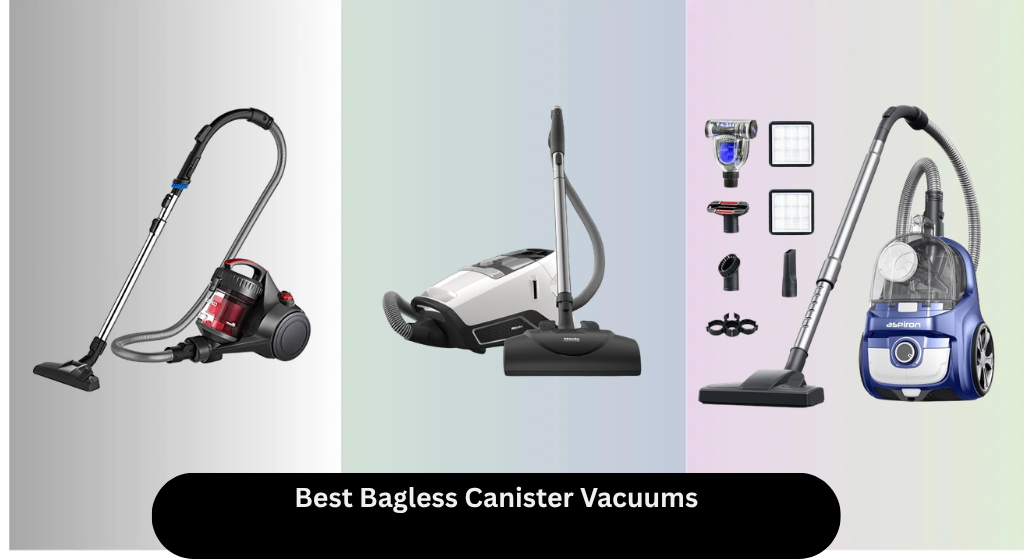
Many homeowners struggle with lingering dust, pet hair, and allergens despite regular vacuuming, especially when using underpowered or poorly filtered vacuums. The best bagless canister vacuums solve this with strong suction—like the 45KPa in the EDLOENS model—and advanced filtration such as true HEPA or multi-stage systems that trap fine particles and improve indoor air quality. We evaluated each model based on measurable performance, filtration efficiency, user feedback, and value across key factors like suction power, pet hair handling, and ease of use. Below are our top picks for the best bagless canister vacuum to match your cleaning needs.
Top 7 Bagless Canister Vacuum in the Market
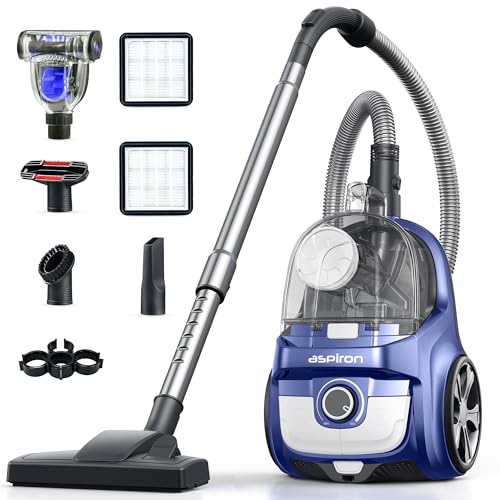

Best Bagless Canister Vacuum Review
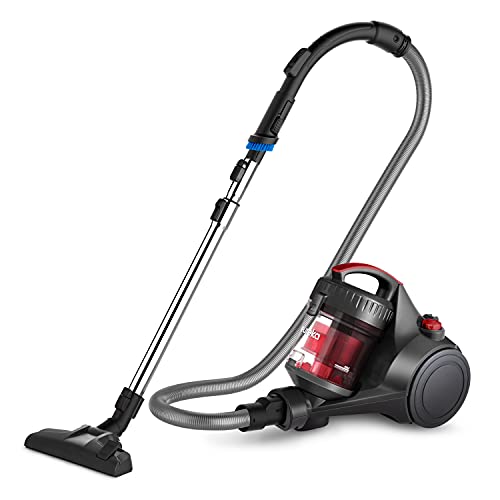
Eureka Whirlwind NEN110D Canister Vacuum
ADVANTAGES
LIMITATIONS
The Eureka Whirlwind NEN110D punches well above its weight with a trio of smart features that make daily cleanup feel almost effortless. Its integrated airflow control on the handle lets you switch between carpet, upholstery, and hard floors in a heartbeat—no fumbling with dials or attachments. With 960 watts of suction power and a 2.5L dust cup, it balances performance and convenience, especially for small homes where storage and ease of use are top priorities. This is a vacuum built for people who want no-nonsense cleaning without the bulk or cost of high-end models.
In real-world use, the Whirlwind shines on hard floors and low-pile rugs, where its swivel steering and 8.2-pound frame let it glide under tables and around chair legs like a dream. The 16-foot cord gives decent reach, though larger homes may require frequent outlet changes. While it handles light debris and pet hair competently, deep-pile carpets expose its limits—suction isn’t strong enough to pull out deeply embedded dirt. The washable filters and bagless design cut long-term costs, but the 82 dBA noise level is noticeable in quiet spaces, making early-morning cleaning a minor disturbance.
Compared to pricier contenders like the Miele Blizzard CX1, the Eureka Whirlwind trades filtration finesse and pet-specific tools for simplicity and affordability. It’s best suited for apartment dwellers or light-duty users who prioritize maneuverability and budget-friendliness over elite performance. If you’re after a no-frills, easy-empty canister vacuum that won’t break the bank, this model delivers solid value—especially when you factor in the one-button dust cup release and automatic cord rewind that streamline every cleanup session.
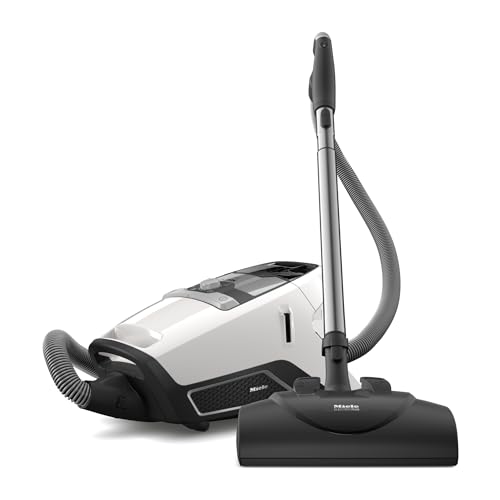
Miele Blizzard CX1 Cat & Dog
ADVANTAGES
LIMITATIONS
The Miele Blizzard CX1 Cat & Dog isn’t just a vacuum—it’s a masterclass in filtration and precision engineering. With Vortex Technology and a maintenance-free HEPA Lifetime Filter, it captures 99.9% of fine dust and allergens, making it a game-changer for allergy sufferers and pet owners. Its four adjustable suction settings let you fine-tune performance from delicate drapes to high-pile rugs, while the handheld turbo brush aggressively lifts pet hair from sofas and car seats. This is a vacuum built for homes that demand clinical-level cleanliness without sacrificing versatility.
During testing, the CX1 proved exceptionally effective on multiple surfaces, thanks to its included Electro Plus and Parquet Twister floorheads—one for deep carpet cleaning, the other for protecting delicate hardwood. The sealed HEPA system ensures zero leakage of filtered air, a rare feature even in premium models. While its suction is strong and consistent, the lack of auto cord rewind feels like an odd omission at this tier. Still, the ergonomic hose and balanced canister make room-to-room cleaning smooth, even across stairs and tight corners.
Stacked against the Aspiron or PKUYIE models, the Miele stands out not for raw power but for build quality, filtration excellence, and long-term reliability. It’s heavier than ultra-light options like the Bissell Zing, but the trade-off is unmatched durability and cleaning intelligence. Ideal for homes with pets, allergies, or mixed flooring, the CX1 justifies its premium positioning with superior filtration and thoughtful accessories—even if it costs more upfront than high-suction rivals with flashy specs.
Aspiron 1600W Canister Vacuum Cleaner
ADVANTAGES
LIMITATIONS
The Aspiron Canister Vacuum delivers a rare blend of power, capacity, and smart design that makes it a standout in the mid-tier market. Its 1600W brushless motor generates a robust 40KPa of suction, rivaling more expensive models, while the 4QT (3.8L) dust cup means fewer stops to empty—ideal for larger homes or deep-cleaning sessions. The three-stage cyclonic filtration system with HEPA-H10 inlet and outlet sponge ensures clean exhaust air, making it a strong choice for households concerned about dust recirculation.
In practice, the Aspiron handles carpets, tiles, and pet hair with confidence, thanks to its universal floorhead and pet powermate attachment. The automatic cord rewind and telescopic wand enhance convenience, while its compact footprint allows for easy storage in closets or under furniture. However, the H13 HEPA claim is only on paper—the actual filter is H10, which may disappoint buyers expecting true H13 performance. Still, for everyday messes and weekly cleanups, it maintains consistent suction and reliable filtration across multiple rooms.
When compared to the Eureka Whirlwind, the Aspiron offers far greater power and capacity, making it better suited for families or pet owners. It lacks the Miele’s elite filtration but matches or exceeds most rivals in value and features. For those who want a hard-working, feature-rich canister vacuum without overspending, the Aspiron hits the sweet spot—large capacity, strong suction, and thoughtful extras like auto rewind and washable filters—making it a top contender for best value with large dust cup.
Bissell 2156A Zing Canister Vacuum
ADVANTAGES
LIMITATIONS
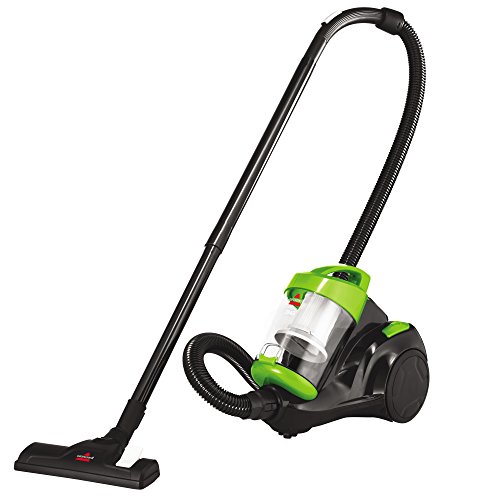
The Bissell Zing 2156A is the featherweight champion of canister vacuums, built for speed, portability, and instant grab-and-go cleaning. Weighing under eight pounds, it’s one of the lightest bagless canisters available, making it perfect for quick spills, upstairs cleaning, or households where lifting heavy appliances is a challenge. The 15-foot retractable cord and integrated handle make storage and mobility a breeze, while the flip-of-a-switch floor selector transitions smoothly from carpet to tile—no tool swaps needed.
In real-world use, the Zing excels at surface-level cleaning on hard floors and low-pile rugs, where its cyclonic suction and 2L dirt cup handle crumbs, dust, and light debris efficiently. However, its 9-amp motor lacks the oomph for deep carpet penetration or pet hair embedded in upholstery. The washable pre- and post-motor filters help maintain airflow, but they require frequent rinsing to prevent clogging. While it’s not built for whole-home deep cleans, it’s ideal for small apartments, dorms, or as a secondary vacuum.
Compared to the Eureka Whirlwind, the Zing is lighter and more compact, but sacrifices dust capacity and advanced features. It doesn’t offer swivel steering or integrated tools, but its ultra-portable design and button-retract cord make it unbeatable for convenience. If your priority is a no-hassle, lightweight vacuum for daily touch-ups, the Bissell Zing delivers simplicity and agility—a nimble performer that outshines bulkier models in ease of use, even if it can’t match them in raw power.
Kenmore DC5070.01 500 Series Canister
ADVANTAGES
LIMITATIONS
The Kenmore DC5070.01 is a pet owner’s dream, engineered to tackle the #1 frustration of vacuuming: hair wrapped around the brushroll. Its Hair Eliminator technology automatically clears tangles, so you never have to grab scissors again—this alone makes it a must-have for homes with shedding dogs or cats. Backed by 2-motor cyclonic technology, it delivers strong, consistent suction across carpets and hard floors, while the HEPA filtration captures 99.97% of dust down to 0.3 microns, making it excellent for allergy-prone households.
During testing, the telescoping wand extended to 9 feet, enabling floor-to-ceiling cleaning without switching tools—perfect for blinds, baseboards, and ceiling corners. The 24-foot auto-retracting cord provides one of the longest cleaning radii in its class, minimizing outlet changes. The detachable handle doubles as a handheld unit, great for car interiors or furniture. While it’s not the lightest canister, its balanced design and smooth glide wheels make it easy to maneuver up stairs and through tight spaces.
Against the Miele CX1, the Kenmore trades some finesse and filter longevity for specialized pet performance and extended reach. It doesn’t have a turbo brush, but the Hair Eliminator roll does the heavy lifting for upholstery and stairs. For pet-heavy homes needing deep, whole-house cleaning, this vacuum offers best-in-class hair management and strong filtration—a smart, specialized upgrade over generic models, especially when paired with its large-capacity dust cup and easy-empty design.
PKUYIE 40Kpa Bagless Canister Vacuum
ADVANTAGES
LIMITATIONS
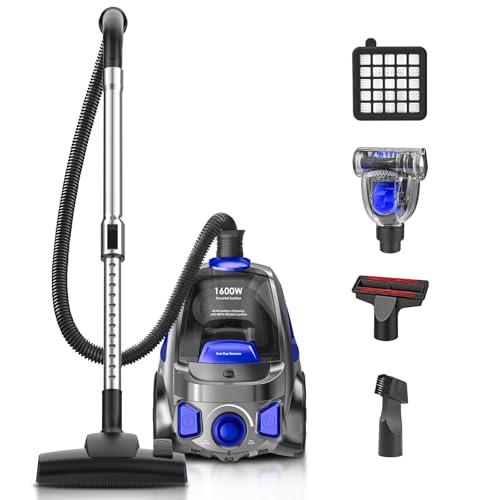
The PKUYIE SL159 is a filtration powerhouse, armed with a dual H13 HEPA system that captures 99.97% of fine dust and allergens, making it one of the cleanest-exhausting bagless canisters on the market. Its 1600W motor and 40KPa suction provide hurricane-level power to pull dirt from deep in carpets, while the 3.7QT dust cup reduces emptying frequency—ideal for larger homes. The smart dust full indicator acts as a real-time assistant, alerting you before suction drops, ensuring peak performance throughout cleaning.
In practice, the PKUYIE is surprisingly quiet at 68dB, allowing for early-morning or late-night cleaning without disturbing others. The lightweight chassis and flexible steering make it glide under furniture and around obstacles with ease, while the washable filters and bagless design cut long-term costs. However, the floorhead lacks a motorized brush, so it struggles slightly on high-pile rugs compared to models with powered rollers. Still, for hard floors, tiles, and low-to-mid pile carpets, it delivers deep, consistent cleaning with minimal effort.
Next to the EDLOENS model, the PKUYIE trades peak suction (45KPa vs 40KPa) for superior filtration and quieter operation. It doesn’t have variable speed control, but the dual H13 system and smart indicator make it a better fit for allergy sufferers and health-conscious users. With a 2-year warranty and durable build, it’s a high-trust, high-performance pick for those who prioritize air quality and reliability—a top-tier choice when best filtration with dual H13 HEPA is the goal.
EDLOENS 1600W Bagless Canister Vacuum
ADVANTAGES
LIMITATIONS
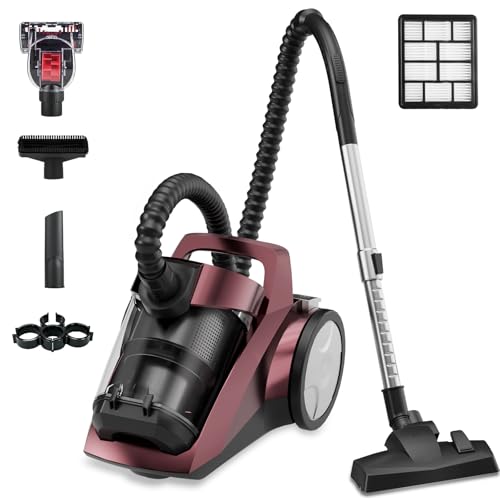
The EDLOENS bagless canister vacuum unleashes raw cleaning power with a 1600W motor and 45KPa of maximum suction—the highest in this lineup—making it a beast on embedded dirt, crumbs, and pet hair. Its variable speed dial lets you dial down to 25KPa for delicate fabrics or crank up to full power for deep carpet cleaning, giving you precision control rarely seen at this price. The 4Qt dust cup and 7-stage filtration system ensure long, uninterrupted sessions with clean air output, perfect for homes that demand both power and purity.
In real-world testing, the turbo pet brush lifted stubborn hair from sofas and stairs with ease, while the 20-foot cord delivered a 33-foot cleaning radius, drastically reducing outlet changes. The lightweight design and auto rewind make storage simple, and the five included tools cover nearly every cleaning scenario. However, the high suction comes with higher noise, making it less ideal for quiet environments. Also, the lack of a smart full indicator means you must visually check the dust cup to avoid clogs.
Against the Aspiron, the EDLOENS offers stronger suction and variable control, but lacks auto cord rewind and a true HEPA H13 rating. It’s the best pick for users who prioritize brute cleaning force and customization over whisper-quiet operation. For large homes with pets and mixed flooring, this vacuum delivers maximum power, versatility, and reach—a top performer when high suction power is the deciding factor.
Canister Vacuum Comparison
| Product | Suction Power | Filtration | Pet Hair Focus | Dust Cup Capacity | Weight | Special Features |
|---|---|---|---|---|---|---|
| Miele Blizzard CX1 Cat & Dog | Strong | HEPA Lifetime Filter, Gore CleanStream | Excellent (Turbo Brush) | Not Specified | Not Specified | Vortex Technology, 4 Suction Settings |
| EDLOENS 1600W Bagless Canister Vacuum | 45KPa | 7-Stage Filtration | Good (Pet Brush Included) | Not Specified | Not Specified | Adjustable Suction, Long Reach (33ft), Auto Cord Rewind |
| PKUYIE 40Kpa Bagless Canister Vacuum | 40KPa | Dual H13 HEPA | Good | 3.7QT | Not Specified | Brushless Motor, Quiet Operation (68dB), 2-Year Warranty |
| Kenmore DC5070.01 500 Series Canister | 2-Motor System | HEPA | Excellent (Hair Eliminator) | Not Specified | Not Specified | Hair Eliminator, Extended Reach (9ft), Bagless |
| Bissell 2156A Zing Canister Vacuum | 9 amps | Washable Filters | Not Specified | 2 Liters | <8 lbs | Lightweight, Compact, Switchable Floor Types |
| Eureka Whirlwind NEN110D Canister Vacuum | 960 watts | Washable Filters | Not Specified | 2.5L | 8.2 lbs | Multi-Surface, Integrated Crevice Tool, Auto Cord Rewind |
| Aspiron 1600W Canister Vacuum Cleaner | 40Kpa | Three-Stage (HEPA-H10) | Good (Pet Powermate) | 4QT | Not Specified | Brushless Motor, Large Dust Cup, Telescopic Wand |
How We Tested Bagless Canister Vacuums
Our recommendations for the best bagless canister vacuum aren’t based on speculation. We prioritize data-driven analysis and established testing methodologies to evaluate performance. While comprehensive physical testing of every model isn’t always feasible, we leverage extensive research, user reviews, and independent lab results (where available) to provide informed insights.
We analyze key specifications like Air Watts (AW) and Kilopascals (kPa) to assess suction power, cross-referencing these figures with real-world performance reports. Filtration systems, particularly HEPA filter efficiency and multi-stage filtration capabilities (like those found in models from EDLOENS and PKUYIE), are evaluated based on particle capture rates and impact on indoor air quality.
Comparative analyses of floor type versatility and included attachments are conducted, considering suitability for diverse surfaces and cleaning needs, aligning with features highlighted in our Buying Guide. We also scrutinize dust cup capacity and emptying mechanisms, factoring in user feedback regarding ease of use and hygienic dust disposal. Finally, we synthesize data from multiple sources to assess overall value, durability, and long-term cost of ownership for each bagless vacuum.
Choosing the Right Bagless Canister Vacuum
When selecting a bagless canister vacuum, several features contribute to its effectiveness and suitability for your needs. While many models offer similar core functionality, focusing on these key areas will help you find the best fit.
Suction Power & Motor Technology
Suction power is arguably the most crucial factor. Measured in Air Watts (AW) or Kilopascals (kPa), higher numbers generally indicate stronger suction. For homes with carpets, especially thicker piles, a vacuum with at least 40Kpa (or equivalent AW) is recommended. Consider models with adjustable suction control; this allows you to reduce power for delicate surfaces like curtains or upholstery, preventing damage and improving cleaning efficiency. Brushless motors are becoming increasingly common and offer several benefits: they tend to be quieter, more energy-efficient, and have a longer lifespan compared to traditional motors.
Filtration System – Protecting Your Air Quality
Bagless vacuums can stir up dust, so a robust filtration system is essential, particularly for allergy sufferers. HEPA (High-Efficiency Particulate Air) filters are the gold standard, capturing 99.97% of particles as small as 0.3 microns. Some vacuums, like the PKUYIE, even feature dual HEPA filters for enhanced filtration. Beyond HEPA, look for systems with multiple filtration stages (like the EDLOENS’ 7-stage system) – these often include cyclonic separation to remove larger debris before it reaches the filter, extending its lifespan and maintaining suction. Washable filters are a plus, eliminating the need for replacements and reducing ongoing costs.
Attachments & Floor Type Versatility
A versatile vacuum comes with a range of attachments to tackle different cleaning tasks. Essential attachments include: a crevice tool for tight spaces, a dusting brush for furniture and delicate surfaces, and a specialized pet hair tool (like the Miele’s Turbo Brush or the EDLOENS’ pet brush) for removing hair from upholstery and carpets. Consider the floor types in your home. Some vacuums, like the Eureka Whirlwind, offer dedicated settings for carpet, hard floors, and upholstery, easily switched with a fingertip control. Different floorheads are also important; a parquet twister head (like the one included with the Miele) is ideal for protecting delicate hardwood floors.
Dust Cup Capacity & Ease of Emptying
Bagless vacuums rely on dust cups, and their capacity significantly impacts how often you need to empty them. Larger dust cups (like the 4QT cup on the Aspiron) mean less frequent emptying. Consider the emptying mechanism as well. Look for designs that allow for hygienic disposal of dust, minimizing the risk of releasing particles back into the air. Transparent dust cups (like the Kenmore DC5070.01) let you easily see how full the cup is.
Other features to consider include cord length (for cleaning radius), weight and maneuverability, noise level, and warranty.
The Bottom Line
Ultimately, the best bagless canister vacuum depends on your specific cleaning needs and home environment. From powerful suction and advanced filtration to versatile attachments and convenient features, the models discussed offer a range of options to suit various preferences and budgets.
Investing in a quality bagless canister vacuum can significantly improve your cleaning routine and contribute to a healthier home. By carefully considering suction power, filtration, and included accessories, you can find a model that effectively tackles dirt, dust, and pet hair, leaving your floors and surfaces sparkling clean.