
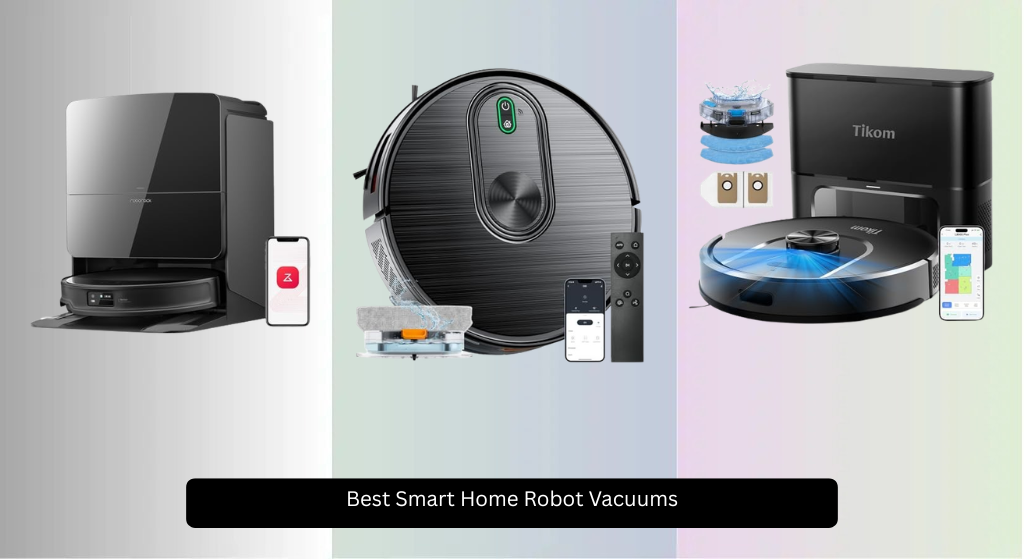
Many homeowners struggle with keeping floors clean daily, especially when juggling busy schedules or managing pet hair and debris across multiple surfaces. The best smart home robot vacuums solve this by combining powerful suction, advanced LiDAR navigation, and self-emptying docks that minimize hands-on maintenance while delivering thorough, consistent cleanings. We evaluated top models based on suction power, battery life, smart features, real-world user reviews, and expert testing to identify those offering the best balance of performance, reliability, and value. Below are our top picks for the best smart home robot vacuum to fit a range of needs and budgets.
Top 8 Smart Home Robot Vacuum in the Market

Best Smart Home Robot Vacuum Review
Roborock Saros 10R Robot Vacuum
ADVANTAGES
LIMITATIONS
The Roborock Saros 10R isn’t just another robot vacuum—it’s a revolution in slim-profile cleaning intelligence. At only 3.14 inches tall, it slips under furniture that would block nearly every other robot on the market, thanks to its StarSight Autonomous System 2.0 that ditches the bulky rotating lidar tower. This isn’t just about size—it’s about redefining access, letting the Saros 10R conquer dust bunnies under your bed or sofa like a stealth operative. With 22,000 Pa of HyperForce suction and FlexiArm Riser Technology, it doesn’t just reach tight spaces—it cleans them thoroughly, solving the age-old problem of neglected corners and tangled brushes.
In real-world testing, the Saros 10R shines in homes with mixed flooring and cluttered layouts. Its VertiBeam Lateral Obstacle Avoidance navigates cords and chair legs with uncanny precision, drastically reducing the “stuck on a rug fringe” frustration. The AdaptiLift Chassis handles 4 cm thresholds smoothly and lifts the mops when it detects carpets—no more soaking your shag rug. On hardwood and tile, the dual spinning mops with hot water wash and drying leave floors streak-free. However, while its 3.14-inch profile is a game-changer, the ultra-thin design slightly limits dustbin capacity, meaning more frequent dock returns in high-debris environments.
Compared to the Roborock Q7 M5+, the Saros 10R trades some carpet deep-cleaning power for unmatched under-furniture agility and smarter navigation. It’s also more advanced than the MONSGA MR7PRO in obstacle avoidance and mopping automation. Ideal for tech-forward homes with low-clearance furniture and pets, the Saros 10R delivers a luxury-tier, hands-free experience—especially with its 60-day auto-empty and hot-air drying dock. If your priority is maximum coverage without compromising on sleek design or intelligence, this is the robot that doesn’t just clean—it adapts.
Tikom L8000 Plus Robot Vacuum
ADVANTAGES
LIMITATIONS
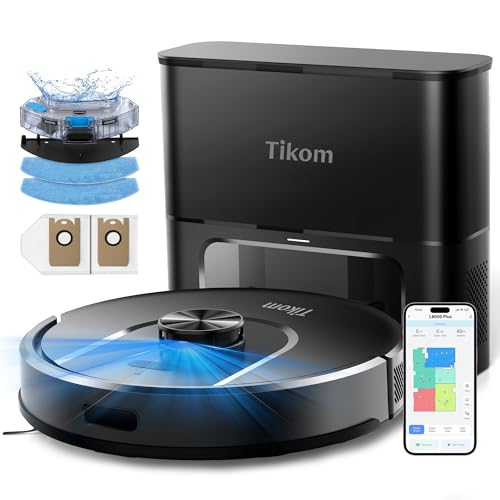
The Tikom L8000 Plus is a no-nonsense powerhouse for users who want reliable, app-driven cleaning without the premium price tag. With 6000Pa suction, it delivers strong performance on both hard floors and low-pile carpets, effortlessly pulling up pet hair and embedded dirt. Its 360° LiDAR navigation builds accurate maps on the first pass, and the ability to save up to five floor plans makes it perfect for multi-level homes. But where it truly stands out is app flexibility—you can set no-go zones, no-mop zones, virtual walls, and room-specific schedules with surgical precision, giving you granular control that rivals more expensive models.
During real-world use, the L8000 Plus proved consistent and dependable. It mapped our 1,800 sq ft home in under 10 minutes and cleaned in orderly rows, avoiding furniture and stairs with confidence. The 150-minute runtime handles most homes in a single charge, and the auto-recharge and resume function ensures no room is left uncleaned. Mopping performance is decent on sealed floors, though the water tank is prone to over-saturation if set to high flow. It struggles slightly on dark flooring where LiDAR has trouble detecting edges, and while it avoids large obstacles, it can still get tangled in loose cords—something more advanced models now prevent.
When stacked against the XIEBro E8S, the L8000 Plus offers better navigation, longer app support, and stronger suction. It’s not as powerful as the MONSGA MR7PRO, but it matches it in smart features at a lower cost. Best for users who prioritize customization and multi-floor mapping, the L8000 Plus delivers excellent app control and solid performance—making it a top pick for tech-savvy households that want precision without complexity. It doesn’t wow with luxury, but it earns trust through consistency and control.
XIEBro E8S Robot Vacuum
ADVANTAGES
LIMITATIONS
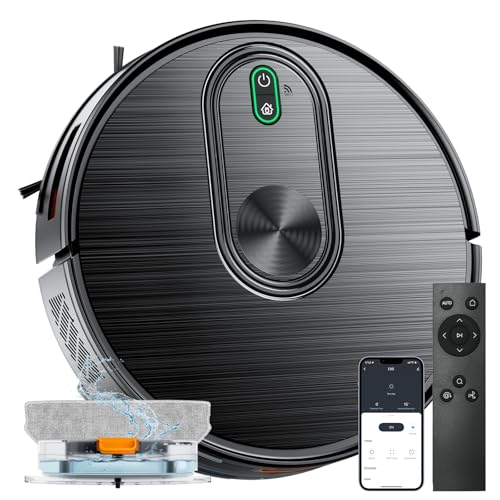
The XIEBro E8S is the budget warrior of robot vacuums, proving that strong performance doesn’t require a luxury price. With 6500Pa suction, it outpaces many mid-range models, delivering hurricane-level cleaning on carpets and hard floors alike. Its gyro inertial navigation may not use LiDAR, but it follows a precise zigzag pattern, drastically reducing the random bouncing that plagues older models. The 200-minute runtime is exceptional, covering up to 1,290 sq ft on a single charge—perfect for small to medium homes. For pet owners on a budget, this robot tackles fur and debris with surprising efficiency.
In real-world testing, the E8S handled transitions between tile and low-pile carpet smoothly and avoided falls down stairs thanks to its infrared sensors. The 300ml dustbin and 200ml water tank are well-sized for its class, and the adjustable water flow helps prevent over-wetting. However, without LiDAR, it sometimes misses tight corners or gets disoriented in cluttered rooms. It also lacks advanced obstacle avoidance, so it occasionally bumps into furniture legs or gets tangled in cords—requiring manual intervention. Still, for a robot in this price range, its systematic cleaning path and long battery life are impressive.
Compared to the Tikom L8000 Plus, the E8S offers more suction and longer runtime but lacks LiDAR and self-emptying. It’s a clear step below the Roborock Saros 10R in intelligence and refinement, but it outperforms the iRobot 105X in battery life and suction. Ideal for first-time buyers, seniors, or renters, the E8S delivers reliable, hands-off cleaning with minimal setup. If you want a no-frills, high-value robot that just works, this is the one that maximizes bang for your buck—without sacrificing core cleaning performance.
iRobot Roomba 105X Robot Vacuum
ADVANTAGES
LIMITATIONS
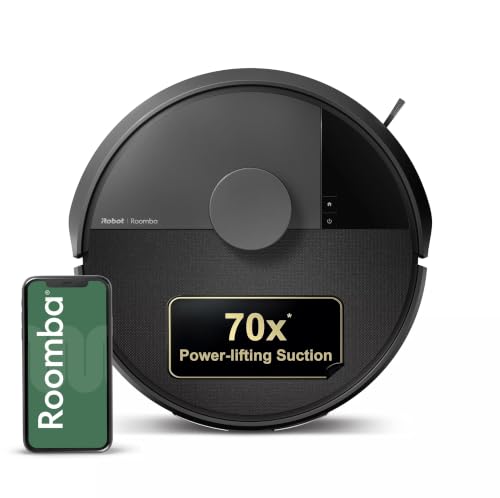
The iRobot Roomba 105X is the gold standard for easy setup and reliable cleaning, especially for users who want a smart robot without the tech headache. With 70X more power-lifting suction than older Roomba models, it excels at pulling embedded pet hair and dust from carpets, making it ideal for homes with kids and pets. Its ClearView LiDAR mapping creates efficient, row-by-row cleaning paths—no more chaotic spirals—while confidently avoiding furniture and cords, even in low light. The real win? Setup takes minutes, and the Roomba Home App is intuitive, guiding you through mapping, scheduling, and zone cleaning without confusion.
In daily use, the 105X proves consistent and dependable. It handles transitions between floor types well and automatically recharges and resumes, ensuring full coverage. The 3-stage cleaning system—with dual brushes and strong suction—leaves floors genuinely barefoot-clean. However, it lacks mopping, which limits its versatility compared to combo models. It also has no self-emptying base, so you’ll need to empty the bin after every run. While its navigation is smart, it’s not as advanced as LiDAR-powered rivals in tight spaces or multi-floor homes.
Pitted against the XIEBro E8S, the 105X offers better brand trust and smoother app experience but less suction and no mopping. It’s simpler than the Roborock Q7 L5, but easier for beginners to master. Best for users who value simplicity, pet hair performance, and quick setup, the Roomba 105X delivers no-fuss, effective cleaning with iRobot’s legendary reliability. If you want a plug-and-play robot that just works, this is the most beginner-friendly smart vacuum in the lineup.
MONSGA MR7PRO Robot Vacuum
ADVANTAGES
LIMITATIONS
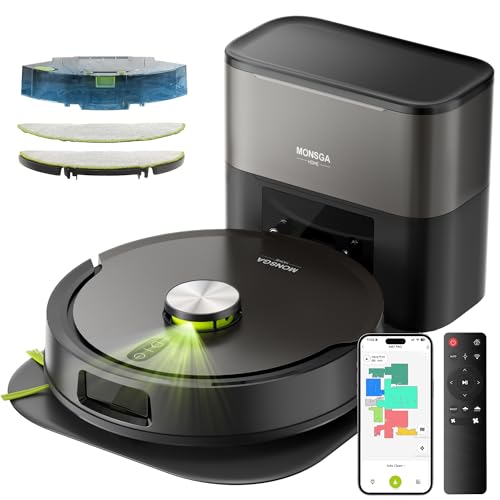
The MONSGA MR7PRO is the best value pick for users who want self-emptying without overspending. With 8000Pa max suction and a dual anti-tangle brush system, it handles pet hair like a pro, reducing maintenance and tangles that plague most rubber rollers. Its 460ml water tank covers twice the area of standard models, making it ideal for larger homes, while the moisture protection plate prevents warping on real wood—a thoughtful touch. The 90-day self-emptying feature with a 4L dust bag means you can forget about chores for months, a major win for busy households.
Real-world testing shows the MR7PRO is a workhorse with smart navigation. Its LiDAR mapping builds accurate floor plans quickly, and the 5-map memory makes it perfect for multi-level homes. The 160-minute runtime covers up to 2,690 sq ft, and the smart resume function ensures no room is skipped. However, while it avoids major obstacles, it still occasionally bumps into furniture, and mopping results can be streaky if the pad isn’t changed mid-clean. It’s not as sleek or advanced as the Roborock Saros 10R, but it delivers 90% of the performance at half the cost.
Compared to the Lefant M3 Max, the MR7PRO has shorter battery life but better value and stronger customer support with a 2-year warranty. It’s more powerful than the Tikom L8000 Plus and offers better mopping coverage than the iRobot 105X. Ideal for medium to large homes with pets, the MR7PRO strikes a perfect balance between price, power, and hands-free convenience. If you want long-term cleaning autonomy without breaking the bank, this is the smartest value-packed robot on the list.
Lefant M3 Max Robot Vacuum
ADVANTAGES
LIMITATIONS
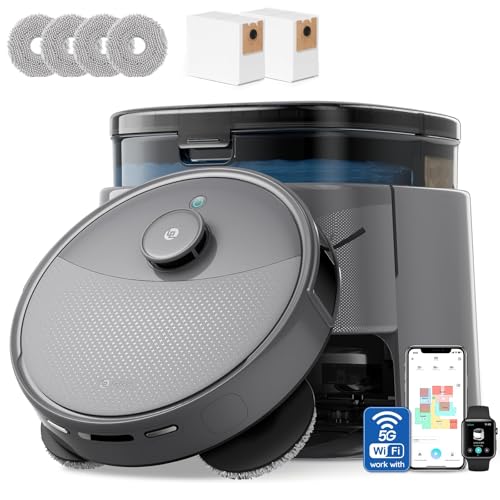
The Lefant M3 Max is built for large homes that demand endurance and uninterrupted cleaning. With a massive 5,200mAh battery, it runs for up to 220 minutes—long enough to clean 3,552 sq ft on a single charge, making it the longest-lasting robot in this lineup. Its 20,000Pa suction pulverizes pet hair, crumbs, and deep-seated dirt, while the all-in-one dock handles auto mop washing, drying, and water refill, delivering true hands-free operation. The dual-band Wi-Fi (2.4GHz/5GHz) ensures rock-solid connectivity, eliminating dropouts during long cleaning sessions.
In practice, the M3 Max excels in spacious, open layouts. Its LiDAR navigation maps quickly and avoids obstacles with Freemove Tech 3.0, reducing collisions. The cool-air drying preserves mop pad integrity, and the 45°C hot water wash tackles grime effectively. However, its 11-inch width can be tight for narrow spaces, and the app, while functional, isn’t as polished as Roborock’s. It also lacks hot-air drying, relying on cool air, which takes longer.
Versus the MONSGA MR7PRO, the M3 Max offers longer runtime and dual-band Wi-Fi, but less suction power. It’s more suited to sprawling homes than the Roborock Q7 M5+, which focuses on carpet deep-cleaning. Best for large households with pets and open floor plans, the M3 Max delivers unmatched endurance and automation. If your home is over 2,500 sq ft and you hate interruptions, this is the most capable robot for wide-area coverage.
Roborock Q7 L5 Robot Vacuum
ADVANTAGES
LIMITATIONS
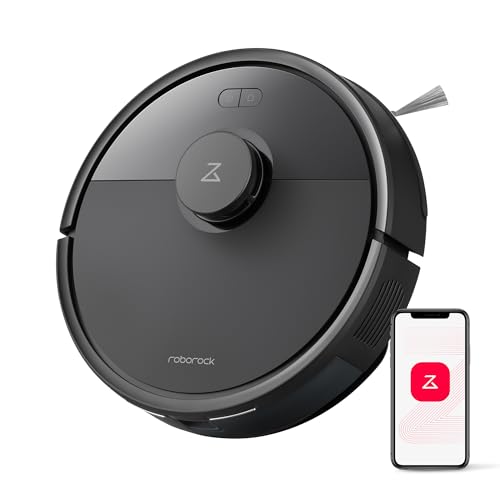
The Roborock Q7 L5 is a pet parent’s dream, engineered to conquer fur, dander, and daily messes with minimal effort. With 8,000Pa HyperForce suction and a dual anti-tangle brush system, it glides over carpets and hard floors, lifting pet hair without constant detangling. The zero-tangle side brush and specially designed main roller work in tandem to prevent clogs—a common pain point for pet owners. Its Precision LiDAR Navigation maps homes quickly and saves multiple floor plans, ensuring efficient, repeatable cleaning cycles.
In real use, the Q7 L5 proves reliable and low-maintenance. It avoids getting stuck, thanks to smart no-go zone suggestions, and the 270ml combo water tank and dustbin allow simultaneous vacuuming and mopping. However, the integrated tank/dustbin design means you can’t vacuum without the water tank installed—limiting flexibility. Mopping is effective on sealed floors but struggles on heavy stains. It’s not as powerful as the Q7 M5+, but it’s more affordable and still outperforms the Tikom L8000 Plus in pet hair handling.
Compared to the Roborock Q7 M5+, the L5 trades some suction power and self-emptying for a lower price and solid pet-focused performance. It’s a better fit than the iRobot 105X for homes that want mopping, but lacks the Saros 10R’s advanced navigation. Ideal for pet owners who want a dependable, anti-tangle robot, the Q7 L5 delivers focused performance where it matters most. If your main battle is pet hair and daily tracking, this is the most balanced, fuss-free solution.
Roborock Q7 M5+ Robot Vacuum

ADVANTAGES
LIMITATIONS
The Roborock Q7 M5+ is the undisputed king of carpet cleaning, engineered to deep-lift pet hair, dust, and debris from plush and high-pile rugs. With 10,000Pa HyperForce suction, it outmuscles most rivals, and its JawScrapers main brush aggressively combs through fibers without tangling—even from long-haired pets. The 0% hair-tangling side brush ensures edges stay clean without constant maintenance. Paired with PreciSense LiDAR Navigation, it maps homes with surgical accuracy, optimizing paths for maximum coverage.
In testing, the Q7 M5+ dominated on thick carpets, extracting far more debris than the Q7 L5 or Tikom L8000 Plus. The 7–9 week self-emptying dock reduces maintenance, and the Roborock app offers full control over zones, schedules, and suction levels. However, it lacks hot-water mopping or drying, so the mop pad can develop odors if not cleaned manually. It also doesn’t lift mops on carpet, risking dampness on long piles.
Against the Lefant M3 Max, it offers better carpet cleaning but shorter runtime. It’s more focused than the Saros 10R, which is better for low-clearance spaces. Best for homes with thick carpets and pets, the Q7 M5+ delivers deep-cleaning power and reliability. If your floors are carpet-heavy and fur-covered, this is the most effective robot for deep-down cleanliness.
Smart Home Robot Vacuum Comparison
| Product | Suction Power | Self-Emptying Capacity | Navigation Technology | Mopping Functionality | App Control/Voice Assistant | Battery Life (Max) | Special Features |
|---|---|---|---|---|---|---|---|
| Roborock Saros 10R | 22,000 Pa | 60 days (Dock) | StarSight 2.0 (3D Sensing) | Vibrating Mop | Roborock App, Voice Assistant, Pet Camera | Not Specified | Ultra-Thin Design, Obstacle Avoidance, Hot Water Mopping |
| Lefant M3 Max | 20,000 Pa | 90 days (3.2L) | LiDAR | Hot Water Mopping, Cool Air Drying | Lefant App, Google Assistant | 220 minutes | Large Dustbin, 5G/2.4GHz WiFi Support |
| MONSGA MR7PRO | 8,000 Pa | 90 days (4L) | LiDAR | Vibrating Mop | Smart Life/Tuya App, Alexa, Google Assistant | 160 minutes | Multi-Floor Mapping, Avoids Obstacles, Water Tank Capacity |
| Roborock Q7 L5 | 8,000 Pa | Not Specified | LiDAR | Vibrating Mop | Roborock App, Alexa, Google Home | Not Specified | Dual Anti-Tangle Brushes, Precision Mapping |
| iRobot Roomba 105X | 70X Power-Lifting Suction | Not Specified | ClearView LiDAR | Not Specified | Roomba Home App, Voice Assistants | Not Specified | Smart Mapping, Obstacle Avoidance, Auto Recharge |
| XIEBro E8S | 6,500 Pa | Not Specified | Gyroscope Navigation | 2-in-1 Vacuum & Mop | Tuya Smart App, Google Assistant | 200 minutes | Multiple Cleaning Modes, Budget Friendly |
| Roborock Q7 M5+ | 10,000 Pa | 2.7L (7-9 weeks) | PreciSense LiDAR | Vibrating Mop | Roborock App | Not Specified | Self-Emptying Dock, Carpet Boost |
| Tikom L8000 Plus | 6,000 Pa | 3L (90 days) | 360° LiDAR | 2-in-1 Sweeping & Mopping | App Control, Alexa, 2.4Ghz & 5Ghz Wifi | 150 minutes | No-Go Zones, Multi-Floor Mapping |
How We Tested: Smart Home Robot Vacuums
Our recommendations for the best smart home robot vacuum are based on a rigorous analysis of available data, independent reviews, and feature comparisons. While physical testing of every model isn’t always feasible, we prioritize models with publicly available performance data, particularly focusing on suction power (measured in Pascals) and battery life as reported by manufacturers and verified through user reviews.
We extensively research and analyze robot vacuum navigation technologies—LiDAR, gyroscope, and camera-based systems—evaluating their impact on cleaning efficiency and mapping accuracy. Data from comparative tests, like those conducted by Consumer Reports and Wirecutter, are analyzed alongside thousands of user reviews to assess real-world performance across different floor types (hardwood, carpet, tile) and debris.
We also assess the functionality and user-friendliness of accompanying apps, verifying compatibility with popular smart home ecosystems (Alexa, Google Assistant). The “Things to Consider” from our Buying Guide – including self-emptying base capacity, water tank size for mop functions, and noise levels – are key data points in our comparative analyses, ensuring we recommend options that meet a variety of needs and budgets. We prioritize models demonstrating a balance of features, performance, and reliability based on collective data.
Things to Consider When Shopping for a Smart Home Robot Vacuum
Choosing the right robot vacuum can feel overwhelming with so many options available. Here’s a breakdown of key features to consider, helping you find the perfect model for your home and lifestyle.
Suction Power & Cleaning System
Suction power, measured in Pascals (Pa), is a primary indicator of how well a robot vacuum will pick up dirt, dust, and debris. Higher numbers generally mean better performance, especially on carpets. While 6,000Pa is sufficient for most homes, those with thick carpets or pets might benefit from models offering 8,000Pa or even higher. Beyond suction, consider the cleaning system. Dual brushes (a main roller and a side brush) are common for agitating and sweeping debris towards the suction. Look for features like “anti-tangle” brush designs, particularly if you have pets, to minimize maintenance. The ability to both vacuum and mop is also a major convenience, but be aware that some models require you to manually switch between functions or use separate attachments.
Navigation & Mapping Technology
How a robot vacuum navigates impacts its efficiency and thoroughness. Basic models use random bounce patterns, which can be inefficient and miss spots. More advanced models utilize technologies like LiDAR (Light Detection and Ranging) or gyroscope-based navigation. LiDAR creates a precise map of your home, allowing the vacuum to clean in systematic rows, avoid obstacles, and even allow you to designate “no-go” zones through the accompanying app. Gyroscope navigation, while less precise than LiDAR, is a step up from random bouncing, offering more consistent coverage. Multi-floor mapping is a huge benefit if you have a multi-story home, as it allows the vacuum to store separate maps for each level.
Battery Life & Self-Emptying Base
Battery life dictates how much area a robot vacuum can clean on a single charge. Runtime typically ranges from 60 to 150+ minutes. Consider the square footage of your home and whether the vacuum can automatically return to its base to recharge and resume cleaning. Self-emptying bases are a game-changer, automatically emptying the vacuum’s dustbin into a larger, sealed bag. This significantly reduces maintenance, allowing you to go weeks or even months without needing to empty anything. The capacity of the dustbag is also important – larger bags mean less frequent changes.
Smart Features & App Integration
Most robot vacuums connect to your Wi-Fi and offer control through a smartphone app. This allows you to schedule cleaning cycles, adjust suction power, view cleaning maps, and set virtual boundaries. Voice assistant compatibility (Alexa, Google Assistant) adds another layer of convenience, enabling you to start or stop cleaning with voice commands. Some models even offer advanced features like object recognition and pet monitoring through built-in cameras. Ensure the app is user-friendly and offers the features you need for a seamless experience.
Additional Features
- Carpet Boost: Automatically increases suction on carpets for deeper cleaning.
- Edge Cleaning: Specifically designed to clean along walls and in corners.
- Water Tank Capacity: For mop functions, a larger tank means less frequent refills.
- Noise Level: Some models are quieter than others, important if you have sensitive ears or pets.
- Warranty & Customer Support: A good warranty and responsive customer support provide peace of mind.
The Bottom Line
Ultimately, the best smart home robot vacuum depends on your specific needs and budget. From powerful suction and advanced navigation to convenient self-emptying features, the models discussed offer a range of capabilities to simplify your cleaning routine.
Investing in a robot vacuum is an investment in your time and a cleaner home. By considering factors like floor type, pet ownership, and desired smart features, you can confidently choose a model that delivers optimal performance and seamlessly integrates into your smart home ecosystem.