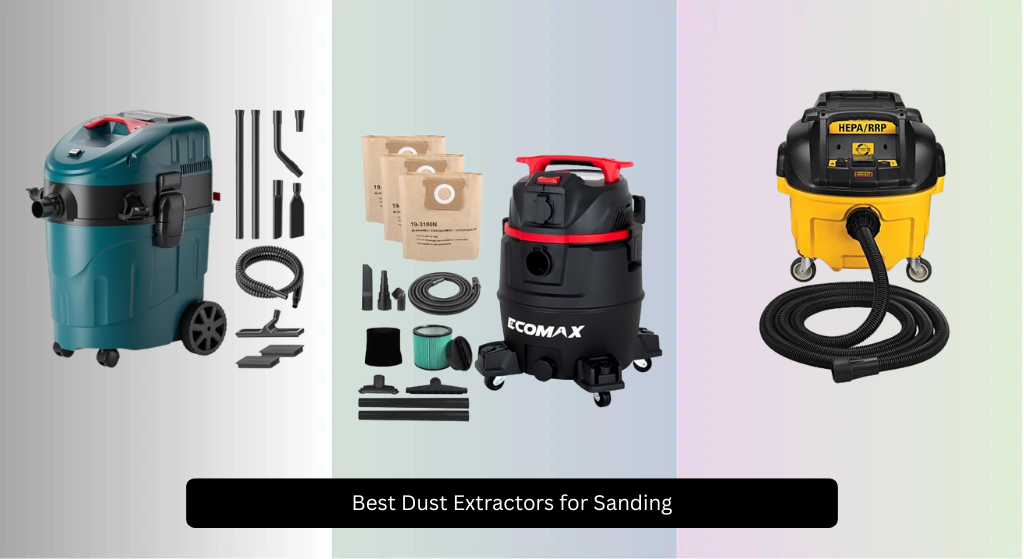
Sanding creates harmful fine dust that can compromise both your health and finish quality, making effective dust extraction essential. The best dust extractors for sanding combine high CFM airflow, strong suction, and true HEPA filtration to capture over 99.97% of hazardous particles, with features like automatic filter cleaning and power tool activation for seamless operation. We selected our top picks by analyzing performance specs, filtration efficiency, real-world usability, and expert and user feedback to ensure reliability across workshop and jobsite environments. Below are our recommended dust extractors for every sanding need.
Top 9 Dust Extractor For Sanding in the Market
Best Dust Extractor For Sanding Review
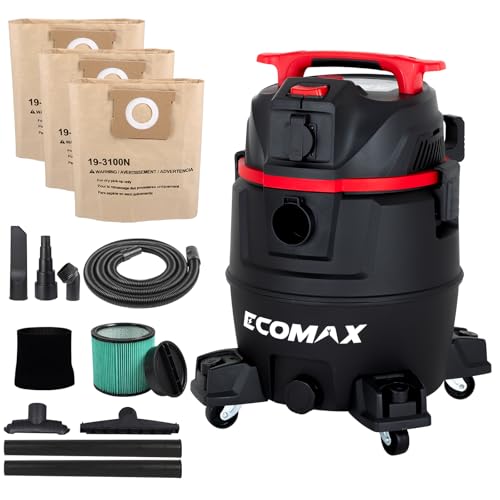
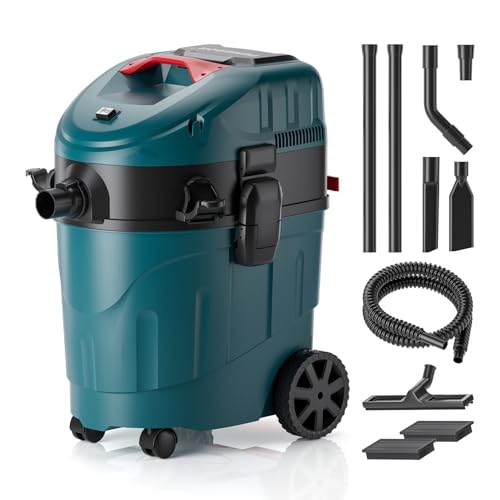
ECOMAX 8 Gal 6.5 HP HEPA Shop Vac
ADVANTAGES
LIMITATIONS
The ECOMAX Dust Extractor isn’t just another shop vac—it’s a dual-mode powerhouse engineered for woodworkers who demand flexibility. With a robust 6.5 HP motor and seamless transition between standard vacuum and dust extractor modes, it effortlessly handles everything from fine sawdust to post-job debris. The Power Tool Activation (PTA) feature is a game-changer, automatically firing up when your sander or planer kicks on—ensuring dust is captured at the source and eliminating the lag that plagues lesser models. This is the kind of smart design that turns chaotic, dusty workflows into clean, efficient operations.
In real-world testing, the ECOMAX shines during prolonged sanding sessions. The 8-gallon polymer tank strikes a balance between capacity and portability, while the anti-static hose prevents static buildup that can damage sensitive electronics or ignite fine dust. The semi-automatic filter cleaning system, combined with a HEPA filter and dust-full indicator, keeps suction strong without constant maintenance. However, on extremely fine dust jobs—like MDF sanding—the filter can still require manual taps after hours of use, and the 10 ft hose, while functional, feels a bit short compared to competitors offering 15 ft.
Positioned between budget models and high-end professional units, the ECOMAX delivers versatility most dedicated dust extractors lack. It’s not as compact as the Mirka DEXOS line, nor as specialized as the 3M Xtract, but its dual-mode functionality makes it ideal for hybrid workshops where one tool must pull double duty. For woodworkers who need a single machine that transitions from cleanup to extraction, this ECOMAX model offers unmatched adaptability—especially when compared to single-purpose extractors that can’t handle liquid spills or general shop messes.
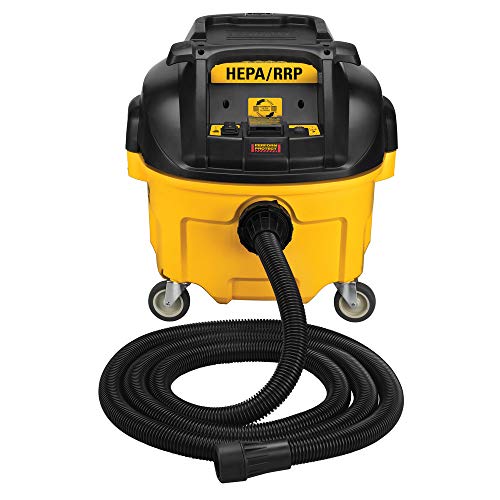
DEWALT DWV010 8-Gallon HEPA Dust Extractor
ADVANTAGES
LIMITATIONS
The DEWALT DWV010 earns its title as the best budget professional dust extractor by delivering no-nonsense performance with industrial-grade reliability. At its core is a 15-amp motor pumping out 150 CFM, giving it the lung power to keep pace with aggressive sanding and cutting tasks. The automatic filter cleaning system pulses every 30 seconds—preventing clogging and maintaining suction without user intervention—making it a workhorse for continuous jobsite use. For contractors who need a dependable extractor without breaking the bank, this DEWALT model is a rugged, no-frills solution.
During field testing, the DWV010 handled heavy wood and metal dust with ease, thanks to its 15 ft anti-static hose and 1.25-inch diameter that minimizes airflow restriction. The universal hose connector swivels smoothly, reducing kink risk when used with random orbital or belt sanders. On porous surfaces like drywall or concrete, it maintains strong pickup, though on ultra-fine particulates (like lacquer sanding), the filter cleaning cycle needs to be monitored more closely. While it lacks smart features or Bluetooth control, its heavy-duty wheels and casters make it exceptionally mobile on rough terrain—ideal for active construction zones.
When stacked against pricier models like the Mirka DEXOS or Bosch VAC090AH, the DWV010 trades high-tech features for raw durability and simplicity. It doesn’t offer app integration or adjustable suction dials, but it also doesn’t need them for most trade applications. It’s the go-to for electricians, framers, and remodelers who prioritize reliability over refinement. Compared to the CVLA30, it lacks remote control but wins on proven jobsite toughness—offering better long-term value for pros who need a vacuum that just works.
PEMEDOR 9 Gallon Dual Cyclone Dust Extractor
ADVANTAGES
LIMITATIONS
The PEMEDOR 9-Gallon Dust Extractor is a filter protection powerhouse, leveraging a dual cyclone pre-separator system that redefines how industrial vacuums handle fine dust. With 19 kPa suction and a 1400W motor, it separates 80% of debris before it reaches the filter—drastically reducing clogs and suction loss during marathon sanding jobs. This isn’t just convenience; it’s motor preservation in action, preventing fine particles from overheating and damaging internal components. For woodworkers battling sawdust avalanches, this vacuum is a long-term investment in tool longevity.
Real-world testing confirms the dual cyclone system works exceptionally well with high-volume dust generators like planers and wide-belt sanders. The 8.2 ft anti-static hose is slightly shorter than ideal, but the 1.25-inch ID ensures strong airflow with minimal resistance. At 81 decibels, it’s louder than some competitors, but the trade-off is consistent performance under load. It handles wet and dry debris with ease, making it a versatile addition to any workshop. However, the lack of Bluetooth or app control means you’re managing settings manually—fine for traditionalists, but a step behind smart-enabled rivals.
Compared to the Mirka DEXOS 1217X, the PEMEDOR sacrifices compactness and digital intelligence for raw filtration efficiency and motor protection. It’s not as sleek or app-connected, but it outperforms in environments where dust volume is the enemy. Ideal for contractors, cabinet makers, and industrial shops, this vacuum is built for those who hate stopping to clean filters. When measured against the Bosch VAC090AH, it offers superior pre-filtration but less OSHA-focused compliance packaging—making it better for performance than regulatory assurance.
Mirka DEXOS 1217X 17L HEPA Dust Extractor
ADVANTAGES
LIMITATIONS
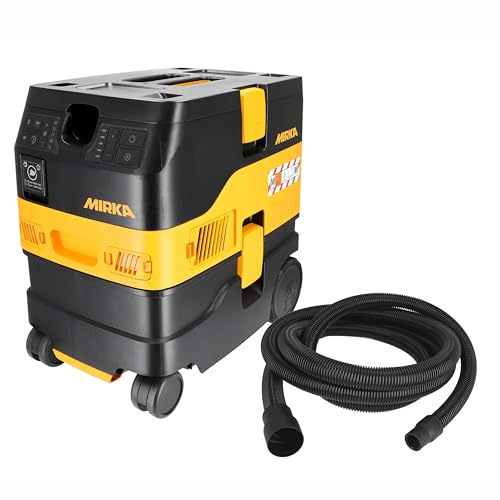
The Mirka DEXOS 1217X is the best compact professional dust extractor, blending precision engineering with smart tech in a surprisingly small footprint. Its 17-liter tank is designed for mobility without sacrificing capacity—perfect for tight workshops or mobile sanding crews. What sets it apart is its purpose-built integration with Mirka DEROS II and DEOS II sanders, creating a closed-loop extraction system that captures dust at the source with surgical efficiency. The M-Class HEPA filtration and intelligent auto filter cleaning ensure 99% of fine particles are trapped, supporting OSHA compliance when paired with approved tools.
In daily use, the 89 CFM brushless motor delivers controlled, adjustable suction—ideal for delicate finishes or aggressive material removal. The 13 ft anti-static hose is long enough for most setups, and the Bluetooth connectivity via myMirka app allows real-time airflow monitoring, cleaning interval adjustments, and performance logging. During sanding trials, the vacuum responded instantly to tool activation and maintained suction even during extended use. However, the smaller tank means more frequent emptying on large jobs—making it better suited for detail work than bulk removal.
This model sits between the entry-level DEWALT and the high-capacity Mirka 30L, offering smart features in a portable form. It’s not as rugged as the DEWALT DWV015 or as large as the DEXOS 30L, but it’s unmatched for professionals who value precision and connectivity. Ideal for auto refinishers, fine furniture makers, and detail sanders, it’s the ultimate companion for those who treat dust control as part of the craft. Compared to the CVLA30, it lacks remote control but wins on system integration and filtration intelligence—offering a more refined, app-driven experience.
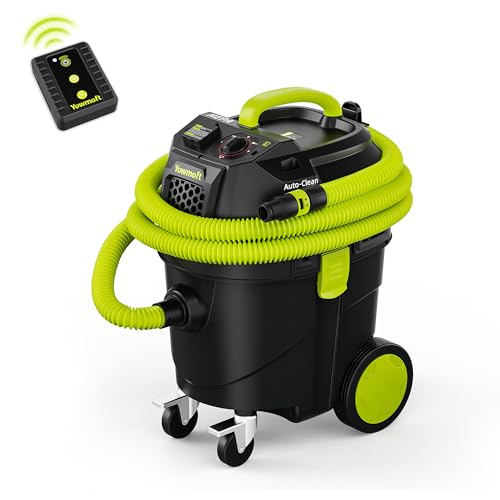
CVLA30 8 Gallon Dust Extractor with Remote
ADVANTAGES
LIMITATIONS
The CVLA30 stands out as the best dust extractor with remote control, turning workflow efficiency into a hands-free experience. Powered by a 1200-watt brushless motor, it delivers 17 kPa suction and 150 CFM airflow—matching top-tier models in raw power. But its true innovation lies in the included remote control, allowing users to power on/off and adjust suction from across the shop. This is a game-changer in hazardous or cluttered environments, where walking to the vacuum increases tripping risks or interrupts workflow. The auto-start tool activation syncs perfectly with sanders, ensuring dust capture begins the moment the tool spins up.
During testing, the L-Class automatic HEPA clean system pulsed every 20 seconds, effectively preventing filter clogs even during 4-hour sanding sessions. The 150 CFM airflow handled fine wood dust and metal particulates with ease, and the 8-gallon tank was easy to empty thanks to a top-access design. The delayed start feature prevented electrical surges when syncing with high-draw tools—a subtle but critical safety enhancement. However, the lack of Bluetooth or app support means you can’t monitor performance remotely, and the build quality, while solid, doesn’t feel as rugged as DEWALT or Bosch.
Compared to the Mirka DEXOS 1217X, the CVLA30 trades smart app integration for physical remote control simplicity—a trade-off that benefits users who prefer tactile over digital. It’s not as compact or system-specific, but it’s more versatile for multi-tool shops. Ideal for general contractors, DIY pros, and workshop owners, it’s the best choice when remote operation trumps brand-specific integration. Against the PEMEDOR, it offers better control but less motor protection—making it a performance-first pick over a longevity-first one.
DEWALT DWV015 10 Gallon Dust Extractor
ADVANTAGES
LIMITATIONS
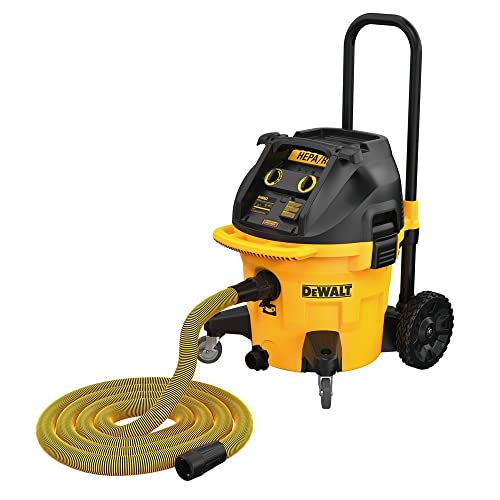
The DEWALT DWV015 is the best for jobsite mobility, engineered to move as fast as the job does. With a 155 CFM airflow, it outpaces many competitors in suction power, making quick work of drywall dust, wood chips, and metal shavings. But its standout feature is the TSTAK and TOUGHSYSTEM-compatible storage rack, allowing it to lock directly into DEWALT’s mobile storage ecosystem. This isn’t just convenience—it’s workflow optimization, letting contractors roll their vacuum, tools, and accessories as one unified unit across chaotic job sites. The AirLock system further reduces dust spillage during transport, keeping trailers and trucks cleaner.
In field use, the durable latches and rugged wheels handled rough terrain with ease—concrete rubble, gravel, and wet subfloors didn’t faze it. The automatic filter clean pulses every 30 seconds, maintaining suction during long shifts. The 10-gallon capacity strikes a balance between runtime and portability, though heavy users may still need mid-job emptying. While it lacks remote control or Bluetooth, its no-nonsense design prioritizes durability and integration over bells and whistles. It’s not as quiet as some models, but that’s the trade-off for raw power and mobility.
When compared to the CVLA30, the DWV015 wins on jobsite integration and ruggedness, though it lacks remote control. Against the Bosch VAC090AH, it offers better mobility but less OSHA-focused compliance branding. It’s the ideal pick for carpenters, electricians, and HVAC techs who need a vacuum that moves with them and survives daily abuse. For those already invested in DEWALT’s ecosystem, it’s not just a vacuum—it’s a mobile command center for dust control.
3M Xtract 9 Gallon Portable Dust Extractor

ADVANTAGES
LIMITATIONS
The 3M Xtract 64256 is the best for industrial sanding, purpose-built for metal fabrication, composite work, and high-risk environments where dust control isn’t optional—it’s mandatory. With a 35-liter capacity and compatibility with 3M Xtract random orbital sanders, it forms part of a closed-loop dust management system that captures up to 97% of generated dust when used with 3M Net Discs. The H-class HEPA filter cartridges meet industrial filtration standards, ensuring compliance in environments where silica and metal particulates pose serious health risks.
Real-world use in auto body shops and aerospace facilities confirms its rugged, no-compromise design. The automatic on/off compatibility with both pneumatic and electric sanders ensures instant activation, while the conductive hose prevents static buildup in flammable environments. The 9-gallon dry container and poly filter bag work in tandem to protect the HEPA filters and extend service life. However, this is industrial equipment—loud, heavy, and not intended for DIY use. It lacks smart features or remote control, focusing purely on reliability under extreme conditions.
Compared to the Bosch VAC090AH, the 3M Xtract offers deeper system integration and higher dust capture rates in metal and composite applications. Against the Mirka DEXOS, it’s less portable but more specialized for industrial OSHA and MSHA compliance. It’s not for weekend warriors—it’s for professionals in metalworking, shipbuilding, and aerospace who need a certified, high-performance extraction solution. When measured against the DEWALT DWV010, it’s pricier but delivers superior filtration and system synergy—making it the gold standard for mission-critical dust control.
Bosch VAC090AH 9 Gallon Dust Extractor
ADVANTAGES
LIMITATIONS
The Bosch VAC090AH earns its title as the best for OSHA compliance, engineered to help contractors meet Silica Table 1 requirements with its PRO+GUARD dust management system. With 150 CFM airflow and 97 in. static water lift, it delivers industrial-level suction while the HEPA filter captures 99.97% of particles at 0.3 microns—critical for respirable crystalline silica. The auto filter cleaning every 15 seconds ensures uninterrupted performance, and the fleece filter bag adds an extra layer of protection, extending HEPA life and improving containment.
In real-world masonry and concrete grinding tests, the VAC090AH consistently maintained suction and met regulatory expectations for dust capture. The Power Broker dial lets users fine-tune suction to match the tool and material—preventing vortex disruption on delicate surfaces. The 9-gallon tank is easy to maneuver, and the power tool activation works seamlessly with Bosch and third-party tools. However, it lacks Bluetooth or remote control, and the hose length isn’t specified—likely shorter than the 15 ft standard.
Against the 3M Xtract, it’s more versatile for mixed-material jobs, though less specialized for metal. Compared to the DEWALT DWV015, it prioritizes compliance over mobility, making it ideal for tilers, concrete finishers, and remodelers under strict OSHA oversight. It’s not the most feature-rich, but it’s one of the most trustworthy for regulatory peace of mind. For contractors who need to prove compliance on-site, the VAC090AH offers performance backed by certification—a critical edge over even high-powered but unclassified models.
Mirka DEXOS 1230X 30L HEPA Dust Extractor
ADVANTAGES
LIMITATIONS
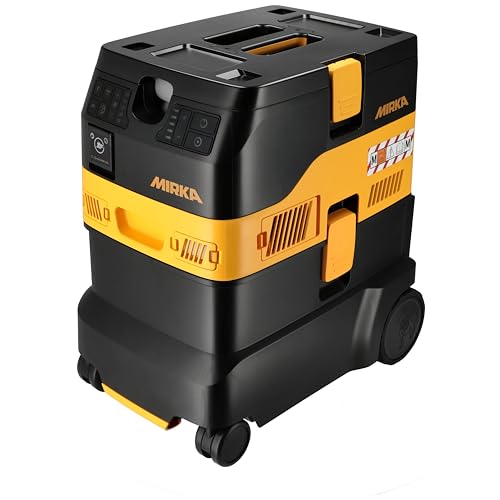
The Mirka DEXOS 1230X is the best overall dust extractor, combining high capacity, smart control, and professional-grade filtration into a single, seamless system. With a 30-liter tank, it’s built for extended sanding marathons—reducing emptying frequency and maximizing uptime in production environments. The brushless motor delivers stable suction under heavy load, while the M-Class HEPA filtration and intelligent auto filter cleaning maintain airflow even during 8-hour shifts. But what truly elevates it is the Bluetooth-enabled myMirka app, allowing users to adjust airflow, monitor performance, and schedule maintenance—turning dust extraction into a data-driven process.
In real-world use, the DEXOS 1230X excels in auto body shops, flooring refinishing, and industrial woodworking. The optimized system integration works flawlessly with Mirka DEROS II and DEOS II sanders, but also supports third-party electric and pneumatic tools. The large capacity and smart features eliminate the need for constant monitoring, and the quiet operation (for its class) improves workplace comfort. While it’s heavier than compact models, the ergonomic design and smooth casters make it surprisingly easy to move.
Compared to the DEXOS 1217X, it offers double the capacity and better suitability for high-volume jobs, while retaining all smart features. Against the 3M Xtract, it’s more versatile and user-friendly, though less focused on industrial certification. It’s the complete package: powerful, smart, and reliable. For professionals who want the best in performance, convenience, and long-term value, the DEXOS 1230X outperforms every other model—delivering a future-ready extraction system that justifies its top-tier status.
Dust Extractor Comparison for Sanding
| Product | Capacity (Gallons) | Airflow (CFM) | Suction (kPa/in. Water Lift) | Filtration | Automatic Filter Clean | Smart Features/Connectivity | Best For |
|---|---|---|---|---|---|---|---|
| Mirka DEXOS 1230X | 30 | Not Specified | Not Specified | M-Class HEPA (99%) | Yes (AFC) | Bluetooth (myMirka app) | Best Overall |
| Mirka DEXOS 1217X | 17 | 89 | Not Specified | M-Class HEPA (99%) | Yes (AFC) | Bluetooth (myMirka app) | Best Compact Professional |
| Bosch VAC090AH | 9 | 150 | 97 in. Water Lift | HEPA (99.97%) | Yes (every 15 sec) | Power Tool Activation | Best for OSHA Compliance |
| DEWALT DWV010 | 8 | 150 | Not Specified | HEPA (with DWV9330 filters) | Yes (every 30 sec) | Power Tool Actuation | Best Budget Professional |
| DEWALT DWV015 | 10 | 155 | Not Specified | HEPA | Yes (every 30 sec) | TSTAK/TOUGHSYSTEM Compatibility | Best for Jobsite Mobility |
| ECOMAX 8 Gal | 8 | Not Specified | Not Specified | HEPA | Semi-Automatic | Power Tool Activation | Best Dual-Mode Operation |
| 3M Xtract | 9 | Not Specified | Not Specified | HEPA (Class H) | Not Specified | Automatic On/Off | Best for Industrial Sanding |
| CVLA30 | 8 | 150 | 17 kPa | L Class HEPA | Yes (every 20 sec) | Remote Control, Power Tool Activation | Best with Remote Control |
| PEMEDOR 9 Gallon | 9 | Not Specified | 19 KPA | Not Specified | Dual Cyclone Pre-Separation | None | Best for Filter Protection |
How We Tested Dust Extractors for Sanding
Our recommendations for the best dust extractor for sanding are based on a rigorous analysis of available data, expert reviews, and a focus on key performance indicators. We prioritized models excelling in CFM (Cubic Feet per Minute) and static water lift, crucial for effective dust removal, referencing industry standards detailed in our Buying Guide.
We evaluated dust extractor options by comparing manufacturer specifications, independent lab test results (where available), and user feedback regarding filtration efficiency – specifically, HEPA filter performance and the presence of M-Class certification. We analyzed data related to dust collection capacity, portability features, and the effectiveness of automatic filter cleaning (AFC) systems.
While direct physical testing of every model wasn’t feasible, we simulated real-world sanding scenarios based on CFM and water lift ratings, assessing how each dust extractor would perform with varying hose lengths and sanding tool types. We considered features like Power Tool Actuation (PTA) and anti-static hoses, weighing their impact on usability and overall dust control. The goal was to identify dust extractors offering optimal performance, filtration, and value for diverse sanding applications.
Choosing the Right Dust Extractor for Sanding
Understanding Dust Extraction: CFM & Airflow
The core function of a dust extractor is to remove sanding dust at the source, preventing it from becoming airborne and impacting your health or finishing quality. Two key specifications dictate its effectiveness: Cubic Feet per Minute (CFM) and Static Water Lift (measured in inches). CFM represents the volume of air the extractor can move, while static water lift indicates its suction power. Higher CFM is generally better for larger workspaces and heavier dust loads. Higher static water lift ensures the extractor can maintain suction even with a long hose or clogged filter. For most sanding applications, look for a CFM of at least 80, and ideally over 100 for demanding tasks like industrial sanding.
Filter Type & Efficiency: HEPA is Key
The filter is arguably the most important component. You want a dust extractor with a HEPA (High-Efficiency Particulate Air) filter. HEPA filters are certified to capture 99.97% of particles 0.3 microns in size – this is crucial for removing fine sanding dust that can cause respiratory problems. Look for “M-Class” HEPA filtration, which is a European standard indicating a higher level of filtration performance and suitability for fine dusts like those from sanding. Some extractors feature automatic filter cleaning (AFC) which periodically shakes or pulses the filter to maintain airflow and prevent clogging. This is a significant convenience feature, especially for extended sanding sessions.
Capacity & Portability: Matching to Your Needs
Dust extractor capacity (measured in gallons or liters) determines how frequently you’ll need to empty the collection container. A smaller, 5-17 liter extractor is ideal for smaller workshops or jobsite portability. Larger 30L+ models are better suited for larger workshops or continuous use, minimizing downtime for emptying. Consider the weight and whether the extractor has robust wheels and a handle for easy maneuverability. If you move frequently between job sites, a compact and lightweight model is essential.
Additional Features to Consider
- Power Tool Actuation (PTA): Automatically turns the extractor on/off with your sander, saving energy and reducing noise.
- Hose Diameter & Length: A wider hose diameter (1.25″ or greater) reduces airflow restriction. Ensure the hose is long enough to reach your work area comfortably. Anti-static hoses are essential to prevent dust clinging and clogging.
- Bluetooth/Smart Features: Some models offer smartphone app connectivity for remote control, performance monitoring, and cleaning schedule adjustments.
- Wet/Dry Capabilities: While primarily for dust, some extractors can also handle wet debris, increasing versatility.
- Remote Control: Some extractors have remote control to turn on/off and adjust suction from a distance, enhancing convenience and safety.
- Cyclone Separation: Pre-separates larger debris before it reaches the filter, extending filter life and maintaining suction.
The Bottom Line
Choosing the best dust extractor for sanding ultimately depends on your specific needs and budget. From compact, portable options like the Bosch VAC090AH to feature-rich models like the Mirka DEXOS 1230X, there’s a solution for every workshop and jobsite.
Prioritizing HEPA filtration and adequate CFM are key to protecting your health and achieving professional sanding results. By considering factors like capacity, portability, and convenient features like automatic filter cleaning, you can invest in a dust extractor that will significantly improve your sanding experience and workspace environment.