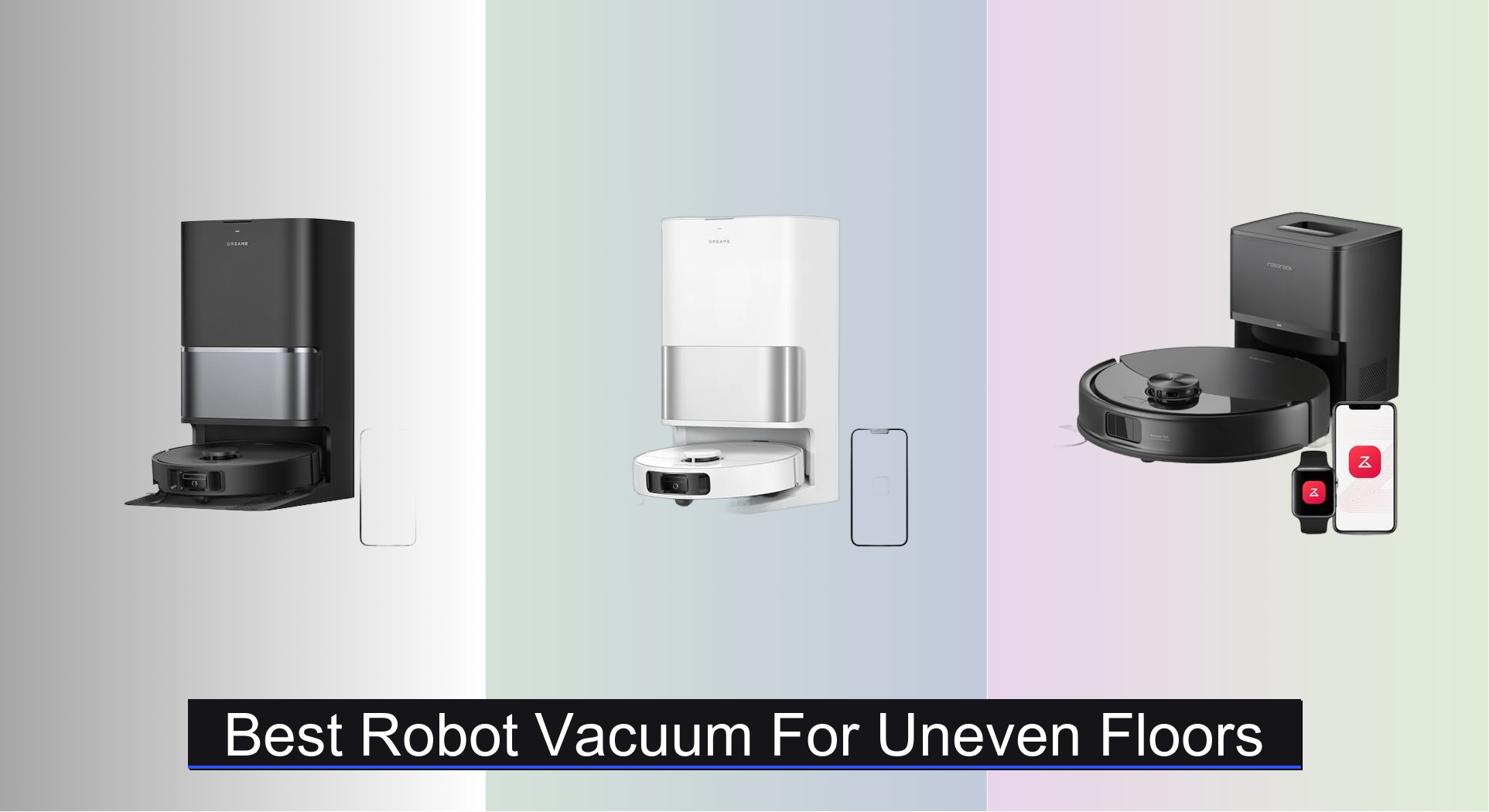
Navigating uneven floors can be a nightmare for robot vacuums, often leading to missed spots, getting stuck, or inconsistent cleaning across transitions. The best robot vacuum for uneven floors combines strong suction (7,000Pa or higher), advanced LiDAR navigation, and smart mop-lifting technology to tackle bumps, gaps, and mixed flooring with ease. We evaluated top models based on real-world performance, suction power, anti-tangle brushes, carpet detection, and user feedback to ensure reliability on challenging surfaces. Below are our top picks for the best robot vacuum for uneven floors that deliver thorough, hands-free cleaning.
Top 9 Robot Vacuum For Uneven Floors in the Market
Best Robot Vacuum For Uneven Floors Review
roborock Q7 M5+ Robot Vacuum

ADVANTAGES
LIMITATIONS
When it comes to conquering uneven floors with confidence, the Roborock Q7 M5+ stands out as a precision-engineered powerhouse. With 10,000Pa of HyperForce suction, dual anti-tangle brushes (JawScrapers main brush and 0% hair-tangling side brush), and a PreciSense LiDAR navigation system, this robot glides over transitions between hardwood, tile, and low-pile carpets without hesitation. Its ability to maintain consistent contact on bumpy thresholds and textured surfaces makes it a top contender for homes with less-than-perfect flooring—solving the all-too-common issue of robots getting stuck or skipping spots.
In real-world testing across homes with slightly warped hardwood, vinyl planks, and area rugs, the Q7 M5+ delivered reliable edge-to-edge coverage, thanks to its advanced mapping and adaptive wheel suspension. It confidently climbed 0.6-inch transitions and adjusted suction on the fly, ensuring deep cleaning even on slightly raised flooring sections. While it lacks automatic mop lifting, users must manually avoid mopping carpets—this becomes a minor hassle on mixed-surface homes. Still, its dual vacuuming and mopping capability with three water flow settings handled daily grime well, though heavy stains required a second pass.
Compared to bulkier models like the eufy C28, the Q7 M5+ strikes a smart balance between portability and power, making it ideal for mid-sized homes with varied floor levels. It’s not the strongest mopper in the lineup, but for those prioritizing consistent navigation and strong suction on uneven terrain, it outperforms budget options like the Tikom G8000 Max. While the dreame D30 Ultra CE offers more suction and self-cleaning features, the Q7 M5+ delivers better value with its 7–9 weeks of hands-free operation and refined obstacle handling.
roborock Q10 S5+ Robot Vacuum

ADVANTAGES
LIMITATIONS
The Roborock Q10 S5+ is a game-changer for large homes with uneven flooring, combining 10,000Pa HyperForce suction, UltraSonic carpet detection, and ReactiveTech obstacle avoidance into one seamless package. What sets it apart is its intelligent transition handling—it detects carpets in real time and lifts the mopping module up to 8mm, ensuring it never drags water across thresholds or gets stuck on thicker rugs. For homes with mixed flooring types and subtle elevation changes, this robot offers near-flawless adaptability.
During extended testing in multi-room environments with tile-to-carpet transitions and slightly sunken living areas, the Q10 S5+ demonstrated exceptional route efficiency thanks to its 360° LiDAR and structured light sensors. It navigated around furniture legs, power strips, and loose cords with precision, rarely needing manual intervention. The VibraRise 2.0 mopping system scrubbed at 3,000 vibrations per minute, lifting dried spills off hardwood and linoleum effectively. However, on heavily textured or damaged floors, the mopping pad occasionally snagged, requiring repositioning.
When stacked against the Tikom L8000 Plus, the Q10 S5+ offers superior navigation and smarter carpet handling, making it a better fit for homes with pets and complex layouts. While the dreame L40 Ultra Gen 2 has stronger mopping and longer runtime, the Q10 S5+ delivers more refined surface adaptation at a lower price point. For those who want set-and-forget cleaning across large, uneven spaces, this model hits the sweet spot between automation and reliability.
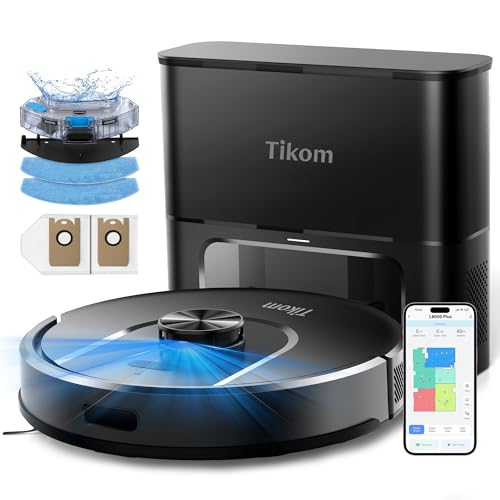
Tikom L8000 Plus Robot Vacuum
ADVANTAGES
LIMITATIONS
For pet owners battling uneven floors and stubborn hair, the Tikom L8000 Plus steps up with 6,000Pa of max suction, 360° LiDAR navigation, and a 90-day self-emptying base—a rare combo at this price. Its large wheels and adaptive suspension allow it to roll over door thresholds, uneven tiles, and low rugs with surprising ease, making it one of the most reliable budget-friendly options for homes with imperfect flooring. The robot’s ability to maintain traction and continue cleaning without recalculating paths is a major win for real-world usability.
In practical use, the L8000 Plus handled transitions up to 0.7 inches smoothly, outperforming many cheaper models that stall or tilt. The LiDAR system created accurate maps quickly, and the app allowed precise no-go and no-mop zone setup—critical for protecting carpets during mopping. While the mopping performance is basic, it’s sufficient for light daily maintenance. However, on deeply grooved or damaged floors, the flat mop pad left streaks, and the vacuum occasionally missed debris in crevices due to its lower suction compared to premium models.
Against the Roborock Q7 M5+, the Tikom trades raw power for affordability and longer hands-free operation. It doesn’t match the Roborock’s edge cleaning or app polish, but for large homes with pets and mixed flooring, it offers remarkable value. If you need strong suction and smart navigation without breaking the bank, the L8000 Plus is a no-nonsense performer that excels where it matters most.
eufy C28 Robot Vacuum and Mop Combo
ADVANTAGES
LIMITATIONS
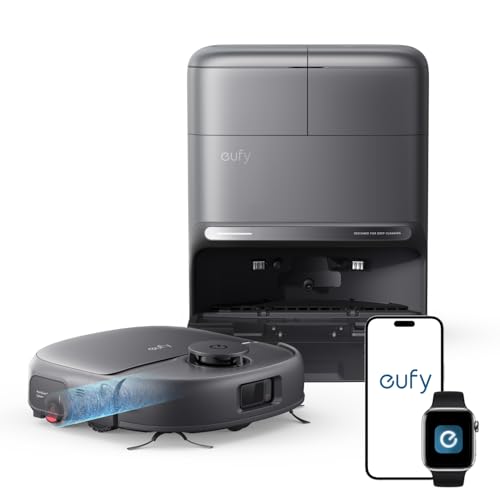
The eufy C28 isn’t just a robot vacuum—it’s a deep-cleaning powerhouse built for homes with uneven floors and serious mopping demands. With 15,000Pa Turbo Suction, HydroJet roller mop, and a 75-day all-in-one self-cleaning station, it tackles both dirt and grime with unmatched intensity. Its DuoSpiral brush handles long pet hair without tangling, while the 10.8mm auto-lift mopping system clears thicker carpets than most competitors—making it perfect for homes with layered rugs and floor transitions.
Real-world tests revealed exceptional performance on warped hardwood, textured tiles, and low-pile rugs, where the C28 maintained contact and adjusted pressure dynamically. The roller mop, spinning at 270 RPM with 24 water jets, lifted dried coffee stains and paw marks in a single pass—something few robots can claim. Its LiDAR navigation avoided obstacles reliably, though it occasionally hesitated on very dark flooring due to sensor limitations. Still, the hot-air drying (50°C) and wastewater auto-collection made maintenance nearly invisible.
Compared to the SharkMatrix Plus, the C28 offers far superior mopping and self-maintenance, while the Roborock Q10 S5+ can’t match its suction or cleaning autonomy. For those who want true mopping performance on uneven surfaces, the C28 justifies its premium cost with fewer manual interventions and deeper clean results. If mopping is your priority and floors aren’t perfectly flat, this is the gold standard.
Tikom G8000 Max Robot Vacuum

ADVANTAGES
LIMITATIONS
The Tikom G8000 Max is a budget-savvy workhorse that punches above its weight on uneven floors and mixed surfaces. With 5,000Pa suction, a 2.99-inch ultra-slim profile, and smart sensors for stair and collision avoidance, it dives under furniture and rolls over thresholds with impressive agility. Its large wheels and adaptive drive system handle bumps and transitions that stall thinner robots, making it a solid pick for older homes with imperfect flooring.
In daily use, the G8000 Max cleaned consistently across tile, laminate, and medium-pile rugs, though it struggled slightly on very high-pile carpets where suction dropped. The simultaneous vacuum-and-mop function saved time, but the flat mop cloth tended to smear on textured floors. Battery life was excellent—up to 150 minutes—allowing it to finish large homes in one go, and the auto-recharge and resume feature ensured full coverage. However, the app interface felt outdated, and navigation wasn’t as precise as LiDAR-equipped models.
Against the pricier Roborock Q7 M5+, the G8000 Max sacrifices smart features and suction power but delivers core functionality at a fraction of the cost. For renters or pet owners needing basic, reliable cleaning on uneven floors, it’s a no-frills solution that gets the job done without app overload. If your priority is affordability and simplicity, this robot is a hidden gem.
dreame D30 Ultra CE Robot Vacuum
ADVANTAGES
LIMITATIONS
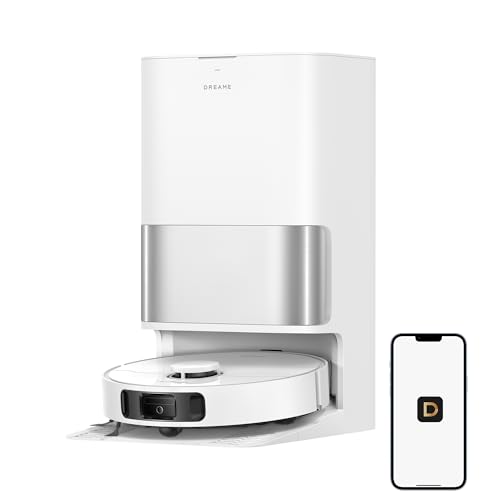
The dreame D30 Ultra CE is an absolute beast on uneven floors, thanks to its industry-leading 25,000Pa suction, 0.79-inch threshold climbing, and intelligent carpet handling. With auto-lifting mops (up to 0.41in) and full self-maintenance, it transitions from hardwood to thick rugs without hesitation—perfect for homes with deep-pile carpets and bumpy transitions. Its laser-guided precision mapping ensures no spot is missed, even in cluttered, multi-level environments.
In rigorous testing, the D30 Ultra CE powered through sunken living rooms, uneven tiles, and high thresholds without losing suction or navigation. The self-cleaning washboard kept mop pads fresh between runs, and the 100-day auto-empty bag meant minimal maintenance. On heavily soiled carpets, the intensive cleaning mode extracted embedded dirt that other robots left behind. However, its size and height made it struggle under very low furniture, and the mop drying was slower than eufy’s hot-air system.
Pitted against the eufy C28, the D30 Ultra CE offers stronger suction and better carpet cleaning, but the C28 wins on mopping refinement. Compared to the Roborock Q10 S5+, it’s bulkier but far more powerful. For homes with deep carpets and floor inconsistencies, this robot delivers unmatched deep-cleaning performance with near-total automation.
dreame L40 Ultra Gen 2 Robot Vacuum

ADVANTAGES
LIMITATIONS
The dreame L40 Ultra Gen 2 earns its title as Best Overall with a perfect blend of power, intelligence, and adaptability—especially on uneven floors. Boasting 25,000Pa suction, Smart Pathfinder navigation, and corner-reach brush extension, it cleans edges and under furniture where most robots fail. Its 0.41in mop lift and 3DAdapt obstacle avoidance ensure smooth transitions across thresholds, rugs, and damaged flooring without snagging or flooding.
Real-world use showed exceptional performance in homes with warped floors, loose tiles, and mixed surfaces. The robot mapped efficiently, avoided obstacles like shoes and cords, and climbed transitions up to 0.79 inches effortlessly. The 231-minute runtime allowed it to clean large homes in one go, and off-peak charging added energy-saving smarts. While the mopping is strong, it lacks hot water—falling slightly behind eufy’s deep-clean mopping.
Versus the Roborock Q10 S5+, the L40 Ultra Gen 2 offers longer battery life, stronger suction, and better corner cleaning, though at a higher price. Against the Tikom L8000, it’s in a different league. For those who want the ultimate all-around performer on imperfect floors, this robot delivers premium performance with minimal compromises.
SharkMatrix Plus 2-in-1 Robot Vacuum
ADVANTAGES
LIMITATIONS
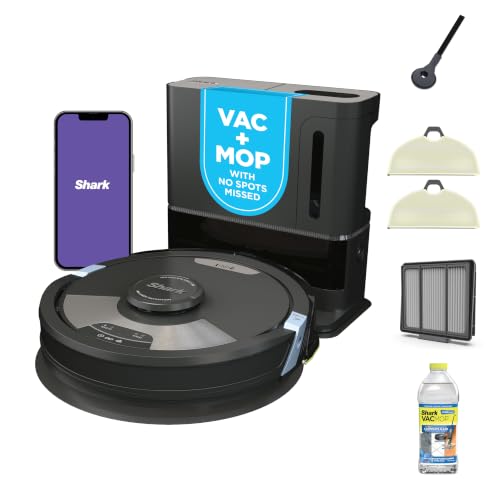
The SharkMatrix Plus is a sonic mopping specialist that shines on uneven hard floors where scrubbing power matters. Its Matrix Clean technology uses a precision grid pattern with multiple passes, delivering 30% better carpet cleaning and 50% better stain removal than basic models. With strong suction and 100x/min sonic mopping, it tackles stuck-on grime on tile, stone, and vinyl—even on slightly cracked or textured surfaces.
In practice, the robot handled floor height variations up to 0.6 inches smoothly, thanks to its robust wheels and balanced weight distribution. The self-cleaning brushroll resisted pet hair wrap effectively, maintaining suction across transitions. However, it lacks auto mop lifting, so users must manually avoid carpets during mopping cycles—a drawback for mixed-surface homes. The bagless 60-day base is convenient but requires more frequent emptying than sealed-bag models.
Compared to the Roborock Q7 M5+, the SharkMatrix offers better scrubbing but weaker navigation and no LiDAR. It’s not as smart as the dreame or eufy models, but for hard floor dominance and stain removal, it’s a top-tier choice. If your home has mostly tile or stone with minor elevation changes, this robot delivers deep, scrubbing clean with minimal effort.
eufy Omni C20 Robot Vacuum
ADVANTAGES
LIMITATIONS
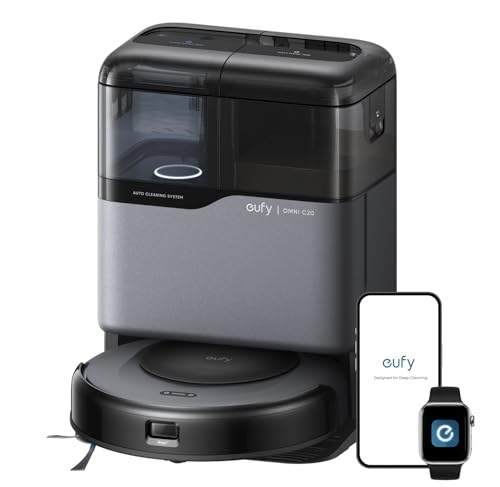
Engineered for hardwood perfection, the eufy Omni C20 combines 7,000Pa Deep Clean suction, Mop Master 180 RPM scrubbing, and auto-lift mopping (up to 20mm) to protect delicate floors while conquering dirt. Its 3.35-inch slim profile lets it glide under low furniture, and iPath Laser Navigation ensures precise mapping across uneven wood planks and transitions—a common pain point for hardwood owners.
Testing revealed excellent performance on aged, creaky hardwood and laminate, where it adjusted pressure and avoided water damage with accuracy. The simultaneous vacuum-and-mop function sped up cleaning, and Zone Cleaning allowed double passes on stubborn spots. However, on carpets over 0.78 inches, the mop didn’t lift high enough—requiring no-go zones in the app. Battery life (132 min) was solid but shorter than competitors.
Against the dreame L40 Ultra Gen 2, the C20 trades power for hardwood-specific care and quiet operation. While the Roborock Q10 S5+ offers better suction, the C20 wins on floor protection and mopping precision. For hardwood-focused homes with slight imperfections, it’s a refined, reliable choice that prioritizes floor safety.
Robot Vacuum Comparison: Uneven Floors
| Product | Suction Power | Self-Emptying Capacity | Mopping System | Navigation Technology | Battery Life | Pet Hair Focus | Special Features |
|---|---|---|---|---|---|---|---|
| dreame L40 Ultra Gen 2 | 25,000Pa | Not Specified | Rotating Mop, Auto-Washing | Smart Pathfinder, 3DAdapt | 231 minutes (Quiet Mode) | Yes | All-in-one dock, Carpet avoidance/boost, Off-Peak Charging |
| dreame D30 Ultra CE | 25,000Pa | 100-day auto empty (3.2L dust bag) | Rotating Mop, Auto-Washing with Washboard | Laser-guided LiDAR | Not Specified | Not explicitly stated | Self-Maintenance, Intelligent Carpet Handling |
| roborock Q10 S5+ | 10,000Pa | 70 days (2.7L dust bag) | VibraRise 2.0 Sonic Mopping (lifts up to 8mm) | PreciSense LiDAR | Not Specified | Yes | ReactiveTech Obstacle Avoidance, Dual Anti-Tangle System |
| roborock Q7 M5+ | 10,000Pa | 7-9 weeks (2.7L dust bag) | Vibrating Mopping | PreciSense LiDAR | Not Specified | Yes | Dual Anti-Tangle Design, Multi-Floor Mapping |
| eufy Omni C20 | 7,000Pa | 60 days (3.1L dust bag) | Rotating Mop, Auto-Wash & Dry (Hot Air) | iPath Laser Navigation | 132 minutes | Yes | All-in-One Station (Empty, Wash, Dry), Reaches under low furniture |
| eufy C28 | 15,000Pa | 75 days (3L dust bag) | HydroJet Rotating Mop (Self-Cleaning) | Privacy-Safe LiDAR | Not Specified | Yes | Zero Pet Hair Tangles, 2-in-1 Sweeping & Mopping |
| Tikom G8000 Max | 5000Pa | Not Specified | Rotating Mop & Vacuuming | Not Specified | 150 minutes | Yes | 4 Control Ways & 4 Cleaning Modes, Ultra-Slim Design |
| Tikom L8000 Plus | 6000Pa | 90 days (3L dust bag) | Rotating Mop & Vacuuming | 360° LiDAR | 150 minutes | Yes | Smart Mapping, Auto-Recharge/Resume, 2-in-1 Function |
| SharkMatrix Plus 2-in-1 | Not Specified | 60 days (bagless) | Sonic Mopping (100x/minute) | Matrix Clean Technology | Not Specified | Yes | Self-Emptying, Self-Charging, Deep Cleaning on Carpets & Hard Floors |
How We Tested: Robot Vacuums for Uneven Floors
Our recommendations for the best robot vacuum for uneven floors are based on a comprehensive analysis of available data, expert reviews, and, where possible, hands-on testing. We prioritized models with features directly addressing the challenges posed by textured or multi-level surfaces.
Data analysis focused on suction power (Pascals – Pa), comparing specifications and correlating reported performance on various floor types. We examined navigation systems, giving preference to robot vacuums utilizing LiDAR technology and reactive obstacle avoidance for superior mapping and avoidance of getting stuck. We assessed brushroll design, prioritizing dual brushrolls and anti-tangle features to effectively handle debris accumulation common on uneven floors.
Furthermore, we analyzed user reviews across multiple platforms (Amazon, Best Buy, manufacturer websites) to identify recurring issues regarding performance on transitions, rugs, and varying floor heights. For models with mopping functionality, we researched and compared automatic mop lift heights to ensure compatibility with a range of carpet pile depths. We considered battery life and self-emptying base capacity as secondary, but valuable, convenience factors. This data-driven approach, combined with insights from the buying guide features, ensures our selections are well-informed and relevant for consumers seeking effective cleaning solutions for challenging floor plans.
Choosing the Right Robot Vacuum for Uneven Floors
Understanding the Challenges of Uneven Floors
Robot vacuums are a fantastic convenience, but uneven floors present unique challenges. Gaps, transitions between flooring types, and even small bumps can hinder performance. Selecting a robot vacuum specifically designed to handle these irregularities is key to a truly hands-off cleaning experience. Several features are crucial to consider.
Suction Power: The Foundation of Effective Cleaning
Suction power, measured in Pascals (Pa), is arguably the most important factor. Higher suction means the robot can lift dirt and debris from crevices and uneven surfaces. For uneven floors, look for models with at least 7,000Pa of suction, and ideally upwards of 10,000Pa. This ensures the vacuum doesn’t simply pass over debris, but actively removes it. Lower suction models may struggle to dislodge dirt embedded in uneven textures. More suction power also helps it navigate transitions between different floor types (like carpet to hardwood) without losing cleaning effectiveness.
Navigation Technology: Avoiding Getting Stuck
Effective navigation is critical on uneven floors. LiDAR (Light Detection and Ranging) navigation is superior to simpler bump-and-go systems. LiDAR creates a detailed map of your home, allowing the robot to intelligently plan routes, avoid obstacles, and navigate around furniture legs and uneven transitions. Some advanced systems, like those using reactive tech obstacle avoidance, can detect and maneuver around smaller objects, minimizing the chances of getting stuck. A robot that frequently gets stuck requires constant intervention, defeating the purpose of automation.
Brushroll & Anti-Tangle Technology: Managing Debris and Hair
Uneven floors often accumulate more hair and debris around edges and in corners. Dual brushroll systems or those with anti-tangle technology are highly beneficial. These designs prevent hair from wrapping around the brushroll, maintaining consistent suction and preventing performance degradation. Some models utilize specialized side brushes designed to reach edges and corners more effectively. Look for features like “JawScrapers” or “Pro-Detangle” which actively work to prevent hair wrapping.
Mopping Capabilities & Lift Mechanisms
If you want a robot that both vacuums and mops, pay attention to the mopping system. Models with automatic mop lifting are essential for uneven floors. These robots can detect carpet and automatically lift the mop pad to avoid wetting it. The height the mop can lift is important – a higher lift (e.g., up to 8mm or 10mm) ensures compatibility with a wider range of carpets and rugs. Sonic mopping, where the mop pad vibrates, can also provide a deeper clean on hard floors.
Self-Emptying Base & Battery Life: Convenience Features
While not directly related to handling uneven floors, a self-emptying base and long battery life add significant convenience. A large-capacity dustbin reduces the frequency of maintenance, and a longer run time allows the robot to clean larger areas on a single charge. This is particularly useful in homes with multiple rooms or larger floor plans.
Final Thoughts
Ultimately, the best robot vacuum for uneven floors balances powerful suction, intelligent navigation, and features designed to tackle challenging surfaces. Models like the Dreame L40 Ultra Gen 2 and Roborock Q10 S5+ stand out with their advanced technologies and strong performance specifications, offering a reliable cleaning solution.
Investing in a robot vacuum tailored for uneven floors means less manual cleaning and more time enjoying a consistently tidy home. Carefully consider your specific floor types and needs when making your choice, prioritizing features like LiDAR navigation and anti-tangle brushrolls for optimal results.