
Janitorial staff often struggle with heavy, inefficient vacuums that slow down cleaning and cause fatigue over long shifts. The best janitorial backpack vacuums solve this with lightweight designs, powerful suction (measured in CFM), and advanced HEPA filtration that captures dust and allergens while reducing strain. We evaluated top models based on performance data, real-world user reviews, filtration efficiency, weight, and durability to ensure our picks meet the demands of professional cleaning. Below are our top-recommended backpack vacuums for every commercial cleaning need.
Top 8 Janitorial Backpack Vacuum in the Market

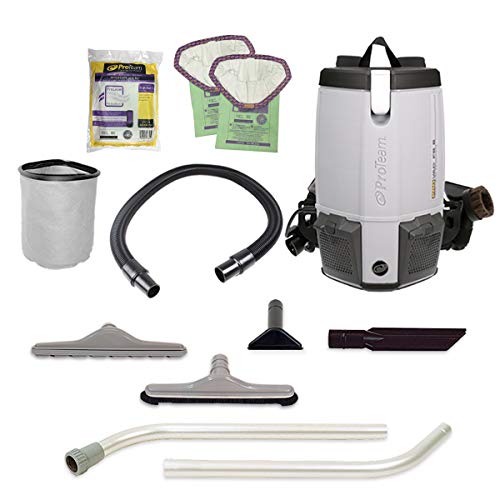
Best Janitorial Backpack Vacuum Review
Prolux 2.0 Commercial Bagless Backpack Vacuum
ADVANTAGES
LIMITATIONS
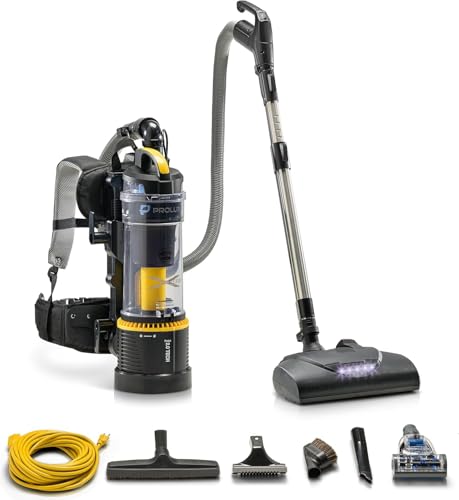
The Prolux 2.0 redefines what it means to be a lightweight powerhouse in commercial cleaning. At just 9 pounds, it’s the world’s lightest commercial-grade bagless backpack vacuum—a game-changer for janitorial staff who suffer from fatigue and back strain after long shifts. The 120 CFM suction power and 3-stage HEPA filtration deliver deep-cleaning performance across carpets and hard floors, while the bagless design eliminates recurring bag costs and reduces downtime. For professionals who move quickly between rooms and hate lugging around heavy equipment, this vacuum is a true ergonomic breakthrough.
In real-world use, the .64-liter dust receptacle is compact but impressively efficient, especially when emptying is as simple as pressing a button—no messy bag changes or clogs. The 35-foot cord offers solid reach, though in sprawling facilities you might need an extension. It handles dust, debris, and even small particles like paper clips with ease, but its straight-suction design (on this model) means it lacks a powered brushroll, so deep carpet pile cleaning isn’t its strongest suit. On tile, vinyl, and low-pile carpet, however, it performs consistently and quietly, making it ideal for offices, hallways, and low-traffic commercial zones.
Compared to the Atrix Ergo Pro, the Prolux 2.0 wins on weight and maintenance simplicity, but sacrifices some filtration depth and motor durability. While the Atrix offers a 4-stage system with replaceable HEPA bags, the Prolux relies on washable filters and smaller capacity—ideal for light to medium-duty use. This makes it best suited for janitors in small to mid-sized facilities who prioritize speed, comfort, and cost savings over heavy-duty filtration. It’s a lean, agile performer that outpaces traditional bagged vacuums in efficiency but isn’t built for extreme industrial abuse—making it a smarter fit for daily maintenance over rugged, high-volume cleanups.
Atrix Ergo Pro Backpack Vacuum Pro Clean Kit
ADVANTAGES
LIMITATIONS
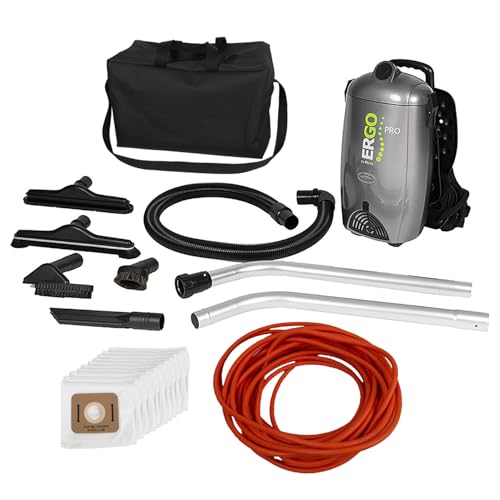
The Atrix Ergo Pro stands out as a filtration-focused workhorse built for janitorial teams who prioritize air quality and sustained performance. Its 4-stage HEPA filtration system—complete with a cloth shake-out bag, pre-motor HEPA filter, and exhaust filter—captures ultrafine particles better than most competitors, making it a top pick for schools, hospitals, and allergy-sensitive environments. With 106 CFM of suction from a 1400-watt motor, it delivers reliable cleaning power across a wide range of surfaces, and the 8-quart bag capacity means fewer interruptions during large jobs. For professionals who clean all day and breathe in the aftermath, this vacuum is a breath of fresh air—literally.
In practice, the 72 dB noise level makes it one of the quietest commercial backpacks available—ideal for cleaning occupied offices or hotels without disturbing guests. The 50-foot extension cord and full accessory kit (including crevice tools, floor brushes, and upholstery nozzles) allow for complete coverage without switching equipment. The 19.25 lb weight is manageable thanks to the padded, balanced harness, though it’s noticeably heavier than the Prolux 2.0. On thick carpet, it performs well, but the lack of a powered nozzle means it relies solely on suction, which can leave behind embedded debris in high-traffic areas.
When compared to the ProTeam Super Coach Pro 10, the Atrix trades raw airflow (159 CFM vs 106 CFM) for quieter operation and superior filtration refinement. It’s not the most powerful, but it’s among the cleanest in terms of exhaust air—perfect for environments where indoor air quality is non-negotiable. This unit is best for contract cleaners in noise-sensitive, health-conscious spaces who need dependable, low-maintenance filtration over brute-force cleaning. It delivers more complete air cleaning than the Prolux 2.0, but with less mobility and higher long-term bag costs due to its bagged system.
Prolux 2.0 Bagless Backpack Vacuum with Power Nozzle
ADVANTAGES
LIMITATIONS
When it comes to carpet-heavy environments, the Prolux 2.0 with Power Nozzle is a suction-to-brushroll dynamo that outperforms nearly every other backpack in its class. This model adds a geared, belt-driven power nozzle—engineered to never wear out—that aggressively pulls up sand, pebbles, and deeply embedded dirt from medium to high-pile carpets. Combined with 120 CFM of airflow and 3-stage HEPA filtration, it delivers both surface and sub-surface cleaning that rivals uprights, but in a 9-pound, ultra-mobile backpack form. For janitors cleaning gyms, hotels, or office suites with wall-to-wall carpet, this vacuum is a game-changing blend of power and portability.
Real-world testing shows it excels in stairwell cleaning, under furniture, and in high-traffic zones where debris compacts into fibers. The 1.25-inch attachments and 35-foot cord provide solid reach, while the bagless design keeps ongoing costs low—no more buying vacuum bags every few weeks. However, the power nozzle increases bulk, and maneuvering in tight corners requires some adjustment. On hard floors, it’s less efficient than dedicated hard-surface models, and the .64-liter dust bin still requires frequent emptying in large spaces. Still, for deep carpet cleaning, few corded backpacks match its aggressive pickup and consistent performance.
Against the Hoover Shoulder Vac Pro, the Prolux 2.0 with power nozzle offers far superior carpet agitation and longer durability, though it’s slightly heavier and lacks the chiropractor-approved harness. It’s also more specialized—this isn’t a general-purpose vacuum, but a targeted solution for carpeted commercial facilities. Compared to the ProTeam ProVac FS 6, it doesn’t match the airflow (159 CFM), but it wins in user comfort and maintenance simplicity thanks to its bagless design and lighter weight. For carpet-focused cleaning, it delivers better agitation and faster cleanup than any other lightweight model in the lineup.
Tomahawk 18V Battery Powered Backpack Vacuum
ADVANTAGES
LIMITATIONS
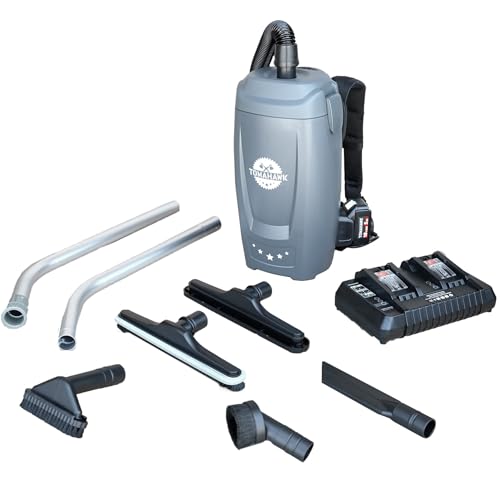
The Tomahawk 18V is a budget-savvy cordless contender that brings freedom of movement to janitorial cleaning without breaking the bank. With up to 60 minutes of runtime on a single 18V lithium-ion battery, it’s perfect for cleaning stairwells, classrooms, or office blocks where outlets are sparse. Weighing just 14 pounds, it features ergonomic padded straps that reduce shoulder strain during extended use, and the 6-liter high-capacity bin cuts down on emptying frequency—boosting productivity in medium-sized facilities. For schools, hotels, or custodial staff on a tight budget, this vacuum delivers cordless convenience at an accessible price point.
In daily operation, the suction power is adequate for dust, crumbs, and light debris, but struggles with deeply embedded dirt in carpets or heavy spills. The flexible hose and included toolkit (crevice tool, floor nozzle, extended wand) handle most standard tasks, but the lack of HEPA filtration is a notable gap for health-conscious environments. The motor is quiet, which helps in occupied spaces, but the single-battery system means downtime during recharging—no hot-swapping like higher-end models. It’s best suited for light to moderate cleaning, not industrial-grade messes.
Compared to the Sanitaire SC580A, the Tomahawk is significantly less powerful and less advanced, lacking dual batteries, HEPA sealing, and handheld controls. But it serves a different purpose: affordable entry into cordless cleaning without sacrificing too much on runtime or capacity. It’s the only sub-$200 backpack vacuum here that still feels commercial-grade in build. For teams needing basic cordless mobility without premium pricing, it offers solid value and ease of use, even if it doesn’t match the performance or longevity of pricier options.
Hoover Commercial Shoulder Vac Pro Backpack

ADVANTAGES
LIMITATIONS
The Hoover Shoulder Vac Pro earns its title as the most chiropractor-friendly backpack vacuum, thanks to a scientifically designed harness that reduces strain and improves posture during long cleaning shifts. At under 12 pounds, it’s one of the lightest bagged models available, and the extra-long quick-change cord minimizes outlet switching—a huge time-saver in multi-room facilities. Its HEPA media filter captures 99.97% of particles down to 0.3 microns, making it a solid choice for maintaining indoor air quality in offices, schools, and medical waiting areas. For janitors who prioritize comfort and health, this vacuum is a true ergonomic ally.
In real-world use, the suction is reliable but not exceptional, handling everyday dust and debris well on both carpet and hard floors. The included tools—like the 11″ turbo floor tool and crevice nozzle—perform competently, though the hose can kink under tension. One notable issue: the unit tends to get warm during prolonged use, especially in summer or poorly ventilated spaces, which can make extended sessions uncomfortable. While it doesn’t have the raw power of the ProTeam models, it’s consistent, quiet, and easy to maintain, with bag changes being quick and mess-free.
Compared to the Prolux 2.0, the Hoover trades bagless convenience for better filtration consistency and harness comfort. It’s not as fast to empty, but the chiropractic design gives it an edge for users with back issues. Against the Atrix Ergo Pro, it’s lighter and more comfortable but offers less airflow and fewer accessories. It’s best for custodians who clean daily, value long-term comfort, and need reliable HEPA-level filtration without the bulk. It delivers better ergonomics than any other model here, even if it doesn’t lead in power or tech features.
ProTeam ProVac FS 6 Backpack Vacuum
ADVANTAGES
LIMITATIONS
The ProVac FS 6 is a restaurant-ready beast engineered to handle grease-laden floors, food spills, and high-traffic messes with relentless efficiency. With a staggering 159 CFM of airflow and 65.8 dBA quiet operation, it cleans large dining areas and kitchens rapidly without disturbing patrons. The four-level HEPA media filtration captures 99.97% of particles 0.3 microns and larger, including flour, spice dust, and allergens—critical in foodservice environments. Supplied with a restaurant-specific tool kit, it’s ready to tackle crumbs under tables, sticky spills, and debris behind counters right out of the box.
Field testing shows it excels in large, open commercial kitchens and cafeterias, where the 50-foot power cord allows continuous cleaning across expansive zones. The FlexFit harness is well-padded and breathable, reducing heat buildup during long shifts. However, the 6-quart bag capacity fills quickly in high-debris areas, requiring frequent changes. While it handles carpets and hard floors well, the lack of a powered brushroll limits deep carpet cleaning—this is a hard-surface specialist at heart. It’s also heavier than average, which can fatigue users over time.
Versus the Super Coach Pro 10, the ProVac FS 6 has slightly less capacity and durability, but it’s optimized for foodservice with targeted accessories. It outperforms the Tomahawk and Prolux models in suction and filtration, but isn’t cordless. It’s ideal for janitorial staff in restaurants, bars, and cafeterias who need industrial-level airflow and food-safe cleanliness. It delivers stronger performance than the Atrix Ergo Pro, with better airflow and filtration, though with less comfort over 8-hour shifts.
ProTeam Super Coach Pro 10 Backpack Vacuum
ADVANTAGES
LIMITATIONS
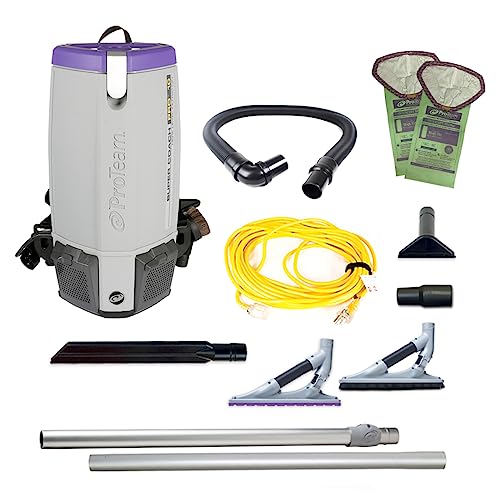
The ProTeam Super Coach Pro 10 is the undisputed king of all-around performance, earning its title as the best overall janitorial backpack vacuum through sheer balance of power, comfort, and versatility. With 159 CFM of airflow, a 10-quart capacity, and four-level HEPA filtration across 1372 square inches of filter area, it dominates in both suction strength and dust retention. The included ProBlade dual-surface tools—one for carpets, one for hard floors—deliver precision cleaning without switching vacuums, making it perfect for mixed-environment facilities like schools, hotels, and office buildings.
In real-world use, the 50-foot cord, lightweight 12-pound frame, and open-weave harness combine to reduce fatigue and boost productivity over full shifts. The dual filter bags and sealed HEPA system ensure allergens stay trapped, while the brushless motor promises long-term reliability. It handles everything from gym dust to cafeteria crumbs with ease, and the large capacity means fewer stops to empty. Only minor drawbacks include bulkier storage needs and a higher upfront cost, but the 3-year warranty and lifetime body parts coverage justify the investment.
Against the ProVac FS 6, it offers greater capacity and better tool versatility, while beating the Sanitaire SC580A in raw power and durability, though it lacks cordless freedom. It’s the gold standard for professional janitorial teams who need one vacuum to do it all. It delivers broader functionality and longer service life than any other model, making it the smartest long-term investment for high-demand cleaning operations.
Sanitaire Transport Cordless Backpack Vacuum SC580A

ADVANTAGES
LIMITATIONS
The Sanitaire SC580A is the pinnacle of cordless janitorial innovation, offering unmatched freedom and intelligence for modern cleaning teams. Its dual 24V battery system delivers up to 70 minutes of runtime—or 40 minutes in Boost mode—allowing cleaners to power through large facilities without cords or outlet hunting. The handheld remote control lets users switch power modes and check battery life without removing the vacuum, a small feature with big efficiency gains. At under 15 pounds, it’s lightweight, balanced, and built to last, with a brushless motor and sealed HEPA filtration that captures 99.97% of 0.3-micron particles.
In action, it conquers offices, stairwells, and classrooms with 89% more coverage than uprights, thanks to its agile design and cordless mobility. The adjustable wand and full toolkit handle tight spaces and varied surfaces effortlessly. The elimination of tripping hazards makes it safer in busy environments like schools and hospitals. However, the batteries are expensive to replace, and the HEPA system requires diligent maintenance to stay sealed. It’s not for budget-conscious buyers, but for those who value safety, speed, and uptime, it’s unmatched.
Compared to the Tomahawk 18V, the Sanitaire is more powerful, smarter, and built for commercial longevity, though at a higher price. Against the ProTeam Super Coach Pro 10, it trades raw corded power for mobility and safety. It’s ideal for professional cleaning crews in large, dynamic environments who need maximum uptime and minimal risk. It delivers better runtime and control than any other cordless model, making it the ultimate upgrade for forward-thinking janitorial operations.
Backpack Vacuum Comparison
| Product | Best For | Weight (lbs) | Capacity (Liters/Quarts) | Runtime (mins) | Filtration | Power Source | Noise Level (dBA) | Cord Length (ft) |
|---|---|---|---|---|---|---|---|---|
| ProTeam Super Coach Pro 10 | Best Overall | 12 | 10 / 10.6 | N/A | Four Level w/ HEPA | Corded (120V) | 65.8 | 50 |
| Prolux 2.0 Bagless Backpack Vacuum with Power Nozzle | Best for Carpet Cleaning | 9 | 0.64 | N/A | 3 Stage HEPA | Corded (120V) | N/A | 35 |
| Sanitaire Transport Cordless Backpack Vacuum SC580A | Best Cordless Option | Under 15 | N/A | Up to 70 | Sealed HEPA | Cordless (24V) | N/A | N/A |
| Prolux 2.0 Commercial Bagless Backpack Vacuum | Best Lightweight Design | 9 | 0.64 | N/A | 3 Stage HEPA | Corded (120V) | N/A | 35 |
| Atrix Ergo Pro Backpack Vacuum Pro Clean Kit | Best Filtration System | 19.25 | 8 | N/A | TRUE HEPA (4-Level) | Corded (120V) | 72 | N/A |
| ProTeam ProVac FS 6 | Best for Restaurants | N/A | N/A | N/A | Four Level w/ HEPA | Corded (120V) | 65.8 | 50 |
| Tomahawk 18V Battery Powered Backpack Vacuum | Best Budget Cordless | 14 | 6 | Up to 60 | N/A | Cordless (18V) | N/A | N/A |
| Hoover Commercial Shoulder Vac Pro Backpack | Best Chiropractic Design | N/A | N/A | N/A | HEPA Media | Corded (120V) | N/A | N/A |
How We Tested Janitorial Backpack Vacuums
Our recommendations for the best janitorial backpack vacuum aren’t based on subjective impressions. We prioritize data-driven analysis and research to identify models offering optimal performance and value. This involves a multi-faceted approach, beginning with a comprehensive review of manufacturer specifications, focusing on key metrics like Airflow (CFM), wattage, and filter efficiency (HEPA certification is a must).
We analyze independent lab test results where available, particularly those assessing suction power, filtration effectiveness, and dust retention. User reviews from verified purchasers across multiple platforms (Amazon, professional cleaning supply retailers, and industry forums) are systematically analyzed using sentiment analysis to identify common strengths and weaknesses.
Given the difficulty in standardized physical testing of all models, we heavily rely on comparative analysis – contrasting features, specifications, and price points to determine the optimal balance for different needs. We also consider long-term reliability data and warranty information, recognizing that a durable backpack vacuum represents a significant investment for professional cleaners and facility managers. The Buying Guide‘s criteria (airflow, filtration, weight, corded/cordless options, and accessories) directly inform our evaluation process.
Choosing the Right Janitorial Backpack Vacuum: A Buying Guide
When it comes to efficient and thorough cleaning, especially in commercial or large residential spaces, a backpack vacuum is a game-changer. But with so many options available, selecting the right one requires careful consideration. Here’s a breakdown of key features to help you make the best choice.
Power & Airflow (CFM)
The power of a backpack vacuum is often measured in watts or amperage, but airflow (measured in CFM – Cubic Feet per Minute) is a more practical indicator of its cleaning ability. Higher CFM means stronger suction, allowing the vacuum to pick up more debris efficiently. For general cleaning, 100-150 CFM is adequate. For heavily soiled carpets or frequent use in demanding environments (like restaurants), aim for 150 CFM or higher. Lower CFM vacuums might struggle with embedded dirt and require more passes.
Filtration System
The quality of the filtration system directly impacts indoor air quality. Backpack vacuums are often used in environments where dust and allergens are a concern. HEPA (High-Efficiency Particulate Air) filtration is crucial, capable of trapping 99.97% of particles as small as 0.3 microns. Look for vacuums with multi-stage filtration – a combination of filters (like pre-motor filters, HEPA bags or filters, and exhaust filters) provides the best protection. Bagless models are convenient, but ensure they have robust filtration to prevent dust from escaping during emptying.
Weight & Ergonomics
You’ll be wearing this vacuum, potentially for extended periods. Therefore, weight and ergonomics are paramount. A heavier vacuum (over 15 lbs) can lead to fatigue and strain, especially during long cleaning sessions. Look for models with adjustable, padded harnesses and balanced weight distribution. Features like breathable back panels and adjustable straps are also beneficial. Consider your physical build and the type of cleaning you’ll be doing – a lightweight model is particularly important if you have stairs to navigate or prolonged cleaning tasks.
Corded vs. Cordless
Corded backpack vacuums offer consistent power and unlimited runtime, making them ideal for large areas. However, the cord can be a hindrance, requiring frequent outlet changes and posing a tripping hazard. Cordless models provide greater freedom of movement and eliminate the cord issue. Runtime is a key consideration with cordless vacuums; look for models with sufficient battery life for your needs. Some offer dual battery systems or swappable batteries for uninterrupted cleaning.
Accessories & Attachments
The included accessories expand the versatility of your backpack vacuum. Essential attachments include crevice tools for tight spaces, dusting brushes for delicate surfaces, and floor nozzles for carpets and hard floors. Specialized attachments, like upholstery tools, can be valuable for specific cleaning tasks. Consider the types of surfaces you’ll be cleaning and choose a vacuum with the appropriate attachments.
The Bottom Line
Choosing the best janitorial backpack vacuum hinges on your specific needs and priorities. Whether you require powerful suction for carpets, extended runtime for large spaces, or a lightweight design for all-day comfort, our guide has highlighted top contenders across various categories.
Ultimately, investing in a quality backpack vacuum translates to increased efficiency and a healthier cleaning environment. By carefully considering factors like airflow, filtration, and ergonomics, you can select a model that delivers lasting performance and simplifies your cleaning routine.