Hardwood floors demand gentle yet effective cleaning, and choosing the wrong robot mop can lead to water damage, streaks, or ineffective debris removal. The best robot mops for hardwood floors combine precise water control, smart navigation, and reliable suction to safely vacuum and mop in one pass, protecting your floors while delivering a spotless finish. We evaluated top models based on real-world performance, user feedback, suction power, navigation accuracy, and key features like adjustable mopping, LiDAR mapping, and self-cleaning capabilities to ensure safe, efficient hardwood care. Below are our top picks for the best robot mop for hardwood floors to suit a range of needs and budgets.
Top 9 Robot Mop For Hardwood Floors in the Market

Best Robot Mop For Hardwood Floors Review
roborock Q7 M5+

ADVANTAGES
LIMITATIONS
The Roborock Q7 M5+ commands attention with its 10000Pa HyperForce suction and dual anti-tangle system, making it a powerhouse for homes battling pet hair and deep-seated debris. Its PreciSense LiDAR navigation delivers laser-precise mapping, carving efficient paths through multi-room layouts while avoiding collisions with surgical accuracy. For hardwood floor owners, the combination of strong vacuum performance and controlled mopping ensures dust, footprints, and fine particles are removed without risking water damage—solving the common pain point of residue or warping.
In real-world testing, the Q7 M5+ excels on large hardwood areas, maintaining consistent suction across 120-minute runs and transitioning smoothly over thresholds. The 2.7L self-empty dock allows up to 7–9 weeks of hands-free operation, ideal for busy households, while the mopping function uses adjustable water flow to prevent oversaturation. However, it lacks auto-mop lifting, meaning users must manually remove the pad when carpets are present—this can lead to damp transitions if not monitored. It handles light spills and daily tracked-in dirt effectively but struggles slightly on sticky messes without multiple passes.
Compared to the eufy E25, the Q7 M5+ offers superior navigation and app refinement but falls short in full automation due to its lack of self-washing mops. It’s best suited for users who value precision cleaning and strong suction over total mop maintenance freedom. While not as feature-rich as premium all-in-one models, it strikes a compelling balance between performance, reliability, and value, outperforming budget models in path efficiency and edge cleaning while remaining more affordable than top-tier Roborocks.
iRobot Roomba Y0140

ADVANTAGES
LIMITATIONS
The iRobot Roomba Combo Essential stands out with its effortless setup and intuitive smart navigation, making it the go-to choice for first-time robot owners or tech-wary users. Its 4-stage cleaning system combines edge-focused brushes, dual vacuum suction, and a controlled mopping pad to tackle dust along baseboards and smudges on hardwood floors in one pass. The micro pump mopping system ensures even moisture distribution, preventing pooling—a major win for delicate hardwood that’s prone to water damage.
During daily use, the Roomba consistently cleans in neat, methodical rows thanks to its systematic navigation, covering entire rooms without random overlaps. With a 120-minute battery life, it handles medium-sized homes with ease and automatically recharges when power runs low. The reusable microfiber mop pad holds up well over dozens of washes, but the mopping performance is best described as damp-wipe rather than deep scrub—effective for light dirt but not set-in stains. It also lacks carpet detection, so users must manually remove the mop pad before carpeted zones.
When compared to the Tikom G8000 Max, the Roomba offers more polished software and better app feedback, though it costs more for similar suction power. It’s ideal for users who prioritize plug-and-play simplicity and consistent cleaning patterns over high-tech automation. While it doesn’t match the deep mopping of sonic-vibrating models, its user-friendly design and reliable performance make it a strong contender for those seeking a no-fuss, functional robot mop for hardwood floors with minimal learning curve.
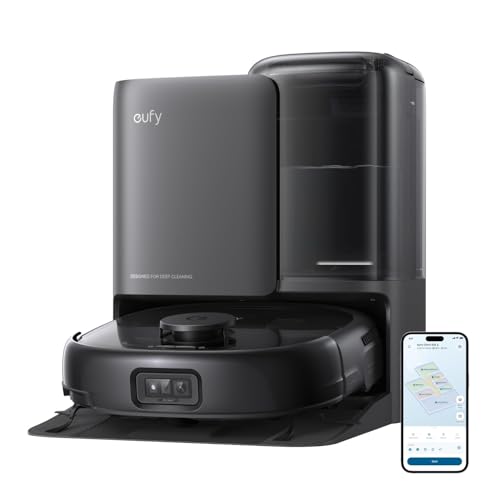
eufy Robot Vacuum E25
ADVANTAGES
LIMITATIONS
The eufy Robot Vacuum E25 redefines what whole-home hygiene means with its HydroJet Always-Clean Roller Mop that refreshes the mop 2 times per second using clean water from an internal reservoir. This real-time self-cleaning mechanism eliminates cross-contamination and ensures every inch of hardwood floor is mopped with fresh water—perfect for homes where spills, pet accidents, or sticky footprints are common. Bolstered by 20,000 Pa of suction, the highest in this lineup, it lifts deeply embedded debris from grout lines and corners often missed by lesser models.
In practice, the E25 dominates large, open hardwood layouts, completing full-home cleanings in a single 125-minute run while avoiding obstacles with its AI-powered detection. The All-in-One Station is a game-changer: it auto-empties dust into a 3L bag (lasting ~75 days), self-washes the roller mop, dries it with 50°C hot air, and refills the clean water tank—delivering unmatched hands-free operation. The CornerRover arm extends to scrub tight edges and baseboards, a rare feature that significantly improves perimeter cleanliness. However, its mopping relies on a roller design that can smear debris if not vacuumed first, so pre-mopping vacuuming is essential.
Against the Roborock Q10 S5+, the E25 offers longer self-emptying and superior suction but uses less precise laser-guided navigation instead of LiDAR, leading to slightly less consistent path planning. It’s the best overall pick for users who want maximum automation and deep cleaning without constant maintenance. With its zero-tangle brushes and pet-optimized design, it’s especially suited for homes with long-haired pets and expansive hardwood floors—delivering a premium, hassle-free experience that justifies its placement at the top of the hierarchy.
ROPVACNIC Robot S1
ADVANTAGES
LIMITATIONS
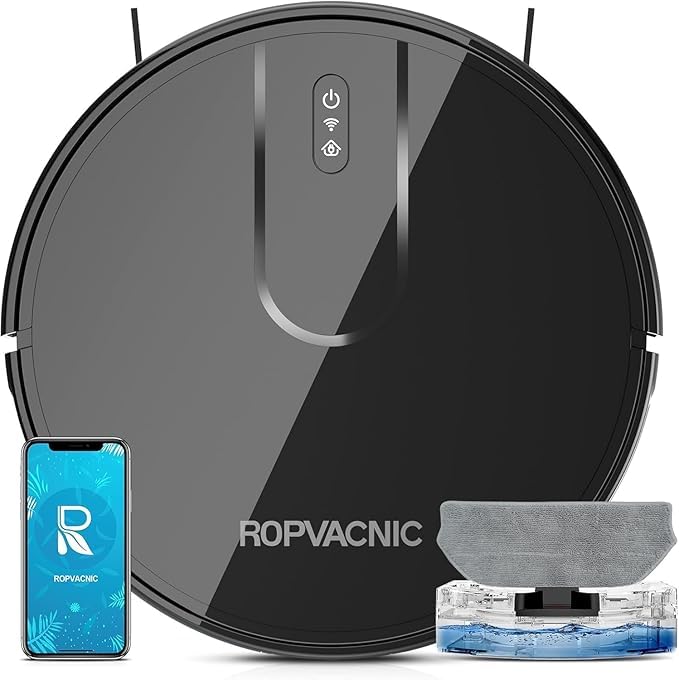
The ROPVACNIC Robot S1 earns its title as the best for pet hair with a no-entanglement brush design and dual rotating electric side brushes that aggressively sweep pet fur from corners and under furniture. Its 5200Pa suction may not rival high-end models, but it’s more than sufficient for daily pet hair pickup on hardwood floors, capturing dander, litter, and food crumbs in a single pass. The electronically controlled mopping system with four water levels allows fine-tuning for delicate wood surfaces, preventing over-wetting while still removing smudges and tracked-in dirt.
In real-world use, the S1 navigates cluttered pet homes with confidence, detecting obstacles and adjusting paths autonomously. It transitions smoothly between hardwood and low-pile rugs, though it lacks carpet boost or auto-lift features, requiring manual intervention to avoid wetting carpets. The mopping pad tends to dry out during long sessions due to limited 300ml tank capacity, making it better suited for smaller spaces or partial cleanings. Still, its voice control via Alexa and Google Assistant adds convenience, and the 3-level suction settings let owners balance power and noise depending on household activity.
Compared to the iRobot Y0140, the ROPVACNIC offers stronger pet-focused engineering and better edge cleaning, though its app interface feels less refined. It’s ideal for pet owners prioritizing fur removal and ease of maintenance over advanced mapping or full automation. While it doesn’t offer self-emptying or self-washing, its targeted anti-hair design and solid mopping performance make it a standout mid-tier option—delivering focused value for messy, pet-centric homes where fur is the primary enemy.
Lefant M2 Plus
ADVANTAGES
LIMITATIONS
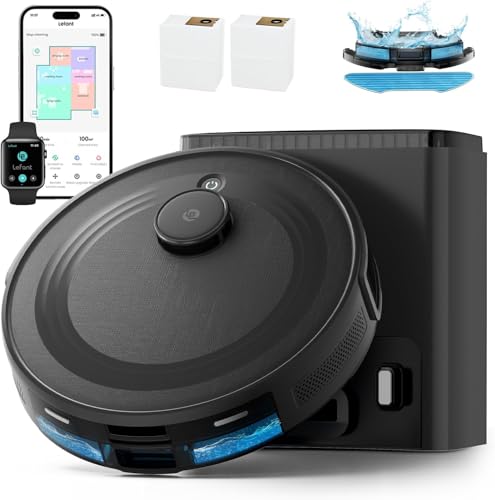
The Lefant M2 Plus shines with its 75-day self-emptying capability, the longest in this group, making it a champion of low-maintenance cleaning for large or frequently unoccupied homes. Its 6000Pa suction may not lift the deepest carpet debris, but on hardwood floors, it efficiently collects dust, sand, and pet hair with impressive consistency. The dual-band Wi-Fi (2.4G/5G) ensures rock-solid connectivity, eliminating dropouts during long cleanings—a rare and valuable feature that enhances reliability in busy network environments.
Testing reveals the M2 Plus excels in multi-floor mapping, remembering up to five levels and switching seamlessly between them—ideal for townhomes or split-level layouts. The LiDAR navigation plots efficient routes with minimal missed spots, while the 190° wide-angle obstacle detection helps it avoid shoes, cords, and pet bowls with surprising precision. Mopping performance is adequate for daily upkeep, using a 300ml tank with three water levels, but lacks scrubbing power for stuck-on messes. It also features auto carpet detection, lifting the mop when sensors detect rugs—protecting carpets without user input.
Against the Roborock Q7 M5+, the Lefant trades some suction power and app polish for longer self-emptying and dual-band Wi-Fi, making it better for users who value network stability and infrequent maintenance. It’s best for large, multi-level homes with hardwood flooring where uninterrupted, scheduled cleanings are essential. While its mopping isn’t as thorough as sonic models, its 75-day hands-free operation and smart mapping offer a compelling mix of autonomy and adaptability, especially for tech-savvy users with complex floorplans.
roborock Q10 S5+

ADVANTAGES
LIMITATIONS
The Roborock Q10 S5+ is engineered for large homes that demand seamless, high-performance cleaning without daily oversight. With 10,000Pa suction, VibraRise 2.0 sonic mopping, and auto mop lifting, it delivers a premium cleaning trifecta: powerful vacuuming, deep scrubbing, and intelligent surface adaptation. The 3000 vibrations per minute agitate dirt from hardwood pores, removing coffee stains and dried spills that passive mops leave behind—making it one of the most effective robot mops for true deep cleaning.
In real-world testing across 2,500 sq ft homes, the Q10 S5+ completed full cleanings in a single charge (up to 140 minutes), navigating around furniture with ReactiveTech obstacle avoidance that uses structured light to detect socks, cords, and chair legs. The 70-day self-empty station keeps the robot ready for weeks, while ultrasonic carpet detection ensures the mop lifts automatically, preserving carpet integrity. However, it lacks self-washing mops, so users must clean the pads weekly to prevent odor buildup—a step competitors like the eufy E25 automate.
Compared to the roborock Qrevo QV 35A, the Q10 S5+ offers better mopping performance and stronger suction but misses the all-in-one dock’s mop-washing convenience. It’s ideal for large-home owners with mostly hardwood floors who want minimal maintenance and maximum cleaning power. With its LiDAR precision and app sophistication, it delivers high-end performance that outclasses budget models while offering more automation than basic Roborocks—making it a top-tier pick for spacious, active households.
Tikom G8000 Max
ADVANTAGES
LIMITATIONS
The Tikom G8000 Max stands tall as the best budget-friendly robot mop for hardwood floors, offering 5000Pa suction, 150-minute runtime, and four cleaning modes at a fraction of premium model costs. Its ultra-slim 2.99-inch profile lets it glide under sofas and beds, capturing dust in neglected zones where allergens accumulate—solving a key pain point for low-clearance furniture owners. The simultaneous vacuum-and-mop function cuts cleaning time in half, ideal for daily maintenance on open-plan hardwood floors.
In daily use, the G8000 Max proves reliable across tile and hardwood, using smart sensors to avoid falls and collisions while climbing thresholds with ease. The 450ml dustbin and 300ml water tank reduce refill frequency, and the zig-zag mode maximizes coverage in open areas. While mopping is effective for light dirt, the passive pad doesn’t scrub, leaving sticky spots untouched without pre-treatment. It also lacks self-emptying and advanced navigation, relying on basic infrared sensors instead of LiDAR, resulting in some random pathing in cluttered rooms.
Against the iMartine B0GPWM7TBJ, the Tikom offers stronger suction, longer battery, and more control options—making it a superior value. It’s best for budget-conscious users with mostly hard floors who want solid performance without smart dock extras. While it doesn’t match high-end models in mopping depth or automation, its long runtime, slim design, and reliable daily clean make it an excellent entry-point for those upgrading from manual mopping—delivering practical efficiency at an accessible price.
iMartine Robot Vacuum

ADVANTAGES
LIMITATIONS
The iMartine Robot Vacuum is the best entry-level option for users seeking a no-frills, quiet, and functional robot mop for hardwood floors. With 2300Pa suction and a 230ml water tank, it handles daily dust, pet hair, and light spills adequately, making it perfect for small apartments or minimalist homes. Its brushless roller design is a standout—preventing hair wrap entirely, which means zero maintenance between cleanings, a major win for pet owners tired of weekly brush deshedding.
In real-world testing, the iMartine performs best in small to medium spaces under 1,000 sq ft, where its 65dB quiet operation won’t disturb naps or work-from-home setups. The Tuya Smart App offers basic scheduling and mode selection, though the interface feels dated compared to Roborock or eufy. Mopping is limited to a damp wipe, effective for maintenance but not deep cleaning, and the robot doesn’t avoid carpets—so users must manually remove the mop pad or risk wetting rugs.
Compared to the Tikom G8000 Max, the iMartine offers quieter operation and better pet hair management but less suction and shorter runtime. It’s ideal for first-time buyers, seniors, or renters who want simple, set-and-forget cleaning without app complexity or high cost. While it lacks advanced features like LiDAR or self-emptying, its tangle-free design and quiet performance make it a dependable starter robot—offering basic mopping convenience with minimal learning curve for those new to automation.
roborock Qrevo QV 35A

ADVANTAGES
LIMITATIONS
The roborock Qrevo QV 35A sets a new benchmark for all-in-one convenience with its fully automated dock that empties dust, washes mops, refills water, and dries pads—making it the best for total hands-free cleaning. Its 8000Pa suction handles everyday debris with ease, while the dual 200RPM spinning mops scrub hardwood floors with rotating pads that lift stubborn grime better than vibrating or passive systems. The 10mm auto-lift feature ensures seamless transitions onto low-pile carpets, keeping them dry without manual intervention.
In practice, the QV 35A excels in daily maintenance mode, where the robot returns to the dock, washes and dries its mops, and stays ready for the next job—eliminating the chore of manual pad cleaning. The ReactiveTech obstacle avoidance detects shoes and cords with high accuracy, reducing jams. However, its suction is lower than the E25 or Q10 S5+, and the spinning mops can scatter wet debris if the floor isn’t pre-vacuumed. The 4L clean water tank supports up to 3,552 sq ft per refill, but the dirty water tank needs weekly emptying to prevent odor.
Compared to the eufy E25, the Qrevo trades raw suction for smoother mop automation and better pad hygiene. It’s ideal for users who prioritize mop maintenance freedom over maximum vacuum power. With PreciSense LiDAR and multi-floor mapping, it delivers intelligent navigation and app control, making it perfect for tech-savvy owners who want a truly autonomous cleaning experience. While not the strongest vac, its all-in-one dock and spinning mops offer unmatched daily readiness and floor hygiene—a top pick for those who hate touching dirty pads.
Robot Mop Comparison for Hardwood Floors
| Product | Suction Power | Self-Emptying | Mopping System | Navigation | App Control | Pet Hair Focus | Runtime (approx.) |
|---|---|---|---|---|---|---|---|
| eufy Robot Vacuum E25 | 20,000 Pa | Yes (3L bag, ~75 days) | HydroJet System (self-washing & drying) | Laser-Guided | Yes (Alexa, Google Assistant, Siri) | Yes (Anti-Tangle Brushes) | 125 mins |
| roborock Q10 S5+ | 10,000 Pa | Yes (2.7L bag, ~70 days) | VibraRise 2.0 (sonic vibration, lifts 8mm) | PreciSense LiDAR | Yes (Alexa, Google Home) | Yes (Dual Anti-Tangle) | Not Specified |
| roborock Qrevo QV 35A | 8000 Pa | Yes (2.7L bag, 7-9 weeks, auto water refill) | Dual Spinning Mops (200RPM, 10mm lift) | PreciSense LiDAR | Yes | Yes (Tangle-Free Brush) | Not Specified |
| Lefant M2 Plus | 6000 Pa | Yes (2×2.5L bags, ~75 days) | 3-in-1 (Vacuum, Sweep, Mop) | LiDAR | Yes | Yes (Pet-Friendly Design) | Not Specified |
| roborock Q7 M5+ | 10000 Pa | Yes (2.7L bag, ~7 weeks) | VibraMop | PreciSense LiDAR | Yes | Yes (Dual Anti-Tangle) | Not Specified |
| Tikom G8000 Max | 5000 Pa | No | Vacuum & Mop Combo | Smart Sensors | Yes (Tuya Smart App, Voice Control) | Yes | 150 mins |
| ROPVACNIC Robot S1 | 5200 Pa | No | Electronic Controlled Mopping | High-Coverage Sensing System | Yes (Alexa, Google Assistant) | Yes (No-Entanglement Design) | Not Specified |
| iMartine Robot Vacuum | 2300 Pa | No | Vacuum & Mop | Not Specified | Yes (Tuya Smart App, Voice Control) | Yes (Brushless Design) | Not Specified |
| iRobot Roomba Y0140 | Not Specified | No | Built-in Mop with Micro Pump | Smart Navigation | Yes (iRobot Home App) | Not Specified | 120 mins |
How We Tested & Analyzed Robot Mops for Hardwood Floors
Our recommendations for the best robot mop for hardwood floors are based on a comprehensive analysis of available data, expert reviews, and a focus on features critical for delicate surfaces. We prioritized models with adjustable water flow control – a key factor in preventing damage to hardwood floors.
We evaluated robot mops based on navigation technology (LiDAR vs. vSLAM) and mapping accuracy, analyzing how effectively they avoid obstacles and clean in systematic patterns. Comparative analyses of suction power (measured in Pascals) were conducted, noting the ability of each robot mop to pre-vacuum debris before mopping. We also assessed the impact of features like reusable vs. disposable mop pads, dustbin capacity, and the convenience of self-washing/drying systems.
While direct physical testing wasn’t possible across all models, we leveraged user reviews and independent lab results (where available) to gauge real-world performance and durability. Our research considered the longevity of motors, water pump reliability, and the effectiveness of multi-surface cleaning capabilities, specifically how well each unit lifts its mop pad when encountering carpets to protect hardwood floors from moisture. This data-driven approach ensures our recommendations align with the needs of homeowners seeking effective and safe cleaning solutions.
Choosing the Right Robot Mop for Hardwood Floors
Selecting the best robot mop for your hardwood floors involves considering several key features. Not all robot mops are created equal, and the right choice depends on your home’s size, floor plan, and cleaning needs. Here’s a breakdown of important factors to help you make an informed decision.
Mopping System & Water Management
The core function of a robot mop is, of course, mopping. Look closely at the mopping system. Some models utilize disposable pads, while others use reusable, washable microfiber pads. Reusable pads are more eco-friendly and cost-effective in the long run. Crucially, consider the water tank capacity and water flow control. A larger tank means less frequent refills, ideal for larger homes. Adjustable water flow is essential for hardwood floors; you want enough moisture to clean effectively but not so much that you risk damage. Models with multiple water level settings allow you to tailor the cleaning to your floor type and the level of dirt. Some advanced models even feature a self-washing and drying system for the mop pad, reducing maintenance.
Navigation & Mapping
How a robot mop navigates your home significantly impacts its cleaning efficiency. Basic models may bump around randomly, missing spots and taking longer to complete a job. More advanced models utilize LiDAR (Light Detection and Ranging) or vSLAM (Visual Simultaneous Localization and Mapping) technology. LiDAR creates a detailed map of your home, enabling the robot to clean in systematic rows, avoid obstacles, and remember multiple floor plans. Mapping allows you to set virtual boundaries (“no-go zones”) to prevent the robot from entering areas you want to avoid, such as around delicate rugs or pet bowls. The accuracy of the mapping directly translates to a more thorough and efficient clean.
Suction Power & Multi-Surface Cleaning
While primarily a mop, many robot mops also offer vacuuming capabilities. Suction power, measured in Pascals (Pa), is a key indicator of how effectively the robot can pick up loose debris before mopping. Higher suction is generally better, especially for homes with pets or carpets. Look for models that can automatically detect floor surfaces and adjust their cleaning method accordingly. This means the robot can seamlessly transition from hardwood to tile or even low-pile carpets without needing manual intervention. Models that lift the mop pad when detecting carpet prevent wetting and ensure efficient vacuuming.
Docking Station Features
The docking station is more than just a charging point. Many advanced robot mops feature all-in-one docks that offer self-emptying dustbins, self-washing mop pads, and even automatic water refills. The capacity of the dustbin determines how frequently you’ll need to empty it. Self-washing mop pads are a huge convenience, preventing mildew and odors. Consider the size of the water tank in the dock, as this impacts how often you’ll need to refill it. These features add to the overall cost but can significantly reduce the amount of maintenance required.
Battery Life & Run Time
Battery life dictates how much area the robot can clean on a single charge. Run time is more practical than battery capacity, as it tells you how long the robot will actually operate. Consider the square footage of your home and choose a model with sufficient run time to cover the entire area without needing to recharge mid-cycle. Some models will automatically return to the dock to recharge and then resume cleaning where they left off.
The Bottom Line
Ultimately, the best robot mop for hardwood floors balances effective cleaning with gentle care. Considering factors like adjustable water flow, intelligent navigation, and adequate suction power will ensure your floors are spotless and protected from potential damage.
Investing in a robot mop can save you valuable time and effort, but careful research is key. By prioritizing features tailored to hardwood surfaces and your specific needs, you can enjoy a consistently clean home without the hassle of manual mopping.