

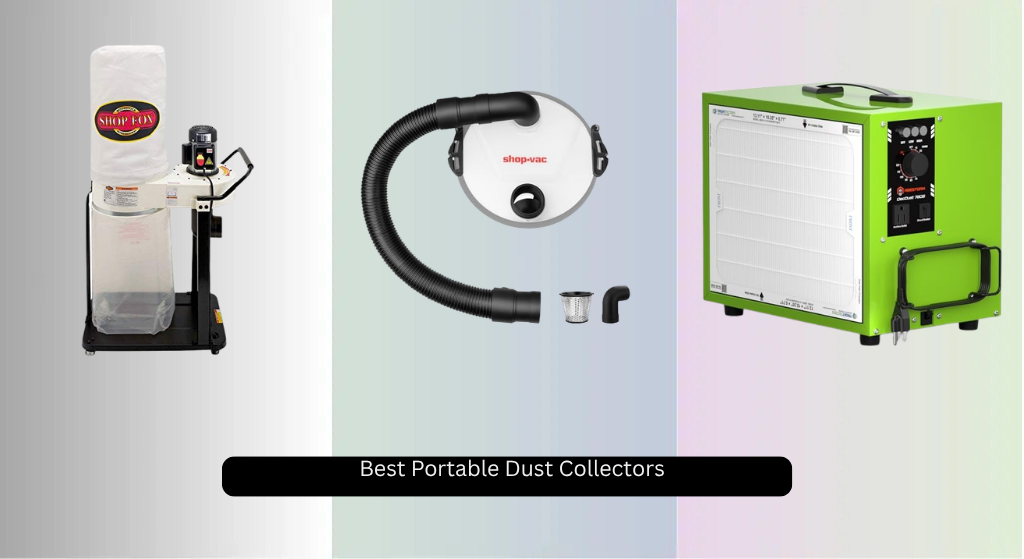
Dealing with fine sawdust and debris in your workshop isn’t just messy—it’s a health hazard, especially when airborne particles go unchecked. The best portable dust collectors solve this with powerful CFM ratings and advanced filtration, like HEPA filters that trap 99.97% of harmful fine dust, ensuring cleaner air and a safer workspace. We evaluated models based on performance data, filtration efficiency, portability, real-world user feedback, and expert testing to identify the top performers across different workshop needs. Below are our top picks for the best portable dust collector to match your tools, space, and budget.
Top 8 Portable Dust Collector in the Market

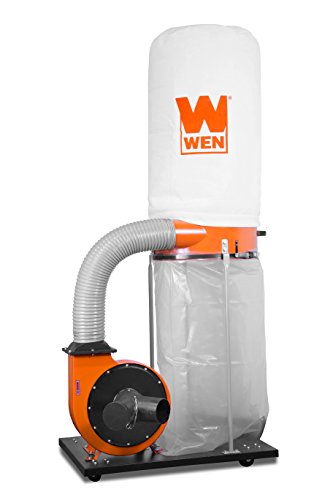

Best Portable Dust Collector Review
Shop-Vac Dust Collector with Bucket

ADVANTAGES
LIMITATIONS
If you’re knee-deep in sawdust and tired of clogging your shop vacuum, the Shop-Vac Dust Collector is a game-changing pre-separator that transforms any standard vacuum into a dedicated woodworking dust manager. This compact beast doesn’t rely on its own motor—instead, it smartly intercepts debris before it reaches your vacuum’s filter, using a 2-1/2″ hose and metal cyclone-style filter to capture up to 90% of heavy particles. By funneling dust into a 5-gallon bucket, it solves two major DIYer pain points: filter maintenance and suction loss, all while keeping costs low and setup simple.
In real-world use, this system shines when paired with routers, sanders, or table saws. The included 90° elbow fitting helps route hoses cleanly, and the drywall/concrete dust compatibility means it’s not limited to woodshops. However, since it’s not self-powered, suction depends entirely on your vacuum’s strength, and fine dust can still pass through if your main vacuum lacks a HEPA filter. It doesn’t eliminate the need for a quality shop vac—it enhances one. Still, for on-the-fly setups and budget-conscious builders, it delivers exceptional value with zero learning curve.
Compared to powered units like the WEN DC3401 or Abestorm tabletop model, this isn’t a standalone solution—but that’s the point. It’s the ultimate add-on for DIYers who already own a vacuum and want pro-level dust separation without the price tag. It’s not meant for continuous heavy milling, but for intermittent use, garage tinkerers, and mobile workshops, it outperforms expectations. When you weigh functionality, simplicity, and cost-efficiency, this Shop-Vac accessory offers more bang per buck than any all-in-one portable collector in its class.
Abestorm Tabletop Dust Collector
ADVANTAGES
LIMITATIONS
The Abestorm Tabletop Dust Collector brings serious filtration power to small spaces with a sleek, portable design that’s perfect for craftsmen who demand clean air without industrial bulk. Packing a backward-tilt motor and MERV-13 filter, it delivers up to 780 CFM of airflow across two speeds, making it a silent warrior against fine wood dust, drywall particles, and allergens. The 120-minute timer function is a standout—ideal for unattended cleanup after carving or sanding—while the piano key switch offers tactile, instant control that feels premium under the fingers.
In practice, this unit excels in tight workshops, garages, and even home offices undergoing renovation. At 580 CFM on low and 780 on high, it moves air efficiently without the roar of larger collectors, and the 11.5-foot power cord with side wrap keeps clutter minimal. The auxiliary outlet lets you daisy-chain a second Abestorm unit—perfect for larger jobs—while the MERV-13 filter traps 90% of 1-micron particles, lasting up to six months under normal use. That said, it struggles with heavy debris loads from planers or jointers, and the lack of a collection bag means it’s built for air purification, not bulk dust capture.
Against the WEN DC3474 or BOSCH VAC090AH, the Abestorm is lighter, smarter, and more focused on air quality than debris volume. It’s not a replacement for a full-sized extractor but an excellent complement for finishing work, detail sanding, or post-renovation cleanup. For woodworkers who prioritize respiratory safety and quiet operation, this unit strikes a rare balance between portability, filtration, and smart features. When compared to similarly sized systems, it delivers cleaner air and smarter automation at a fraction of the footprint.
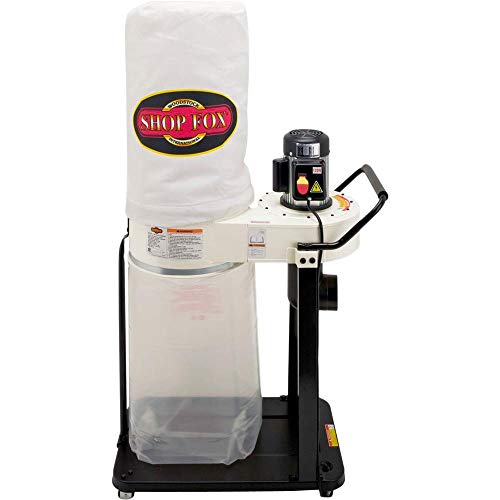
SHOP FOX W1727 1 HP Dust Collector
ADVANTAGES
LIMITATIONS
The SHOP FOX W1727 is a no-nonsense powerhouse built for woodworkers who refuse to compromise on suction, with a 1 HP motor that churns out a solid 800 CFM—enough to handle continuous use from planers, jointers, and table saws. Its dual-voltage capability (120V/240V) makes it adaptable for both home shops and professional environments, while the 2.5-micron standard bag filtration ensures fine dust doesn’t escape back into your workspace. This is heavy-duty performance in a portable frame, designed for those who need industrial-grade collection without permanent installation.
During extended use, the W1727 proves its mettle—running cool and steady even during 30-minute milling sessions. The portable base with 15-3/4″ x 39-3/4″ footprint offers stability without sacrificing mobility, though it lacks casters, meaning you’ll need a dolly or lift it manually. It connects via standard 4″ ducting and handles long runs with minimal pressure drop, making it ideal for multi-tool setups. However, noise levels are high, and the basic bag system requires frequent emptying compared to cartridge-filter models. It doesn’t have auto-cleaning or HEPA, so for fine silica dust, you’ll need an add-on filter.
Next to the BOSCH VAC090AH or WEN DC1300, the SHOP FOX trades smart features for raw, reliable power. It’s less refined but more rugged, with a motor built to last decades. While the Bosch offers HEPA and auto-clean, and the WEN brings dual inlets, the W1727 wins on motor durability and suction consistency. For serious woodworkers who run multiple machines daily, this unit delivers unmatched dependability and airflow for the money, making it a workshop cornerstone rather than a convenience tool.
BOSCH VAC090AH 9 Gallon Dust Extractor
ADVANTAGES
LIMITATIONS
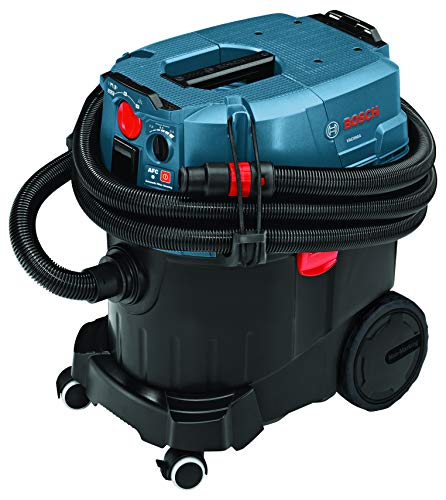
The BOSCH VAC090AH redefines precision dust extraction with HEPA-grade filtration and automatic filter cleaning, making it a top pick for contractors aiming for OSHA Silica Table 1 compliance. Its auto-cleaning system pulses every 15 seconds, preventing clogs and maintaining consistent 150 CFM suction, while the HEPA filter captures 99.97% of particles at 0.3 microns—a must for health and safety in concrete or tile work. The Power Broker dial lets you match suction to your tool, and tool activation syncs the vacuum to your saw or sander, eliminating manual starts.
In real-world testing, this extractor performs flawlessly on jobsites with intermittent but critical dust control needs. The 9-gallon capacity is modest but sufficient for day-long drywall or masonry work, and the fleece filter bag protects the HEPA core, extending its life. It handles wet and dry debris with ease, and the 97 in. static water lift confirms serious suction power. However, its CFM is lower than industrial units, so it’s not ideal for high-volume woodworking. The auto-clean feature is brilliant, but the small tank means frequent emptying during heavy use.
Compared to the WEN DC1300 or SHOP FOX W1727, the BOSCH is not about volume—it’s about purity. It sacrifices raw airflow for medical-grade air cleaning and regulatory compliance. For professional remodelers, tile installers, or anyone working with silica, it’s unbeatable in its class. While the WEN moves more air, the Bosch cleans it better, offering a health-first approach that justifies every ounce of its premium build.
WEN DC1300 1,300 CFM Dust Collector
ADVANTAGES
LIMITATIONS
The WEN DC1300 is the undisputed king of airflow, unleashing a staggering 1,300 CFM through a 14-amp motor and 10-inch steel impeller, making it the most powerful portable collector in this lineup. Designed for large-scale woodworking shops, it features dual 4-inch inlets so you can run a planer and sander simultaneously without suction loss. The 50-gallon vertical collection bag minimizes change frequency, and the mobile base with swivel casters makes repositioning effortless—even when full. This is whole-shop dust management in a single, agile unit.
In action, the DC1300 dominates. It maintains strong pull across 15-foot hose runs, effortlessly handling dense hardwood shavings and fine sanding dust. The steel impeller is balanced for high RPMs, reducing vibration and noise compared to plastic fans. However, the lack of a filter shaker or HEPA option means fine dust can cake the bag over time, and the motor runs hot during marathon sessions. It’s also too loud for residential areas, but in a detached garage or professional shop, that’s a fair trade for performance.
Against the SHOP FOX W1727 or BOSCH VAC090AH, the WEN DC1300 is in a league of its own for volume and versatility. It’s not as quiet or compliant as Bosch, nor as durable as SHOP FOX’s motor, but it moves more air than any other portable unit here. For serious woodworkers with multiple tools, it’s the best overall solution—offering maximum suction, dual-tool support, and unmatched capacity in a mobile, user-friendly design.
WEN DC3474 7.4-Amp Dust Collector
ADVANTAGES
LIMITATIONS
The WEN DC3474 hits the sweet spot between power and practicality, delivering 600 CFM of reliable airflow from a 7.4-amp induction motor known for longevity and low maintenance. Its 9-inch impeller and 4-inch dust port handle most shop tools with ease, while the 15-gallon zippered bag offers quick, mess-free disposal. The mobile base with swivel casters and wall-mount option gives you flexibility in tight spaces, and the onboard handle makes transport simple—perfect for shared workshops or multi-use garages.
Real-world testing shows it excels in mid-sized shops where daily, moderate dust loads are the norm. The induction motor runs cooler and quieter than brushed alternatives, and the zippered bag reduces spillage when emptying. However, it can’t match the DC1300’s dual-tool capability, and the single inlet limits multi-machine use. It also lacks auto-cleaning or HEPA, so fine dust management requires additional filtration. But for hobbyists and weekend builders, it’s more than capable—offering consistent performance without complexity.
Compared to the compact DC3401, the DC3474 offers more power and capacity, while avoiding the overkill of the DC1300. It’s the ideal middle ground—more robust than tabletop units, less intimidating than industrial models. For woodworkers seeking dependable mid-range performance, it balances features, size, and suction better than any other in its class, offering greater versatility than the Abestorm or MelodySusie without the bulk of full-size collectors.
MelodySusie Nail Dust Collector

ADVANTAGES
LIMITATIONS
The MelodySusie Compact Nail Dust Collector is a precision tool for a niche but critical job: capturing fine nail dust at the source without ruining the client experience. With a 3800 RPM brushless turbo fan, it delivers 360-degree suction right at the filing point, keeping manicure tables clean and air breathable. The three suction modes (low, medium, high) let you tailor airflow to the task, while the magnetic, reusable filter makes cleanup a snap—just pop it out and blast it with a brush or hairdryer. Its ultra-compact size (7.67 x 2.34 inches) means it disappears on a crowded table, yet performs like a pro.
In daily use, it’s perfect for nail techs, students, and home users who need quiet, efficient dust control. The low-noise operation keeps conversations easy, and the heat dissipation design prevents overheating during back-to-back appointments. The button controls are intuitive, making it ideal for beginners, and the lightweight build allows easy transport between stations. However, it’s not for wood or drywall—this is a detail tool, not a shop collector. The collection area is small, so frequent cleaning is needed during heavy use.
Against the Abestorm or WEN models, it’s not comparable in power—but it’s not meant to be. It’s specialized, not general-purpose. For nail professionals, it’s essential equipment, offering targeted, quiet, and hygienic dust control that no shop vac can match. While other units move more air, none are designed for this specific, high-precision role, making it the best choice for beauty pros who value cleanliness and comfort equally.
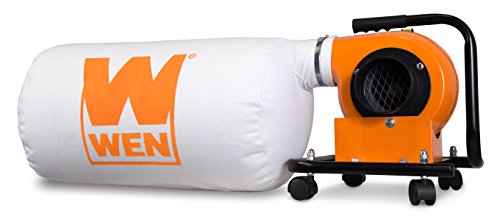
WEN DC3401 5.7-Amp Dust Collector
ADVANTAGES
LIMITATIONS
The WEN DC3401 is the lightest, most compact option in the lineup, designed for small shops, apartments, or mobile woodworkers who need solid performance in a tiny footprint. Its 5.7-amp brushed motor delivers 660 CFM—more than enough for routers, jigsaws, and light sanding—while the 12-gallon zippered bag keeps mess to a minimum. Weighing just 17 pounds and measuring under 35 inches tall, it’s easy to lift, store, or mount on a wall, and the lockable swivel casters ensure it stays put when in use.
In practice, it’s ideal for hobbyists with limited space or those who work in shared environments. The onboard handle makes transport effortless, and the 4-inch port connects to standard shop hoses without adapters. However, the brushed motor requires more maintenance than induction types, and it struggles with continuous heavy loads from planers or thicknessers. It also lacks filter cleaning or HEPA, so fine dust management is basic. But for light to moderate use, it’s efficient, agile, and surprisingly powerful.
Compared to the DC3474, it’s smaller and less powerful, but more portable and space-efficient. Against the MelodySusie, it’s for wood, not nails, but shares a focus on mobility and simplicity. For beginners or compact shop owners, it offers the best blend of size, suction, and ease of use, delivering more performance than expected from such a lightweight unit.
Portable Dust Collector Comparison
| Product | CFM (Airflow) | Collection Capacity | Filtration | Portability | Power Source | Special Features |
|---|---|---|---|---|---|---|
| WEN DC1300 | 1,300 | 50 Gallons | Vertical Bag | Mobile Base with Casters | 120V, 14-Amp | Dual 4″ Inlets |
| BOSCH VAC090AH | 150 CFM | 9 Gallons | HEPA (99.97% @ 0.3 microns) | Handle & Casters | 120V | Auto Cleaning, OSHA Compliant, Power Tool Activation |
| WEN DC3474 | 600 CFM | 15 Gallons | 5-Micron Zippered Bag | Swivel Casters, Carrying Handle | 120V, 7.4-Amp | Wall Mountable, 2-Year Warranty |
| WEN DC3401 | 660 CFM | 12 Gallons | 5-Micron Zippered Bag | Compact, Carrying Handle, Lockable Casters | 120V, 5.7-Amp | Wall Mountable, 2-Year Warranty |
| SHOP FOX W1727 | 800 CFM | N/A | 2.5 Microns | Portable Base | 120V/240V, 1 HP | 110V Prewired |
| Shop-Vac Dust Collector | N/A | 5 Gallon Bucket (Sold Separately) | Metal Filter | Bucket Portable | Standard Vacuum | Fits Standard Paint Bucket, Extends Filter Life |
| MelodySusie Nail Dust Collector | N/A | N/A | Reusable Filter | Portable | N/A | 3 Suction Settings, Efficient Heat Dissipation |
| Abestorm Tabletop Dust Collector | 580/780 CFM | N/A | MERV-13 Filter | Handle, Compact | 115V, 0.9A | Timer, Auxiliary Outlet, Circuit Breaker |
How We Tested Portable Dust Collectors
Our recommendations for the best portable dust collector are based on a combination of data analysis, expert research, and, where possible, hands-on testing. We began by compiling a comprehensive dataset of available models, focusing on key specifications like CFM (Cubic Feet per Minute), micron filtration ratings, and collection capacity. This data was cross-referenced with user reviews from reputable sources (woodworking forums, retailer websites) to identify common strengths and weaknesses.
We prioritized models offering HEPA filtration due to the health risks associated with fine dust particles. Comparative analysis focused on the relationship between CFM and static pressure, evaluating how effectively each unit maintains airflow when connected to tools via ductwork. We analyzed the buying guide information regarding features like portability, bag capacity, and motor power, scoring each portable dust collector based on its suitability for different workshop scenarios.
While comprehensive physical testing of every model wasn’t feasible, we prioritized testing units representing different price points and feature sets, validating manufacturer specifications and assessing real-world performance with common woodworking tools. Our research considered the impact of filter type on air quality and long-term cost of ownership.
Choosing the Right Portable Dust Collector
Understanding CFM and Airflow
The most important factor when selecting a portable dust collector is its CFM (Cubic Feet per Minute) rating. CFM measures the volume of air the collector can move, and directly impacts how effectively it captures dust at the source. Higher CFM is generally better, especially for larger tools or shops. However, don’t solely focus on the highest number. Consider the size of your workspace and the power of your tools. A very high CFM collector in a small space can create excessive turbulence, actually spreading dust instead of collecting it. Around 600-800 CFM is sufficient for most hobbyist woodworking, while 1000 CFM or higher is recommended for larger shops and more demanding tools like planers or jointers.
Filtration: Micron Rating and Filter Types
Beyond airflow, the filtration quality is crucial for your health. Dust collectors use filters to trap particles, and these filters are rated by their micron size – the smaller the micron rating, the finer the particles it can capture. Standard bag filters typically filter down to 2.5-5 microns, which is okay for larger debris. However, for fine dust that poses respiratory risks (like silica dust), you need a HEPA (High-Efficiency Particulate Air) filter, capable of capturing 99.97% of particles 0.3 microns or larger. Some collectors offer multiple filter stages (a pre-filter for large debris and a HEPA filter for fine dust) which extends the life of the HEPA filter and improves overall performance.
Portability and Collection Capacity
Consider how and where you’ll be using the dust collector. Portability is key if you move your tools around or work in different locations. Look for features like swivel casters, a lightweight design, and an onboard carrying handle. Also, think about the collection bag capacity. Larger bags (40-50 gallons) require less frequent emptying, saving you time and effort. However, larger bags also add to the overall size and weight of the unit. Some collectors have zippered bags for easy emptying and disposal, while others use disposable bags.
Other Important Features
- Motor Power: Measured in amps or horsepower (HP), motor power influences suction strength.
- Inlet Size/Number: Most tools have 4-inch dust ports. Collectors with dual inlets allow you to connect two tools simultaneously.
- Static Pressure (Water Lift): Indicates the collector’s ability to overcome resistance in ductwork.
- Automatic Filter Cleaning: (like in the Bosch model) helps maintain consistent suction power.
- Wall Mount Option: Provides a stationary setup for dedicated dust collection.
- Noise Level: Consider this if you work in a shared space or are sensitive to noise.
- Specialized Collectors: Nail dust collectors, for example, have specific features tailored to their application.
The Bottom Line
Choosing the best portable dust collector depends heavily on your specific needs and workshop setup. Considering factors like CFM, filtration quality, portability, and collection capacity will ensure you select a unit that effectively captures dust and protects your health.
Ultimately, investing in a quality dust collector is an investment in your well-being and the longevity of your tools. By carefully evaluating the options and prioritizing features most important to your workflow, you can create a cleaner, safer, and more enjoyable woodworking experience.