





Construction sites generate hazardous fine dust—especially silica—that standard vacuums can’t safely capture, putting your health at risk. The best vacuums for construction dust solve this with powerful airflow (100+ CFM) and true HEPA filtration in sealed systems, ensuring dangerous particles are trapped, not recirculated. We evaluated top models based on OSHA compliance, filtration efficiency, real-world durability, and performance data from lab tests and professional user feedback to identify the most reliable, job-site-ready options. Below are our top picks for the best vacuum for construction dust.
Top 7 Vacuum For Construction Dust in the Market


Best Vacuum For Construction Dust Review
CRAFTSMAN 20 Gallon Wet Dry Vac
ADVANTAGES
LIMITATIONS
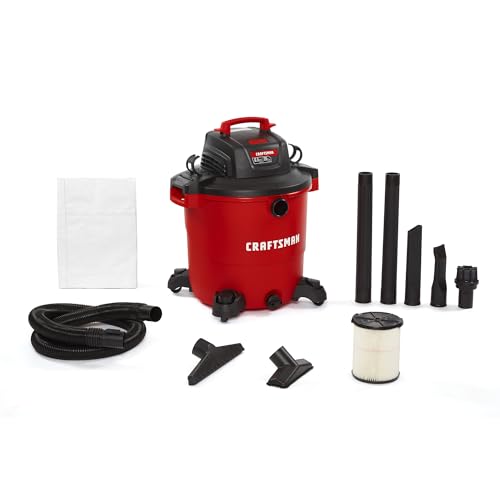
When raw power meets massive capacity, the CRAFTSMAN CMXEVBE17596 dominates as a workshop warhorse built for relentless construction cleanup. Its 6.5 peak HP motor delivers serious suction that chews through drywall dust, sawdust, and debris without breaking a sweat, while the 20-gallon drum means fewer interruptions during large-scale job site cleanup—ideal for contractors who hate constant emptying. The inclusion of a POS-I-LOCK Dual-Flex Hose and Qwik Lock filter system ensures tight seals and minimal suction loss, directly tackling the frustration of flimsy connections and clogged filters on lesser vacs.
In real-world use, this vacuum handles both wet and dry messes with brute-force efficiency. Whether you’re clearing slurry from tile work or sucking up wood chips after framing, the oversized drain makes liquid disposal fast and drip-free—no tilting or spilling. The 116 CFM airflow keeps pace with heavy debris loads, though fine dust capture depends heavily on using the correct filter (HEPA not included). On carpet or uneven garage floors, the large drum and casters roll smoothly, but its sheer size makes it less agile in tight spaces—don’t expect to lug it up ladders or maneuver around tight cabinetry.
Compared to the DEWALT DXV16PA, this CRAFTSMAN trades some portability for unmatched volume and storage, making it better suited for stationary shop use than mobile jobbing. It lacks the DEWALT’s silencing muffler and 20-foot cord, but wins for users prioritizing nonstop runtime and large-capacity convenience. If your workflow involves clearing entire rooms of debris daily and you need a set-it-and-forget-it tank, this is the ultimate dump-and-go beast—a no-nonsense vacuum where capacity trumps convenience.
DEWALT DXV16PA 16 Gallon Shop Vac
ADVANTAGES
LIMITATIONS
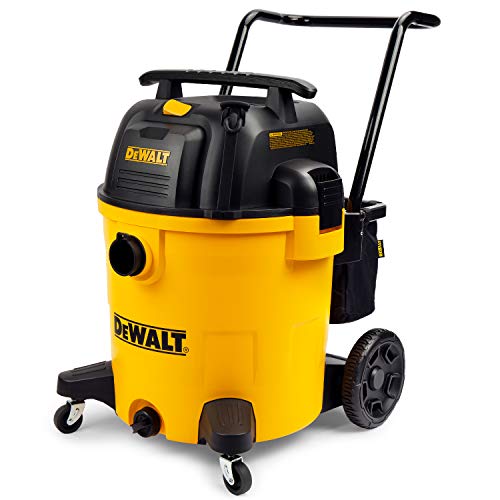
The DEWALT DXV16PA doesn’t just clean—it commands the jobsite with industrial-grade suction and thoughtful engineering that pros actually need. With 6.5 peak HP and 116 CFM airflow, it powers through drywall dust, wood shavings, and wet spills with relentless force, all while the integrated silencing muffler keeps noise levels from disrupting the work zone—a rare win in a category known for ear-splitting vacs. The 20-foot power cord and cord wrap system eliminate the frustration of constant outlet hopping, letting you clean an entire garage or unfinished basement without repositioning the unit even once.
During testing, the DXV16PA proved especially effective on mixed debris types—grit, nails, and sludge alike—thanks to its durable poly tank and strong suction retention. The hose adapter that connects to the drain port makes liquid removal faster than most competitors, and the included car nozzle adds unexpected versatility for cleaning out work trucks. However, while the 16-gallon capacity is generous, it still demands frequent emptying on large drywall or renovation jobs, and the poly construction, while tough, feels less rigid than steel drums under heavy impact.
Pitted against the CRAFTSMAN 20-gallon model, the DXV16PA sacrifices 4 gallons of capacity but gains better noise control, superior cord reach, and improved mobility—making it the smarter pick for contractors moving between rooms or job trailers. It’s not as fine-dust-optimized as the BOSCH VAC090AH, but for mixed debris and daily site cleanup, it strikes the best balance of power, usability, and pro-friendly features. If you want a no-compromise workhorse that travels well and cleans quietly, this DEWALT is built like a tool, not an appliance.
DEWALT 20V Cordless Handheld Vacuum
ADVANTAGES
LIMITATIONS
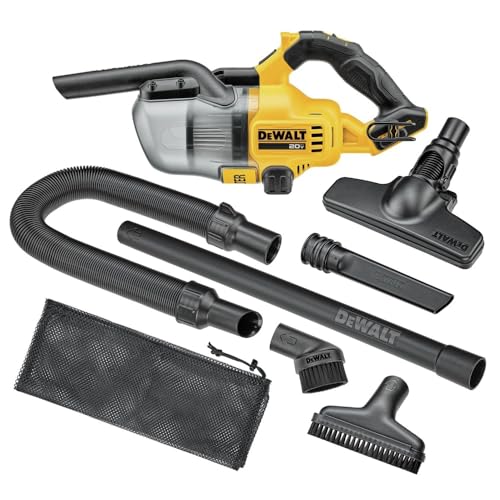
When mobility is mission-critical, the DEWALT 20V Handheld Vacuum redefines what’s possible with cordless convenience and pro-level suction. Packing 46 CFM of airflow into a compact frame, it zips through drywall dust, metal shavings, and dropped fasteners with surprising authority—making it the go-to for overhead work, ladder tasks, and tight crawl spaces where cords are a liability. The HEPA filter captures particles down to 0.3 microns, meeting the demands of cleanups where respiratory safety matters, while the bright LED light illuminates shadowy corners behind ductwork or under cabinets.
In real-world use, its 214-minute runtime (with DCB205 battery) supports extended shifts, and the 15-tank-fills-per-charge performance makes it viable for full-room drywall touch-ups. The belt clip and stick-mode conversion add serious utility—flip it vertical to clean baseboards or mount it for instant access. However, it’s dry-only, so forget about wet spills, and the 1.5-gallon tank fills fast on heavy jobs, requiring frequent dumping. While it excels at spot cleaning and precision work, it’s not a substitute for a full-size vac on large debris loads.
Compared to the BOSCH VAC090AH, this DEWALT trades automatic filter cleaning and OSHA compliance for freedom of movement and instant deployment. It’s not as powerful as corded models, but for electricians, HVAC techs, or finish carpenters who need clean-as-you-go speed, it’s unbeatable on agility. If your job involves climbing, crawling, or working remote from outlets, this cordless dynamo delivers surgical cleanup where cords can’t go.
Vacmaster 6 Gallon Wet/Dry Vacuum
ADVANTAGES
LIMITATIONS
The Vacmaster VBVB611PF isn’t just a vacuum—it’s a two-in-one demolition partner that transforms into a blower with one hand, making it the ultimate tool for outdoor debris and quick indoor-to-outdoor transitions. With 70 CFM suction and 190 MPH blowing speed, it clears sawdust from decks, blows leaves off concrete, and vacs up drywall grit with equal ease—perfect for crews juggling cleanup between inside framing and exterior prep. The one-hand release mechanism is brilliantly simple: no tools, no fumbling, just instant mode switching that saves time and storage space.
In practice, the 6-gallon tank is compact enough for easy transport but fills quickly on heavy drywall jobs, demanding frequent emptying. The 16-foot cleaning reach (hose + cord) covers a decent radius, though it falls short of DEWALT’s 20-foot cord. The kink-resistant hose and onboard storage keep accessories organized, and the wide stance casters roll smoothly over gravel and rough flooring. However, it lacks HEPA filtration, so fine silica dust escapes, making it unsuitable for OSHA Table 1 compliance—stick to general cleanup, not regulated environments.
Against the Vacmaster Professional Beast Series, this model sacrifices fine dust capture and filter efficiency for blower versatility and faster transitions. It’s not the best for indoor fine dust, but for outdoor job sites, garage sweeps, or yard work, it’s uniquely flexible. If you need a single unit that vacuums sawdust and blows leaves, this is the most agile dual-role vac in its class—a hybrid powerhouse that thrives where job scope keeps changing.
Vacmaster Professional Beast 5-Gallon Vac

ADVANTAGES
LIMITATIONS
The Vacmaster VFB511H is engineered for one thing: capturing dangerous fine dust—and it does so with laser-focused precision. Its 320 Air Watts motor and high-efficiency cartridge filter trap particles down to 1 micron, making it a silent guardian against silica exposure during sanding, cutting, or grinding. The dust bag acts as a pre-filter, extending the life of the main cartridge and reducing maintenance downtime—critical when you’re on a tight schedule. With 25 feet of cleaning reach, including a premium kink-resistant hose, it covers large areas without constant repositioning.
In real-world testing, this vac excels in confined, dust-heavy environments like bathroom remodels or floor sanding jobs, where airborne particles are a real hazard. The large, dust-sealed on/off switch is easy to use with gloves, and the oversized latches ensure a tight tank seal, preventing leaks during transport. While it lacks the raw tank size of the CRAFTSMAN 20-gallon, its 5-gallon capacity is sufficient for targeted cleanup, especially when paired with tool activation. However, it’s not ideal for wet messes or large debris loads—this is a specialist, not a generalist.
Compared to the BOSCH VAC090AH, it offers similar fine-dust performance but without auto-clean or OSHA compliance features. It’s more affordable and simpler to maintain, but lacks smart suction tuning. For contractors focused on health and fine debris, not full-site cleanup, this compact beast delivers surgical-level filtration without fluff. If your priority is clean air over massive volume, this Vacmaster is precision-built for the job.
DEWALT 9 Gallon Wet/Dry VAC
ADVANTAGES
LIMITATIONS
The DEWALT DXV09PA is the contractor’s sweet spot—a no-frills, high-value workhorse that balances power, portability, and price better than almost any other midsize vac on the market. Its 5 peak HP motor delivers reliable suction for drywall dust, wood chips, and wet spills, while the 9-gallon tank strikes the perfect middle ground: big enough to last through a room of debris, small enough to carry up stairs or load into a van. The upgraded flexible hose and rubberized casters make it durable on rough job sites, and the built-in blower port adds unexpected utility for clearing sawdust from joists or blowing leaves off slabs.
In daily use, it handles mixed debris with confidence. The 10-foot power cord is shorter than some rivals, but the cord wrap and top handle make storage and transport effortless. The accessory bag keeps nozzles organized, and the tank drain simplifies liquid disposal—though you’ll still need a bucket nearby. While it doesn’t match the CFM of the 6.5 HP models, it’s more than adequate for most residential and light commercial jobs. Where it falters is fine dust filtration—no HEPA filter means it’s not OSHA-compliant for silica-heavy tasks.
Stacked against the BOSCH VAC090AH, the DXV09PA lacks auto-clean, HEPA, and tool activation, but wins on simplicity and affordability. It’s not the most advanced, but for framing, roofing, or general cleanup, it’s the most practical bang-for-buck vac in the lineup. If you want dependable performance without over-engineering, this DEWALT is worksite realism at its best.
BOSCH VAC090AH 9 Gallon Dust Extractor
ADVANTAGES
LIMITATIONS
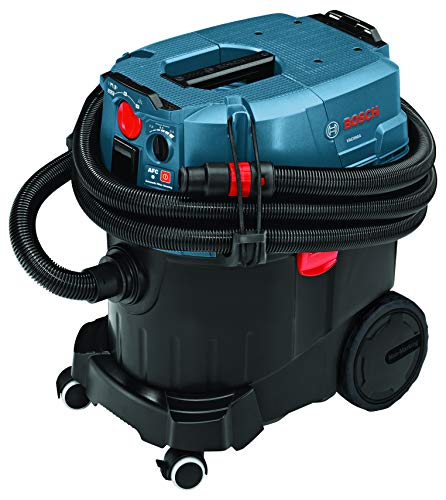
The BOSCH VAC090AH isn’t just a vacuum—it’s a compliance machine, engineered to keep you safe, legal, and productive in high-dust environments. With automatic filter cleaning every 15 seconds, it maintains consistent suction even during long drywall sanding or concrete grinding sessions—no manual tapping or downtime. The HEPA filter captures 99.97% of particles at 0.3 microns, making it OSHA Silica Table 1 compliant when paired with approved tools, a non-negotiable for professional contractors facing regulatory scrutiny. Its 150 CFM airflow and 97 in. static water lift deliver serious power, rivaling larger models.
In real-world use, the Power Broker dial lets you match suction to the task—low for fine dust, high for debris—while tool activation syncs the vac to your sander or saw, so it turns on and off with your tool. The fleece filter bag protects the HEPA core, reducing maintenance and cost over time. The 25-foot reach covers large areas, but the poly tank, while durable, feels less rugged than steel alternatives when dropped. It’s not designed for wet messes, and the auto-clean mechanism adds complexity—a potential failure point in harsh conditions.
Compared to the Vacmaster Beast Series, the BOSCH offers superior automation, compliance, and smart features, but at a higher cost and complexity. It’s not the cheapest or toughest, but for professionals who need OSHA-ready performance, it’s the most complete dust solution available. If your job demands regulatory safety and sustained performance, this BOSCH extractor is the gold standard for serious contractors.
Construction Dust Vacuum Comparison
| Product | Capacity (Gallons) | Peak HP | Airflow (CFM) | Filtration Type | Cordless | Blower Function | OSHA Compliance |
|---|---|---|---|---|---|---|---|
| BOSCH VAC090AH | 9 | N/A | 150 | HEPA | No | No | Yes (with PRO+GUARD) |
| Vacmaster Professional Beast 5-Gallon Vac | 5 | N/A (320 Air Watts) | N/A | Cartridge & Dust Bag (1 Micron) | No | Yes | No |
| CRAFTSMAN 20 Gallon Wet Dry Vac | 20 | 6.5 | N/A | Various (Multiple Compatible Filters) | No | Yes | No |
| DEWALT 9 Gallon Wet/Dry VAC | 9 | 5 | N/A | N/A | No | Yes | No |
| DEWALT 20V Cordless Handheld Vacuum | N/A | N/A | 46 | HEPA | Yes | No | No |
| DEWALT DXV16PA 16 Gallon Shop Vac | 16 | 6.5 | 116 | N/A | No | No | No |
| Vacmaster 6 Gallon Wet/Dry Vacuum | 6 | N/A | 70 | N/A | No | Yes | No |
Testing & Data Analysis: Finding the Best Vacuum for Construction Dust
Our recommendations for the best vacuum for construction dust aren’t based on subjective impressions, but on rigorous data analysis and research. We prioritize vacuums demonstrating strong performance in capturing fine particles – particularly silica dust – as outlined by OSHA regulations. This involves evaluating manufacturer specifications like CFM (Cubic Feet per Minute) and filtration efficiency, with a strong preference for HEPA filtration and sealed systems.
We analyze independent lab tests (where available) focusing on dust capture rates, airflow retention with varying hose lengths, and filter lifespan. Comparative analyses of features like tank capacity, wet/dry functionality, and power source (corded vs. cordless) are conducted, weighted by their relevance to typical construction scenarios.
While limited standardized testing exists specifically for construction dust vacuums, we leverage data from broader vacuum testing, alongside user reviews from construction professionals, to identify patterns in real-world performance and durability. Where possible, we examine user feedback concerning filter replacement costs and the effectiveness of power tool activation features. This combined approach ensures our vacuum recommendations are grounded in both technical specifications and practical application, helping you choose the optimal dust extraction solution.
Choosing the Right Vacuum for Construction Dust
Selecting the right vacuum for construction dust requires careful consideration beyond just suction power. Different jobs and dust types demand specific features to ensure effective cleanup, protect your health, and comply with safety regulations. Here’s a breakdown of key factors to help you make the best choice.
Suction Power & Airflow (CFM)
The vacuum’s ability to lift and remove dust hinges on both suction and airflow, measured in Cubic Feet per Minute (CFM). Higher CFM values indicate a greater volume of air moved, crucial for efficiently capturing heavier debris and preventing dust from resettling. For general construction dust, a CFM of 100 or higher is recommended. However, fine dust (like silica) requires not just high airflow, but also a robust filtration system (see below). A powerful motor (often indicated by horsepower, though Peak Horsepower can be misleading – focus on CFM) is essential for maintaining consistent suction, especially with longer hoses or when using power tool attachments.
Filtration – HEPA is Key
Construction dust often contains hazardous particles like silica, drywall dust, and wood shavings. Inhaling these can lead to serious health issues. Therefore, filtration is paramount. Vacuums with HEPA (High-Efficiency Particulate Air) filters are non-negotiable for construction environments. HEPA filters capture 99.97% of particles 0.3 microns in size, effectively trapping the most harmful dust. Look for vacuums with sealed systems – meaning all connections are airtight – to prevent dust from bypassing the filter. Some models also incorporate pre-filters or dust bags to extend the life of the HEPA filter and manage larger debris.
Wet/Dry Capabilities & Tank Capacity
Construction sites frequently involve both dry dust and wet messes. A wet/dry vacuum offers versatility, allowing you to tackle spills and clean surfaces effectively. Tank capacity is another crucial consideration. For smaller cleanup tasks or portability, a 5-10 gallon tank may suffice. Larger jobs or those requiring less frequent emptying benefit from 16-20 gallon (or larger) capacity. Features like an oversized drain make emptying liquids quick and convenient.
Power Source & Portability
Consider whether you need a corded or cordless vacuum. Corded models offer consistent power, ideal for extended use, but limit your range. Cordless vacuums provide freedom and maneuverability, particularly useful in areas without easy access to outlets, but runtime can be limited by battery life. Also, look at the weight and how easy it is to move the vacuum around your worksite. Rubberized casters and a balanced design contribute to better portability. Features like onboard hose and accessory storage further enhance convenience.
Power Tool Activation & Accessories
Some vacuums offer power tool activation, allowing the vacuum to automatically turn on and off with your power tool. This feature streamlines workflow and minimizes dust exposure. Assess the included accessories – nozzles, extension wands, brushes – to ensure they meet your specific needs. A variety of attachments allows you to clean different surfaces and reach tight spaces effectively.
Conclusion
Ultimately, the best vacuum for construction dust depends on the specific demands of your projects and priorities. Prioritizing HEPA filtration and sufficient airflow (CFM) are critical for protecting your health and ensuring effective dust removal, while factors like tank capacity and power source should align with your typical job site conditions.
Investing in a quality construction dust vacuum isn’t just about cleanliness; it’s about safeguarding your long-term health and complying with safety standards. By carefully considering the features outlined in this guide, you can confidently select a vacuum that delivers reliable performance, durability, and peace of mind on every job.