We’ve all been there—you start cleaning your house to make it feel fresh and healthy, but ten minutes into vacuuming, your nose starts running, your eyes get itchy, and you can’t stop sneezing. It feels like a cruel joke. You’re trying to get rid of the dust, yet the very act of cleaning seems to be making your allergies worse.
If this sounds familiar, the problem probably isn’t you—it’s your vacuum cleaner.
For someone without allergies, any vacuum that picks up visible dirt is usually “good enough.” But for those of us who react to dust mites, pet dander, or pollen, a vacuum is more than just a cleaning tool; it’s a piece of health equipment. Choosing the wrong one can actually kick allergens up from your carpet and spray them back into the air you breathe.
So, how do you find a machine that actually helps? Let’s walk through what really matters when you’re shopping for a vacuum that won’t make you sneeze.
The Magic Word: HEPA Filtration
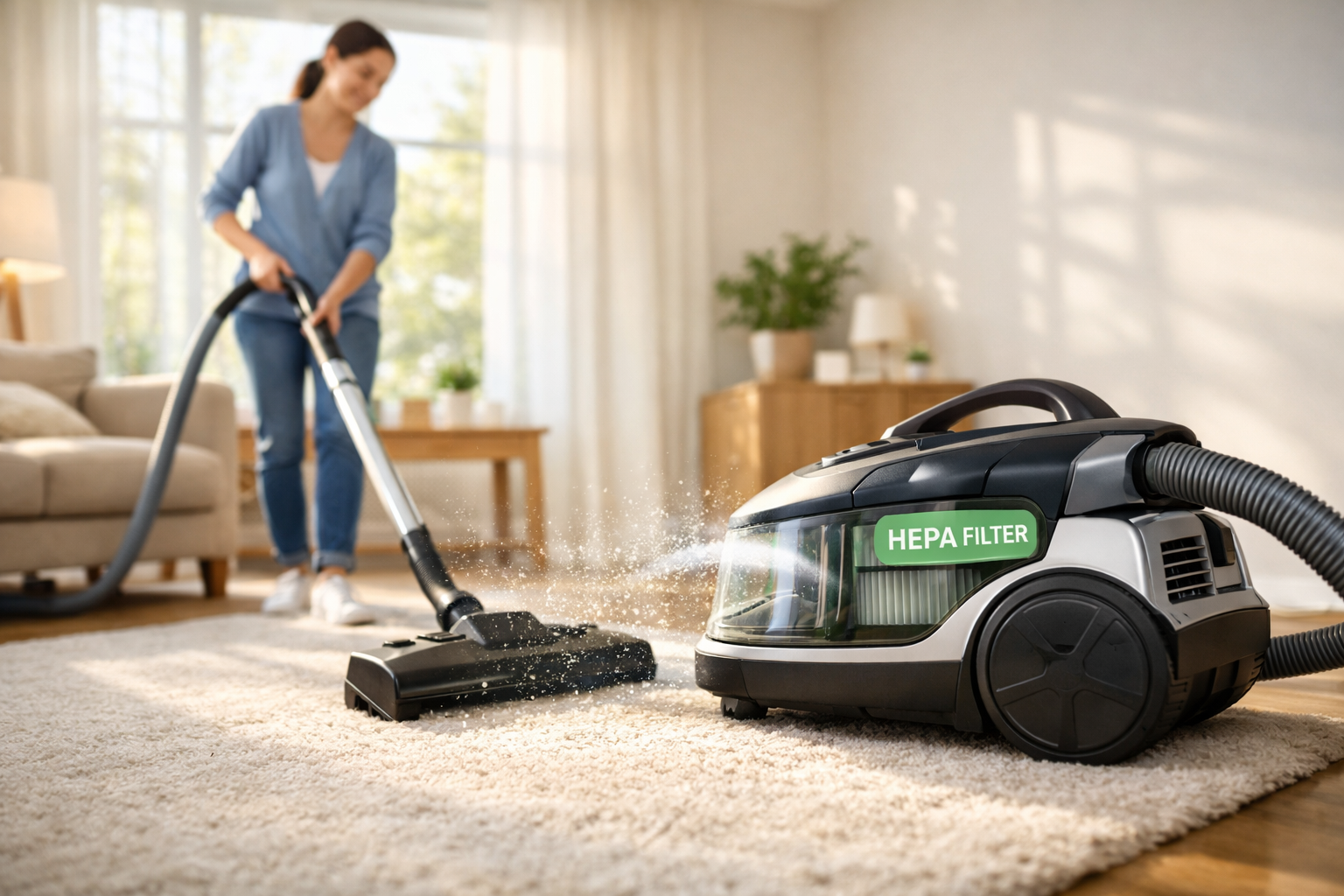
If you take only one thing away from this guide, let it be this: HEPA. It stands for High-Efficiency Particulate Air.
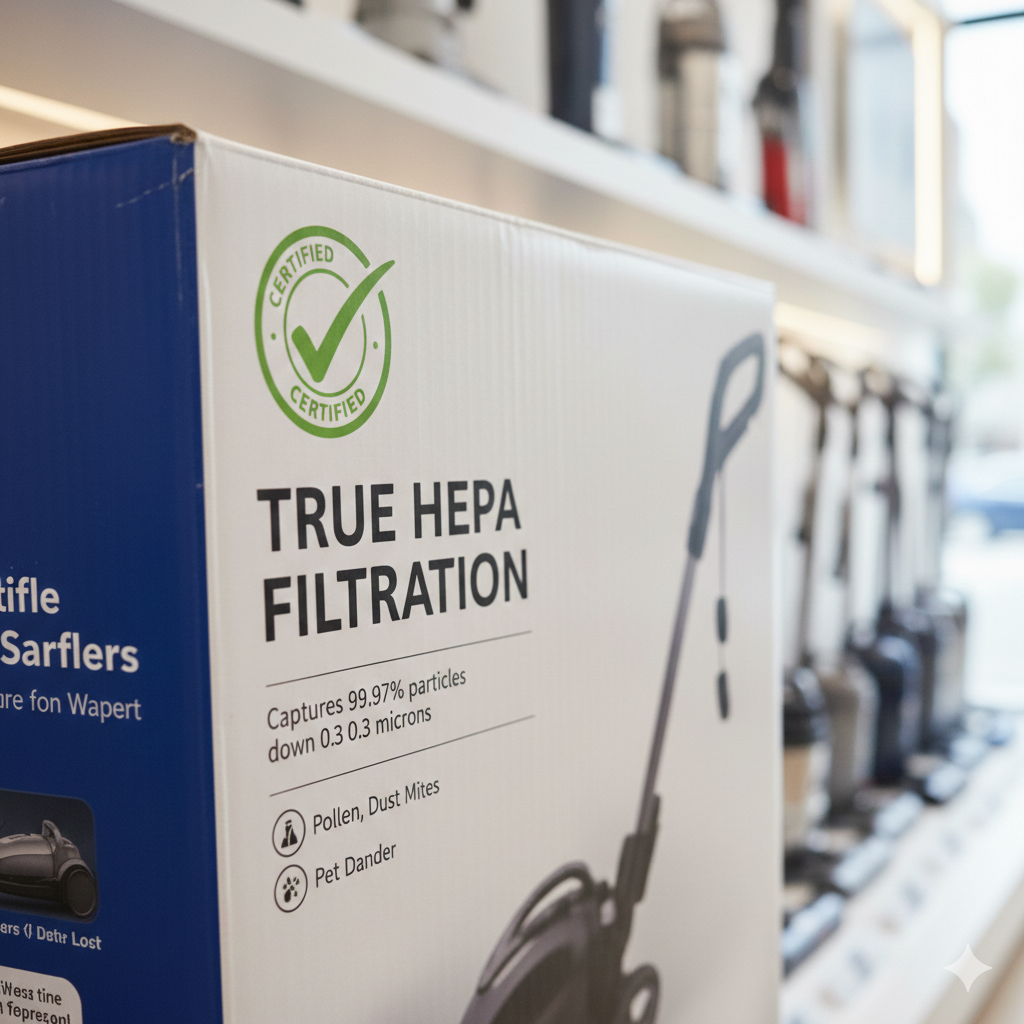
In simple terms, a HEPA filter is designed to catch 99.97% of tiny particles. We’re talking about things as small as 0.3 microns. To give you an idea of how small that is, a single human hair is about 50 to 70 microns wide. HEPA filters catch the microscopic stuff—pollen, mold spores, and dust mite droppings—that standard filters just let fly right through.
When you’re looking at vacuum boxes, make sure it says “True HEPA” or “Certified HEPA.” Some brands use “HEPA-like” or “HEPA-type,” which might sound similar but they don’t meet the same strict standards. If you have bad allergies, don’t settle for “type”—go for the real thing.
Why a “Sealed System” is a Game Changer
Here is a secret the big brands don’t always highlight: a HEPA filter is useless if the vacuum itself leaks.
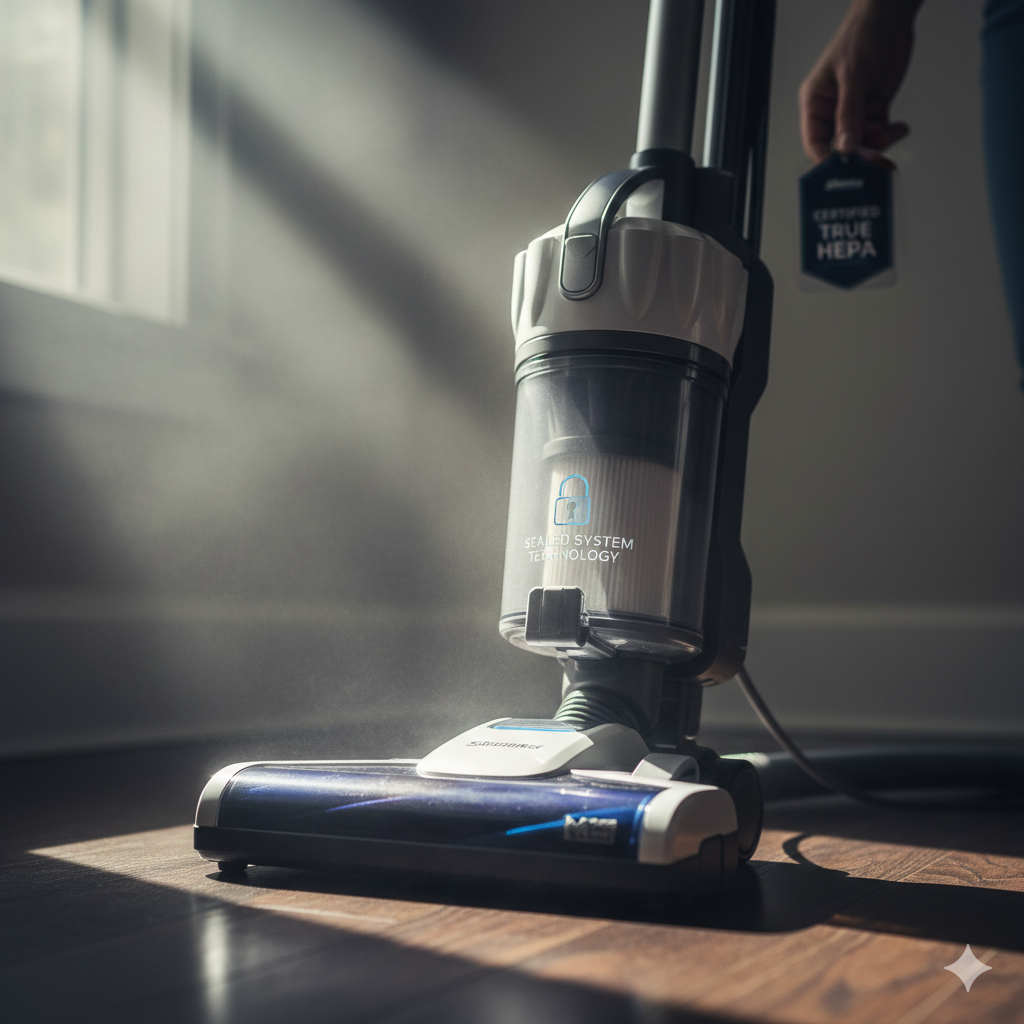
Think of it like a high-end water filter attached to a leaky pipe. The filter might be great, but if the water is spraying out of the cracks before it even reaches the filter, you’re still getting dirty water.
Many cheaper vacuums have tiny gaps in their plastic housing or around the seals. As the motor pulls air in, it pushes “dirty” air out through these cracks before it ever touches the filter. This is why you sometimes see dust dancing in the sunlight right behind a vacuum while it’s running.
When shopping, look for terms like “Completely Sealed Technology” or “Airtight Construction.” This ensures that 100% of the air sucked up goes through the filter before it exits the machine.
The Big Debate: Bags vs. Bagless
This is where most people get stuck. Bagless vacuums are very popular because they’re convenient—you don’t have to keep buying replacements, and you can see the dirt you’ve collected. However, if you have allergies, bagless vacuums have a major “danger zone”: the moment you empty the bin.
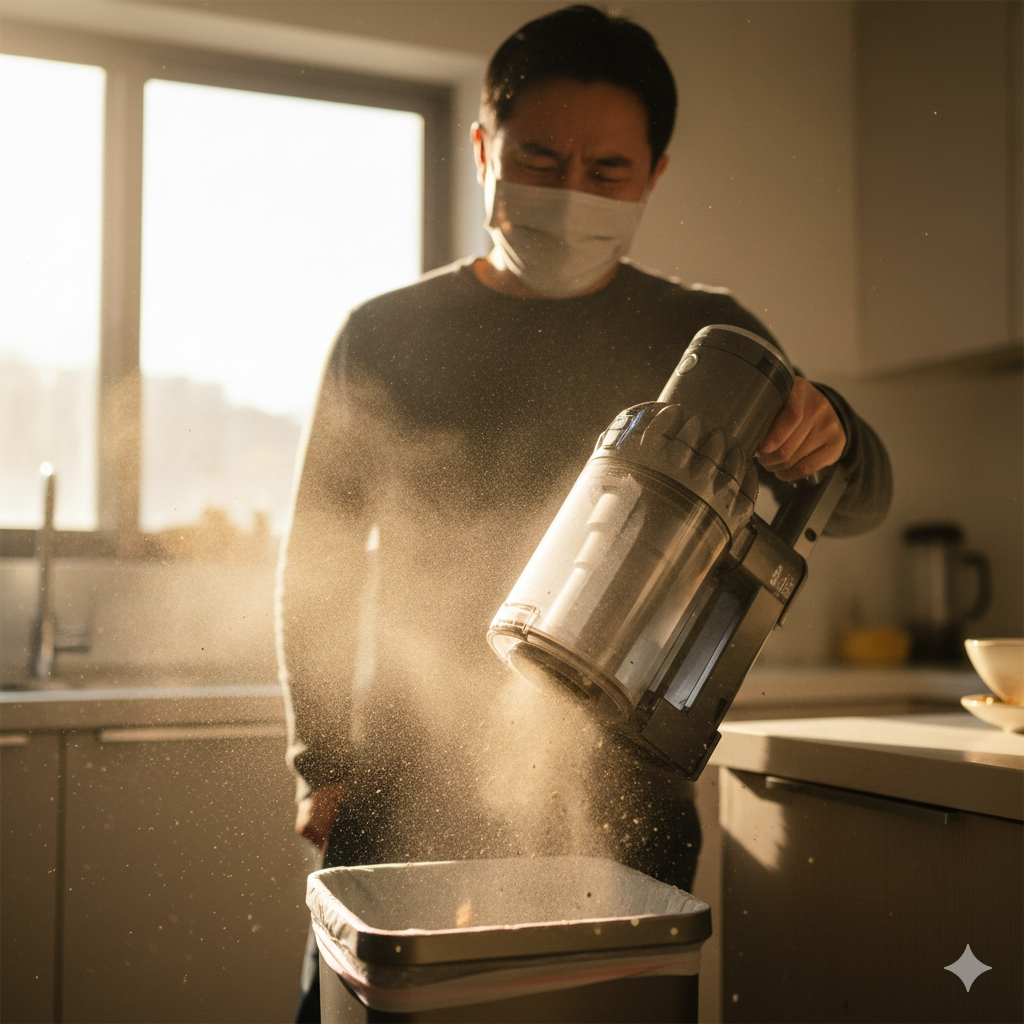
When you hit that button to drop the dust into your trash can, a literal cloud of allergens often poofs back up into your face. Even if you do it outside, some of that dust lingers on your clothes or drifts back into the house.
For allergy sufferers, bagged vacuums are almost always the better choice. When the bag is full, you simply pull it out. Most modern bags have a self-sealing flap that closes the hole the moment you remove it. You never have to see or breathe the dust. It’s clean, it’s contained, and it goes straight into the garbage.
If you absolutely must have a bagless vacuum, try to find one with a “one-touch” bottom-empty bin and, if possible, empty it outdoors while wearing a mask.
Consider Your Flooring
The type of floors you have in your home should dictate the style of vacuum you choose.
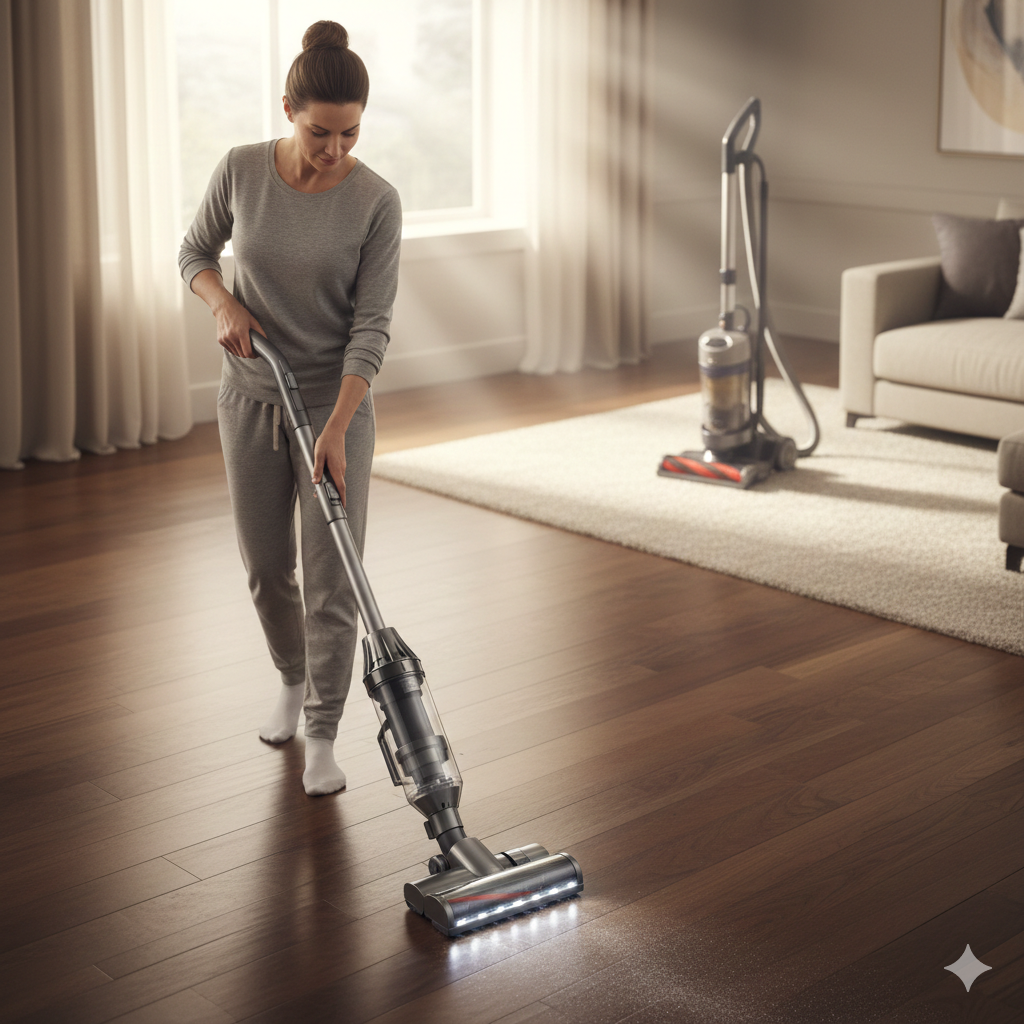
- Wall-to-Wall Carpets: Carpets are like giant magnets for allergens. They trap dust deep down in the fibers. For this, you need an upright vacuum with a powerful “beater bar” (the spinning brush at the bottom). It agitates the carpet fibers to shake the dust loose so it can be sucked up.
- Hardwood or Tiles: If your home is mostly hard floors, a canister vacuum or a lightweight stick vacuum is usually better. You want something with soft bristles that won’t scratch the floor but will still create a tight seal against the ground to pull dust out of the cracks.
Don’t Forget the Attachments
Allergens don’t just live on the floor. They settle on your curtains, your sofa, and your baseboards. When choosing a vacuum, check the included tools.
A good upholstery tool is essential for getting pet dander off the couch. A long crevice tool helps you reach those dusty corners behind the radiator where “dust bunnies” love to hide. Some vacuums even come with a dedicated dusting brush that has soft bristles—this is much better for your health than using a feather duster, which usually just moves dust from the table to the air.
Weight and Ease of Use
This might not seem like an “allergy” feature, but it is. If your vacuum is too heavy or a pain to use, you won’t use it as often. Allergy management requires frequent cleaning—usually at least twice a week in high-traffic areas.
Choose a vacuum that you feel comfortable carrying up and down stairs. If it’s too much of a chore, the dust will pile up, and your symptoms will get worse.
A Note on Maintenance
Even the best allergy vacuum will fail if you don’t take care of it. Filters need to be cleaned or replaced regularly. If a HEPA filter is clogged, the vacuum has to work harder, the suction drops, and it might even start over-heating.
Check the manual to see if the filters are “washable” or “replaceable.” Washable filters save money, but you must make sure they are 100% dry (usually 24 hours) before putting them back in, or you’ll risk growing mold inside your vacuum—which is the last thing an allergy sufferer wants!
Summary Checklist for Your Next Purchase
When you’re standing in the store or browsing online, keep this quick checklist in mind:
- Does it have a True HEPA filter?
- Is it a “Sealed System”? (This is the most overlooked feature!)
- Is it bagged? (Highly recommended for severe allergies.)
- Does it have the right tools for your furniture and curtains?
- Is it easy enough to use every few days?
Final Thoughts
Buying a vacuum for allergies is an investment in your comfort. While the high-end models with sealed systems and HEPA filters might cost a bit more upfront, the relief of being able to breathe clearly in your own home is worth every penny.
Cleaning shouldn’t be a trade-off where you get a clean floor but a stuffy nose. With the right machine, you can finally have both—a spotless home and the ability to breathe easy. Take your time, read the labels carefully, and don’t be afraid to ask about the filtration system. Your nose will thank you!