

The Ultimate Maintenance Guide
Introduction
If your vacuum cleaner smells dusty when you turn it on, or if it feels like it has lost its strength, the problem isn’t usually the motor—it’s the airflow. Over time, vacuum hoses get coated with grime, and filters get clogged with fine dust.
Cleaning these two components is the single most effective way to make an old vacuum feel brand new. This guide covers how to safely wash filters and deep-clean hoses without damaging them.
Materials You Will Need
- Mild Dish Soap: To break down grease in the hose.
- White Vinegar and Baking Soda: To neutralize bad odors (musty smells).
- A long bottle brush or a wire coat hanger: To push scrubbers through the hose.
- A bathtub or large sink.
- Dry towels.
How to Deep Clean the Vacuum Hose
Step 1: Detach and inspect
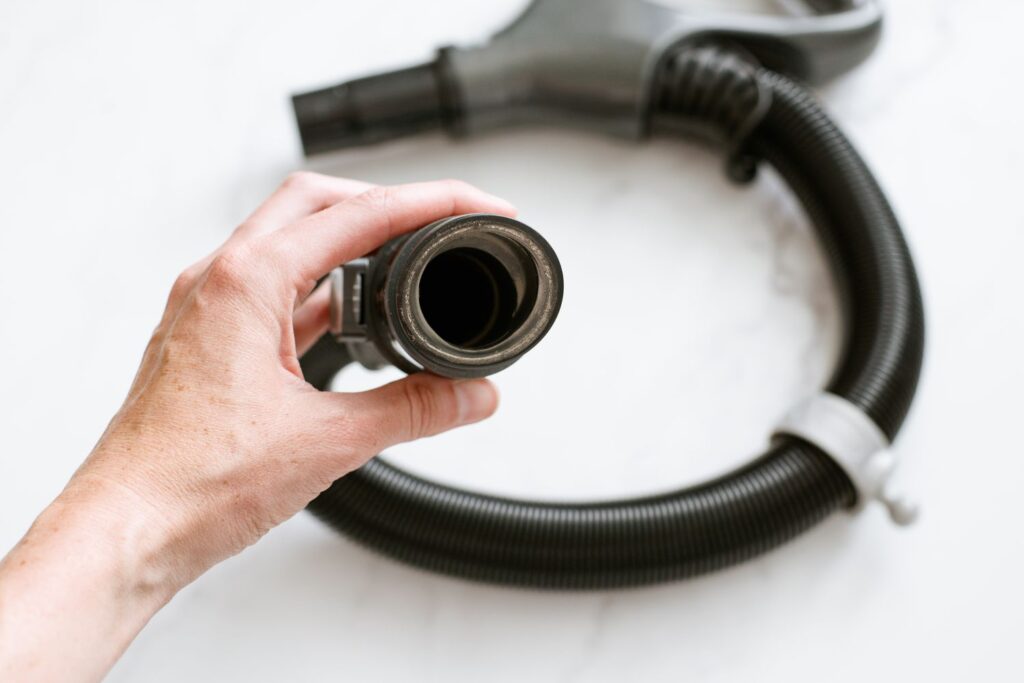
Disconnect the hose from the vacuum unit. Look through it toward a light source to ensure there are no physical blockages (like socks or toys). If blocked, use a broom handle to gently push the item out.
Step 2: The “Soak and Shake” Method
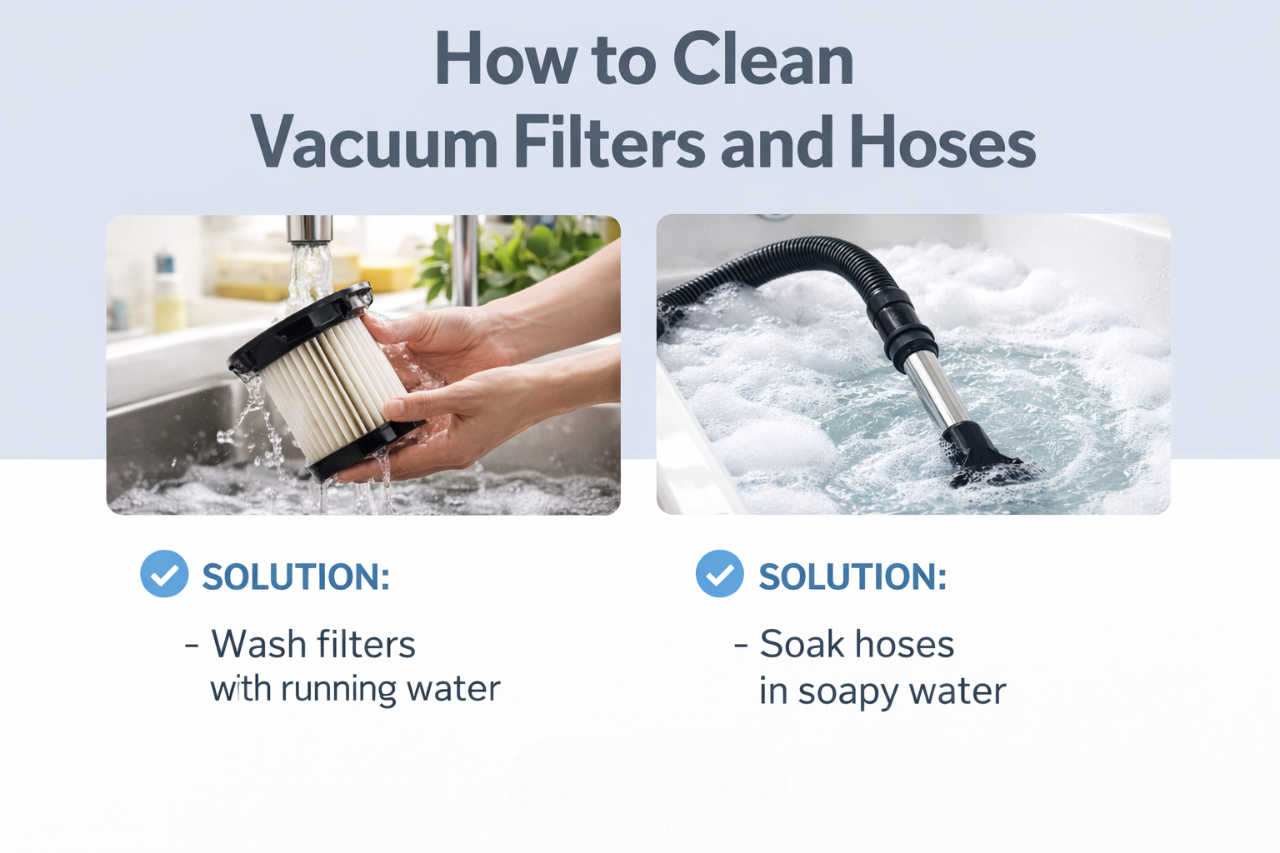
- Fill a bathtub or a large sink with warm water.
- Add a squirt of dish soap.
- Pro-Tip for Smells: Add 1/2 cup of baking soda or white vinegar to kill bacteria and mold spores inside the tube.
- Submerge the hose completely. Make sure water fills the inside of the tube, not just the outside.
- Let it soak for 15–30 minutes.
Step 3: Scrub the Inside (Optional)
If the hose is very dirty, use a long bottle brush. If you don’t have one, wrap a small rag around the middle of a wire coat hanger (straightened out), push it into the hose, and pull it back out to wipe the inner walls.
Step 4: Rinse and Dry (Crucial Step)
Rinse the hose thoroughly with shower water to remove all soap.
Drying: Hang the hose over a shower curtain rod or a door so it forms an inverted “U” shape. This allows water to drip out of both ends.
- Time: You must let it dry for 24 to 48 hours.
How to Clean Vacuum Filters
Step 1: Identify Your Filter Type
Check your manual. Generally, there are two types:
- Foam/Felt Filters (Pre-Motor): These are usually washable.
- HEPA/Paper Filters (Post-Motor): Some are washable, but many are not. If it is made of paper and looks like an accordion, do not wash it unless the manual specifically says so. Washing a non-washable HEPA filter ruins its fibers.
Step 2: Tap and Rinse
- Take the washable foam or felt filter out.
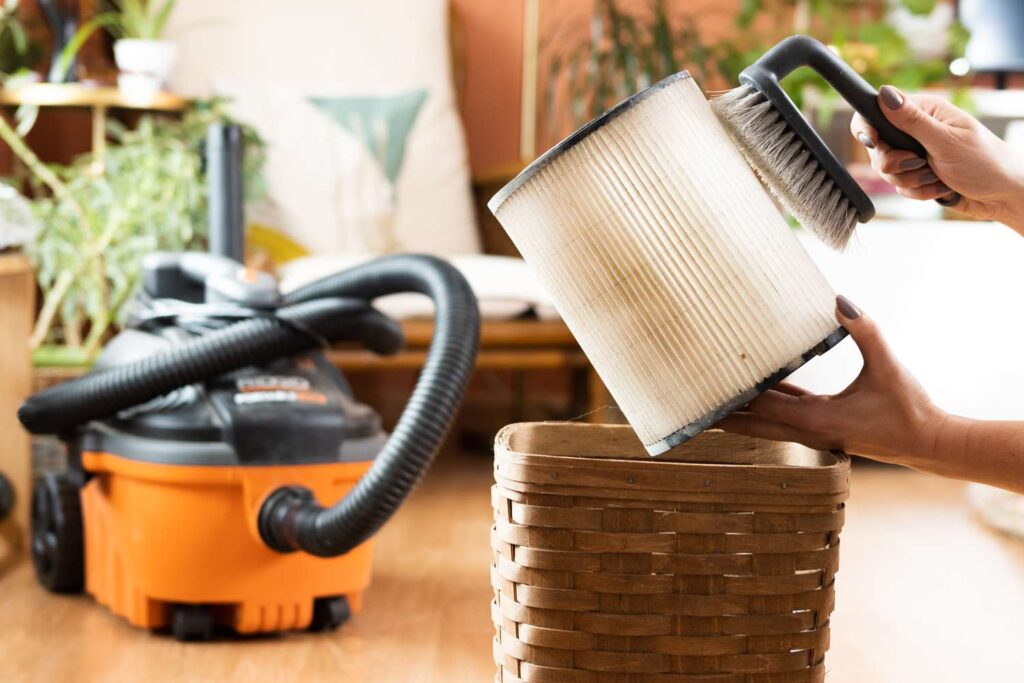
- Tap it against the side of a trash can to knock off loose dust.
- Run it under cold or lukewarm water. Squeeze it gently like a sponge to push the dirt out.
- Do not use soap unless the manufacturer suggests it, as soap residue can clog the pores.
- Rinse until the water runs clear.
Step 3: The Squeeze and Dry
Gently squeeze the excess water out (do not twist or wring it hard, or it might tear). Lay it flat on a dry towel in a ventilated area.
- Warning: Never put a damp filter back into the vacuum. It will grow mold and can kill the motor. Let it dry for 24 hours minimum.
How to Fix / Troubleshooting
- Vacuum smells like wet dog after cleaning: This means you reassembled the vacuum before the filter or hose was 100% dry. Remove them, wash them again with vinegar, and let them dry for 48 hours this time.
- Suction is worse after washing: You may have damaged a paper HEPA filter by washing it. If the filter looks disintegrated or fuzzy, buy a replacement.
Conclusion
Cleaning your filters and hoses isn’t just about hygiene; it saves you money on electricity and extends the life of your vacuum. Aim to rinse your filters once a month and deep clean your hose every three months.