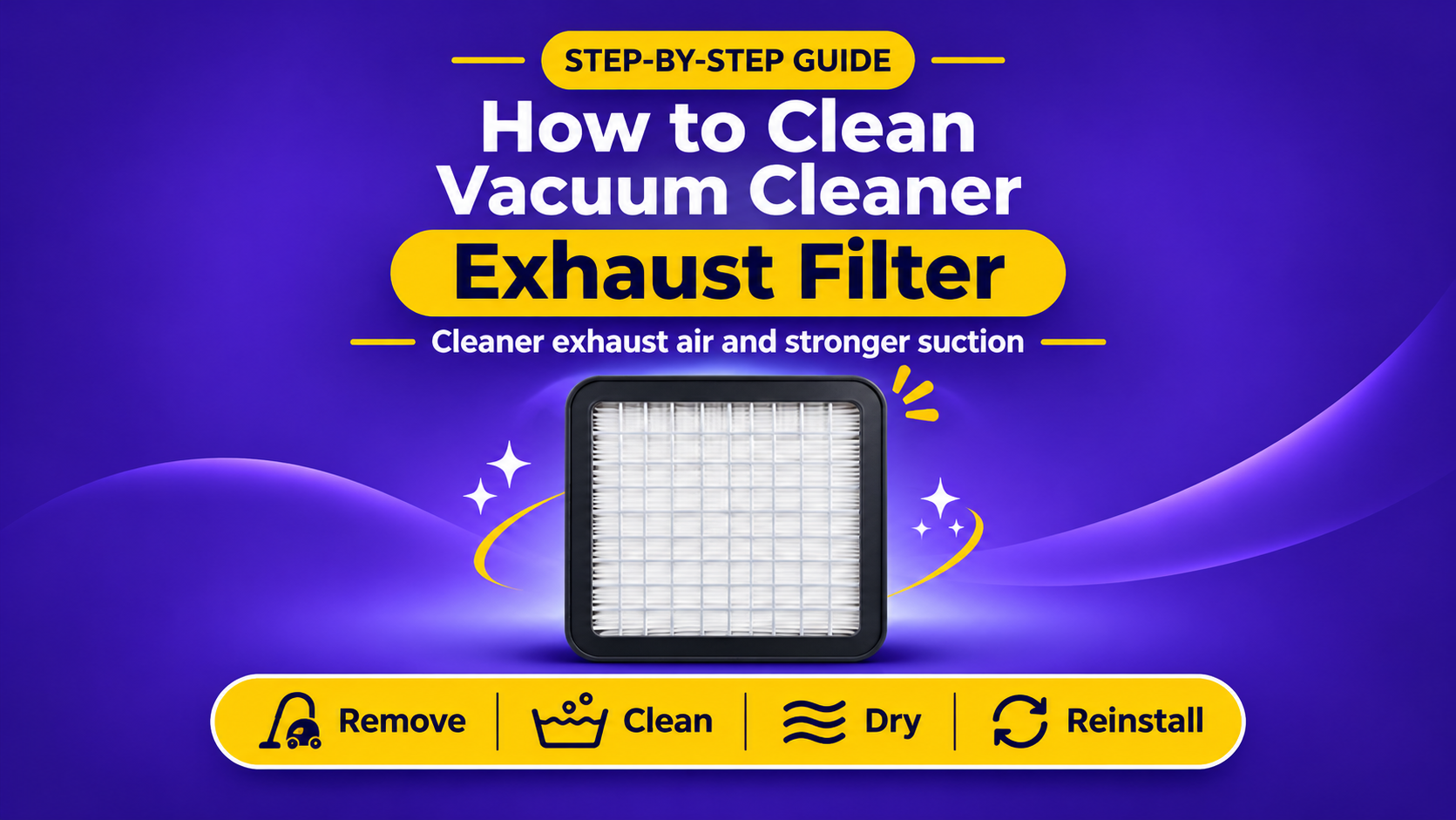
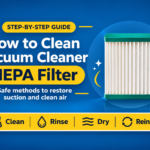
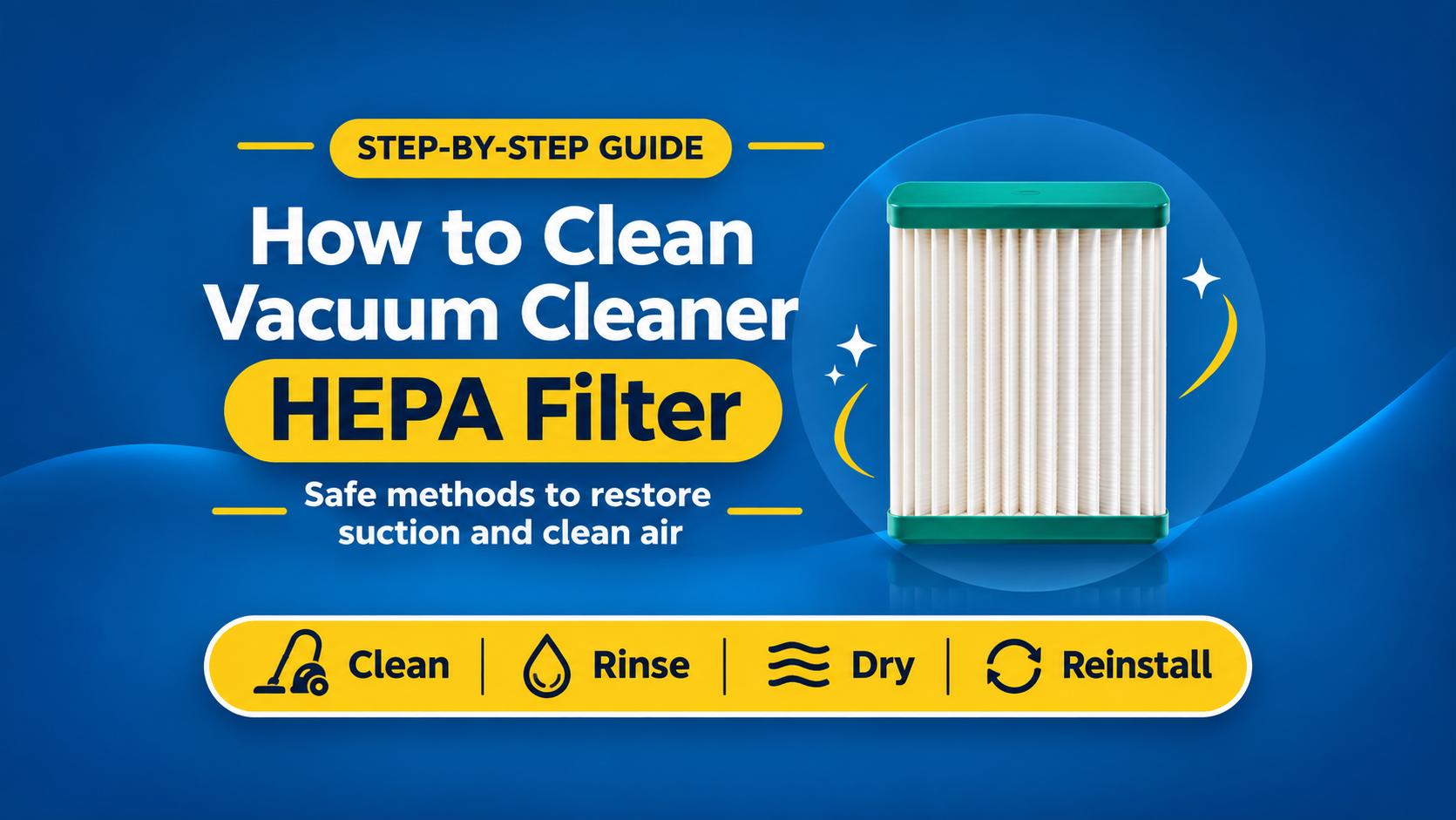
A HEPA filter is the last line of defense inside your vacuum cleaner. It traps fine dust, pollen, pet dander and other tiny particles so they do not drift back into your home. When the filter clogs, suction drops, the motor works harder, and the air coming out of your vacuum can smell stale or dusty. Cleaning it properly restores performance and helps your vacuum last longer.
The tricky part is that not every HEPA filter can be washed. This guide explains how to tell the difference, how to clean each type safely, how often to do it, and when it is time to replace the filter.
What Is a HEPA Filter and Why Does It Need Cleaning?
HEPA stands for High Efficiency Particulate Air. A true HEPA filter is designed to capture at least 99.97% of particles as small as 0.3 microns. It is made of a dense mat of fine fibers folded into pleats, which creates a large surface area for catching particles.
Because the filter catches such tiny particles, it gradually clogs. A blocked filter restricts airflow, which reduces suction, can cause overheating, and lets odors build up.
Signs Your HEPA Filter Needs Cleaning
- Suction feels weaker even though the bin is empty
- The vacuum smells musty or dusty when running
- Fine dust blows out of the exhaust
- The motor sounds strained or the vacuum shuts off from overheating
- The filter looks gray, dark or visibly caked with dust
- A filter indicator light or app alert is on
Can You Wash a Vacuum HEPA Filter?
It depends on the filter type. Always check the manual or the label printed on the filter frame first.
| Filter Type | Cleaning Method |
|---|---|
| Washable HEPA (marked washable or reusable) | Rinse with cold water, dry fully |
| Non-washable true HEPA (paper-like pleats) | Tap and brush gently, then replace on schedule |
| HEPA-type filter with foam or mesh layer | Wash the foam or mesh layer only, if the manual allows |
| Sealed HEPA cartridge | Follow manufacturer instructions only |
Important: if the manual does not say the filter is washable, assume it is not. Water can damage the delicate fibers and permanently reduce filtration.
What You Will Need
- Your vacuum’s user manual
- A trash bag or an outdoor area for tapping out dust
- A soft brush, such as a clean paintbrush or soft toothbrush
- A dust mask and gloves if you have allergies
- Cold running water (washable filters only)
- A clean, dry microfiber cloth
- A well-ventilated spot for air drying
How to Clean a Vacuum HEPA Filter Step by Step
Step 1: Unplug and Empty the Dust Bin
Turn off and unplug the vacuum, or remove the battery. Empty the dust bin or replace a full bag first, so fresh debris does not coat the clean filter.
Step 2: Remove the Filter
Locate the filter compartment, usually near the dust cup, behind the motor, or at the exhaust. Twist or pull it out gently. Take note of how it sits so you can reinstall it correctly.
Step 3: Tap Out Loose Dust
Go outside or hold the filter over a trash bag. Tap the frame gently against the inside of the bin to dislodge dust. Wear a mask, because fine particles will become airborne.
Step 4: Brush Gently
Use a soft brush to sweep dust from between the pleats, moving in the direction of the folds. Do not scrub hard or poke the pleats, since damage creates gaps that let dust pass through.
Step 5: Wash If, and Only If, It Is Washable
Hold the filter under cold running water, flowing from the clean side to the dirty side to push debris out. Do not use soap, detergent or hot water. Gently shake off excess water.
Step 6: Dry Completely
Let the filter air dry for at least 24 hours in a warm, well-ventilated place, away from direct sun and heat. Do not use a hair dryer, oven or radiator. Installing a damp filter can cause mold, odors and motor damage.
Step 7: Reinstall and Test
Once the filter is completely dry, place it back in the correct position and close the compartment. Run the vacuum briefly and check that suction is restored.
Cleaning HEPA Filters on Different Vacuum Types
Upright Vacuums
Uprights often have two filters: a pre-motor foam filter near the dust cup and a HEPA filter at the exhaust. Clean both according to the manual, and wash only those that are labeled washable.
Canister Vacuums
The HEPA filter is usually in a compartment behind the bin or near the exhaust grille. Bagged models may also need a fresh bag for best filtration.
Robot Vacuums
Robot vacuum filters are small and clog quickly. Tap them out weekly and replace them every few months, as the manufacturer suggests.
Cordless Stick and Handheld Vacuums
Filters usually sit inside or behind the cyclone bin. Remove the battery, clean as directed, and make sure the filter is bone dry before refitting.
Mistakes to Avoid
- Washing a non-washable filter: It ruins the fibers and filtration.
- Using soap or hot water: Residue and heat can damage the filter media.
- Using compressed air or high-pressure blasting: It can tear pleats and push dust deeper.
- Reinstalling a damp filter: It encourages mold and can harm the motor.
- Running the vacuum without a filter: Dust will reach the motor and your room air.
- Beating the filter hard: Rough handling cracks the frame and seal.
How Often Should You Clean and Replace a HEPA Filter?
| Situation | Cleaning | Replacement |
|---|---|---|
| Pets or allergies | Every 2 to 4 weeks | Every 3 to 6 months |
| Average household | Every 1 to 3 months | Every 6 to 12 months |
| Light use | Every 3 to 6 months | Every 12 months or as advised |
| Robot vacuum | Weekly tap-out | Every 2 to 3 months |
These are general guidelines. Always follow your vacuum manufacturer’s recommended schedule, since filter materials and designs vary.
When to Replace Instead of Clean
- The pleats are torn, bent or flattened
- The filter stays gray or smelly after cleaning
- Suction does not recover after a proper clean
- The frame or seal is cracked or warped
- The filter has passed the manufacturer’s recommended lifespan
Always buy a replacement that matches your exact vacuum model number, as a poor fit lets unfiltered air leak around the edges.
Tips to Keep Your HEPA Filter Clean Longer
- Empty the dust bin after every use, or when it reaches the max line
- Clean or replace the pre-motor filter regularly to protect the HEPA filter
- Avoid vacuuming wet messes, fine drywall dust or ash unless the vacuum is designed for it
- Keep a spare filter so you can rotate while one is drying
- Write the cleaning date on the filter frame with a pencil
Useful Accessories to Consider
A few inexpensive items make filter care easier: a spare or replacement HEPA filter that matches your model, a soft detail brush set, a pack of microfiber cloths, and a filter drying rack or mesh stand. Pairing the vacuum with fresh bags or a pre-filter pack also helps extend the life of the main filter.
Frequently Asked Questions
Can I vacuum my HEPA filter instead of washing it?
Light vacuuming of the dirty side with a soft brush attachment can remove surface dust, but it is less thorough than tapping and brushing, and it should never replace replacement when the filter is worn out.
How long does a washable HEPA filter take to dry?
Plan on at least 24 hours, and longer in humid weather. It should feel completely dry before you refit it.
Does cleaning restore full HEPA performance?
Cleaning restores airflow and suction, but fine particles trapped deep in the fibers cannot be fully removed, which is why periodic replacement is still needed.
Can I use a hair dryer to speed up drying?
No. Heat can warp the frame and damage the filter media. Air drying is the safest option.
Is it safe to run the vacuum without a HEPA filter?
No. Without it, dust can enter the motor and escape into the room, so always have a clean, dry filter installed.
Why does my vacuum still smell after cleaning the filter?
Check the dust bin, pre-filter, brush roll and hose for trapped debris. If the smell remains, the HEPA filter may be due for replacement.
Final Thoughts
Knowing how to clean a vacuum cleaner HEPA filter keeps suction strong, protects the motor and keeps the air in your home cleaner. Check whether your filter is washable, handle it gently, dry it completely, and replace it on schedule. A few minutes of care every month can add years to your vacuum’s life.