
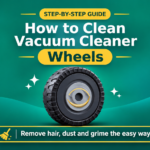




Your vacuum cleaner works hard to keep floors spotless, but its wheels quietly collect the very hair, dust and grime it picks up. Over time that buildup makes the vacuum harder to push, leaves scuff marks on hardwood, and can even stop the wheels from turning altogether. The good news is that cleaning vacuum cleaner wheels takes about ten minutes and requires nothing more than a few household items.
In this guide you will learn why wheels clog, what tools you need, how to clean them step by step on every common vacuum type, and how to keep them rolling smoothly for years.
Why Vacuum Cleaner Wheels Get Dirty
Wheels sit right at floor level, so they pick up everything the machine rolls over. Long hair, pet fur, carpet fibers, threads and fine dust wrap around the axle and compress into a tight, felt-like layer. Moisture from damp floors and sticky spills makes the mess stick even harder.
Common signs your wheels need cleaning include:
- The vacuum feels heavy or drags when you push or pull it
- Wheels squeak, grind or stop spinning
- Black marks or scratches appear on hard floors
- The vacuum pulls to one side
- Visible hair or thread is wrapped around the wheel
Tools and Supplies You Will Need
- Small scissors or a seam ripper to cut through wrapped hair and thread
- Old toothbrush or small detail brush to scrub crevices
- Damp microfiber cloth to wipe the tire and housing
- Screwdriver or coin to open the wheel cover or remove the wheel
- Tweezers or a toothpick for stubborn fibers
- Mild dish soap and warm water for sticky residue
- Silicone-based lubricant (optional) to keep the axle moving freely
How to Clean Vacuum Cleaner Wheels: Step by Step
Step 1: Unplug and Prepare
Always unplug the vacuum or remove the battery before you begin. Lay an old towel on a flat surface and carefully tip the vacuum on its side or back so the wheels are easy to reach. Empty the dust bin first to avoid spills.
Step 2: Remove the Wheels if Possible
Many upright and canister models have wheels that pop off with a gentle pull or a quarter turn, while others are held by a small screw or clip. Check your user manual. If the wheel is sealed in place, you can still clean it without removing it, though removal gives the best results.
Step 3: Cut and Remove Hair and Debris
Slide the tip of your scissors under the tangled hair and cut it lengthwise, being careful not to scratch the plastic. Pull the loosened strands away with tweezers. Work around the full circumference of the axle until the wheel spins freely. Do not simply pull, because that can pack the hair tighter.
Step 4: Scrub and Wipe
Use the toothbrush to loosen dust from the hub, axle and housing. Dip a microfiber cloth in warm, slightly soapy water, wring it out well, and wipe the rubber tire and plastic parts. For sticky residue, let the soapy cloth sit on the spot for a minute before wiping.
Step 5: Dry, Lubricate and Reassemble
Dry every part completely with a clean cloth to prevent rust and mold. If the wheel still feels stiff, apply a tiny amount of silicone lubricant to the axle. Avoid oil-based sprays, since they attract dust. Snap the wheels back in place and spin each one to confirm it turns smoothly.
Cleaning Wheels on Different Vacuum Types
Upright Vacuums
Uprights have large rear wheels and sometimes small front ones. Tilt the machine back, check the rear axle for wrapped hair, and clean the brush roll area at the same time since both collect similar debris.
Canister Vacuums
Canister models use swivel casters that trap hair around the pivot. Remove the caster if you can, then clean inside the swivel socket with a brush.
Robot Vacuums
Robot vacuums have small drive wheels and a front caster wheel. Lift out the caster wheel, remove hair from the axle, and wipe the drive wheel treads. Dirty drive wheels can cause the robot to slip, get stuck or report errors.
Cordless Stick Vacuums
Stick vacuums often have wheels on the floor head. Detach the head, then clean the wheels and the area around the brush bar. Never submerge electronic parts in water.
Common Mistakes to Avoid
- Soaking the vacuum or wheels: Water can damage motors, bearings and electronics. Use a damp cloth only.
- Using sharp blades carelessly: Deep scratches on the axle can cause squeaking and wear.
- Heavy oil lubricants: They collect dust and make the problem return faster.
- Forgetting to unplug: Accidental start-up is a real safety risk.
- Skipping the manual: Some wheels use clips or screws that break if forced.
How Often Should You Clean Vacuum Wheels?
| Household | Recommended Frequency |
|---|---|
| Pets or long-haired family members | Every 2 to 4 weeks |
| Average household | Every 1 to 2 months |
| Light use, hard floors only | Every 3 months |
| Robot vacuum (daily use) | Weekly quick check |
Tips to Keep Vacuum Wheels Cleaner for Longer
- Brush or comb pet hair before vacuuming when possible
- Clear large debris, threads and string from the floor first
- Do a quick visual check of the wheels each time you empty the bin
- Keep the brush roll clean so less hair migrates to the wheels
- Store the vacuum in a dry, clean spot
Helpful Accessories Worth Considering
A few inexpensive accessories make wheel maintenance faster. A small detail brush set is ideal for tight crevices, a hair-cutting tool designed for brush rolls speeds up tangles, and replacement wheels or casters are useful if yours are cracked. A microfiber cleaning cloth pack also helps you wipe the vacuum body and wheels without leaving lint behind.
When to Replace Vacuum Cleaner Wheels
Cleaning solves most problems, but wheels do wear out. Consider a replacement when you see:
- Cracks, chips or flat spots on the tire
- A bent or broken axle
- Wheels that still wobble or lock after a thorough cleaning
- Rubber that has hardened and leaves marks on floors
Replacement wheels are usually inexpensive, and you can find the correct part by checking your model number in the manual.
Frequently Asked Questions
Can I wash vacuum wheels with water?
Detached plastic and rubber wheels can be washed briefly in warm soapy water, then dried completely. Never wet the vacuum body or any electronic components.
Why does my vacuum wheel keep squeaking after cleaning?
Squeaking usually means dry or dirty axles. Clean the axle again and add a small drop of silicone lubricant.
What is the best way to remove hair wrapped around a wheel?
Cut the hair lengthwise with small scissors or a seam ripper, then lift the strands out with tweezers.
Can dirty wheels damage my floors?
Yes. Trapped grit and hardened rubber can scratch hardwood, laminate and vinyl, so clean wheels protect your flooring.
Do robot vacuum wheels need special care?
They need the same hair removal and dry wiping, but check them more often, ideally weekly, because they run so frequently.
Final Thoughts
Learning how to clean vacuum cleaner wheels is one of the easiest ways to improve performance, protect your floors and extend the life of your machine. With a few basic tools and ten minutes, you can restore smooth, quiet movement and avoid costly repairs. Make wheel cleaning part of your regular vacuum maintenance routine, and your vacuum will glide effortlessly for years to come.