
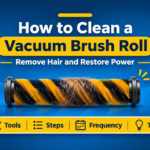




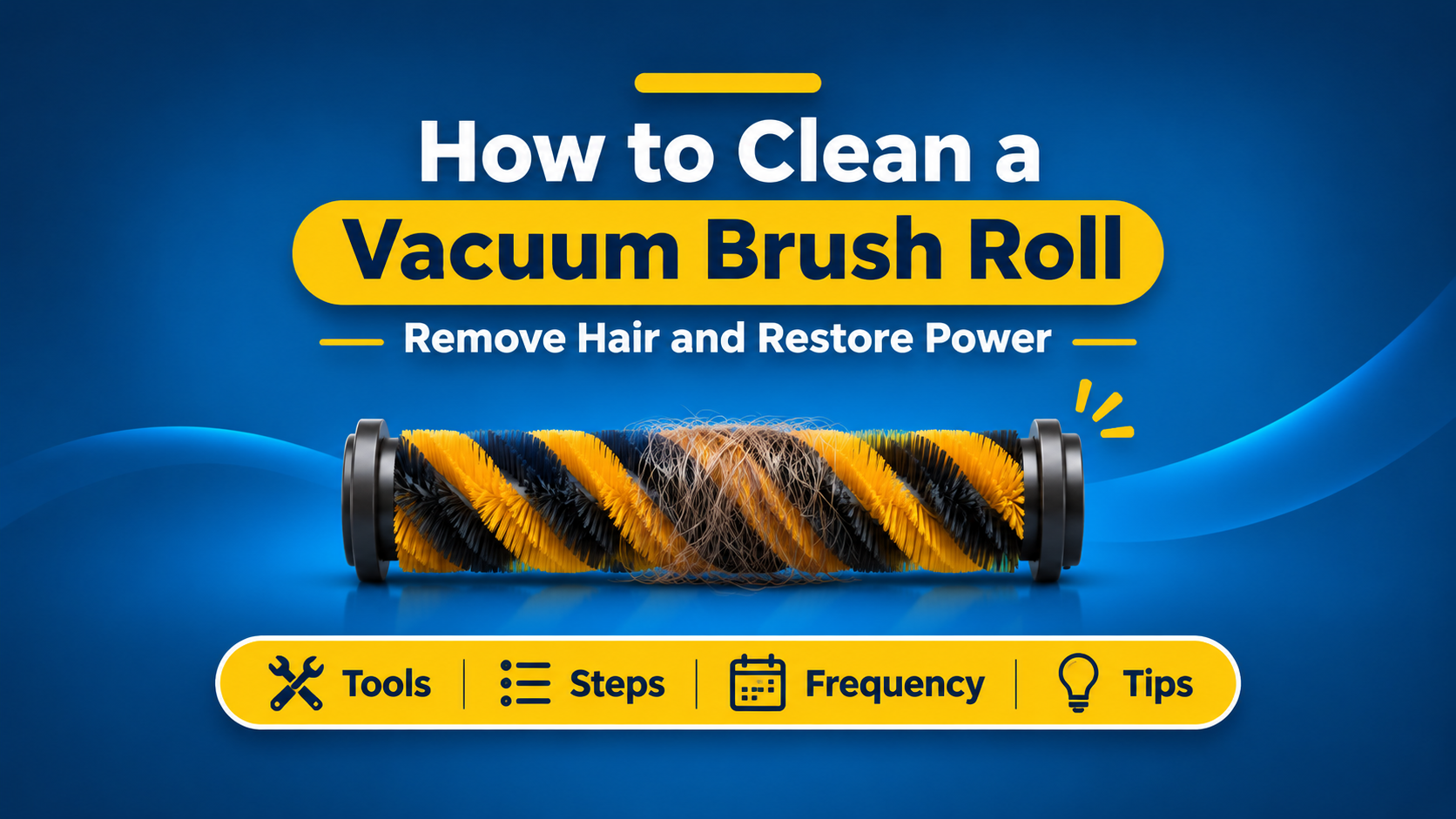
If your vacuum leaves hair on the carpet, feels hard to push or has lost cleaning power, the brush roll is often the reason. Hair, thread, carpet fibers and pet fur wrap around the roller until it cannot spin properly. The good news is that cleaning a vacuum cleaner brush roll takes only 5 to 10 minutes and needs very basic tools. It is one of the simplest ways to bring back strong cleaning performance.
In this guide you will learn why the brush roll gets dirty, how to clean it safely step by step, how to deal with different roller types, how often to clean it and how to know when it is time to replace it.
Table of Contents
- Why brush roll cleaning matters
- Signs your brush roll needs cleaning
- Types of brush rolls
- Tools you will need
- Step-by-step cleaning
- Cleaning different roller types
- Deep cleaning: end caps, bearings and belt
- How often to clean
- When to replace the brush roll
- Choosing a replacement
- Prevention tips
- Common mistakes
- FAQ
1. Why Brush Roll Cleaning Matters
The brush roll is the spinning part that agitates carpet fibers and lifts dirt and hair into the airflow. When it is wrapped in hair, it cannot agitate properly. A clogged roller also puts extra strain on the motor and belt, which can cause overheating, noise and early wear. Regular cleaning protects your floors, your machine and your cleaning results.
2. Signs Your Brush Roll Needs Cleaning
| Sign | What it means |
|---|---|
| Brush roll spins slowly or stops | Hair or thread is wrapped around the roller or axle |
| Hair and dust left on the carpet | Bristles are clogged or flattened |
| Loud rattling or squealing | Debris is stuck in the end caps or bearings |
| Burning rubber smell | Friction from a jammed roller or a stressed belt |
| Vacuum feels harder to push | Roller is dragging because of tangles |
| Brush roll indicator light on | Many models warn you when the roller is blocked |
3. Types of Brush Rolls
| Brush roll type | Best for and cleaning notes |
|---|---|
| Bristle brush roll | Carpets. Hair tangles easily; cut hair along the bristle rows. |
| Soft roller (microfiber) | Hard floors. Wipe clean; some can be washed, check the manual. |
| Rubber fin or tangle-free roller | Pet hair and long hair. Easier to clean but still needs checks. |
| Combination roller | Mixed floors. Clean both the bristles and the soft strips. |
| Robot vacuum roller | Small and often more tangled. Clean the end caps carefully. |
4. Tools You Will Need
- Scissors, a seam ripper or a small hook tool
- Screwdriver or coin if the cover is screwed or twist-locked
- Old comb or soft brush for bristles
- Damp cloth and a little mild soap
- Paper towel or trash bag for the hair
- Gloves (optional)
5. Step-by-Step: How to Clean a Vacuum Brush Roll
Step 1: Unplug the vacuum
Switch the vacuum off and unplug it. For a cordless model, remove the battery. This is essential because a spinning roller can injure fingers.
Step 2: Lay the vacuum down and open the cover
Turn the vacuum onto its back so you can see the underside. Unscrew or unclip the brush roll cover. Some models have a quick-release latch, and others need a coin.
Step 3: Remove the brush roll
Lift the roller out of its housing, noting how it sits and which end connects to the belt or drive. Take a photo if it helps you refit it later.
Step 4: Cut and remove tangled hair
Use scissors or a seam ripper to cut the hair along the roller, taking care not to cut the bristles. Pull away the loose hair and thread. For stubborn strands, slide the tool under them and lift.
Step 5: Clean the bristles
Comb the bristles with an old comb or brush to remove lint and fibers. Wipe the roller with a slightly damp cloth, and use a little mild soap for sticky dirt. Dry it thoroughly with a clean cloth.
Step 6: Clean the housing and ends
Remove hair and dust from the roller chamber, the end caps and the area around the belt. Check that the end caps spin freely.
Step 7: Refit and test
Place the roller back in its housing, close the cover and make sure everything clicks into place. Plug in the vacuum and run it briefly. The roller should spin smoothly and quietly.
6. Cleaning Different Roller Types
Bristle brush rolls
Cut hair along the bristle rows, then comb the bristles. Do not soak the roller because water can damage the bearings.
Soft rollers for hard floors
Wipe with a damp cloth. If the manual says the roller is washable, rinse it with cool water and let it air dry completely, which can take up to 24 hours, before refitting.
Pet hair and tangle-free rollers
These are easier to clean, but long hair can still collect on the ends. Check both end caps every time you clean.
Robot vacuum brushes
Remove the brush and its end caps, pull out hair from the bearings and wipe the roller. Robots clean often, so check them at least once a week in homes with pets.
7. Deep Cleaning: End Caps, Bearings and Belt
- End caps: pull them off if your model allows it and remove hair wound around the axle.
- Bearings: turn the end cap by hand. If it is stiff or grinding, it may need replacing.
- Belt: look for cracks, stretching or a shiny glazed surface. A worn belt can stop the roller from spinning.
- Housing: wipe out the compartment and make sure no debris blocks the roller path.
8. How Often Should You Clean the Brush Roll?
Clean sooner if the vacuum starts to leave hair behind or the roller slows down. In homes with long-haired people or shedding pets, a quick weekly check keeps the roller working properly.
9. When to Replace the Brush Roll
- Bristles are worn down, bent or bald in places.
- The roller wobbles or the end caps are loose or broken.
- It no longer spins even after cleaning and belt replacement.
- You see cracks, melted plastic or heavy damage.
- The vacuum still leaves dirt behind even after a deep clean.
10. Choosing a Replacement Brush Roll
| Feature | What to look for |
|---|---|
| Tangle-resistant design | Rubber fins or anti-wrap bristle patterns for pet and long hair. |
| Correct model fit | Match brand, model and roller length. |
| Removable end caps | Makes cleaning bearings and removing wrapped hair much easier. |
| Built-in cutting groove | A slot that lets you slice hair with scissors quickly. |
| Durable bristles | Dense, firm bristles that do not flatten fast. |
| Included parts | Check for end caps, bearings and belt if needed. |
Tip: photograph the model sticker and the old brush roll before you shop. It helps you match the part exactly.
11. Prevention Tips
- Cut and remove hair after every few uses if you have pets.
- Pick up threads, strings and large debris before vacuuming.
- Tie up or remove loose rugs fringes that can wrap around the roller.
- Use the hard-floor or no-brush setting for fringes and delicate rugs.
- Empty the dustbin and clean filters regularly to keep airflow strong.
- Do not vacuum cords, ribbons or yarn.
12. Common Mistakes to Avoid
- Cleaning with the vacuum plugged in or the battery connected.
- Cutting the bristles together with the hair.
- Soaking the roller or bearings in water.
- Refitting a damp roller.
- Ignoring squealing noises from the end caps.
- Putting the roller back in the wrong direction.
13. Frequently Asked Questions
Can I wash my brush roll?
Only if the manufacturer says it is washable. Otherwise, wipe it with a damp cloth. Always let it dry fully before using it.
How do I remove very tight hair?
Slide a seam ripper or scissors under the hair and cut it in several places. Then pull the sections off by hand.
Why does my brush roll keep tangling?
Long hair, pet fur and threads are the usual cause. A tangle-resistant roller and more frequent cleaning help.
Is it safe to run the vacuum without the brush roll?
Do not run it without the roller unless the manual allows it. Use the correct floor setting instead.
My brush roll is clean but still not spinning. Why?
The belt may be broken or slipping, the bearings may be seized or the motor may have a problem.
Final Thoughts
Cleaning the brush roll is a quick maintenance job that makes a big difference. Unplug, remove, cut away hair, wipe and refit. Check it regularly and replace worn parts when needed. A clean roller means stronger pickup, a happier motor and a longer-lasting vacuum.