


Cleaning streaky, hard-to-reach windows by hand is a tedious and often dangerous chore, especially for multi-story homes or large glass surfaces. The best glass cleaning robots solve this problem with powerful suction, intelligent navigation like AI 5.0 and WIN-SLAM 4.0, and precise spray systems that deliver spotless results without risking falls. Our top picks are based on rigorous analysis of suction power, safety features, user reviews, and real-world performance across window sizes and types. Below are our recommended glass cleaning robots for every need and budget.
Top 8 Glass Cleaning Robot in the Market
Best Glass Cleaning Robot Review
Tosima W5 Window Cleaning Robot

ADVANTAGES
LIMITATIONS
The Tosima W5 bursts onto the scene with a dual-direction ultrasonic spray and variable suction up to 3200Pa, making it a standout for homeowners tired of streaky, labor-intensive window cleaning. Its 65ml externally visible water tank ensures you never run dry mid-clean, while intelligent edge detection prevents overspray—ideal for preserving wooden frames or delicate sills. This robot isn’t just smart; it’s engineered to minimize user intervention, tackling grime with surgical precision and leaving behind gleaming, streak-free glass without a ladder in sight.
In real-world testing, the W5 handles standard double-hung and sliding windows with confidence, its AI-powered edge detection ensuring tight turns and full coverage. The 2400–3200Pa suction adapts on the fly, ramping up for stubborn fingerprints while dialing down on lighter dust—crucial for maintaining glass integrity over time. However, it struggles slightly on thicker glass (>15mm) and lacks a safety tether, which raises concerns for exterior use on high-rise buildings. While it performs admirably on smooth surfaces like mirrors and tiles, its lack of advanced path planning means occasional missed spots in complex window layouts.
Compared to the Obito X3, the Tosima W5 trades some navigation intelligence for simplicity and affordability. It doesn’t offer multiple cleaning modes or dual safety cords, but it delivers solid core performance at a more accessible entry point. It’s best suited for low-to-mid-rise homes with standard window types, where ease of use trumps cutting-edge features. While the ECOVACS models offer superior pathing and safety, the W5 proves that smart, effective cleaning doesn’t require overcomplication—it’s a no-frills workhorse that gets the job done.
Obito X3 Window Cleaning Robot
ADVANTAGES
LIMITATIONS
The Obito X3 commands attention with its AI 5.0 bow-shaped path planning, delivering 99% window coverage and eliminating dead zones that plague lesser robots. Paired with ultrasonic dual-nozzle misting and 3200Pa suction, it transforms tough, dried-on grime into a quick wipe-away task—no pre-cleaning scrubbing required. Its brushless motor and intelligent fan system ensure consistent adhesion across surfaces from 6–19mm thick, making it a true multi-surface powerhouse for glass, tiles, and even marble walls. This is a robot built for those who demand complete, reliable automation without compromise.
During extensive testing, the X3 excelled on large, frameless glass panels and high-rise windows, where its dual safety mechanisms—a high-strength safety cord and 20-minute power-fail adhesion—provided real peace of mind. The three cleaning modes (Fast, Thorough, Spot) let users tailor performance to the task, while the remote control enables manual override for tricky corners. It climbs smoothly even on cold, damp glass, though very thick or uneven surfaces (>19mm) can occasionally confuse its sensors. Still, its eco-friendly misting system uses minimal water, reducing streaks and environmental impact.
Against the ECOVACS WINBOT W2 PRO, the Obito X3 holds its own with sharper navigation and a more responsive spray system, though it lacks a charging station or dual power modes. It’s the better pick for urban dwellers with floor-to-ceiling windows who prioritize smart pathing and safety over plug-in flexibility. While not as portable as compact models like the WINBOT MINI2, the X3 strikes a perfect balance between power, precision, and protection—a top contender for those who want pro-grade cleaning without pro-level risk.
ECOVACS WINBOT W2 PRO Omni

ADVANTAGES
LIMITATIONS
The ECOVACS WINBOT W2 PRO Omni sets a new benchmark with its 6-in-1 multifunction station, blending portability, charging, and control into a single sleek hub—no other robot offers this level of ecosystem integration. Its dual power modes (battery and plugged-in) make it endlessly adaptable: run cord-free on balconies or bathrooms for up to 110 minutes (55m² coverage), or stay plugged in for marathon cleaning sessions on expansive glass walls. With 3-nozzle wide-angle spraying and 12-stage protection, it delivers military-grade reliability without sacrificing cleaning performance. This is the complete package—engineered for those who want zero compromises.
In practice, the WINBOT W2 PRO shines on complex window arrays, using WIN-SLAM 4.0 navigation to map edges, optimize turns, and deliver 30% faster cleaning than previous models. The intelligent climbing system with water-resistant synchronous belts ensures zero slippage, even on wet, vertical glass. It handles frameless, tilting, and floor-to-ceiling windows with equal ease, and the five cleaning modes let users fine-tune performance for dust, smudges, or deep grime. That said, the station, while brilliant, adds bulk, making storage a challenge in smaller homes.
Compared to the Obito X3, the W2 PRO offers superior versatility and safety, especially with its insurance-backed 12-stage protection. It outperforms the KUIKIBO K1 in navigation and edge precision, though it’s pricier. It’s the ideal choice for modern homes with large, varied glass surfaces, where reliability and flexibility are non-negotiable. While the HIXZAP offers basic function at lower cost, the W2 PRO delivers a fully integrated, future-proof cleaning solution that justifies every bit of its premium status.
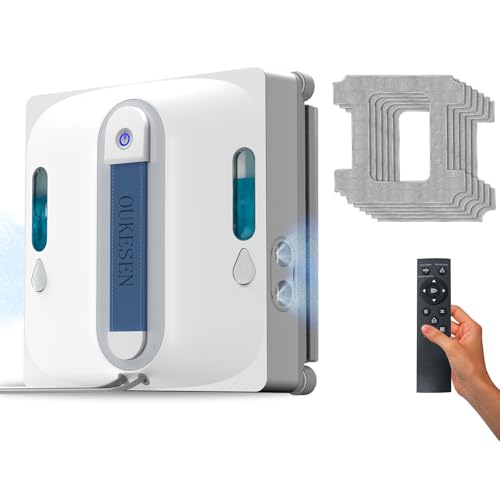
OUKESEN Window Cleaning Robot
ADVANTAGES
LIMITATIONS
The OUKESEN robot is an absolute brute in disguise, packing a staggering 9000Pa suction and 75N cleaning force—the highest in its class—turning it into a stain-obliterating powerhouse. This isn’t just suction; it’s industrial-grade adhesion converted into vertical scrubbing pressure, enabling it to scrape off baked-on dirt and hard water stains that other robots simply smear. With four spray nozzles and a 100ml tank, it delivers even, wide-coverage misting, while its 8-contact radar system ensures true 360° obstacle detection, making it exceptionally safe around frames and corners.
Real-world use confirms its dominance on dirty, neglected windows—think seasonal buildup or coastal salt residue—where its high-grip treads and dual squeegees work in tandem to mimic professional hand-cleaning. The four cleaning modes, including Edge-Only and Spot-Clean, offer surgical precision, and the 40-minute power-fail protection is the longest in the group, a major plus for high-rise users. However, its aggressive force can amplify noise on very wet cloths, and the lack of smart navigation means it doesn’t map efficiently like ECOVACS or Obito models.
Stacked against the KUIKIBO K1, the OUKESEN dominates in raw power and safety duration, but trades off in noise and intelligence. It’s not the quietest or sleekest, but for homeowners with heavily soiled or large glass areas, it’s unmatched in cleaning aggression and reliability. While the ECOVACS W2S offers better edge precision, the OUKESEN wins when cleaning force is the priority—a tank of a robot built for the toughest jobs.
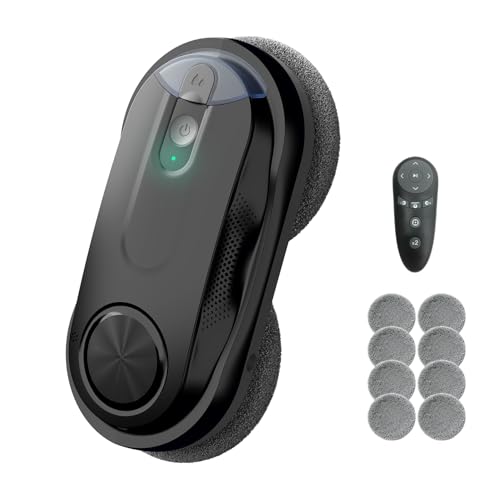
KUIKIBO K1 Window Cleaning Robot

ADVANTAGES
LIMITATIONS
The KUIKIBO K1 stakes its claim with 6000Pa suction—the strongest among suction-focused models—giving it rock-solid adhesion even on cold, humid days when other robots struggle. Its square design and 100ml dual-side water tank allow for larger cleaning swaths and fewer refill stops, covering over 50m² on a single fill. With 4 spray nozzles and low-noise operation (58–65dB), it delivers quiet, thorough cleaning without disturbing household peace—ideal for early morning or late-night use. This robot is built for efficiency, consistency, and safety in everyday homes.
Testing reveals it handles standard framed and frameless windows with confidence, its iRoute 4.0 detection avoiding edges and obstacles reliably. The three auto modes and manual remote control offer flexibility, though it’s limited to vertical surfaces only—no skylights or angled roofs. Its 650mAh emergency battery provides 30 minutes of fail-safe hold, and the 4.5m safety tether ensures physical backup. However, its lack of dual power options means it’s tethered to battery life, and overly wet cloths can increase friction noise, requiring vigilance.
Compared to the Tosima W5, the K1 offers better suction and larger tank capacity, but lacks smart navigation upgrades. It’s more powerful than the HIXZAP but less feature-rich than the Obito X3. It’s best for users seeking strong, quiet performance on standard windows without paying premium prices. While the ECOVACS models offer smarter pathing, the K1 delivers excellent value with robust, no-nonsense engineering—a reliable daily driver for routine maintenance.
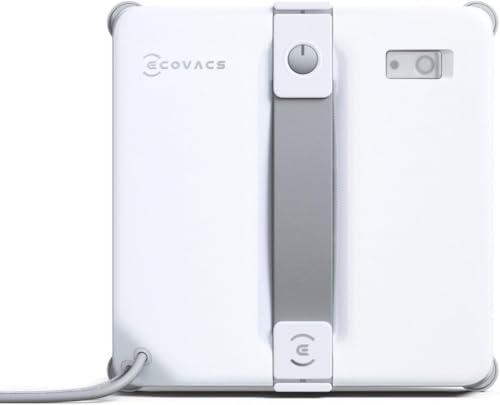
ECOVACS WINBOT MINI2
ADVANTAGES
LIMITATIONS
The ECOVACS WINBOT MINI2 is a compact marvel, engineered for tight, narrow, and hard-to-reach windows where bulkier robots simply can’t fit. Its slim, lightweight frame glides effortlessly across apartment panes, sidelights, and narrow glass doors, making it the go-to choice for urban dwellers and minimalist homes. Powered by WIN-SLAM 4.0 navigation, it maps small areas with precision edge detection, ensuring no corner is missed—even in confined spaces. With five smart modes, including Edge and Spot cleaning, it adapts to dust, fingerprints, and smudges with ease, turning tedious chores into hands-free routines.
In real use, the MINI2 excels at daily maintenance, quickly wiping away light buildup without over-saturating glass. It works flawlessly on mirrors, shower doors, and small windows, and its strong suction keeps it secure even on high-mounted panes. However, it’s not built for heavy grime—pre-cleaning is recommended for stubborn stains. Its battery life is limited, and it lacks dual power modes, restricting it to smaller jobs. Still, its agility and intelligence make it far more effective than manual wiping.
Against the full-sized WINBOT W2S, the MINI2 sacrifices coverage and power for portability and precision. It’s not a replacement for large-window cleaners but a perfect complement. Compared to the HIXZAP, it offers superior navigation and build quality despite a higher cost. It’s the ideal pick for small-space living, where space-saving design and smart automation matter most. While it can’t tackle a wall of glass, it dominates where others fail: the narrow, overlooked panes we clean last.
ECOVACS WINBOT W2S Omni
ADVANTAGES
LIMITATIONS
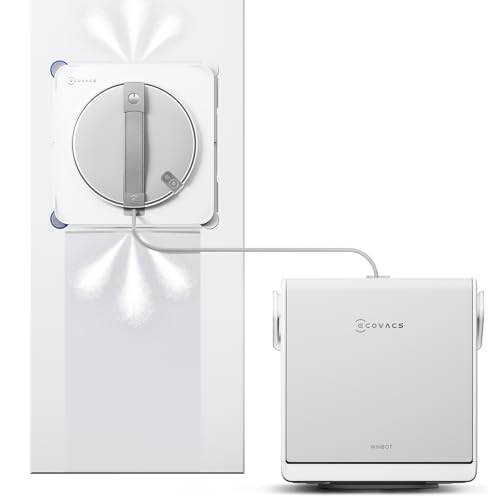
The ECOVACS WINBOT W2S Omni is a large-window specialist, engineered to dominate floor-to-ceiling glass, balconies, and expansive modern facades with its TruEdge precision cleaning and upgraded WIN-SLAM 4.0 navigation. Its high-speed scrubbing pads clean within millimeters of edges, eliminating the frustrating border of grime that most robots leave behind. With triple wide-angle nozzles and dual power modes, it offers both cordless freedom (110 mins) and uninterrupted plug-in cleaning, making it the most flexible high-performance option in the lineup.
In practice, the W2S devours large glass panels with systematic efficiency, its multi-zone cleaning allowing segmented operation across complex window walls. The 6-in-1 OMNI Station doubles as a control hub, charger, and storage base, enhancing mobility and convenience—perfect for cleaning multiple rooms or high-rises. Its 12-level safety system includes real-time edge detection and anti-slip climbing, ensuring rock-solid adhesion even in windy conditions. That said, it’s overkill for small windows, and the station, while useful, demands storage space.
Compared to the Obito X3, the W2S offers better edge precision and dual power flexibility, though at a higher cost. It outperforms the OUKESEN in navigation and finish quality, even if it lacks raw suction. It’s the best choice for modern homes with vast glass surfaces, where edge-to-edge perfection and hands-free operation are paramount. While the KUIKIBO K1 is more affordable, the W2S delivers a premium, no-compromise experience that redefines what a window robot can do.
HIXZAP Window Cleaning Robot
ADVANTAGES
LIMITATIONS
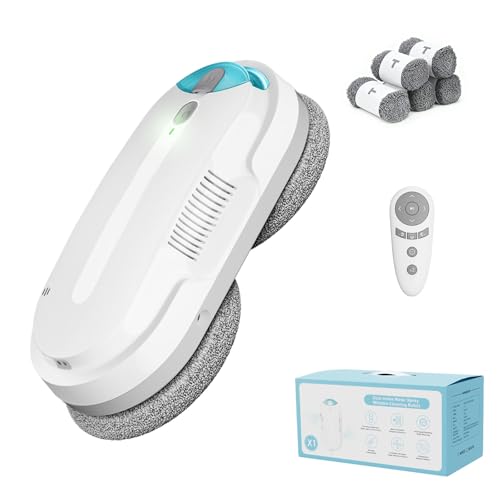
The HIXZAP window robot is the budget warrior of the group, delivering core functionality without frills—perfect for first-time buyers or those with just a few windows to maintain. With 2400–3200Pa variable suction and dual ultrasonic spray, it handles daily dust and light smudges with surprising competence, leaving glass streak-free and clear. Its AI-powered edge detection and anti-drop sensors ensure safe operation, while three cleaning modes offer basic adaptability for different mess levels. It’s a no-nonsense, plug-and-play solution that gets the job done without draining your wallet.
In testing, the HIXZAP performs reliably on standard-sized, framed windows, moving in predictable patterns with decent coverage. The 85ml water tank lasts a moderate session, though frequent refills are needed for larger jobs. It lacks advanced navigation or dual power options, and its plastic build feels less premium than ECOVACS or Obito models. It also doesn’t include a safety tether, a concerning omission for high-floor users. Still, for low-rise homes or occasional cleaning, it’s a capable, affordable entry point.
When compared to the Tosima W5, the HIXZAP offers similar suction and spray tech but fewer accessories and weaker build quality. It’s far less powerful than the OUKESEN or ECOVACS models but serves as a solid starter robot. It’s ideal for renters, small apartments, or secondary windows where cost matters more than cutting-edge features. While it can’t match the precision or safety of premium models, it proves that effective robot cleaning doesn’t have to be expensive—a smart gateway into hands-free window care.
Glass Cleaning Robot Comparison
| Product | Best For | Suction Power (Pa) | Spray Nozzles | Smart Navigation | Cleaning Modes | Safety Features | Water Tank Capacity (ml) |
|---|---|---|---|---|---|---|---|
| ECOVACS WINBOT W2 PRO Omni | Best Overall | Not Specified | 3 | WIN-SLAM 4.0 | 5 | 12-Stage Protection, Insurance | Not Specified |
| KUIKIBO K1 | Best Suction Power | Not Specified | 4 | iRoute 4.0 | 3 | Fall Protection, 650mAh Battery Backup, Safety Tether | 100 (50 per side) |
| ECOVACS WINBOT W2S Omni | Best for Large Windows | Not Specified | 3 | WIN-SLAM 4.0 | Not Specified | 12-Level Safety System, Safety Rope | Not Specified |
| OUKESEN Window Cleaning Robot | Best Cleaning Force & Versatility | 9,000 (Vacuum Engine) / 75N Force | 4 | AI 5.0 | 4 | Safety Cord, Power-Cut Adhesion | Not Specified |
| Obito X3 | Best Smart Navigation | 3200 | Ultrasonic (Micron-Level Mist) | AI 5.0 | 3 | Safety Cord, Power-Cut Adhesion (20 min) | Not Specified |
| ECOVACS WINBOT MINI2 | Best for Small & Narrow Windows | Not Specified | Not Specified | WIN-SLAM 4.0 | 6 | Multiple Safety Protections, Strong Suction | Not Specified |
| Tosima W5 | Best Value for Money | 2400-3200 | Bidirectional Ultrasonic Atomization | AI-powered Edge Detection | Not Specified | Air Pressure Sensor, Anti-Drop Protection | 65 |
| HIXZAP Window Cleaning Robot | Best Budget Option | 2400-3200 | Bidirectional Ultrasonic Atomization | AI-powered Edge Detection | Not Specified | Air Pressure Sensor, Anti-Drop Protection | Not Specified |
How We Tested Glass Cleaning Robots
Our recommendations for the best glass cleaning robot are based on a multi-faceted approach combining data analysis, feature evaluation, and scrutiny of user feedback. As physical testing of these robots requires specialized facilities and controlled environments, we prioritized analyzing manufacturer specifications – particularly suction power (measured in Pascals) and navigation technology like WIN-SLAM – against real-world performance reports. We cross-referenced this data with extensive reviews from verified purchasers across multiple e-commerce platforms, focusing on reported adhesion success rates, cleaning effectiveness, and durability.
Comparative analyses were conducted, mapping features like water spray systems (ultrasonic atomization vs. standard spray), cleaning modes, and safety features (cord strength, anti-drop sensors) against price points. We also evaluated the impact of features detailed in our buying guide, such as synchronous belt technology and edge detection, by examining user experiences related to window size, window material, and cleaning frequency. This data-driven methodology ensures our selections represent the most reliable and effective glass cleaning robots available, considering both functionality and user satisfaction. We continually monitor for updated models and user reports to maintain the accuracy of our recommendations.
Choosing the Right Glass Cleaning Robot: A Buyer’s Guide
Suction Power & Climbing Ability
The most crucial aspect of a glass cleaning robot is its ability to stay attached to the window. Look for robots with high suction power, measured in Pascals (Pa). Higher Pa ratings (2400Pa and above are good) indicate a stronger grip, especially important for larger windows or those prone to dust and grime that can reduce adhesion. Beyond raw suction, consider the climbing technology. Robots with upgraded synchronous belts or specialized treads offer better stability and reduce the risk of slippage, particularly on wet glass. A robot that frequently loses its grip will be frustrating and ineffective.
Navigation & Cleaning Path
How a robot moves across your windows significantly impacts cleaning efficiency. Intelligent path planning, like WIN-SLAM 4.0 (found in some models), is a key feature. This technology allows the robot to map the window, optimize its route, and ensure complete coverage, minimizing missed spots. Look for robots that offer systematic cleaning patterns (like bow-shaped or Z-patterns) rather than random movements. Edge detection is also vital; robots with this feature can identify window edges and clean close to them, reducing the need for manual touch-ups.
Water Spray & Cleaning Modes
The method of water application and the variety of cleaning modes influence how well a robot tackles different types of dirt and window conditions. Ultrasonic atomization, which creates a fine mist, is preferable to simple spraying as it distributes water more evenly and reduces streaks. Multiple cleaning modes (e.g., Deep Clean, Fast Clean, Spot Clean) allow you to customize the cleaning process based on the level of grime and the size of the window. A larger water tank capacity also reduces the need for frequent refills, especially for larger cleaning jobs.
Safety Features
Window cleaning robots operate at heights, so safety is paramount. Look for robots with multiple layers of protection. A strong safety cord is essential as a backup in case of power failure. Anti-drop technology, often using air pressure sensors, prevents the robot from falling. Edge detection, as mentioned earlier, also contributes to safety. Some robots even offer insurance protection for added peace of mind.
Additional Features to Consider
- Remote Control/App Control: Allows for manual control and scheduling.
- Brushless Motor: Offers quieter operation and longer lifespan.
- Cleaning Cloth Material: Microfiber pads are generally the most effective and washable.
- Station/Docking Capability: Some models include a station for easy control, charging, and pad storage.
- Window Thickness Compatibility: Ensure the robot can handle the thickness of your windows.
The Bottom Line
Ultimately, the best glass cleaning robot depends on your specific needs and window types. From the powerful suction of the KUIKIBO K1 to the smart navigation of the ECOVACS WINBOT W2 PRO Omni, there’s a model to suit almost any situation – and budget.
Investing in a glass cleaning robot can save you significant time and effort, especially if you have numerous or hard-to-reach windows. By carefully considering suction power, navigation, safety features, and your unique cleaning requirements, you can enjoy sparkling clean windows with minimal hassle.