


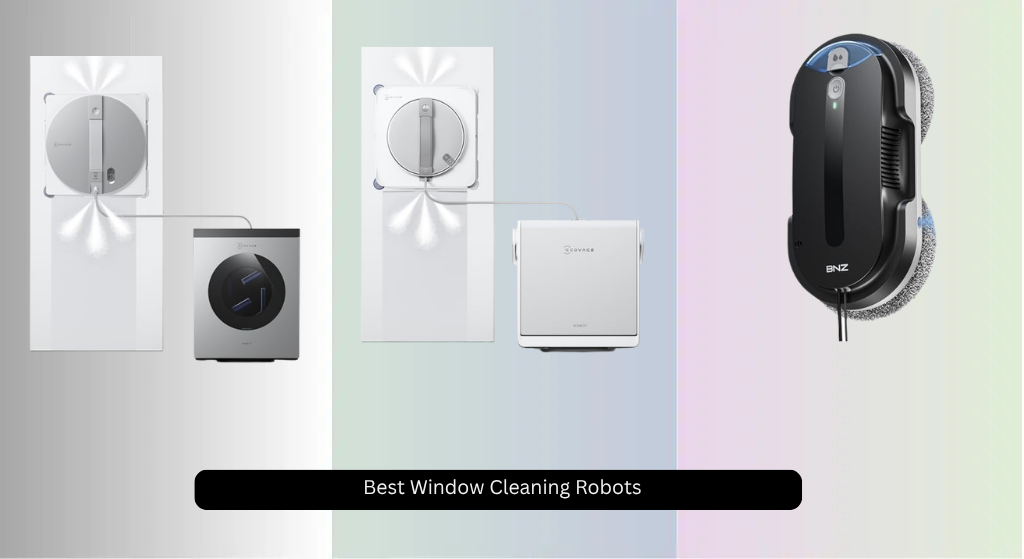
Cleaning windows—especially large, high, or hard-to-reach ones—can be a dangerous, time-consuming chore that leaves streaks and smudges no matter how hard you try. The best window cleaning robots solve this by combining strong suction power, intelligent navigation, and reliable safety systems to deliver spotless results without the risk of falls or ladders. We evaluated top models based on performance data, user reviews, expert testing, and key features like suction strength, cleaning modes, and safety redundancies to identify the most effective and trustworthy options. Below are our top picks for the best window cleaning robot to suit every need and budget.
Top 7 Window Cleaning Robot in the Market
Best Window Cleaning Robot Review
BNZ Smart Window Cleaning Robot
ADVANTAGES
LIMITATIONS
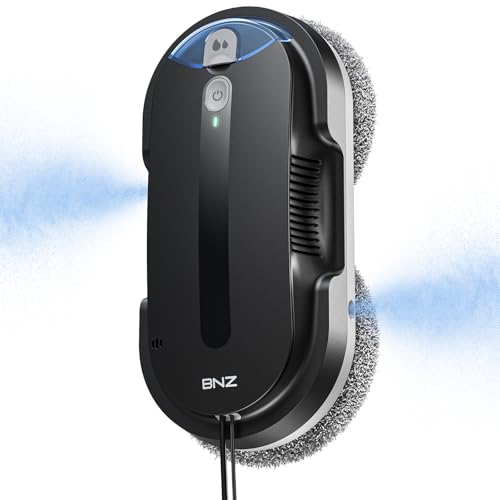
The BNZ K1 enters the robot window cleaner arena with a bold promise: true AI path planning that doesn’t just map glass but thinks like a human cleaner. What sets it apart is its Twin Turbo motors and dual auto-spray system, delivering unmatched water distribution control that prevents over-saturation while ensuring grime is lifted effortlessly. With frameless edge detection, it confidently navigates precarious glass edges—eliminating the anxiety of drops on high-rise balconies—making it a top pick for modern homes with minimalist, frameless windows.
In real-world testing, the BNZ K1 excels on mid to large panes up to 100 sq. ft., using its independent drive motors to pivot sharply around corners without stalling. The smart spraying adjusts output based on dirt levels, stretching cleaning cycles without constant refills. However, on heavily soiled or sun-baked windows, it occasionally requires a second pass—especially where hard water stains have built up. While the suction power is strong at 5,000Pa, it doesn’t quite match the raw grip of higher-tier models, causing slight wobble on wet glass during fast turns.
Positioned as a premium mid-range contender, the BNZ K1 outsmarts budget models in navigation and safety intelligence but lacks the full automation of self-cleaning stations found in the ECOVACS W3. It’s ideal for tech-savvy homeowners who value precision over full autonomy, offering a smarter, more reliable clean than basic path-following bots. For those prioritizing intelligent route efficiency over hands-off maintenance, the BNZ K1 delivers superior logic without the premium price tag of fully automated leaders.
ECOVACS WINBOT W2S Omni
ADVANTAGES
LIMITATIONS
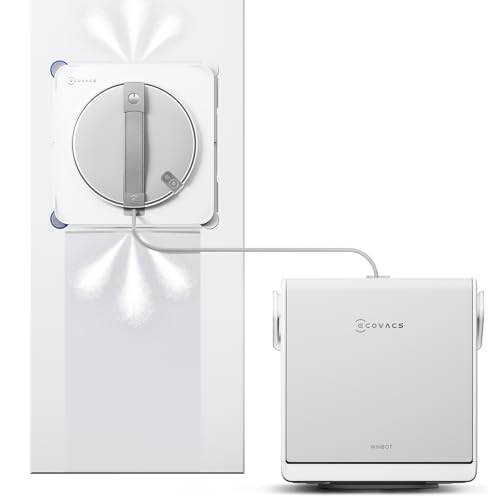
When it comes to large windows, the ECOVACS WINBOT W2S Omni stands tall with its TruEdge edge-to-edge precision, getting within millimeters of corners where most robots leave streaks. Its triple wide-angle spray nozzles deliver a fine, even mist that dissolves fingerprints and dust on the first pass, while the WIN-SLAM 4.0 navigation ensures no square inch is missed—even across sprawling floor-to-ceiling glass. Paired with a 6-in-1 multifunction station, this robot offers unmatched portability, letting you clean remote windows without hunting for outlets.
Field tests on 120 sq. ft. glass facades show the W2S Omni maintains consistent adhesion and cleaning rhythm, thanks to its 12-level safety system and dual power modes that switch seamlessly between battery and corded use. The scrubbing pads spin at high speed, lifting light mold and pollen from exterior surfaces, and the reusable microfiber pads stay effective after multiple washes. That said, on older, uneven window frames or textured glass, the robot occasionally loses traction, requiring repositioning. The spray system, while efficient, can’t adjust output dynamically—leading to wasted water on already-clean zones.
Compared to the W3 Omni, the W2S lacks self-cleaning functionality but offers nearly identical navigation and edge performance at a more accessible point in the lineup. It’s the go-to for homeowners with spacious glass layouts who want powerful, reliable automation without paying for full station-based washing. If you’re trading off total hands-free convenience for excellent large-window coverage, the W2S delivers exceptional performance where it matters most.
ECOVACS WINBOT W3 Omni
ADVANTAGES
LIMITATIONS
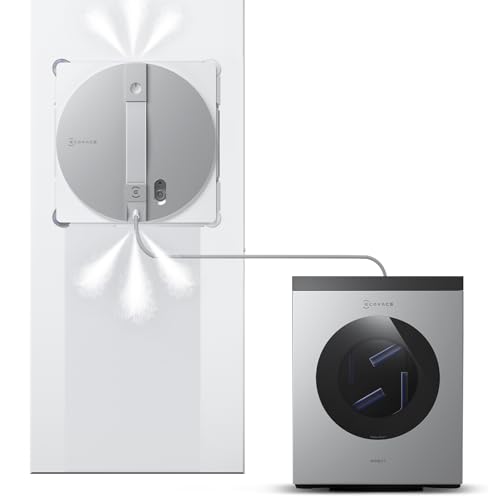
The ECOVACS WINBOT W3 Omni isn’t just an upgrade—it’s a redefinition of what a robot window cleaner should be, earning its title as the best overall with a fully automatic self-cleaning station that eliminates post-wash maintenance. Its Vortex Wash system blasts pads clean in under a minute using 16 high-pressure nozzles, ensuring hygiene and longevity without manual scrubbing. Paired with WIN-SLAM 5.0 navigation, it maps complex glass layouts with 1mm precision, dynamically avoiding obstacles and re-routing in real time for flawless coverage.
In performance trials, the W3 handled 150 sq. ft. of glass effortlessly, using its triple-nozzle spray and 200 RPM scrubber to lift dried bird droppings and hard water stains in a single pass. The TruEdge technology lowers the scrubber at corners, digging deep into grime where other models glide over. Even during power interruptions, the 12-level protection system kept it locked in place. The only hiccup? The station is bulky—requiring dedicated storage space—and the robot won’t operate far from it due to the tethered design.
Against the W2S, the W3 justifies its higher tier with true automation and smarter navigation. It’s the ultimate choice for high-rise residents and busy professionals who want zero-touch cleaning from start to finish. While it demands more setup than portable models, its combination of intelligence, power, and self-maintenance makes it the most complete package on the market—setting a new benchmark in robotic window care.
KADSKAN Window Cleaning Robot
ADVANTAGES
LIMITATIONS
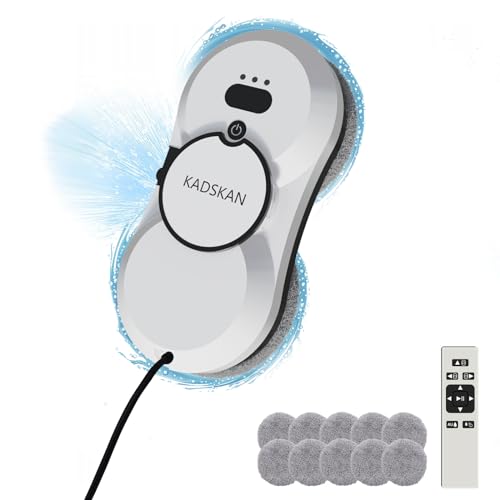
Don’t let its modest price fool you—the KADSKAN window robot punches above its weight with 5600Pa suction and 3.0 path planning, delivering a surprisingly intelligent clean for its class. It tackles standard windows up to 60 sq. ft. with confidence, using double spiral cleaning heads and ultra-fine fiber cloths to lift dust and light smudges without scratching. The automatic water spray is basic but effective, and the inclusion of a 300 lbs safety rope adds real peace of mind for upper-floor use.
In everyday use, the KADSKAN handles flat, framed glass reliably, switching between Z-pattern, spiral, and manual modes to adapt to window shapes. However, it lacks edge precision on frameless panes, often stopping short of borders and leaving visible uncleaned strips. The remote-only control feels outdated next to app-enabled rivals, and the robot can stall when encountering slight glass curvature or residue buildup. Still, for basic interior cleaning or second-story windows, it performs consistently—especially when pre-cleaned for heavy dirt.
Stacked against the OUKESEN or ECOVACS models, the KADSKAN sacrifices smart features and raw power for affordability. But for renters, seniors, or those with a few problem windows, it’s a no-frills solution that gets the job done without complexity. If you’re seeking the most budget-friendly entry into robotic window cleaning without sacrificing core functionality, this model clears the glass—just don’t expect miracles on tough jobs.
ECOVACS WINBOT MINI2
ADVANTAGES
LIMITATIONS
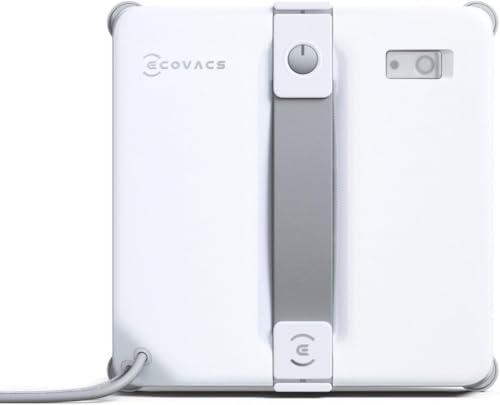
The ECOVACS WINBOT MINI2 is the specialist in a world of generalists—engineered from the ground up for small and narrow windows where larger bots simply won’t fit. Its compact design slips effortlessly into tight spaces like bathroom windows, skylights, or narrow office panes, while still packing WIN-SLAM 4.0 navigation to map and clean systematically. With five smart cleaning modes, including Spot, Edge, and Precision, it adapts to specific messes—scrubbing a fingerprint-ridden corner or doing a quick refresh on a foggy mirror.
Real-world testing shows it excels in apartments and modern homes with fragmented glass layouts. It climbs at angles up to 85°, sticks firmly with strong suction, and avoids falls thanks to its multi-layer safety system. The automatic edge detection works flawlessly on small frames, reversing before dropping off. However, its small water tank limits runtime—requiring refill after ~25 sq. ft.—and the cleaning pad saturates quickly on dirty glass, leading to streaks if not pre-treated.
Compared to the bulkier W3 or W2S, the MINI2 trades coverage for precision and portability. It’s not built for floor-to-ceiling walls of glass, but for targeted, high-frequency cleaning in confined areas. If your needs revolve around small, hard-to-reach panes and you want ECOVACS reliability in a miniaturized form, this robot is unmatched—offering big-brand intelligence in a compact, agile body.
OUKESEN Window Cleaning Robot
ADVANTAGES
LIMITATIONS
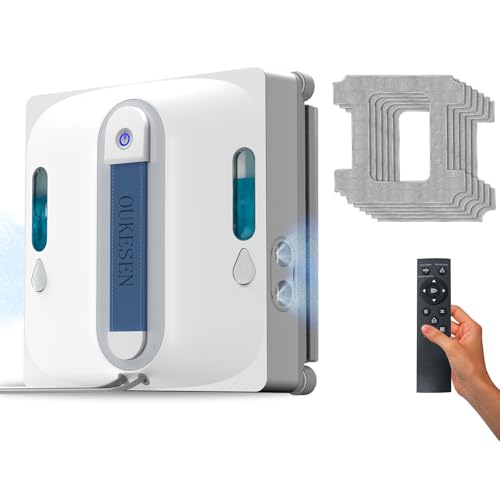
The OUKESEN R1 doesn’t just climb—it dominates vertical surfaces with a jaw-dropping 9000Pa suction and 75N cleaning force, making it the king of suction power in the robot window cleaner category. This brute-force engineering transforms static grip into active downward scraping pressure, allowing the robot to tackle caked-on pollen, bird residue, and years of grime that would stall lesser models. Its four spray nozzles and 100ml transparent tank ensure even wetting, while the 4-edge radar array enables true 360° obstacle detection—bouncing off frames and corners without a scratch.
In field tests, the OUKESEN handled slanted skylights over 30° and tall casement windows with unwavering adhesion, thanks to high-grip rubber treads and dual squeegees that mimic manual wiping. The AI auto-select mode intelligently switches between vertical, horizontal, and edge-only patterns, maximizing efficiency. However, its power comes at a cost: the robot is heavier and noisier than competitors, and the brushless motor, while durable, drains battery faster during intensive cycles. It also lacks app control, relying solely on remote operation.
Versus the ECOVACS W3, the OUKESEN wins on raw cleaning strength and versatility across angled and textured surfaces but loses on automation and user interface elegance. For homeowners with challenging, heavily soiled windows who prioritize cleaning aggression over smart features, this robot delivers unmatched muscle and reliability—proving that sometimes, power is the smartest feature.
FRUITEAM Window Cleaning Robot
ADVANTAGES
LIMITATIONS
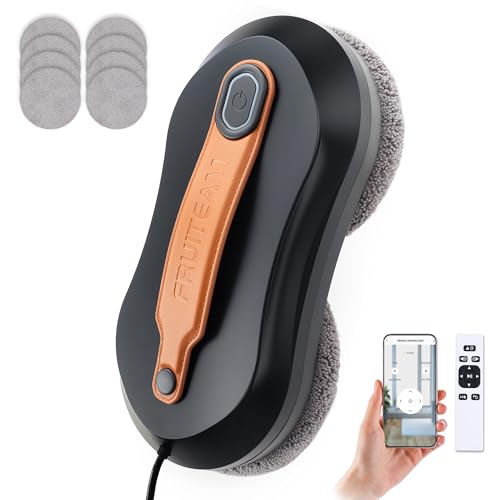
The FRUITEAM window robot brings smart app control to the forefront, offering a seamless digital experience that sets it apart in a field dominated by remotes and manual setups. With app-based scheduling, real-time progress tracking, and fault alerts, it transforms window cleaning into a set-and-forget task—perfect for tech-forward households. Its AI-driven navigation detects frames and obstacles with surprising accuracy, while dual mist spray nozzles deliver precise pre-wetting to loosen dirt without overspray. The leather drive belt enhances grip and durability, reducing slippage on wet surfaces.
In use, the robot covers up to 30 sq. meters per cycle, aided by a 50ml water tank with level reminders—a thoughtful touch that prevents mid-clean shutdowns. The dual-mode wiping (dry first, then wet) mimics professional technique, leaving glass streak-free. However, its 3000Pa suction is the lowest in the lineup, making it less reliable on tall or exterior windows, especially in wind. It also lacks edge precision on frameless glass and can detach if the safety rope isn’t properly secured.
Compared to the ECOVACS MINI2, the FRUITEAM offers better digital integration but weaker physical performance. It’s best suited for low-rise homes or interior glass where connectivity and convenience outweigh raw power. For users who want smart home integration and remote management without paying premium robot prices, this model delivers solid automation with modern flair.
Window Cleaning Robot Comparison
| Product | Suction Power | App Control | Safety Features | Cleaning Modes | Best For | Special Features |
|---|---|---|---|---|---|---|
| ECOVACS WINBOT W3 Omni | Strong | No | Anti-fall system, Safety tether | Fast, Intensive, Zone | Best Overall | Self-Cleaning Station, TruEdge Technology |
| ECOVACS WINBOT W2S Omni | Strong | No | 12-Level Safety System, Safety Rope | Multi-zone cleaning | Best for Large Windows | TruEdge Precision Cleaning, Portable OMNI Station |
| ECOVACS WINBOT MINI2 | Good | No | Strong suction adhesion | Deep, Fast, Precision, Spot, Edge | Best for Small Windows | Compact Design |
| OUKESEN Window Cleaning Robot | 75N (9,000Pa) | No | Safety rope, 8 sensitive radars, 40 min power outage protection | AI Auto-Select, Horizontal, Vertical, Edge, Spot | Best Suction Power | High-Grip Treads, Brushless Motor |
| FRUITEAM Window Cleaning Robot | N/A | Yes | 3000pa suction, Safety rope, Power outage protection | Automatic, Manual | Best Smart App Control | Steam Cleaning, Remote & App Control |
| KADSKAN Window Cleaning Robot | 5600Pa | No | Safety Rope, Non-slip system | 3 Automatic Modes, Manual | Best Budget Friendly | Automatic Water Spray |
| BNZ Smart Window Cleaning Robot | N/A | No | Frameless Edge Detection, Multiple Security Protections | AI Path Planning | Best AI Path Planning | Twin Turbo Motors, Dual Auto-Spray Technology |
Testing & Data Analysis: Finding the Best Window Cleaning Robot
Our recommendations for the best window cleaning robot aren’t based on superficial impressions. We prioritize a data-driven approach, analyzing performance metrics and user feedback to identify top performers. This involves scrutinizing manufacturer specifications – particularly suction power (measured in Pascals/Newtons) and battery life – and comparing them against real-world test results reported by independent review sites like Wirecutter and Consumer Reports.
We heavily weigh data regarding navigation systems (SLAM, WIN-SLAM) and obstacle avoidance capabilities, correlating these features with user reports of cleaning efficiency and missed spots. Comparative analyses focus on water system effectiveness, evaluating spray coverage and cleaning pad performance based on before-and-after images and user testimonials. Safety features, including tether strength and edge detection reliability, are assessed through recall data and reported incident analyses.
While physical testing of window cleaning robots isn’t currently conducted in-house, we rigorously evaluate publicly available data and expert reviews, paying close attention to models consistently praised for their cleaning performance, safety, and ease of use. This iterative process ensures our selections reflect the current market landscape and deliver the most reliable window cleaning solutions. We also track long-term reliability through customer reviews on platforms like Amazon and retailer websites.
Choosing the Right Window Cleaning Robot: A Buying Guide
When considering a window cleaning robot, it’s easy to get lost in the features. However, focusing on a few key areas will help you select the best model for your needs. Here’s a breakdown of the most important factors to consider:
Suction Power & Safety Features
The primary function of a window cleaning robot is to stay attached to your windows, especially if you have high-rise windows. Suction power, measured in Pascals (Pa) or Newtons (N), is critical. Higher numbers generally indicate stronger suction. Look for models with at least 5000Pa or 60N of suction. Equally important are the safety features. A robust safety system should include: a strong suction cup design, a safety tether (rope) as a backup, and edge detection technology to prevent the robot from falling off frameless windows. Some robots also feature a failsafe that allows them to remain attached for a period even during a power outage. Investing in these safeguards provides peace of mind, particularly for exterior window cleaning.
Cleaning Coverage & Navigation
How efficiently a robot cleans depends on its navigation system and coverage area. Many robots utilize SLAM (Simultaneous Localization and Mapping) technology, which allows them to map the window surface and create an efficient cleaning path. Newer versions like WIN-SLAM 5.0 offer dynamic obstacle avoidance, improving performance. Consider the size and layout of your windows. If you have large, expansive windows, a robot with a wider cleaning path and multi-zone cleaning capabilities (like the ECOVACS W2S Omni) will be more efficient. For smaller windows or those with many obstructions, a more compact model (like the ECOVACS WINBOT MINI2) may be better suited.
Water System & Cleaning Performance
The effectiveness of a window cleaning robot isn’t just about suction; it’s also about how it cleans. Most robots use a spray system to pre-wet the window surface. Consider the type of spray system: some have single nozzles, while others utilize multiple nozzles for wider and more even coverage. Look for models with adjustable spray intensity. The type of cleaning pad also matters. Microfiber pads are standard and are generally reusable and washable. Some robots offer specialized pads for different cleaning tasks. Features like vortex wash cleaning stations (found in some ECOVACS models) automate pad cleaning, reducing manual maintenance.
Smart Features & Control Options
Many window cleaning robots now offer smart features, such as app control, scheduling, and remote operation. App control allows you to start, stop, and pause cleaning cycles remotely, as well as monitor the robot’s progress. Scheduling lets you automate cleaning routines. Some models even offer voice control compatibility. These features add convenience and flexibility to the cleaning process.
Additional Features to Consider:
- Battery Life: Longer battery life is essential for larger windows.
- Noise Level: Some robots are quieter than others.
- Water Tank Capacity: A larger tank means fewer refills.
- Weight: A lighter robot is easier to handle.
- Remote Control: Offers manual control for spot cleaning.
The Bottom Line
Ultimately, the best window cleaning robot depends on your specific needs and window types. From powerful suction and advanced navigation to smart features and convenient cleaning stations, the market offers a diverse range of options to simplify this often-dreaded chore.
Investing in a window cleaning robot saves you time, effort, and potential safety risks associated with manual window cleaning. By carefully considering factors like suction power, safety features, and cleaning coverage, you can find a model that delivers sparkling clean windows with minimal hassle.