



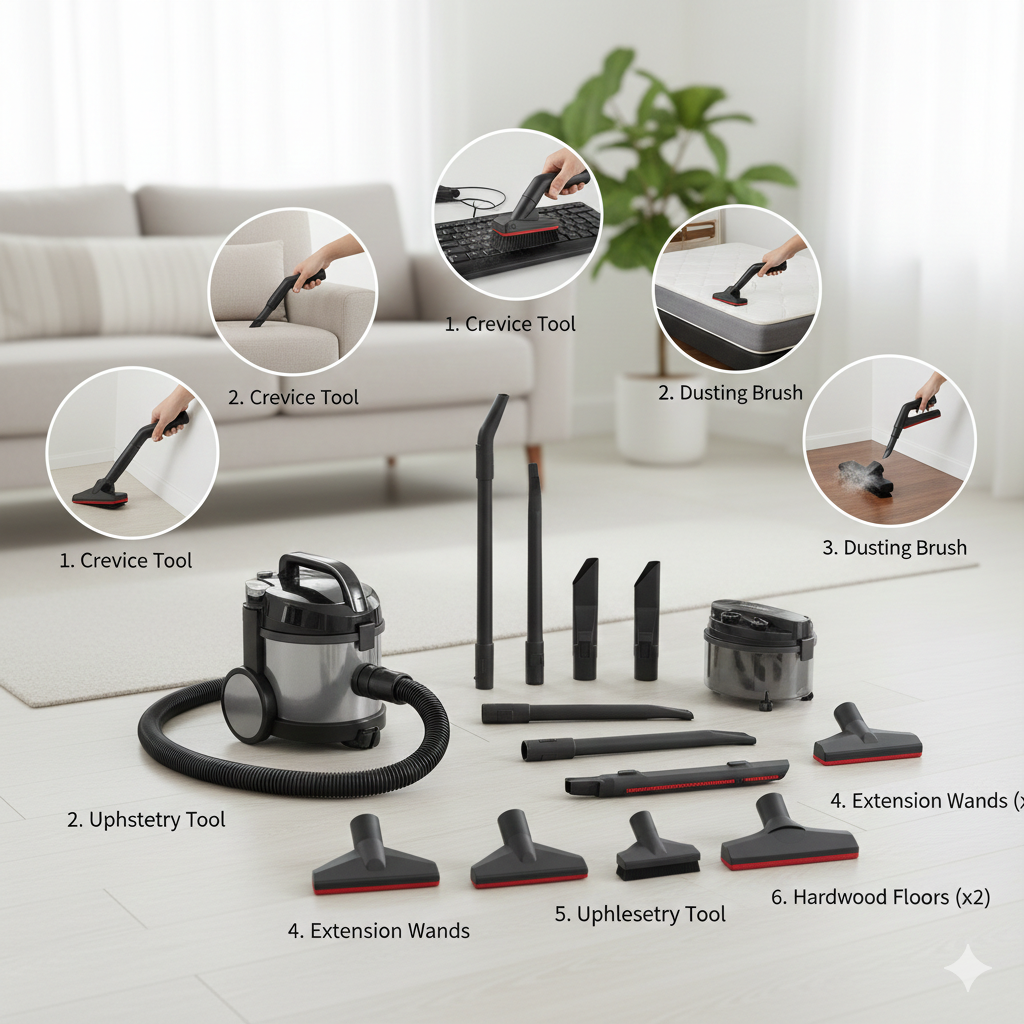
If you’ve ever unboxed a new vacuum cleaner, you probably remember that moment of slight confusion. You pull out the main machine, the shiny pipes, and then… a bag full of odd-looking plastic nozzles, brushes, and tubes.
If you’re like most of us, you probably used the main floor head for everything and tossed the rest into a closet, never to be seen again. But here’s a little secret: those attachments aren’t just “filler” to make the box look better. They are actually the secret to getting your house truly clean without spending all day doing it.
Using the floor head on a sofa or a bookshelf is a bit like trying to paint a masterpiece with a house-painting brush—it’s just the wrong tool for the job. Today, let’s walk through what these pieces actually do and how they can make your life a whole lot easier.
The Crevice Tool (The Skinny One)
This is probably the most recognizable attachment. It’s long, thin, and usually has a slanted tip. Its whole purpose is to get into the places where the big vacuum head simply cannot fit.

Where to use it effectively:
- The “Sofa Abyss”: You know that gap between the sofa cushions where coins, crumbs, and remote controls go to die? This tool is perfect for that.
- Baseboards and Corners: Dust loves to settle in the sharp corners of a room. A quick pass with the crevice tool saves you from having to wipe them down by hand.
- Sliding Door Tracks: If you have sliding glass doors or windows, the tracks get filthy with dirt and dead bugs. This tool fits perfectly in those grooves.
- Car Interiors: This is the MVP for cleaning between car seats and under the pedals.
Pro Tip: If you’ve lost something small behind a heavy dresser, put a thin sock over the end of the crevice tool and secure it with a rubber band. The vacuum will “grab” the item against the sock without sucking it into the dust bag.
The Dusting Brush (The Soft One)
This is usually a small, circular attachment with long, soft bristles. People often overlook this one because they think “I’ll just use a microfiber cloth.” But the dusting brush is actually better because it sucks the dust away instead of just moving it around or pushing it into the air.
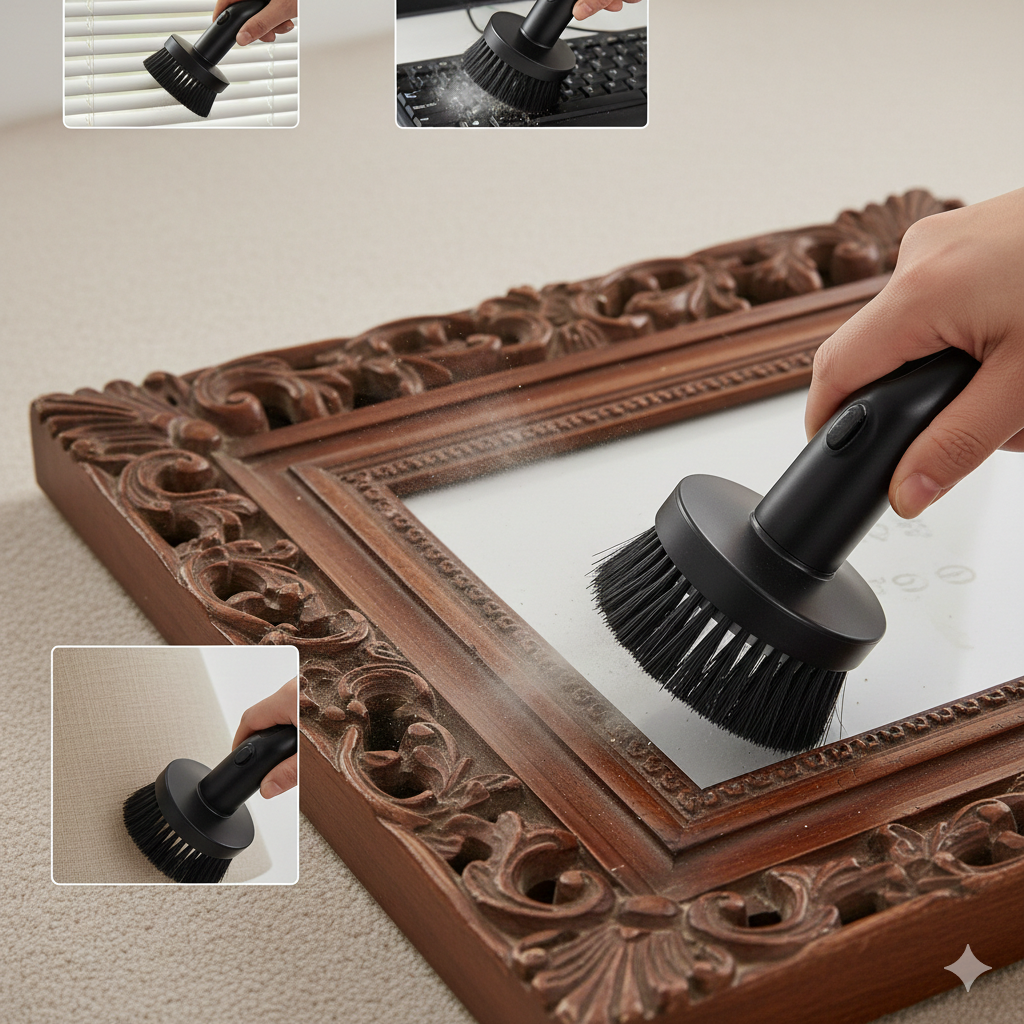
Where to use it effectively:
- Lampshades and Curtains: These are dust magnets. Because the bristles are soft, they won’t damage the fabric, but they’ll lift the dust right out.
- Blinds: Cleaning window blinds is a nightmare. Using the dusting brush while the blinds are closed makes the job ten times faster.
- Keyboards and Electronics: Dust gets trapped between computer keys. The soft bristles can reach in and pull it out without popping the keys off.
- Intricate Woodwork: If you have carved furniture or picture frames, a cloth can’t get into the grooves. This brush can.
The Upholstery Tool (The Flat One)
This one is wider than the crevice tool but smaller than the floor head. It usually has a little strip of red or textured fabric on the bottom (sometimes called a “lint catcher”). It doesn’t have any rotating brushes, which is important.
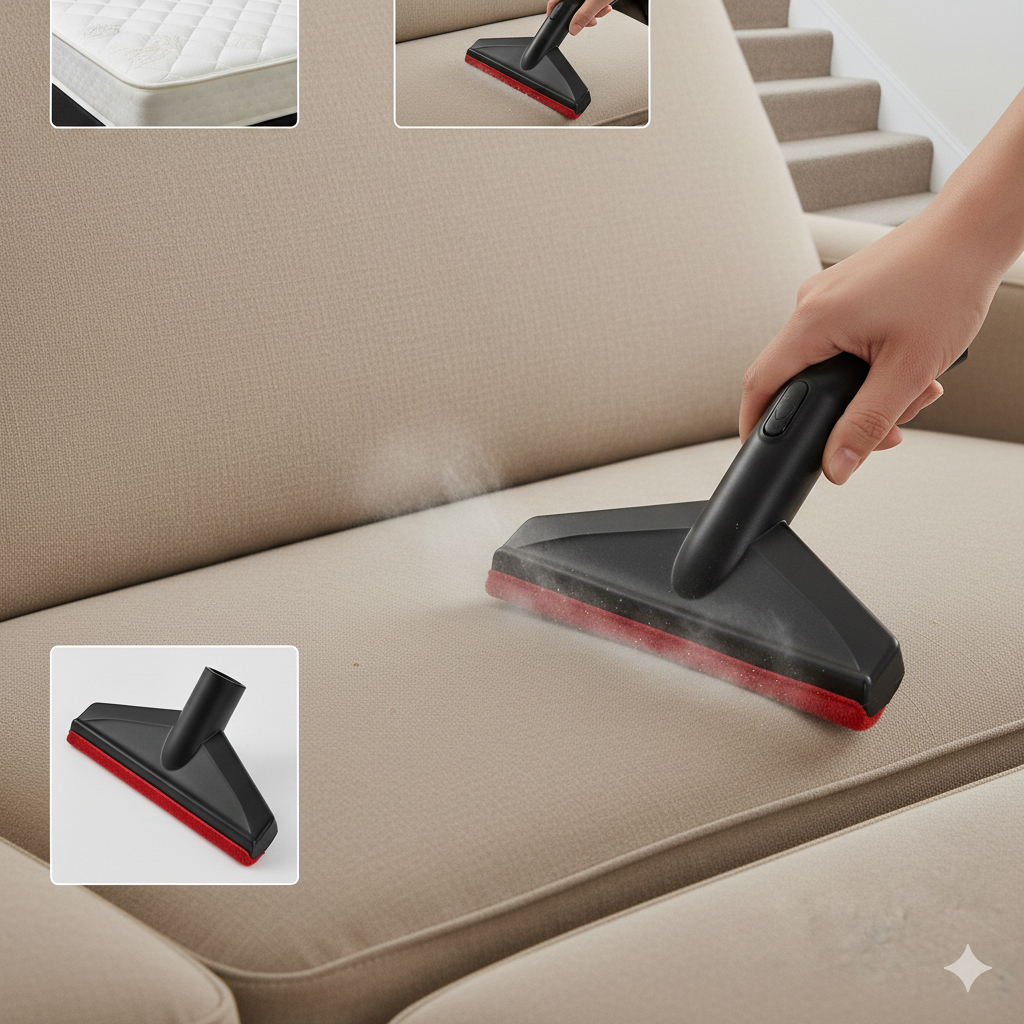
Where to use it effectively:
- The Sofa and Chairs: Unlike the floor head, this tool provides a concentrated suction that pulls dust and hair out of fabric fibers.
- Mattresses: We don’t like to think about it, but mattresses collect a lot of skin cells and dust mites. Every time you change your sheets, give the mattress a quick vacuum with this tool.
- Stairs: If your stairs are carpeted and the main vacuum is too heavy to lug up, this tool is a lifesaver.
The Extension Wand (The Long Pipe)
This isn’t really a “head,” but rather the long tubes that connect the hose to the attachments. Most vacuums come with two of them.
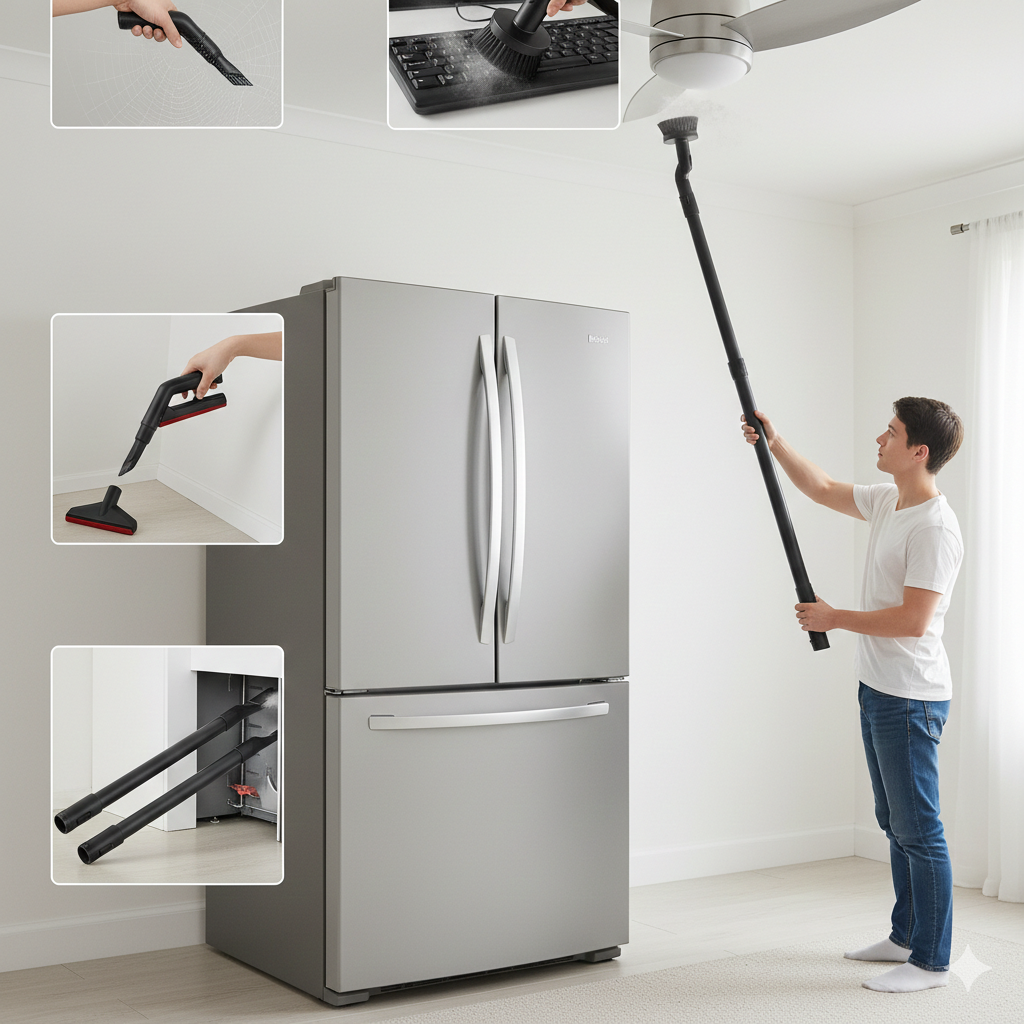
Where to use it effectively:
- High Reach: Use it to get rid of those “ghost” cobwebs in the corners of the ceiling.
- Under Appliances: If you have a flat crevice tool attached to two extension wands, you can often reach all the way under the fridge or stove without moving them.
- Ceiling Fans: This is a big one. Instead of getting on a ladder and having dust fall on your face, use the wand with the dusting brush attached to clean the blades from the floor.
The Power or Turbo Brush (The Mini Motorized One)
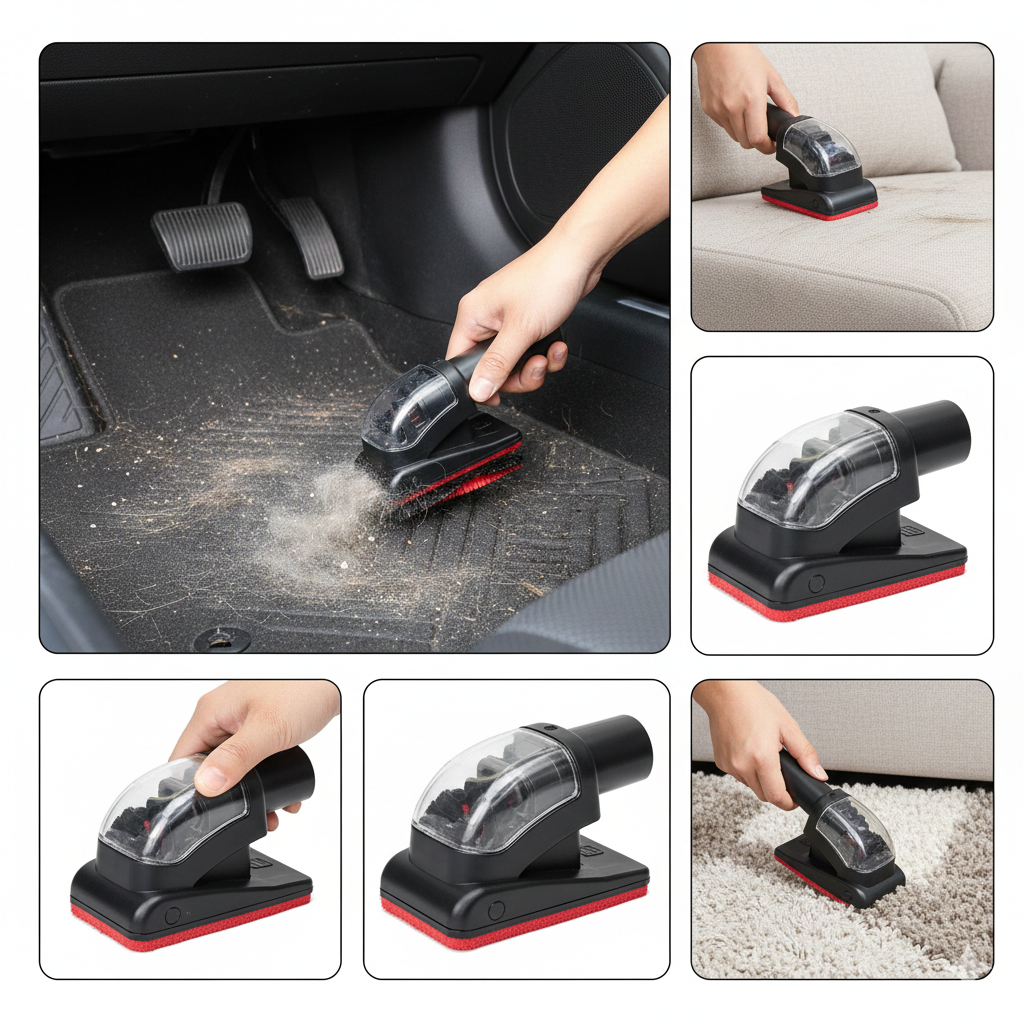
Not every vacuum comes with this, but if yours did, consider yourself lucky. It’s like a miniature version of the main floor head, usually with a rotating brush inside that’s powered by the air flowing through it.
Where to use it effectively:
- Pet Hair: If you have a dog or cat that sheds on the rugs or the sofa, the upholstery tool might not be enough. The rotating bristles of the turbo brush will “dig” the hair out of the fabric.
- Car Carpets: Car floor mats are notoriously tough to clean. This tool is small enough to fit in the footwell but powerful enough to get the sand and dirt out of the carpet.
The Hardwood Floor Tool (The Wide, Bristled One)
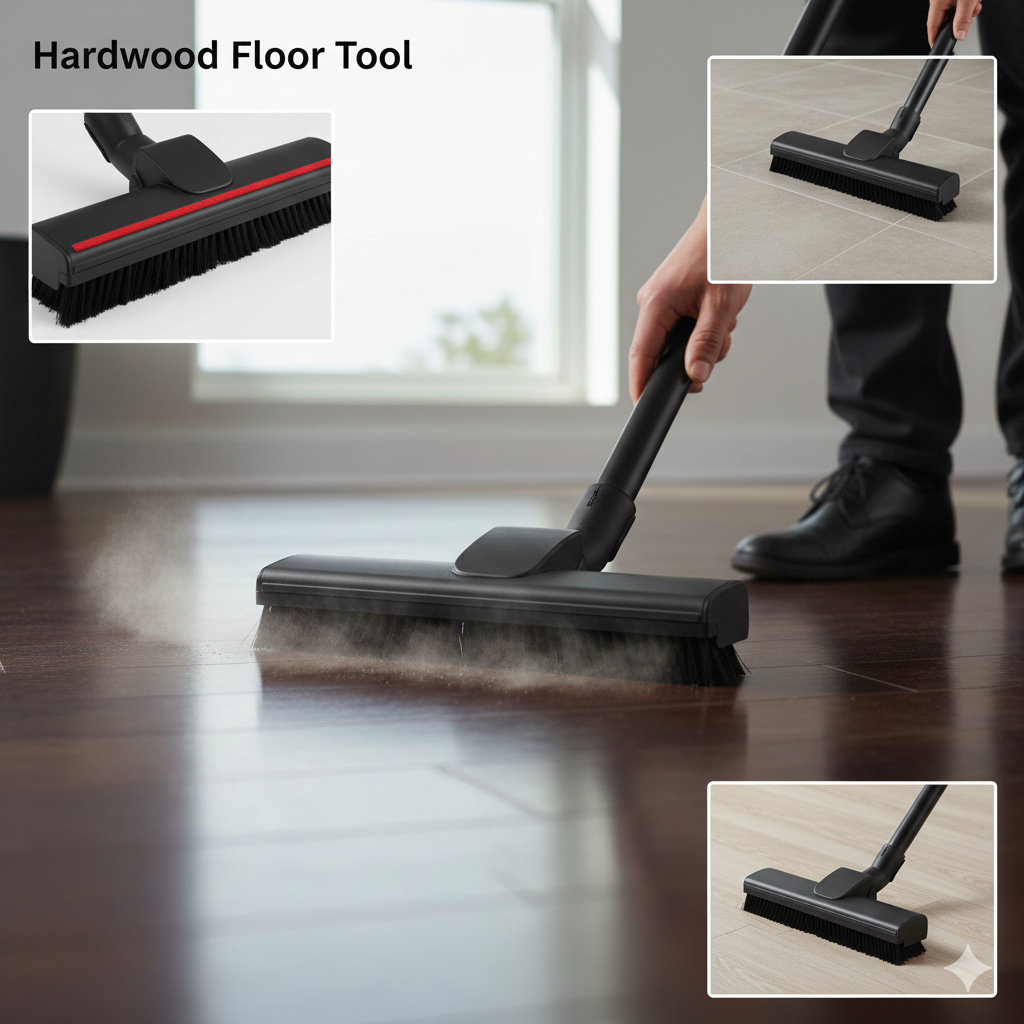
If you have a canister-style vacuum, you might have a wide, flat head with soft bristles all along the bottom. This is specifically for hard floors like wood, tile, or laminate.
Why use it instead of the main head?
Main floor heads often have “beater bars” (the spinning brush) designed to agitate carpet. On a hardwood floor, that spinning brush can actually scratch the finish or just spray the dirt around. The dedicated floor tool is gentle and relies on pure suction to sweep the floor clean.
A Few “Real Life” Tips for Success
Now that you know which tool goes where, there are a couple of things to keep in mind so you don’t accidentally damage your vacuum or your furniture.
Watch the Suction Power
Modern vacuums are incredibly powerful. If you are vacuuming a thin curtain or a delicate tablecloth, the vacuum might “eat” the fabric. Most vacuums have a little sliding vent on the handle or a dial on the motor. Open that vent to reduce the suction when you’re working with lightweight fabrics.
Keep the Brushes Clean
The dusting brush and the turbo brush are only effective if they’re clean. If you see hair or lint wrapped around the bristles, take a second to pull it off. If the bristles on your dusting brush get dusty themselves, you can actually wash them with a little dish soap and let them air dry completely before using them again.
Check for Clogs
If you notice the vacuum isn’t picking up much, it’s usually not the machine’s fault—it’s a clog in one of the attachments. The crevice tool is the most common culprit because it’s so narrow. Every once in a while, peek through the tubes to make sure they’re clear.

Why It’s Worth the Effort
I know it feels like extra work to stop, turn off the vacuum, swap the head, and start again. But in reality, it saves you time. Using the right tool means you only have to pass over an area once instead of five times. It also means you aren’t leaving dust behind in the corners, which helps keep your home smelling fresher and reduces allergies.
Cleaning doesn’t have to be a massive, exhausting chore. Sometimes, it’s just about using that weird plastic tube you’ve been ignoring in the back of the closet.
Next time you pull the vacuum out, try using at least one attachment you’ve never used before. You might be surprised at how much easier it makes your weekend tidy-up!
Stay clean and take it easy!