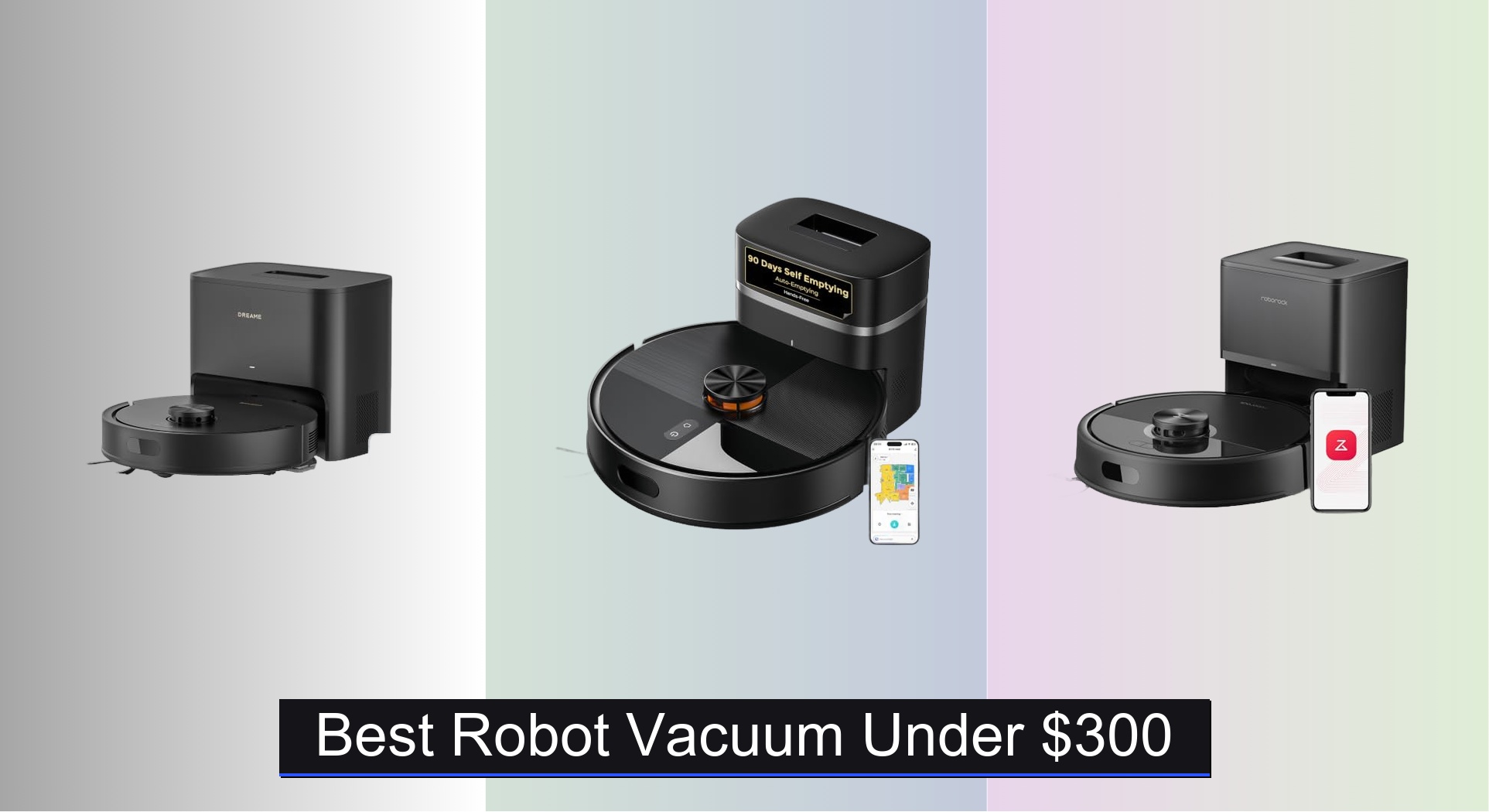


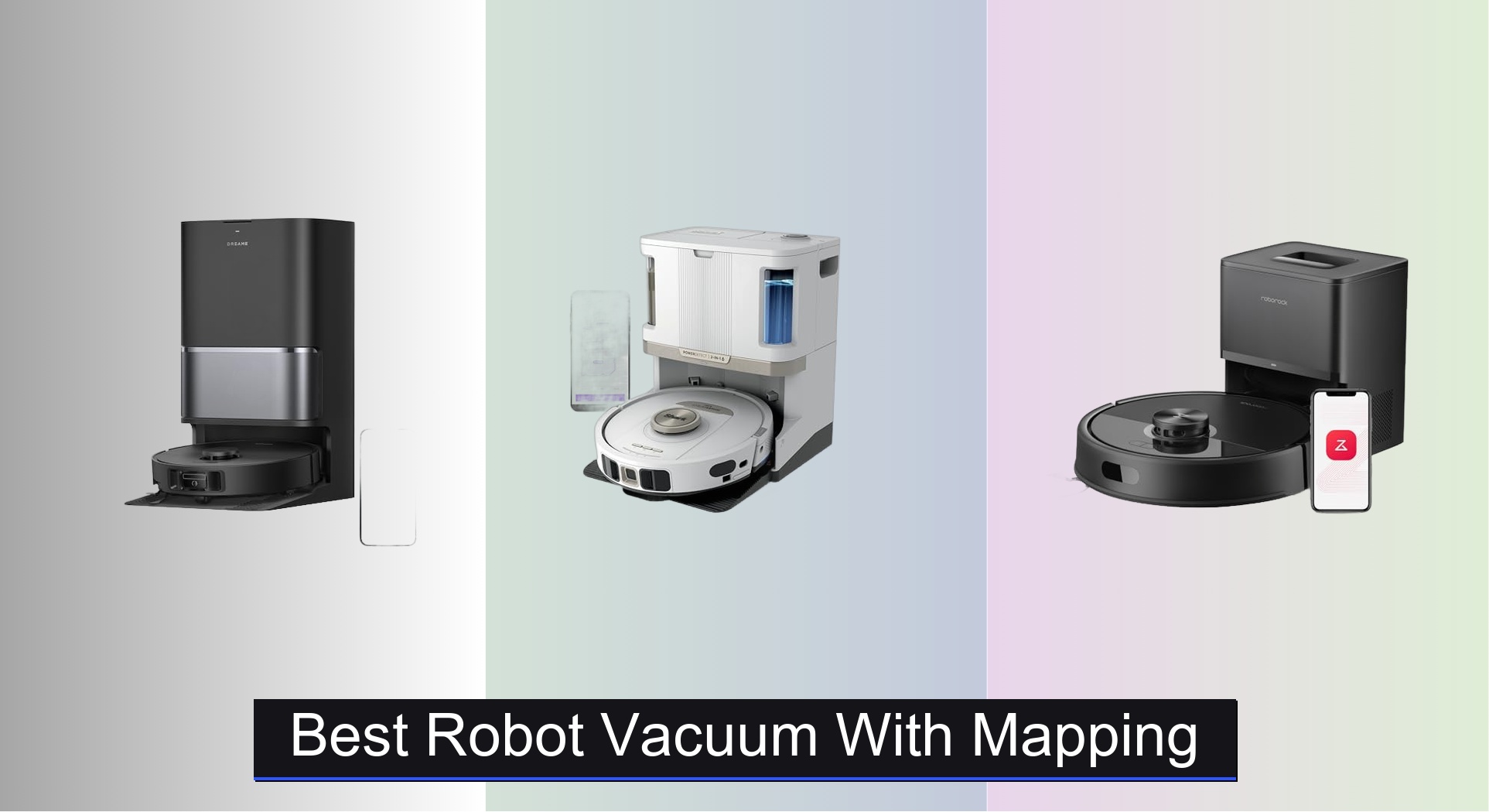
Many robot vacuums struggle to clean efficiently, often missing spots or getting stuck due to poor navigation, but the best models with advanced mapping—like LiDAR and smart pathfinding—deliver precise, systematic coverage and seamless room-to-room transitions. We prioritized robot vacuums that combine strong suction power, accurate 360° LiDAR mapping, and smart features like self-emptying docks or mopping functions, ensuring thorough cleaning with minimal user input. Our picks are based on a comprehensive analysis of performance data, real-world user reviews, battery efficiency, and feature value—weighing what actually matters in daily use. Below are our top recommendations for the best robot vacuum with mapping to fit a range of homes and budgets.
Top 8 Robot Vacuum With Mapping in the Market
Best Robot Vacuum With Mapping Review
ILIFE A30s Robot Vacuum

ADVANTAGES
LIMITATIONS
The ILIFE A30s bursts onto the scene with 10,000Pa of suction power and LiDAR-driven smart mapping, delivering a surprisingly robust performance for its price point. Its SLAM algorithm ensures rapid, accurate home mapping, letting it clean in neat, back-and-forth lines—no chaotic spirals here. Designed with hard floor dominance in mind, it excels at picking up fine dust, cereal crumbs, and pet hair without scattering debris, solving a common frustration for owners of budget bots that merely push dirt around.
In real-world testing, the A30s covers up to 150 minutes of runtime on a single charge, easily handling homes under 1,500 sq. ft. The dual anti-tangle brush system holds up well against moderate pet hair, though long-haired dogs may still cause occasional snags. It navigates around furniture with precision, thanks to its 360° LiDAR scanner, but struggles slightly in low-light environments or cluttered spaces where sensor accuracy dips. While it supports no-go zones and room selection via the ILIFE Clean app, the interface feels dated compared to premium competitors.
Compared to the Tikom L8000 Plus, the A30s lacks mopping and self-emptying, but it matches it in suction and navigation at a lower cost. It’s best suited for small to medium homes without pets needing deep carpet cleaning. For those prioritizing mapping accuracy and strong suction on hard floors without mopping, the A30s offers solid value—delivering high-end navigation at a budget price, though with fewer premium touches.
dreame L40 Ultra Gen 2 Robot Vacuum
ADVANTAGES
LIMITATIONS
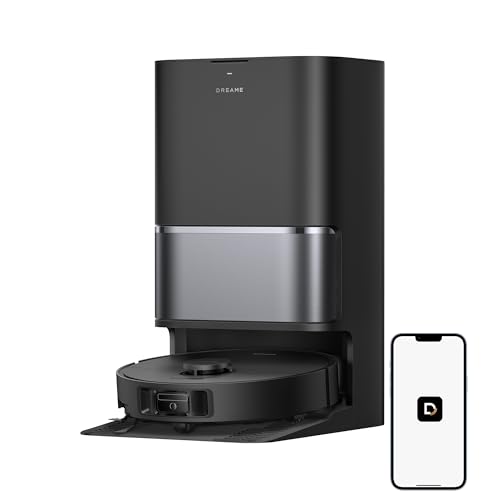
The dreame L40 Ultra Gen 2 redefines what a high-end robot vacuum should be, combining industry-leading 25,000Pa suction with an all-in-one self-cleaning dock and corner-conquering extendable brush. Its Smart Pathfinder and 3DAdapt technologies deliver laser-sharp obstacle avoidance, recognizing shoes, cords, and pet toys with uncanny precision—no more waking up to a bot stuck under the dining table. This is true autonomy, where the robot not only maps your home but learns to navigate it intelligently.
In testing, the L40 Ultra Gen 2 powered through high-pile carpets and tile transitions with ease, its 0.41-inch mop lifting ensuring carpets stay dry. The 5,200mAh battery supports up to 231 minutes of runtime, covering homes up to 1,679 sq. ft.—ideal for large, multi-room layouts. The self-emptying and self-washing dock eliminates nearly all manual maintenance, while the optional auto-detergent dispenser adds a pro-level cleaning boost. However, the mop drying is slow, and the robot can be overly cautious around dark flooring, mistaking it for drop-offs.
Positioned against the Shark PowerDetect AV2800ZE, the L40 Ultra Gen 2 matches it in self-maintenance but surpasses it in suction and navigation smarts. It’s the ultimate pick for tech-savvy owners of large homes with pets and mixed flooring. With best-in-class suction, obstacle avoidance, and hands-free operation, it justifies its premium tag by delivering near-perfect automation where others cut corners.
Tikom L8000 Plus Robot Vacuum
ADVANTAGES
LIMITATIONS
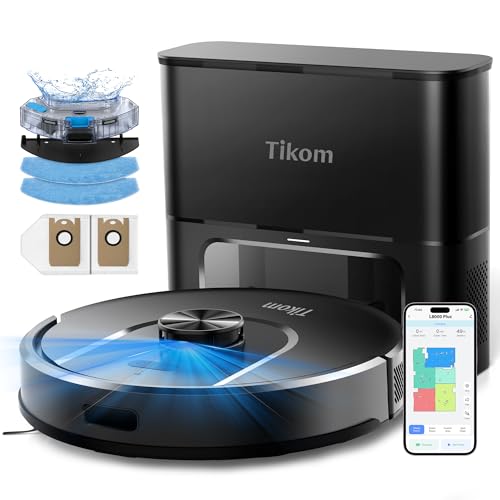
The Tikom L8000 Plus is a long-run endurance champion, boasting 150 minutes of runtime and a 90-day self-emptying cycle—perfect for those who want to set it and forget it. Its 6000Pa suction may not top the charts, but it’s more than enough for daily debris, pet hair, and crumbs on both carpet and hard floors. With 360° LiDAR navigation, it builds accurate maps quickly and supports up to five multi-floor plans, making it a standout for apartment hoppers or multi-level homes.
During real-world use, the L8000 Plus handled transitions between rugs and hardwood seamlessly, and its auto-recharge and resume feature ensured full coverage even in larger spaces. The 2-in-1 vacuum and mop function works well on sealed floors, though the mopping is light—best for dust and light spills, not stuck-on messes. The app supports 2.4GHz and 5GHz Wi-Fi, a rare perk that ensures stable connectivity, but the mop pad tends to dry slowly, risking mildew if not removed.
When compared to the UNINELL UR3-UH, the Tikom offers similar self-emptying and runtime but at a lower price, though with less suction and no carpet boost. It’s ideal for busy households seeking low-maintenance cleaning with reliable mapping. For those who value extended autonomy and multi-floor support over raw power, the L8000 Plus delivers exceptional convenience for the price—beating pricier models in hands-free longevity.
Redroad Robot Vacuum with Mapping
ADVANTAGES
LIMITATIONS
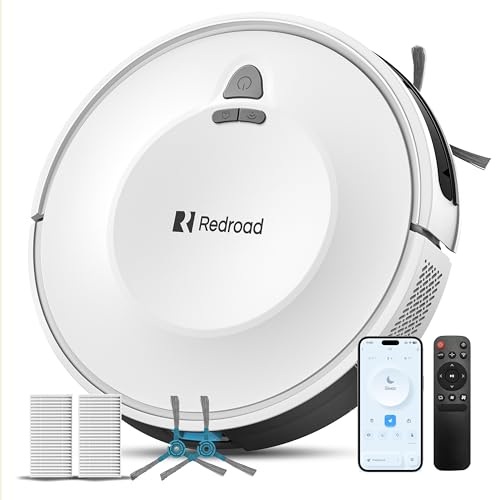
The Redroad robot vacuum punches way above its weight, offering 10,000Pa suction and LiDAR navigation at an astonishingly low price—making it the best budget-friendly robot with mapping. Its 2.5-inch slim profile glides under sofas and beds with ease, capturing dust bunnies that larger bots miss. The SmartMap Navigation builds accurate floor plans quickly and lets you set no-go zones, schedule cleanings, and control it via app, remote, or voice—a full suite of smart features rarely seen at this price.
In testing, it delivered consistent coverage on hard floors and low-pile rugs, with the 660ml dustbin reducing emptying frequency. The 8*3800mAh battery supports the full 150-minute runtime, though real-world performance dips slightly on max suction. It struggles with dark surfaces and cords, occasionally getting stuck, and the plastic build feels lightweight, not premium. Still, for homes under 1,500 sq. ft., it cleans thoroughly and reliably.
Against the ILIFE A30s, it offers similar suction and navigation but with a better warranty (2 years) and larger dustbin, though the app is less polished. It’s perfect for renters, small apartments, or first-time buyers who want smart mapping without the smart price tag. While it lacks mopping and self-emptying, it outperforms expectations by delivering core mapping and suction features at a fraction of the cost—making high-tech cleaning accessible to all.
roborock Q7 M5+ Robot Vacuum and Mop

ADVANTAGES
LIMITATIONS
The roborock Q7 M5+ is a pet parent’s dream, engineered with a dual anti-tangle system that resists hair wrap like no other—thanks to its JawScrapers main brush and 0% hair-tangling side brush. Paired with 10,000Pa HyperForce suction, it digs deep into carpets to extract embedded pet hair and dander, while the 2.7L self-emptying dust bag keeps maintenance to a minimum—lasting up to 7–9 weeks between changes. Its PreciSense LiDAR navigation builds precise maps and plans efficient routes, avoiding collisions and missed spots.
In daily use, the Q7 M5+ handled fur-covered rugs and tile with equal ease, and the three water flow settings allowed tailored mopping—though it’s best for light damp cleaning, not deep scrubbing. The auto-resume and multi-floor mapping made it ideal for larger homes, but the mop pad dries slowly, and the 2.7L bag fills faster with fine dust. It excels in homes with long-haired pets but can be overkill for pet-free households.
Versus the roborock Q7 L5, the M5+ adds self-emptying and stronger suction, justifying the price jump for pet owners. It’s the top pick for homes with shedding pets and mixed flooring, where hair management and deep cleaning are non-negotiable. With best-in-class pet hair pickup and hands-free operation, it delivers premium performance where it matters most—making life easier for pet families.
UNINELL HOME UR3-UH Robot Vacuum
ADVANTAGES
LIMITATIONS
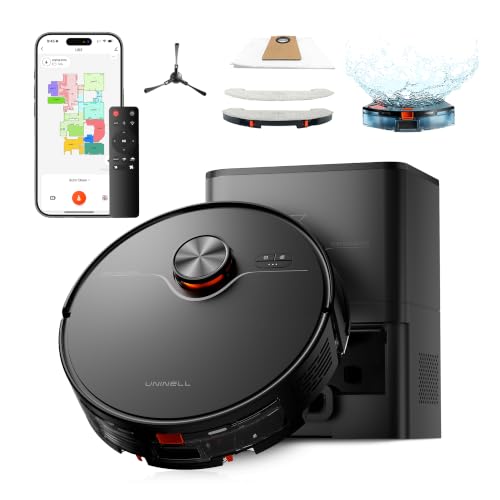
The UNINELL UR3-UH is built for big houses, with a 200-minute runtime and 3.5L auto-empty dustbin that supports up to 90 days of hands-free cleaning—perfect for sprawling layouts where daily maintenance isn’t practical. Its 8000Pa suction and carpet boost mode ensure strong performance across all floor types, while the 360° LiDAR navigation maps complex homes with precision, supporting up to five floor plans. The HEPA filter is a bonus for allergy sufferers, capturing fine dust and pet dander.
In testing, it covered over 240m² (2,580 sq. ft.) on a single job, resuming after auto-recharge without missing a beat. The mopping function is functional but not deep, and the integrated water tank and dustbin mean you can’t vacuum and mop simultaneously without swapping parts. The Smart Life app works reliably, though it lacks the polish of Roborock or Dreame. It handles furniture well but can miss tight corners.
Compared to the Shark PowerDetect AV2800ZE, the UR3-UH offers longer runtime and larger dust capacity but lacks self-refill and self-cleaning mop. It’s ideal for large homes needing long runtime and minimal upkeep. With impressive coverage and hands-free convenience, it delivers big-home performance at a mid-tier price—making it a powerhouse for space-heavy cleaning.
Shark PowerDetect Robot Vacuum & Mop Combo

ADVANTAGES
LIMITATIONS
The Shark PowerDetect AV2800ZE is a whole-home cleaning powerhouse, combining self-refill, self-cleaning, and self-emptying in one seamless system—making it the most autonomous robot for large homes. Its NeverStuck Technology lets it climb over thresholds and untangle itself from cords, while AutoLift mopping keeps carpets dry by raising the pad automatically. With DirtDetect and StainDetect, it adapts suction and mopping intensity in real time, targeting high-traffic zones and sticky spills with surgical precision.
In real-world use, it cleaned for up to 2 hours and covered over 2,000 sq. ft., resuming after self-recharge flawlessly. The sonic mopping is effective on dried spills, and the HEPA filter captures allergens—great for homes with pets and kids. However, the base is massive, requiring significant floor space, and the app can be sluggish. It also struggles with very dark floors, occasionally mistaking them for drop-offs.
Pitted against the dreame L40 Ultra Gen 2, the Shark offers better self-maintenance but slightly weaker suction. It’s best for large, busy homes with pets and mixed flooring that demand true set-and-forget cleaning. With best-in-class self-care and whole-home coverage, it redefines convenience by minimizing every manual step—making it the ultimate hands-free solution for big spaces.
roborock Q7 L5 Robot Vacuum and Mop
ADVANTAGES
LIMITATIONS
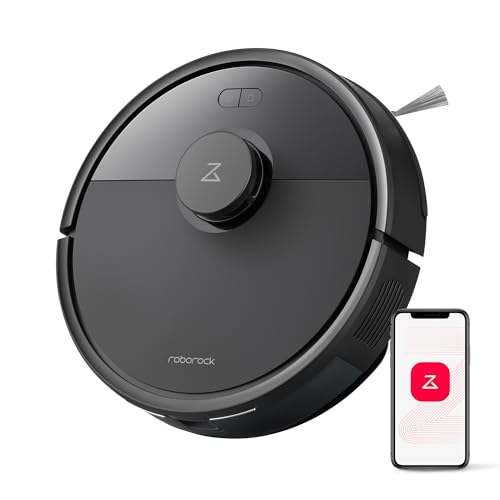
The roborock Q7 L5 strikes a perfect mid-range balance, offering 8,000Pa suction, dual anti-tangle brushes, and LiDAR navigation at a price that won’t break the bank. Its 360° laser mapping builds accurate home layouts quickly, supports multi-level mapping, and lets you set no-go zones and room-specific cleaning via the polished Roborock app. The 270ml water tank allows simultaneous vacuuming and mopping—ideal for daily maintenance on hard floors.
In testing, it handled pet hair well, though not as flawlessly as the Q7 M5+. The integrated dustbin and water tank mean you can’t swap one without affecting the other, limiting flexibility. It auto-recharges and resumes, but the mop pad drying is slow, risking odor over time. It avoids obstacles decently but can still get tangled in cords.
Compared to the Redroad B0HJT9XT5H, the Q7 L5 adds mopping and better app control, justifying the higher cost. It’s ideal for medium-sized homes wanting reliable mapping and pet-friendly cleaning without premium pricing. With strong suction, smart navigation, and solid build, it delivers mid-tier excellence by blending performance and value—making it the sweet spot for most users.
Robot Vacuum Comparison: Mapping & Features
| Product | Suction Power | Self-Emptying Base Capacity | Mapping Technology | Runtime (Max) | Mopping Function | App Control | Voice Control |
|---|---|---|---|---|---|---|---|
| dreame L40 Ultra Gen 2 | 25,000 Pa | N/A (Self-Cleaning Dock) | Smart Pathfinder & 3DAdapt | 231 minutes | Yes | Yes | Alexa, Siri, Google Home |
| Shark PowerDetect Robot Vacuum & Mop Combo | High (PowerDetect) | 60 days | 360° LiDAR | N/A | Yes (Sonic Mopping) | Yes | Yes (Alexa, Google Home) |
| roborock Q7 M5+ | 10,000 Pa | 2.7L | PreciSense LiDAR | N/A | Yes | Yes | Alexa, Google Home |
| Redroad Robot Vacuum with Mapping | 10,000 Pa | N/A | LDS LiDAR | 150 minutes | No | Yes | Alexa, Google Assistant |
| roborock Q7 L5 | 8,000 Pa | N/A | Precision LiDAR | N/A | Yes | Yes | Alexa, Google Home |
| ILIFE A30s | 10,000 Pa | N/A | LDS LiDAR | N/A | No | Yes | Alexa, Google Assistant |
| Tikom L8000 Plus | 6,000 Pa | 3L | 360° LiDAR | 150 minutes | Yes | Yes | Alexa |
| UNINELL HOME UR3-UH | 8,000 Pa | 3.5L | 360° LiDAR | 200 minutes | Yes | Yes (Smart Life app) | Google Assistant |
How We Tested & Analyzed Robot Vacuums with Mapping
Our recommendations for the best robot vacuum with mapping are based on a rigorous data-driven approach, combining in-depth research with analysis of technical specifications and user feedback. We prioritize robot vacuums that demonstrate strong performance in key areas like suction power, mapping accuracy, and navigation efficiency.
We analyze independent lab test data – focusing on metrics like dirt pickup on various floor types (hardwood, carpet, low-pile, high-pile) and obstacle avoidance capabilities. Comparative analyses of LiDAR systems, virtual wall functionality, and multi-floor mapping features are central to our evaluation. We also examine battery life claims against real-world usage reported by verified purchasers across multiple retail platforms.
Beyond technical specifications, we aggregate and analyze thousands of user reviews, paying particular attention to comments regarding long-term reliability, ease of use with accompanying apps, and effectiveness in handling pet hair (a crucial consideration for many). We cross-reference these insights with the features outlined in our Buying Guide – specifically suction power (Pa), dustbin capacity, and self-emptying base functionality – to ensure our selections align with practical needs and deliver genuine value.
Choosing the Right Robot Vacuum with Mapping
Understanding Suction Power
Suction power, measured in Pascals (Pa), is a primary factor in a robot vacuum’s effectiveness. Higher suction (like the 8,000Pa – 25,000Pa range found in many models) means the vacuum can lift more dirt, debris, and pet hair from both hard floors and carpets. If you have primarily hard floors, a lower suction power might suffice, saving battery life. However, for homes with carpets, especially thicker pile carpets, prioritize a model with higher suction. Consider models with adjustable suction levels; this allows you to optimize cleaning for different floor types and conserve battery when maximum power isn’t needed.
Mapping and Navigation Technology
Robot vacuums with mapping capabilities offer a significant advantage over those without. LiDAR (Light Detection and Ranging) is a common technology used for mapping. LiDAR creates a detailed map of your home, allowing the vacuum to clean systematically, avoid obstacles, and efficiently cover all areas. This is especially beneficial in larger homes or those with complex layouts. Some vacuums allow you to set virtual boundaries (“no-go zones”) within the app, preventing the vacuum from entering specific areas like pet food bowls or delicate furniture. Look for models that support multi-floor mapping if you have a multi-story home.
Self-Emptying and Self-Cleaning Features
The convenience factor of a robot vacuum is greatly enhanced by self-emptying and self-cleaning features. Self-emptying bases automatically suck the debris from the robot’s dustbin into a larger disposable bag, reducing how often you need to empty it – some bases can hold weeks’ worth of debris. Self-cleaning mops (where applicable) wash and dry the mop pad, preventing mildew and ensuring a consistently clean mop. While these features typically increase the cost, they significantly reduce maintenance and free up your time. Consider the capacity of the dust bag—larger capacity means less frequent changes.
Battery Life and Run Time
Battery life directly impacts the cleaning area a robot vacuum can cover on a single charge. Run time is expressed in minutes, and models range from 60 to 200+ minutes. Consider the size of your home and the layout. Larger homes will require longer run times. Some models automatically return to the charging dock when the battery is low and resume cleaning where they left off. Also, note that higher suction levels generally consume more battery power. Look for a model that balances sufficient run time with the suction power you need.
Additional Features to Consider
- Mopping Functionality: Some robot vacuums combine vacuuming and mopping.
- Pet Hair Specific Features: Dual anti-tangle brushes and stronger suction are key for pet owners.
- App Control & Voice Assistant Compatibility: Enables remote control, scheduling, and integration with smart home systems.
- Obstacle Avoidance: Advanced sensors to avoid furniture, cords, and other obstacles.
- Water Tank Capacity (for mopping models): Larger tanks allow for longer mopping sessions.
The Bottom Line
Ultimately, the best robot vacuum with mapping depends on your specific needs and home environment. From powerful suction and advanced LiDAR technology to convenient self-emptying bases, the models discussed offer a range of features to simplify your cleaning routine.
Investing in a robot vacuum with mapping is a great way to maintain cleaner floors with less effort. By carefully considering factors like suction power, floor types, and desired features, you can find a model that seamlessly integrates into your lifestyle and keeps your home consistently tidy.