







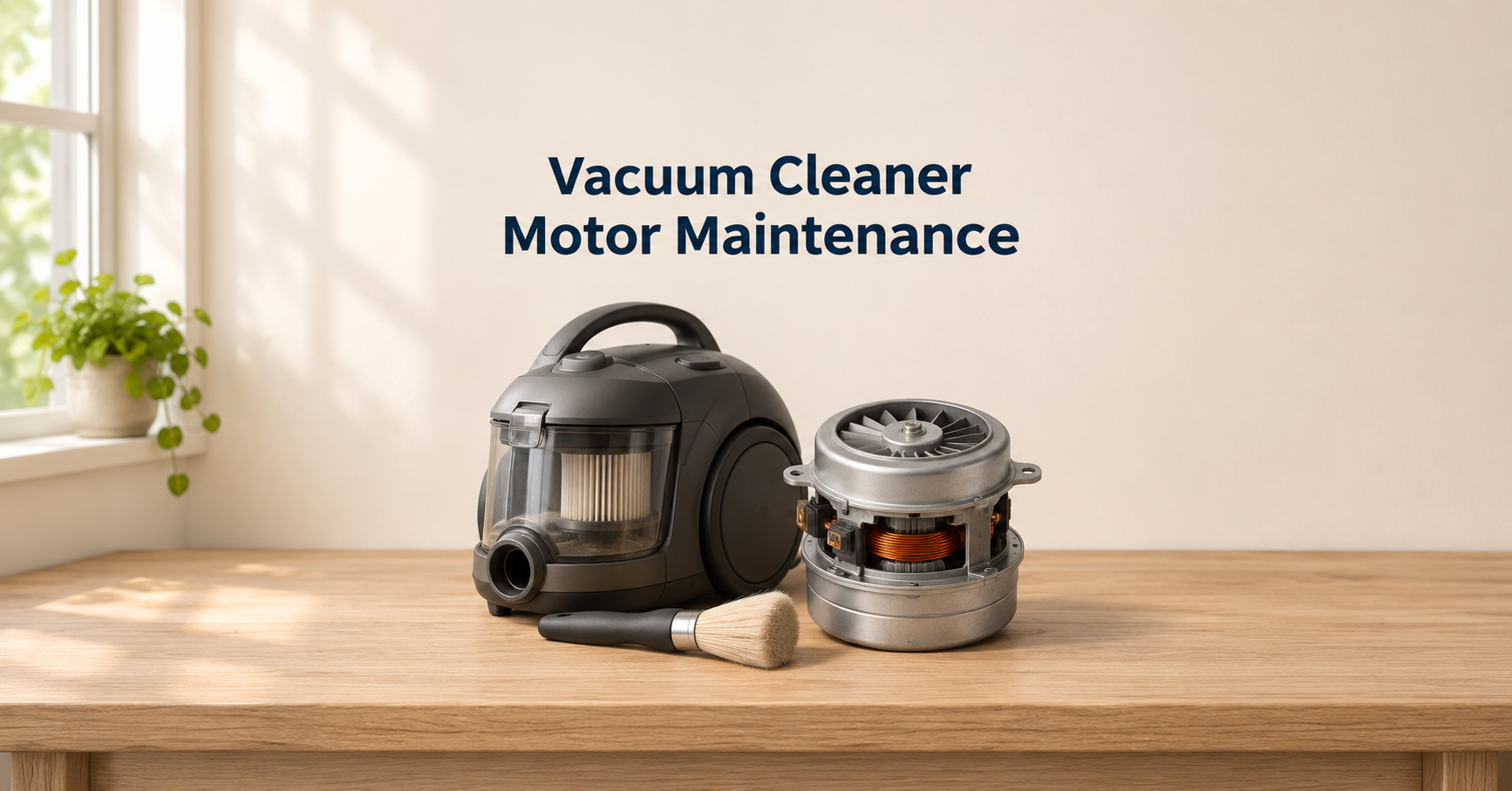
The motor is the heart of every vacuum cleaner. It creates the suction, drives the brush roll on many models, and is usually the most expensive part to replace. Good vacuum cleaner motor maintenance is simple, costs very little and can add years to the life of your machine. This guide explains how the motor works, the care routine that matters, the warning signs to watch for and what to look for when buying your next vacuum.
Quick answer
To maintain a vacuum cleaner motor, keep air flowing freely. Clean or replace the filters, empty the bin or bag, clear the hose and brush roll, keep vents free, avoid overheating, and store the vacuum clean and dry. Airflow is what cools the motor and protects it.
How a vacuum cleaner motor works
An electric motor spins a fan, called an impeller, at very high speed. The fan pulls air through the nozzle, hose, bin and filters, creating suction. The same air also passes over the motor and carries away heat. This is why almost every motor problem starts with restricted airflow: less air means less suction and more heat.
11 maintenance habits that protect your vacuum motor
1. Keep the filters clean
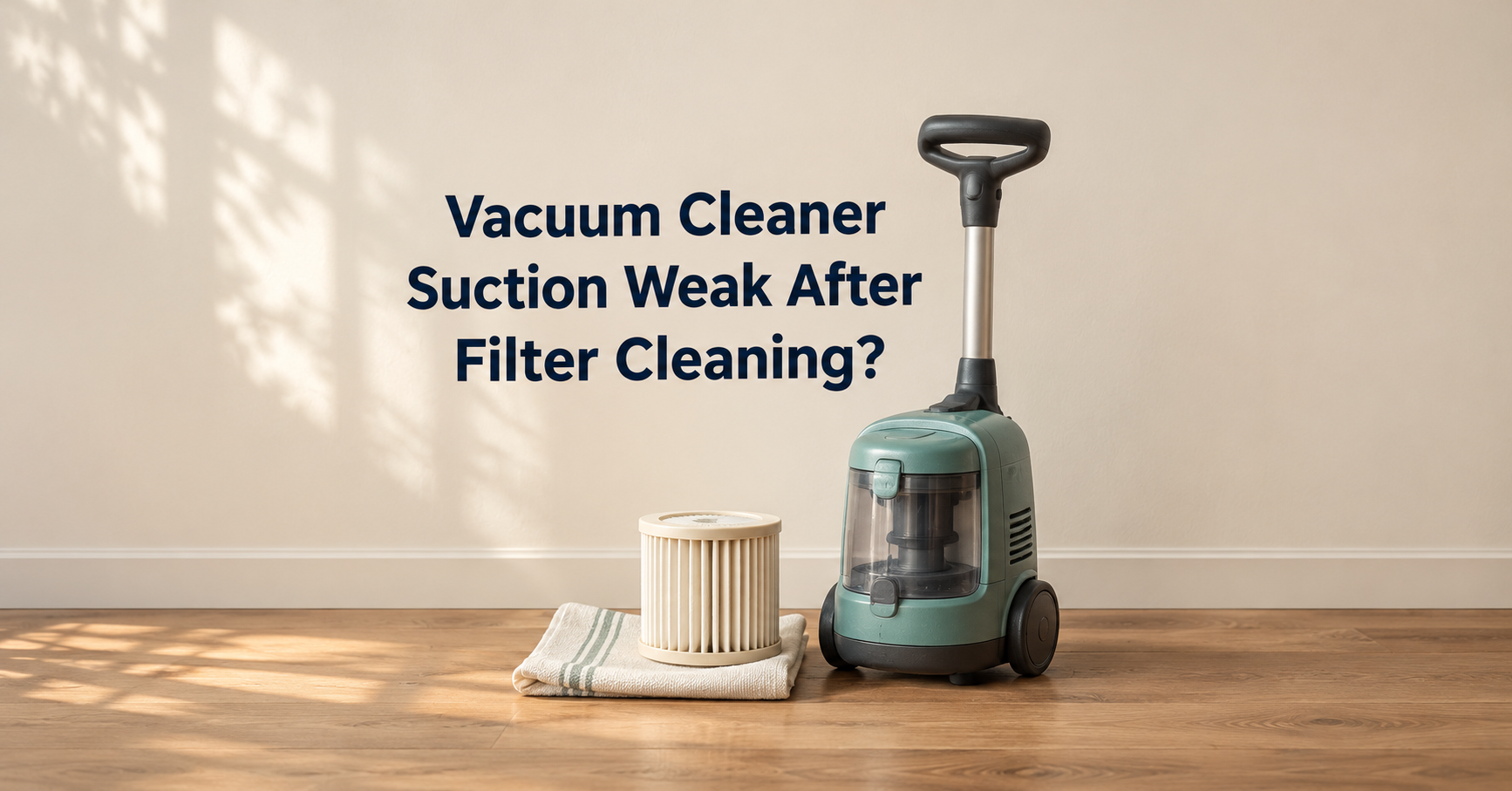
Filters protect the motor from dust and keep air flowing, which is how the motor stays cool. Rinse washable filters in cold water every one to three months, dry them for 24 to 48 hours, and replace them every six to twelve months. Never run the vacuum without a filter or with a wet filter.
2. Empty the bin or bag before it is full
A packed bin cuts airflow and forces the motor to work harder. Empty a bagless bin after each use, or when it reaches the max line, and replace bags when about two thirds full.
3. Clear the hose, wand and nozzle
Blockages are the fastest way to overheat a motor. Look through the hose now and then, clear clogs with a broom handle, and check the nozzle opening for socks, paper and packed dust.
4. Care for the brush roll and belt
Hair and thread wrapped around the roller strain the motor, and a stretched belt makes it slip. Cut away hair every week or two, check the belt for cracks, and replace it about once a year, or as often as the manual suggests.
5. Keep the motor vents and exhaust clear
The motor needs cool air. Wipe dust from the vents, and do not run the vacuum with the exhaust covered or pressed against furniture or a thick rug.
6. Do not overheat the motor
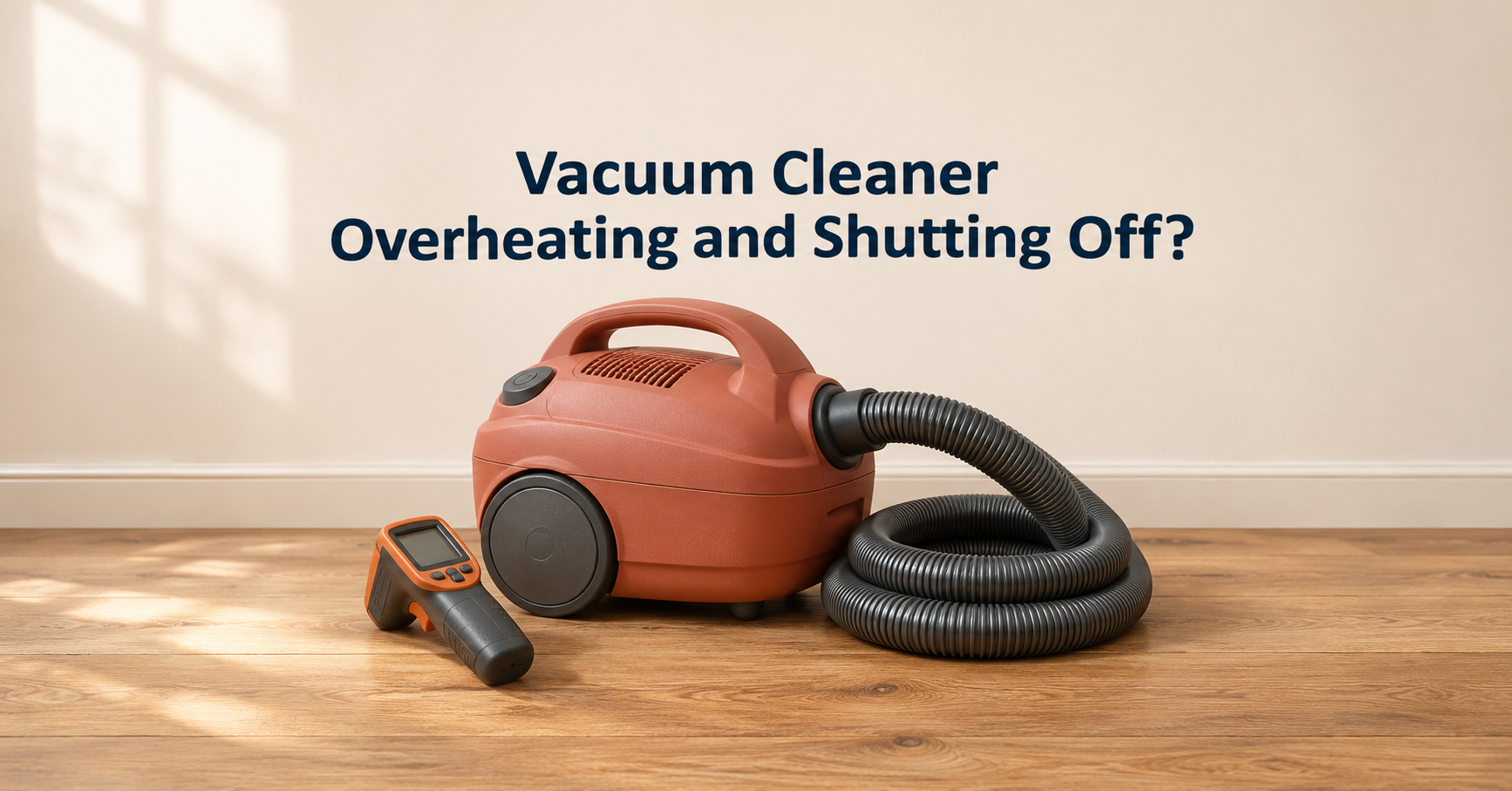
Give the vacuum a rest after 30 to 45 minutes of continuous use, particularly with older or budget models. If the thermal cut-off turns the machine off, unplug it, find the airflow problem and let it cool for at least 30 minutes.
7. Use the right vacuum for the right debris
Fine dust, ash, drywall dust, wet spills and sharp objects can ruin a household vacuum motor. Use a vacuum made for wet and dry jobs or a dedicated shop vacuum for these tasks.
8. Check the power cord and plug
A frayed cord, a loose plug or a thin extension cord can cause power drops and heat. Inspect the cord for cuts, do not yank it from the wall and wind it loosely.
9. Look after the battery on cordless models
Lithium batteries last longer if you avoid draining them to zero, keep them away from heat, and avoid constant use of the boost mode. Store the vacuum at room temperature and replace a swollen or weak battery.
10. Store the vacuum clean and dry
Damp storage leads to mold, corrosion and bad smells. Empty and dry the vacuum, keep it indoors in a ventilated spot, and avoid storing it in very hot garages or damp basements.
11. Know when a motor needs professional service
Worn carbon brushes, dry bearings and failing windings need a technician. Do not open the sealed motor housing yourself unless you are trained, because the motor holds live electrical parts.
Maintenance schedule at a glance
| When | What to do |
|---|---|
| After each use | Empty the bin or bag and wipe the vents. |
| Every week or two | Cut hair off the brush roll and check the hose for clogs. |
| Every month | Rinse washable filters and let them dry fully. |
| Every 3 to 6 months | Replace filters and check seals and belts. |
| Every year | Inspect the cord and vents, and service the vacuum if it sounds rough. |
Warning signs of motor trouble
- Burning smell: Often dust on a hot motor or a worn belt. Stop and unplug the vacuum.
- Loud grinding or screeching: A sign of worn bearings or an object hitting the fan.
- Frequent shutdowns: Thermal protection is tripping due to overheating or a clog.
- Sparks seen through the vents: Normal flicker is small, but heavy orange sparking points to worn carbon brushes.
- Sudden weak suction: Check airflow first, then the motor or battery.
- Rattling or vibration: A loose fan, a damaged impeller or an unbalanced part.
If you notice any of these, stop using the vacuum, check the airflow path and get professional advice if the problem remains.
Common mistakes that shorten motor life
- Running the vacuum without a filter or with a damp filter.
- Vacuuming fine dust, ash or wet messes with a standard vacuum.
- Ignoring a full bin or a reduced suction level.
- Using the vacuum continuously for a long time without a break.
- Pulling the vacuum by the hose or cord.
- Using the boost mode all the time on a cordless model.
Repair or replace the motor?
- Repair if the vacuum is under five years old, the fault is a worn part such as carbon brushes or a belt, and the cost is low.
- Replace if the motor is failing, repair costs are close to the price of a new vacuum, or the machine is old and also has other problems.
Features to look for in a vacuum with a long-lasting motor
- Thermal overload protection that shuts the motor off before it burns out.
- Washable, easily reachable filters that are simple to maintain.
- Efficient cooling airflow with clear exhaust vents.
- Brushless motor on some modern models for lower wear and quieter use.
- Clog and filter indicators that warn you early.
- Solid warranty specifically covering the motor.
- Parts and service availability for filters, belts and batteries.
Frequently asked questions
How long does a vacuum cleaner motor last?
A quality household vacuum motor can last around 8 to 10 years or more with good care. Budget models and those that are neglected often wear out much sooner.
Can I oil a vacuum cleaner motor?
Most modern vacuum motors have sealed bearings and do not need oil. Check the manual, and never oil a motor that is not designed for it.
Why does my vacuum motor smell hot?
Usually a clogged filter, a blocked hose, a full bin or a worn belt is the cause. Stop using it, unplug it and fix the airflow.
What are carbon brushes in a vacuum motor?
They are small conductive blocks that carry power to the spinning part of some motors. They wear out over time, and a technician can replace them.
Is it worth repairing a vacuum motor?
Often not, if the vacuum is older and the repair costs more than half the price of a new one. Cleaning and part replacement are usually worthwhile first steps.
Final thoughts
Vacuum cleaner motor maintenance is mostly about protecting airflow. Clean filters, an empty bin, a clear hose and a free-spinning brush roll will do more for your motor than any repair. Add short breaks during long cleaning sessions, store the machine dry, and the motor can serve you reliably for many years. When you shop for a replacement, choose a model with thermal protection, easy filter care and a strong motor warranty.
Disclosure: this site may earn a commission from qualifying purchases at no extra cost to you.