







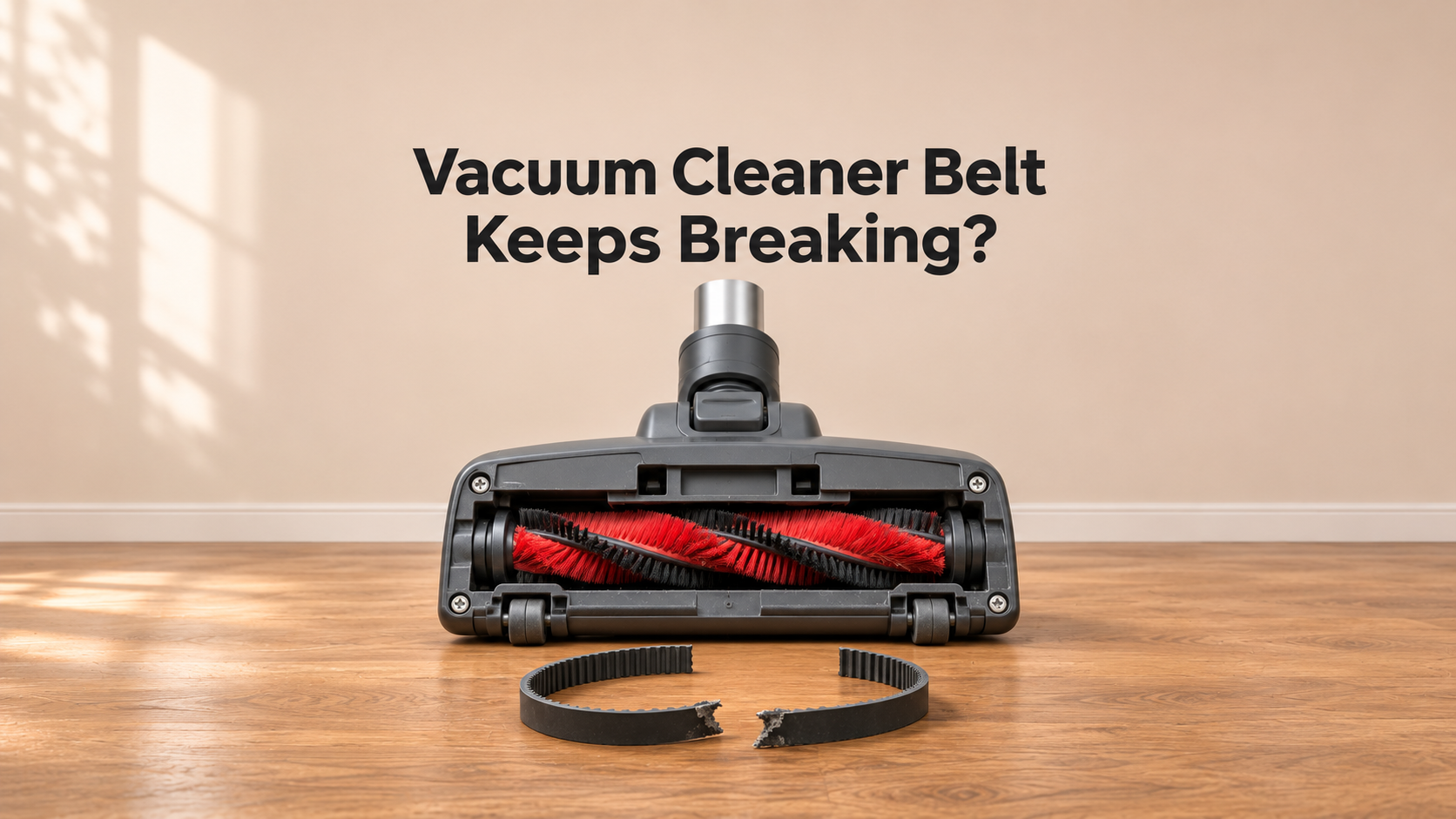
Vacuum Cleaner Belt Keeps Breaking? 10 Causes and Permanent Fixes
You replace the belt on your vacuum cleaner, run it for a few weeks, and it snaps again. Or maybe it stretches, slips, and starts to smell like burning rubber within days. If your vacuum cleaner belt keeps breaking, replacing it again and again is not the real solution. The belt is usually only the victim. Something else is causing it to fail early, and until you find that cause, you will keep wasting time and money.
In this complete guide, you will learn how a vacuum belt works, how to recognize the warning signs of a failing belt, the 10 most common reasons belts keep breaking, how to replace a belt correctly, and how to stop the problem for good. We also cover how to choose the right belt and what to look for in a vacuum that is easier on its belts.
What Does a Vacuum Cleaner Belt Do?
In an upright or canister vacuum with a motorized brush head, the belt is a small rubber loop that connects the motor shaft to the brush roll (also called the beater bar). When the motor spins, the belt turns the brush roll, which agitates carpet fibers and loosens dirt so the suction can pick it up.
A belt is designed as a wear part. It is cheap, simple, and made to be replaced. However, a healthy belt should last about 6 to 12 months with regular use. If yours breaks in days or weeks, something in the system is putting it under too much stress.

Signs Your Vacuum Belt Is Worn or About to Break
Catching a failing belt early helps you avoid a sudden break in the middle of cleaning. Watch for these signs:
- The brush roll stops spinning or spins slowly, even though the motor is running
- A burning rubber smell during vacuuming
- A squealing, slapping, or thumping noise from the floor head
- Poor pickup on carpet, with dirt left behind
- The belt looks stretched, shiny, cracked, frayed, or has melted spots
- Pieces of black rubber residue around the pulley or brush housing
Safety First Before You Inspect Anything
- Unplug the vacuum from the wall. For cordless models, remove the battery.
- Wear gloves, because hair, wire, and debris may hide sharp objects.
- If the machine smells of burning, let it cool for at least 30 minutes before opening any panel.
- Never spin the brush roll or touch the belt while the vacuum is connected to power.
10 Reasons Your Vacuum Belt Keeps Breaking
Use the chart below to see how different problems damage a belt, then read each cause in detail.

1. Wrong Belt Size or Type
This is the most common cause of repeated belt failure. A belt that is too tight stretches and snaps. A belt that is too loose slips and overheats. Even belts that look almost identical can differ slightly in length, width, or shape, and vacuum manufacturers often use specific belts for each model.
How to fix it:
- Check your vacuum manual or the label under the floor head for the correct belt part number.
- Compare the old belt with the new one before installing it. Length, width, and thickness should match.
- Choose the correct style: flat, round, or geared (cogged), depending on what your model uses.
2. Hair and Debris Wrapped Around the Brush Roll
Hair, string, thread, and carpet fibers wind tightly around the brush roll and its end caps. This increases friction, so the motor has to pull harder against a resisting roller, and the belt takes the strain. Over time it overheats, stretches, or snaps.
How to fix it:
- Remove the brush roll and cut away all tangled hair with scissors or a seam ripper.
- Clean around the end caps and bearings, where hair often hides.
- Do this weekly if you have pets or long hair at home.
3. Seized or Jammed Brush Roll Bearings
If the brush roll cannot spin freely, the belt is forced to drag it, and it will break almost every time. Worn or dirty bearings are a hidden cause, because the roller may look fine from the outside.
How to fix it:
- With the belt removed, spin the brush roll by hand. It should turn smoothly and quietly.
- If it feels stiff, gritty, or noisy, clean the end caps and bearings. Replace the roller or end caps if it still does not turn freely.
4. Dirty, Worn, or Damaged Pulley and Motor Shaft
The belt runs around a small pulley on the motor shaft. If this pulley is coated with melted rubber, covered in dust, rough, or has a burr or crack, it rubs against the belt and wears it out fast.
How to fix it: Clean any residue from the pulley with a cloth, check for rough or sharp edges, and replace the pulley or motor shaft part if it is damaged.
5. Belt Installed Incorrectly (Twisted or Misaligned)
A belt that is twisted, off-center, or not fully seated on both the motor pulley and the brush roll groove will rub against the housing and fail early.
How to fix it: Install the belt flat, with no twists, and make sure it sits fully in the groove on both ends. Rotate the brush roll by hand a few times to confirm it tracks straight before closing the housing.
6. Vacuuming Items That Jam the Brush Roll
Cords, socks, shoelaces, toy parts, rubber bands, and large debris can lock the brush roll. When the roller stops suddenly while the motor keeps running, the belt slips or snaps instantly.
How to fix it: Pick up small objects, cables, and loose items before you vacuum. If the roller jams, switch off at once instead of continuing.
7. Overheating From Blocked Airflow
A full bin, clogged filter, or blocked hose makes the whole machine run hot. Heat hardens and cracks rubber belts, so they become brittle and snap.
How to fix it: Empty the bin regularly, clean or replace filters, and clear the hose and floor head. A cooler machine means a longer belt life.
8. Old, Low-Quality, or Poorly Stored Belts
Rubber degrades with age, even in a drawer. Very cheap belts may use poor material that stretches, cracks, or melts quickly. Belts stored in hot, sunny places or near chemicals also age faster.
How to fix it: Buy belts from a reliable source that matches your model, and store spares in a cool, dry, dark place. Avoid belts that feel stiff, sticky, or very thin.
9. Floor Head Height Set Too Low for the Carpet
If the brush roll is pressed too deep into thick carpet, it must work much harder to spin. This creates drag on the belt and can lead to stretching and breakage, especially on shag or high-pile rugs.
How to fix it: Raise the floor head height setting for thicker carpets. Use a hard-floor mode or switch off the brush roll for bare floors, delicate rugs, and tassels.
10. Worn End Caps, Damaged Brush Roll, or Worn Floor Head
Cracked end caps, a bent roller, or a warped housing can cause the roller to wobble and rub. The extra drag shortens belt life even if everything else looks fine.
How to fix it: Inspect the roller for cracks, bends, and worn bristles. Replace damaged parts, and if the whole floor head is worn out, replace the head as a unit.
How to Replace a Vacuum Belt Step by Step
Replacing a belt takes about 10 to 15 minutes for most models. The exact steps vary, so check your manual, but the process is usually similar.

- Unplug the vacuum and lay it flat, or tilt it back so the floor head is easy to reach.
- Open the bottom plate or remove the screws that hold the brush roll cover in place.
- Take out the brush roll and remove the old belt. Note how it was routed.
- Clean everything: cut away hair, wipe the motor pulley, and clear dust from the housing.
- Check the roller and pulley for damage. Spin the roller by hand to test the bearings.
- Fit the new belt over the motor pulley and the brush roll groove, with no twists.
- Refit the brush roll and cover, rotate the roller by hand to check alignment, then close and secure the housing.
- Test the vacuum for a short run on a hard floor. The brush roll should spin freely with no squealing or burning smell.
Types of Vacuum Belts: Which One Do You Need?
Not all belts are the same. Using the wrong style or size is one of the main reasons belts break, so it is worth knowing the common types.

- Flat belts: Thin, wide, and flat. Common in many upright vacuums. They need correct alignment to track properly.
- Round (stretch) belts: Look like a rubber band. Common in smaller, simpler models. They stretch over time.
- Geared (cogged) belts: Have small teeth that grip the pulley. They do not slip as easily and are usually more durable, but they must match the pulley design.
Always match the belt to your vacuum model number rather than guessing by sight alone.
How to Stop Your Belt From Breaking Again
Once you have fixed the cause, a few habits will help the new belt last the full 6 to 12 months or longer.

- Clean the brush roll every week and remove hair from the end caps.
- Check the belt every month for cracks, stretching, and shiny glazed spots.
- Replace the belt every 6 to 12 months, even if it still looks fine, as a routine maintenance step.
- Pick up cords, socks, and small objects before vacuuming.
- Keep the airflow clear: empty the bin, clean the filters, and clear the hose regularly.
- Use the right floor setting: raise the head on thick carpet and turn the brush off on hard floors.
- Stop immediately if the roller jams or you smell burning rubber.
- Keep spare belts in a cool, dry place so you are never tempted to use the wrong size.
When the Problem Is Bigger Than the Belt
If the belt keeps breaking even after you have fixed the common causes, look deeper:
- The motor is weak or failing. A motor that drags or runs unevenly can overload the belt.
- The brush roll or floor head is worn out. Warped plastic and worn bearings are hard to repair.
- The vacuum is poorly designed or very old. Some models are simply hard on belts.
Repair it if the vacuum is newer, parts are available, and the fix is a roller, end caps, or a pulley. Replace it if the motor is failing, the floor head is damaged beyond repair, the machine is 8 to 10 years old, or repair costs approach half the price of a new vacuum.
What to Look for in a Vacuum That Is Gentler on Belts
If you are shopping for a replacement, these features can reduce belt problems:
- Belt-free or direct-drive brush heads: Remove the belt entirely from the equation.
- Brush roll clutch or jam protection: Stops the brush roll automatically when something gets stuck.
- Tool-free brush roll removal: Makes weekly hair cleaning quick and easy.
- Height-adjustable floor head: Helps match the head to different carpet depths.
- Brush on and off switch: Useful for hard floors and delicate rugs.
- Easy belt access: A simple, screw-free cover saves time when you need to replace the belt.
- Available spare parts: Belts, brush rolls, and end caps should be easy to find for your model.
Frequently Asked Questions
Why does my vacuum belt keep snapping?
The most common reasons are the wrong belt size, a jammed or tangled brush roll, worn bearings, overheating, and a damaged pulley. Fix the underlying cause, not only the belt.
How long should a vacuum belt last?
With regular home use, a belt usually lasts 6 to 12 months. Heavy use, pets, and thick carpets can shorten this.
Can I use any belt in my vacuum?
No. Always use the belt specified for your vacuum model. A slightly wrong size can slip, overheat, or snap quickly.
Why does my new belt burn or smell right away?
This usually means the brush roll is jammed, the bearings are stiff, the belt is the wrong size, or the airflow is blocked and overheating the machine.
Is it OK to run a vacuum with a broken belt?
The suction will still work, but the brush roll will not spin, so carpet cleaning will be poor. Running it for long also wastes effort, so replace the belt as soon as possible.
How do I know if the belt is too tight or too loose?
A belt that is too tight is hard to fit and strains the motor and bearings. A belt that is too loose slips, squeals, and may not turn the roller at all. The correct belt should fit snugly with slight tension, without forcing it on.
Should I replace the brush roll when the belt breaks?
Not always. Replace it if it is cracked, bent, worn flat, or does not spin freely even after cleaning.
Final Thoughts
A vacuum cleaner belt that keeps breaking is a symptom, not the real problem. In most cases the belt is simply the cheapest part to take the damage from a tangled brush roll, a stiff bearing, a blocked airflow path, or an incorrect belt size. Work through the checklist in this guide, clean the roller and pulley, use the correct belt, and keep up with regular maintenance.
Do this, and your next belt should last for many months. And if the vacuum itself is worn out, choosing a model with jam protection, easy brush roll access, or a belt-free design will save you the same trouble in the future.