
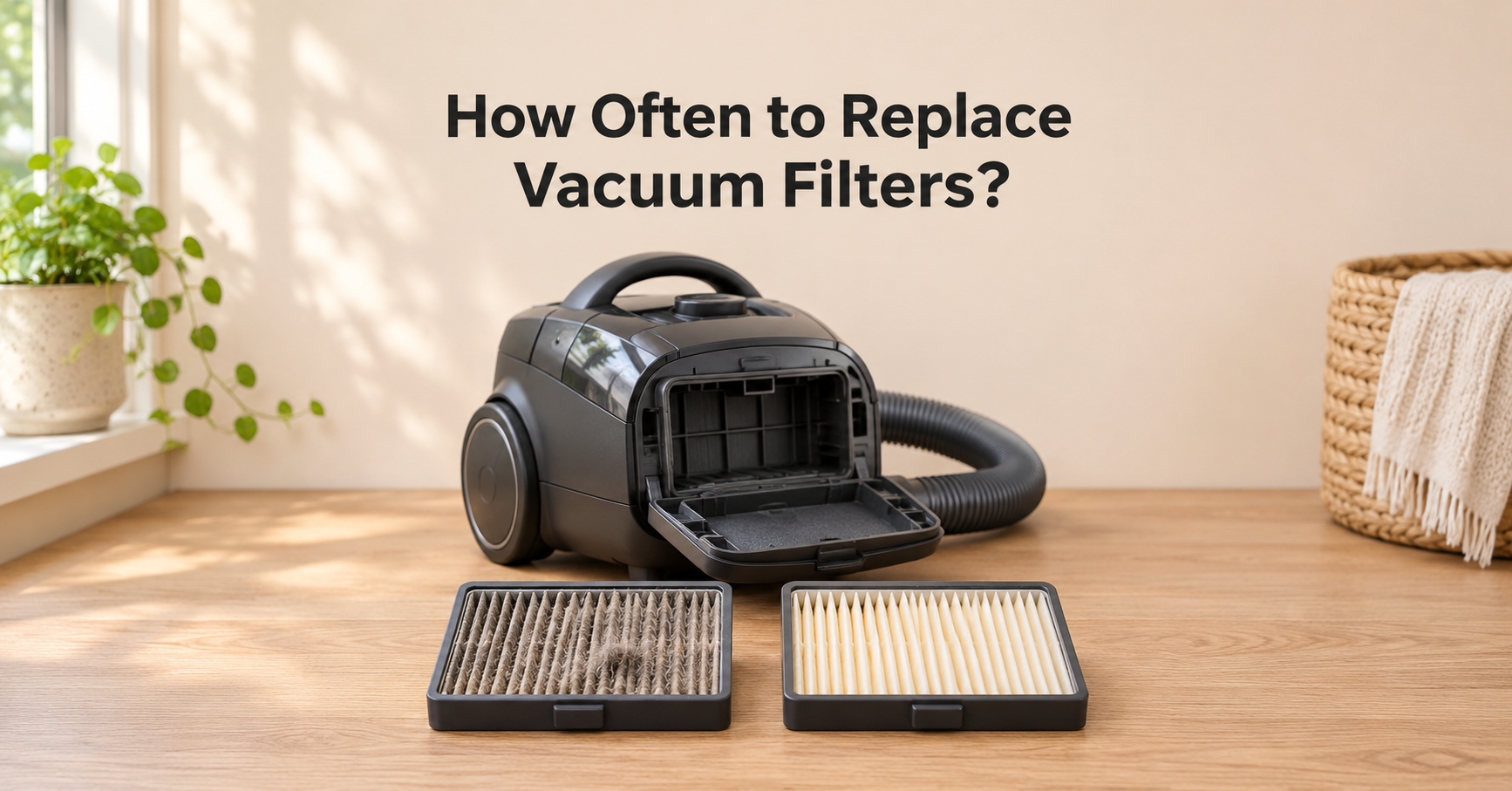
How Often to Replace Vacuum Filters: A Complete Guide by Filter Type
Vacuum filters do quiet, important work. They trap dust, pollen, pet dander, and fine particles so that your vacuum cleans the floor instead of redistributing dirt through the air. But filters do not last forever, and a worn-out one can weaken suction, damage the motor, and make your home’s air worse.
So how often should you replace vacuum filters? The short answer: most vacuum filters should be replaced every 6 to 12 months, though the exact timing depends on the filter type, how often you vacuum, and what you vacuum. This guide breaks it all down.
Quick Answer: Replacement Timeline
- HEPA filters (non-washable): every 6 to 12 months
- Washable pleated filters: every 6 to 12 months, even with regular cleaning
- Foam filters: every 1 to 2 years
- Mesh or pre-motor screens: every 1 to 2 years, or when damaged
- Paper or disposable filters: every 1 to 3 months
- Vacuum bags: when about two-thirds full, not when completely full
Treat these as general guidelines. Always check your vacuum’s manual, because manufacturers set their own recommendations based on how the machine is designed.
Why Replacing Vacuum Filters Matters
- Maintains suction power: a clogged filter chokes airflow, and cleaning performance drops fast.
- Protects the motor: restricted airflow makes the motor overheat, which shortens its life.
- Traps allergens: old filters lose their ability to capture fine particles, which matters for people with allergies or asthma.
- Prevents odors: a filter loaded with dust, hair, and moisture can make your vacuum smell stale.
- Saves money: a filter costs far less than a motor repair or a new vacuum.
Replacement Frequency by Filter Type
HEPA filters
HEPA filters capture a very high percentage of tiny particles. Most are not designed to be washed. Replace them every 6 to 12 months, or sooner if you have pets or allergies. Tapping out loose dust between replacements helps a little, but it does not restore a fully clogged filter.
Washable pleated and foam filters
These can be rinsed and reused, which extends their life. Foam filters often last 1 to 2 years, while washable pleated filters are best replaced every 6 to 12 months. Over time, repeated washing breaks down the material, and it stops trapping fine dust properly.
Paper and disposable filters
These are single-use and clog quickly. Replace them every 1 to 3 months, depending on use. Do not wash them, as water ruins the material.
Mesh and pre-motor filters
These tough screens catch larger debris and are usually rinsable. They can last 1 to 2 years, but replace them as soon as you see tears, warping, or permanent clogging.
Vacuum bags
Bags act as a filter too. Replace the bag when it is about two-thirds full. A packed bag restricts airflow and reduces suction.
What Changes the Schedule?
Your real replacement interval can be shorter or longer than average. Consider these factors:
- Pets: fur and dander clog filters faster, so replace about every 3 to 6 months.
- Allergies or asthma: fresher filters mean cleaner air, so lean toward the shorter end of the range.
- Vacuuming frequency: daily vacuuming wears filters faster than weekly use.
- Home type: dusty homes, homes with lots of carpet, or houses near construction need more frequent changes.
- Fine debris: ash, drywall dust, and flour can clog a filter in a single job.
- Washing habits: well-maintained washable filters last longer than neglected ones.
5 Signs Your Vacuum Filter Needs Replacing Now
- Weak suction even after cleaning: the filter media is permanently clogged.
- Musty or burnt smell: trapped dust and moisture, or a motor straining from low airflow.
- Visible damage: holes, tears, bent pleats, or crumbling foam.
- Dust blowing from the exhaust: the filter is no longer trapping particles.
- Overheating or sudden shut-offs: airflow is blocked and the motor is running hot.
Some newer vacuums also have a filter indicator light that tells you when service is due. Do not ignore it.
Should You Clean or Replace the Filter?
Cleaning and replacing work together. Washable filters should be cleaned regularly, usually every 1 to 3 months, and then replaced on schedule. Non-washable filters cannot be properly cleaned, so replacement is the only reliable fix. If a filter is torn, discolored, stiff, or still smells after cleaning and drying, replace it.
How to Replace a Vacuum Filter
- Turn off and unplug the vacuum (remove the battery if it is cordless).
- Locate the filter, usually near the dust bin, motor, or exhaust. Some models have two or more.
- Remove the old filter and note how it sits so you can fit the new one the same way.
- Wipe the filter housing with a dry cloth.
- Insert the new filter firmly, with no gaps around the edges.
- Close the cover and test the vacuum for suction and any odor.
How to Choose the Right Replacement Filter
- Match your model number: a filter that does not fit lets dust bypass it.
- Choose the right type: HEPA if you need allergen control, and washable if you want lower running costs.
- Check build quality: look for sturdy frames, even pleats, and tight seals.
- Consider multi-packs: buying several at once is often cheaper and lets you swap while another dries.
- Compare original and compatible options: original filters guarantee fit, while quality compatible filters can save money if they match the specifications.
Tips to Make Filters Last Longer
- Empty the dust bin after each use or when it reaches the fill line.
- Pick up large debris before vacuuming.
- Tap out or rinse filters on a regular schedule, following the manual.
- Let washed filters dry fully for at least 24 hours.
- Keep a spare so there is no downtime.
- Set a calendar reminder for filter checks.
Frequently Asked Questions
How often should I replace a HEPA filter in my vacuum?
Every 6 to 12 months for most homes. Replace it sooner if you have pets, allergies, or heavy use.
Can I wash a vacuum filter instead of replacing it?
Only if it is labeled washable. Even then, washable filters wear out and should be replaced about once a year.
What happens if I never replace my vacuum filter?
Suction drops, the motor overheats, odors build up, and fine dust escapes into your air. Over time, this can lead to costly motor damage.
Do cordless vacuums need filter changes too?
Yes. Cordless vacuums have the same filter needs, and a clogged filter can also reduce battery run time.
How do I know which filter fits my vacuum?
Check the manual, the filter’s printed part number, or the model number on the vacuum, then match the replacement to it.
Is it okay to run my vacuum without a filter?
No. Dust will reach the motor and be blown into the room, causing damage and poor air quality.
Final Thoughts
For most households, replacing vacuum filters every 6 to 12 months keeps suction strong, the air cleaner, and the motor healthy. Adjust the schedule for pets, allergies, and heavy use, watch for the warning signs, and always follow your manufacturer’s guidance. A small, regular investment in fresh filters is one of the simplest ways to get years of reliable performance from your vacuum.