


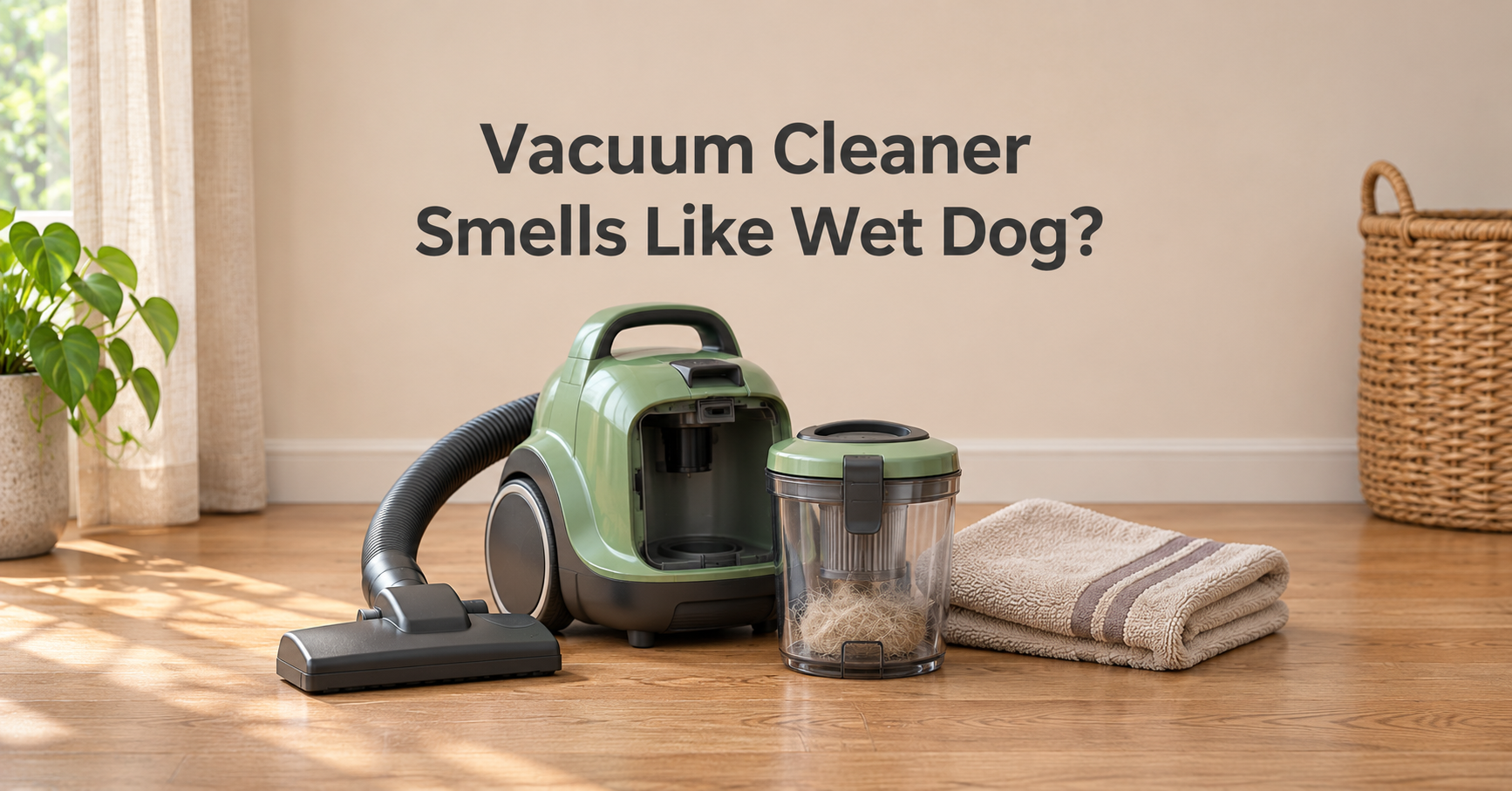
Vacuum Cleaner Smells Like Wet Dog: Causes, Fixes, and How to Keep It Fresh
You switch on your vacuum and within seconds a damp, musty smell fills the room, a lot like a wet dog that has just come in from the rain. It is unpleasant, it spreads through your home, and it makes the cleaning feel pointless. The good news is that this smell has clear causes and a practical fix. In most cases, a thorough cleaning of a few key parts is enough to make your vacuum smell fresh again.
This guide explains why a vacuum cleaner smells like wet dog, how to find the source, step-by-step ways to remove the odor, and how to prevent it from returning, even in homes with pets.
Why Does My Vacuum Smell Like Wet Dog?
A vacuum pulls in dust, hair, skin cells, pet dander, food crumbs, and sometimes moisture. When these collect in the machine, bacteria and mold feed on them, especially in a warm, slightly damp environment. The motor warms the air as it runs, which pushes the smell out through the exhaust and into your room. Pet hair and dander hold natural body oils, which makes the odor stronger, and any dampness makes it worse.
Common Causes of a Wet Dog Smell in a Vacuum
1. Pet hair, dander, and oils
Dog and cat hair carry oils, saliva, and skin flakes. Once packed inside the dust bin, filters, or brush roll, they give off a distinct “pet” smell every time the vacuum heats up.
2. Moisture in the dust and hair
Vacuuming damp carpet, wet paw prints, or slightly wet spills adds moisture to the dust. Damp dust feeds mold and bacteria, which produce the musty, wet-dog odor.
3. A dirty or moldy filter
Filters trap fine dust and odor particles. If a filter is never cleaned, or is put back while still damp after washing, it can grow mildew and smell strongly.
4. A dirty brush roll
Hair wrapped around the brush roll, along with dirt and moisture, can start to smell. As the roll spins and heats up, the odor is released.
5. A dirty dust bin or old bag
A bin that is emptied but never washed keeps a film of grime on its walls. A bag that is left too full for too long can also hold in odor.
6. Odors trapped in the hose, seals, and exhaust
The hose, wand, and rubber seals collect fine dust and moisture. The exhaust path can also hold stale air and dust, which spreads the smell.
7. Pet accidents or wet messes
Vacuuming a pet accident, a wet stain, or pet food spills with a regular vacuum leaves residue inside the machine, which then rots and smells.
8. Overfull bin and poor airflow
A packed bin or clogged filter stops air from moving properly, so stale, dusty air lingers and warms up inside the machine.
Find the Source of the Smell
To find the cause quickly, sniff each part separately after you unplug the vacuum. The bin, filters, and brush roll are the most likely culprits. If the smell appears only when the motor warms up, the dust in the filter or exhaust path is usually the main issue. If the smell is present even when the vacuum is off, look for old debris or mold.
What You Need
- A trash bag or outdoor bin
- Lukewarm water and mild dish soap
- White vinegar
- Baking soda
- A soft brush or old toothbrush
- Small scissors or a seam ripper (for the brush roll)
- Microfiber cloths
- A replacement filter, if needed
How to Remove the Wet Dog Smell From a Vacuum: Step by Step
Step 1: Turn off and unplug
Disconnect the vacuum from the power. For cordless models, remove the battery if the design allows it.
Step 2: Empty the dust bin or remove the bag
Empty the contents into a trash bag, ideally outdoors. If your vacuum uses a bag, remove it and replace it with a new one, since an old bag holds odor.
Step 3: Wash the dust bin
If your manual allows washing the bin, rinse it with lukewarm water and a few drops of mild dish soap. Scrub corners and seals with a soft brush. Rinse well. If the bin is not washable, wipe it thoroughly with a damp microfiber cloth. For lingering smells, wipe with equal parts white vinegar and water.
Step 4: Clean or replace the filters
Remove all filters, including the pre-motor and exhaust filters. Tap out loose dust. Wash filters that are marked washable in lukewarm water, squeeze out the water, and let them dry for at least 24 hours. If a filter is non-washable, stained, stiff, or has been in use longer than recommended, replace it. A smelly filter is often the main cause.
Step 5: Clean the brush roll
Remove the brush roll, cut away tangled hair, and wipe the bristles and ends with a slightly damp cloth. Clean the brush roll chamber and the floor head to remove old, smelly debris.
Step 6: Clean the hose and attachments
Check the hose and wand for clogs. Rinse them with lukewarm water and a little soap if the manual allows, then hang them to drain and dry completely. Wipe the attachments and joints.
Step 7: Wipe seals, vents, and the exhaust area
Wipe the rubber seals, dust bin lid, filter housing, and exhaust grille with a damp cloth. Never wash or soak the motor or any electrical parts.
Step 8: Deodorize naturally
Once all parts are completely dry, you can leave a small open container of baking soda near the empty bin or filter area for a few hours, or place the dry parts in fresh air or indirect sunlight. This helps absorb leftover odor. Do not put baking soda or any powder inside the motor or filter chamber.
Step 9: Dry completely and reassemble
Let everything dry for at least 24 hours. A damp part will bring the smell back within days. Reassemble the vacuum and run it for a minute to check whether the smell has gone.
Safe Deodorizing Tips
- Use white vinegar and water for wiping plastic parts, but never mix it with bleach or other cleaners.
- Avoid scented powders or sprays inside the machine. They can clog filters and hide the problem instead of solving it.
- Avoid harsh chemicals, which can damage plastic, seals, and filters.
- Choose a vacuum-safe approach: clean first, deodorize second.
- Check the manual before washing any part.
If the Smell Does Not Go Away
- Replace the filters, especially if they are old or heavily stained.
- Replace the hose if it is cracked or permanently smelly.
- Check for hidden hair around the brush roll bearings and wheels.
- Look for mold or residue in less obvious areas, such as the cyclone and exhaust path.
- Consider the age of the vacuum. Old machines can hold odor in plastic and seals.
- Check the motor. A burning or hot smell is different from a pet smell and needs service.
Is It a Wet Dog Smell or a Burning Smell?
A wet dog or musty smell usually points to dirt, hair, and damp in the machine. A burning or electrical smell may mean a worn belt, a tangled brush roll, or an overheated motor. If you smell burning, turn off and unplug the vacuum immediately, and check for clogs and tangled hair. If the smell continues, have it checked by a technician.
Common Mistakes to Avoid
- Reinstalling a damp filter: this is the top reason for a returning smell.
- Using air fresheners or perfume inside the vacuum: they mask the odor and can clog parts.
- Washing electrical or motor parts: this can damage the machine and is unsafe.
- Vacuuming wet messes with a dry vacuum: it leaves moisture and bacteria inside.
- Emptying the bin but never washing it: grime builds up on the walls.
- Waiting too long between cleanings: odors get deeper and harder to remove.
How to Prevent a Wet Dog Smell in Your Vacuum
- Empty the dust bin after every use, or when it reaches the fill line.
- Clean the brush roll and cut hair regularly.
- Wash washable filters monthly and let them dry fully.
- Replace filters every 6 to 12 months, or sooner with pets.
- Do not vacuum wet carpets, damp paw prints, or spills unless the machine is designed for it.
- Brush your pets regularly to reduce loose hair and dander.
- Bathe and dry pets properly, so less moisture and odor reach the floor.
- Vacuum pet beds and favorite spots often.
- Store the vacuum in a dry, ventilated place.
- Keep a spare filter, so you can swap while the other dries.
Choosing a Vacuum That Resists Pet Odor
If you have pets, certain features reduce smell problems: a sealed system with HEPA filtration, washable filters, an easy-to-empty and washable dust bin, a tangle-free brush roll, and a design that keeps dust and moisture away from the motor. Models made for pet owners often include these.
Frequently Asked Questions
Why does my vacuum smell like wet dog even though I do not have a dog?
The smell comes from damp dust, mold, and bacteria, not only from pets. Moist dust or a dirty filter can create the same odor in any home.
How do I get the smell out of my vacuum cleaner?
Empty and wash the bin, clean or replace the filters, clean the brush roll and hose, wipe seals and vents, and dry everything fully before reassembling.
Can I put baking soda in my vacuum?
It is best not to vacuum up baking soda, since fine powder can clog filters. Instead, leave an open container near dry, empty parts to absorb odor.
Can I wash my vacuum filter to remove the smell?
Only if it is labeled washable. Wash it in lukewarm water, dry it for at least 24 hours, and replace it if the smell remains.
How often should I clean my vacuum if I have pets?
Empty the bin after every use, check the brush roll every one to two weeks, and wash filters monthly.
Does vacuum smell mean the machine is broken?
Not usually. It normally means that the parts need cleaning or the filter needs replacing. A burning smell is different and may indicate a mechanical or electrical fault.
Will an air freshener or scented vacuum bag help?
These only mask the smell. Cleaning the source is the lasting solution.
Final Thoughts
A vacuum that smells like wet dog is a sign that dust, hair, and moisture have built up inside, not a reason to replace the machine. Empty and wash the bin, clean or replace the filters, clear the brush roll and hose, and dry every part thoroughly. Add a simple monthly routine, especially in homes with pets, and your vacuum will stay fresh, efficient, and pleasant to use.