


Vacuum Cleaner Leaking Dust: How to Find the Leak and Fix It for Good
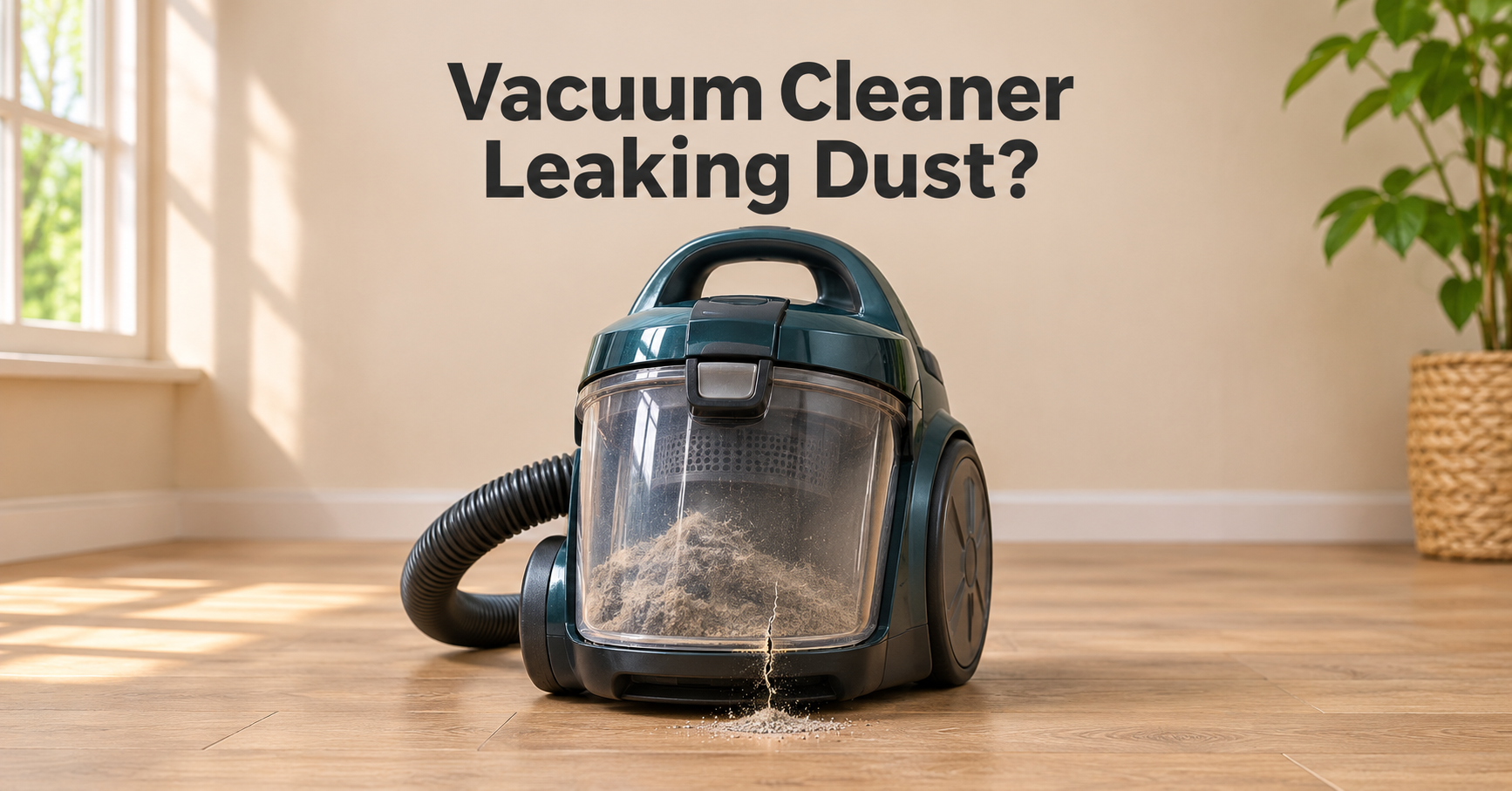
Few things are more frustrating than vacuuming a room and finding a trail of dust behind the machine. A vacuum cleaner that leaks dust, whether from the bin, the hose, the lid, or the seams, is not only messy but also reduces cleaning performance and can make allergy symptoms worse. The cause is usually a small gap, a worn seal, or a filter that is not seated correctly, and most of these problems are easy to fix.
This guide shows you how to find exactly where your vacuum is leaking dust, why it happens, how to repair each leak point, and when it is time to replace parts or the whole vacuum.
Signs Your Vacuum Is Leaking Dust
- A trail of dust or fine powder left on the floor behind the vacuum
- Dust puffing out around the dust bin, lid, or latches
- Dust escaping from hose joints, wand connections, or the floor head
- Dust inside the filter housing or on the motor side of the machine
- A dusty smell in the room while vacuuming
- Dust on furniture and surfaces right after cleaning
- A whistling or hissing noise, which suggests that air is leaking in or out
- Weaker suction than normal
Why Do Vacuums Leak Dust?
A vacuum works as a sealed airflow path. Dirty air enters through the floor head, travels through the hose into the bin or bag, passes through filters, and leaves through the exhaust. If a seal fails or a part is cracked, loose, or missing, dust escapes through the gap instead of ending up in the bin.
1. Worn, cracked, or missing seals and gaskets
Rubber and foam seals around the dust bin, lid, and filter housing flatten, harden, or crack with age. Even a very small gap lets fine dust escape under pressure.
2. Dust bin or bag that is overfilled
When the bin is over the max line or the bag is too full, dust is forced into the seams and out past the lid. This is one of the most common causes, and it is also the easiest to fix.
3. Poorly seated bin, lid, or latch
If the bin is not clicked fully into place, or a latch is broken, the seal does not close tightly. Dust then leaks at the joint.
4. A cracked dust bin or housing
Drops, knocks, and age can cause hairline cracks in the plastic bin or body. These are often hard to see, but they leak steadily.
5. Damaged or loose hose and wand
A split hose, a cracked cuff, or a loose wand connection lets dust blow out before it reaches the bin. Hoses wear out where they bend, near the ends.
6. Missing, damaged, or wrong filters
If a filter is not installed, is torn, or does not fit properly, dust bypasses it and leaks through the filter housing and the exhaust.
7. Torn or incorrectly fitted bag
A bag that is torn, folded, or not sealed over the inlet allows dust to escape into the bag compartment. Bags that are not made for your model may also leak.
8. Blocked airflow
A clog in the hose, nozzle, or inlet raises pressure inside the machine. The air then looks for another way out, which pushes dust through weak seals.
9. Worn floor head connection
The swivel joint or neck of the floor head can crack or loosen, so dust escapes at the joint instead of traveling to the bin.
10. Normal wear in an older machine
Plastic becomes brittle, seals lose their shape, and latches weaken over the years. This makes leaks more likely as the vacuum ages.
How to Find Where Your Vacuum Is Leaking Dust
Before you start replacing parts, pinpoint the leak. Use this simple test:
- Darken the room so that a flashlight beam stands out.
- Run the vacuum on a clean, empty section of floor.
- Shine a bright light along the seams, the lid, the hose joints, and the exhaust. Fine dust leaking out will show up in the beam.
- Listen for a whistle or hiss, which often signals an air leak.
- Hold a dry white cloth near joints to see where dust lands.
- Look inside the dust bin and filter area when the vacuum is unplugged, for dust trails or streaks that show where air has escaped.
Where the dust comes from tells you the likely cause:
- Around the lid or bin base: seals, an overfull bin, or a cracked bin.
- At hose or wand joints: a loose fit, a cracked cuff, or a split hose.
- From the exhaust: a dirty, damaged, or missing filter.
- At the floor head: a worn swivel joint or cracks in the neck.
What You Need
- A bright flashlight
- A trash bag or outdoor bin
- A soft brush and microfiber cloths
- Mild dish soap and lukewarm water
- Replacement seals, filters, or bags made for your model
- A screwdriver set, if your manual allows opening parts
- Strong tape suitable for hoses (for temporary hose fixes only)
How to Stop a Vacuum From Leaking Dust: Step by Step
Step 1: Turn off and unplug
Switch off the vacuum and disconnect it from power. For cordless models, remove the battery if the design allows.
Step 2: Empty the dust bin or replace the bag
Empty the bin outdoors or into a trash bag, and do not let it get beyond the max line again. Replace a bag when it is about two-thirds full, and make sure the new bag is seated over the inlet correctly.
Step 3: Clean and re-seat the filters
Remove all filters, tap out dust, and wash those marked washable. Dry them fully. Replace torn or damaged filters. Refit each one firmly, with no gaps around the edges.
Step 4: Check and fix the seals
Wipe all the rubber and foam seals, and inspect them for cracks, flat spots, or missing sections. Dust trapped on the sealing surface can also cause leaks, so wipe the matching edges of the bin and lid. Replace any damaged seal with one designed for your model.
Step 5: Inspect the bin, lid, and latches
Check the bin and housing for cracks. Make sure the latches click firmly and the lid presses tightly against the seal. A cracked bin should be replaced.
Step 6: Check the hose, wand, and joints
Run your hand along the hose, feeling and looking for holes. Make sure the connection points click or twist in securely. A small crack in the hose can be sealed with strong tape as a temporary fix, but a damaged hose should be replaced for a lasting repair.
Step 7: Clear any clogs
Look through the hose, wand, and nozzle for blockages. Clearing airflow reduces pressure and the chance of dust being forced out.
Step 8: Retest
Reassemble the vacuum, repeat the light test, and check each joint again. If no dust escapes and the suction feels stronger, the leak is fixed.
Leak Fixes by Vacuum Type
Bagless vacuums
Focus on the bin lid seal, cyclone area, and filter housing. Dust leaking when you empty the bin is common, but constant leaking while running points to a seal or latch problem.
Bagged vacuums
Check that the bag is the correct type, fully seated, and not overfilled. Make sure the bag door closes tightly.
Cordless and stick vacuums
Their small bins fill quickly. Check the bin flap, the seal around the cyclone, and the connections between the wand and the motor unit.
Robot vacuums
Empty the bin after each cycle and check that the filter and bin are seated correctly. Dust leaking from the bin door often means the seal is dirty or the bin is overfull.
When to Replace Parts or the Vacuum
- The seals are brittle or crumbling and a replacement is available
- The hose has multiple cracks or a split near the ends
- The bin, lid, or latches are cracked or broken
- The filters are torn or past their service life
- The main housing is cracked, or the leak cannot be found or sealed
- The vacuum is old, and repair costs approach the price of a new one
When buying a replacement vacuum, look for a sealed system, HEPA filtration, a tight-fitting bin with a solid latch, and an easy-to-reach seal that you can clean and replace.
Common Mistakes to Avoid
- Ignoring small leaks: a tiny gap leaks more as pressure rises.
- Overfilling the bin or bag: it forces dust past the seals.
- Using the wrong filter or bag: a loose fit means gaps.
- Running the vacuum without filters: dust goes into the motor and the room.
- Relying on tape as a permanent repair: tape fails over time, so replace the damaged part.
- Forgetting to wipe seal surfaces: dust on the seal stops it sealing.
- Dropping the vacuum or bin: impacts create hidden cracks.
How to Prevent Your Vacuum From Leaking Dust
- Empty the dust bin after each use, or when it reaches the max line.
- Wipe the seals and the matching rim of the bin every month.
- Clean filters regularly and replace them on schedule.
- Check the hose and joints for cracks and loose fits.
- Always use filters and bags designed for your model.
- Store the vacuum in a dry place, away from heat and sunlight, which make plastic and rubber brittle.
- Handle the bin carefully when emptying, to avoid drops.
- Do a quick light test every few months.
Frequently Asked Questions
Why is my vacuum leaking dust from the bottom of the dust bin?
This is usually a worn seal, a cracked bin, or an overfull bin. Empty it, wipe the seal, and look for cracks.
How do I find a leak in my vacuum hose?
Run the vacuum and shine a flashlight along the hose in a dark room, or listen for a whistle. You can also feel along the hose for air blowing out.
Can I fix a vacuum leak with tape?
Strong tape can seal a small hose crack temporarily, but it is not a lasting repair. Replace the damaged hose or part.
Why does my vacuum leak dust when I empty the bin?
Some dust loss is normal when emptying, but heavy spillage suggests a poor design or an overfull bin. Empty it more often, and do it over a trash bag.
Can a clogged filter cause dust leaks?
Yes. A clogged filter restricts airflow and raises internal pressure, which pushes dust through weak points.
How often should I replace vacuum seals?
There is no fixed schedule, but check them every few months and replace them as soon as they crack, harden, or stop sealing.
Is a leaking vacuum bad for allergies?
It can be. Dust that escapes into the air may trigger allergies and breathing problems, so fix the leak as soon as you can.
Final Thoughts
A vacuum that leaks dust is usually dealing with a simple, fixable problem: a worn seal, a cracked hose, a badly seated filter, or an overfull bin. Use the light test to find the leak, replace worn parts with ones that fit your model, and keep up regular cleaning. With a little care, your vacuum will hold dust where it belongs and keep your home cleaner and your air healthier.