






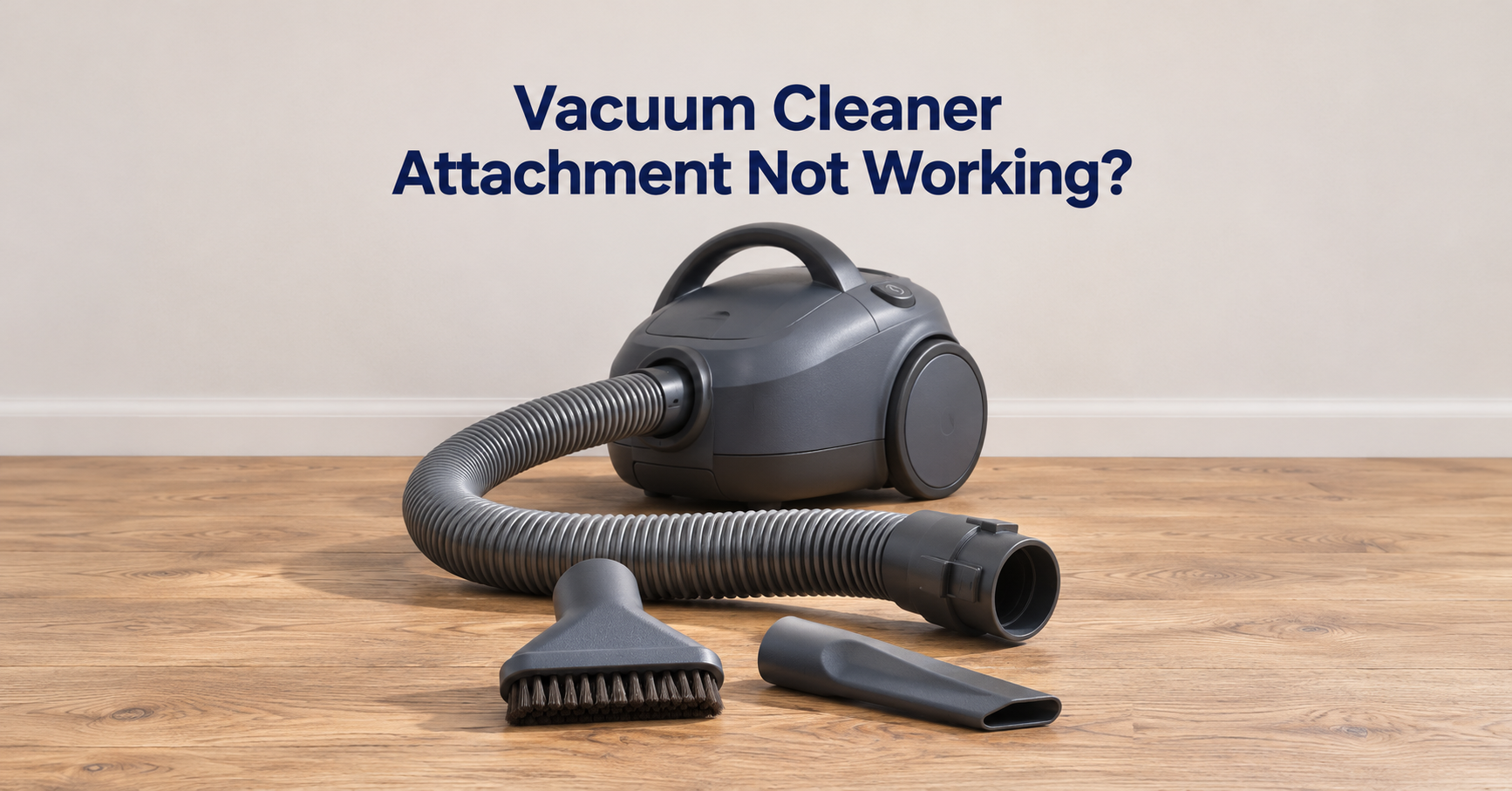
You need the crevice tool for the car, or the brush for the stairs, and suddenly the vacuum cleaner attachment is not working. There is no suction, the tool will not stay on, or the powered brush will not spin. The good news is that attachment problems are among the easiest vacuum faults to solve. This guide explains the real causes, step-by-step fixes and how to choose a vacuum with reliable tools.
Quick answer
When an attachment does not work, the problem is usually a clog, the wrong diverter position, a leaking hose or a dirty filter. For powered tools, it is often hair on the roller or dirty electrical contacts. Check each part separately and swap tools to find the fault.
10 reasons your vacuum attachment is not working (and how to fix each one)
1. A blockage in the hose, wand or attachment
A clog is the most common reason a tool seems dead. Socks, paper, a pet toy or packed dust can stop airflow completely. Detach the tool and look through each part toward a light. Clear stubborn clogs with a broom handle, and avoid sharp objects that could pierce the hose.
2. The diverter or floor and hose switch is in the wrong position
Many uprights and canister vacuums use a valve that redirects suction from the floor head to the hose. If it is stuck, dirty or not fully switched, the attachment gets no suction. Move the switch firmly, clean around it, and listen for the change in motor sound.
3. The hose is loose, cracked or leaking
A split hose or a poorly seated joint lets air escape, so the attachment feels weak. Run your hand along the hose while the vacuum is on and listen for hissing. Tape is only a temporary fix, and a cracked hose should be replaced.
4. The attachment does not fit or is the wrong type
Tools from other brands or models often look similar but have a different diameter or locking shape. They can fit loosely and leak air. Use the original tools listed for your model, and push them in until they click.
5. A powered tool or brush bar is not spinning
Motorized pet tools and mini turbo brushes use a small motor or air-driven turbine. Hair wrapped around the roller, a worn belt or a stuck turbine stops it spinning. Cut away the hair, make sure the roller turns by hand, and replace a worn belt if there is one.
6. Dirty or damaged electrical contacts
Electric hoses and powered tools get their power through small contacts at the connection points. Dust, moisture or bent pins can break the circuit. With the vacuum unplugged, clean the contacts with a dry cloth or a soft brush and check that nothing is bent.
7. The filter, bin or bag is full
A clogged filter or full dustbin reduces airflow everywhere, but you notice it most through narrow tools. Empty the bin, wash or replace the filter, and try the attachment again.
8. The seal or gasket is worn
Rubber seals around the hose inlet and the attachments wear and harden, causing leaks. Check for cracks and flat spots, and replace the seal if air escapes at the joint.
9. The release button or locking clip is damaged
A broken clip can stop the tool from locking onto the wand. If it wiggles or slides off, the tool leaks air and may not make contact with powered connections. Replace the clip or the tool.
10. Motor, belt or switch problems inside the vacuum
If all attachments and the floor head fail, the problem may be inside the vacuum: a failed motor, a damaged switch or a broken belt. This needs a repair technician or replacement, especially on older machines.
Step-by-step troubleshooting
- Switch off and unplug the vacuum, or remove the battery.
- Empty the dustbin or replace the bag, and clean or replace the filters.
- Detach the attachment and look through it for a clog.
- Remove the hose and check it for blockages and cracks.
- Test with a different attachment to see if the problem is the tool or the vacuum.
- Check the hose and floor diverter switch is fully engaged.
- For powered tools, cut hair off the roller and clean the electrical contacts.
- Reassemble the vacuum, turn it on and test suction with your hand at the end of the hose.
How to keep your attachments working
- Clean the tools after use and shake out dust.
- Do not vacuum large debris such as paper clips, coins or big pieces of paper.
- Store the hose without sharp kinks and avoid pulling the vacuum by the hose.
- Keep the tools together in an attached caddy or a labeled box.
- Replace worn seals and belts before they fail.
- Keep the filters clean so the airflow stays strong.
Attachment problems by vacuum type
- Upright vacuums: check the diverter between the floor head and the hose, plus the hose cuff.
- Canister vacuums: check the hose swivel, the wand lock and electric hose contacts.
- Stick and cordless vacuums: check the battery charge, the tool locking latch and the power connector on the motorized head.
- Handheld vacuums: check the crevice tool seat and the filter, which clog quickly.
Repair or replace?
- Repair or replace the part if it is a hose, seal, belt or attachment, since these are usually cheap.
- Replace the vacuum if the motor is weak, the body is cracked or repair costs are close to the price of a new model.
Features to look for in a vacuum with dependable attachments
- Tool-free, snap-on attachments that lock firmly.
- Onboard tool storage so nothing gets lost.
- Anti-tangle motorized pet tool for hair and fur.
- Quality hose with a flexible, crush-resistant design.
- Easy-access diverter and clog access points to clear blockages quickly.
- Available spare parts and a clear warranty.
- Complete tool kit with a crevice tool, dusting brush and upholstery tool.
Frequently asked questions
Why does my vacuum attachment have no suction?
The usual reasons are a clog, a diverter stuck in the floor position, a hose leak or a full filter. Check these in that order.
Why won’t my vacuum attachment connect?
The attachment may be the wrong size, the locking clip may be broken, or dust may be stopping it seating properly. Clean the joint and use an original tool.
Why is my motorized pet tool not spinning?
Hair around the roller, a worn belt, dirty contacts or a faulty hose connector are the most likely causes.
Can I use attachments from another brand?
Sometimes, with an adapter, but leaks and loose fits are common. Original tools usually work best.
When should I replace the hose?
Replace it if you find cracks, splits or a clog you cannot clear, or if the electrical connections for powered tools are damaged.
Final thoughts
When a vacuum cleaner attachment is not working, the cause is usually small and cheap to solve. Start with clogs, the diverter and the hose, then check filters, seals and electrical contacts for powered tools. If the vacuum is old or damaged, upgrading to a model with durable, easy-to-use tools makes everyday cleaning much easier.
Disclosure: this site may earn a commission from qualifying purchases at no extra cost to you.