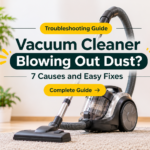

You finish vacuuming, and then you notice a puff of dust coming out of the machine, a dusty smell in the room, or a fine film settling on nearby furniture. A vacuum cleaner blowing out dust defeats its own purpose, and it can be a real problem for allergy and asthma sufferers.
The good news is that this problem is almost always caused by something simple: a missing or dirty filter, a full container, a poor seal, or a cracked part. This guide explains why a vacuum blows dust back into the air, how to find the cause, and how to fix it.
Why Vacuums Blow Out Dust
A vacuum is meant to pull dusty air in, trap the particles, and push only clean air out of the exhaust. Dust escapes when something in that chain fails: the container is too full to separate dust, the filter is missing or clogged, or air leaks around a worn seal and bypasses the filter completely. Finding the stage that is failing solves the problem quickly.
Quick Diagnosis Table
| What You Notice | Likely Cause | Difficulty |
|---|---|---|
| Dust puffs from exhaust | Missing or damaged filter | Easy |
| Dusty smell after vacuuming | Clogged filter or full bin | Easy |
| Dust leaking around the canister | Worn seal or cracked container | Moderate |
| Dust at the hose joint | Cracked or loose hose | Moderate |
| Bag vacuum blowing dust | Wrong or torn bag | Easy |
| Fine dust with burning smell | Motor wear or overheating | Replace or repair |
7 Reasons Your Vacuum Is Blowing Out Dust (and Fixes)
1. Missing or Incorrectly Installed Filter
After cleaning, filters are sometimes left out or fitted crookedly. Without a properly seated filter, fine dust goes straight to the motor and out of the exhaust. Fix: Check the user manual, find every filter location (pre-motor, post-motor, HEPA), and make sure each one is the correct type and snapped firmly into place.
2. Clogged or Saturated Filter
A filter packed with fine dust can no longer trap particles, and airflow becomes restricted, so dust is forced through gaps and seals. Fix: Tap out foam and felt filters, rinse washable ones in cold water without soap, and dry them for a full 24 hours. Replace HEPA filters every 6 to 12 months.
3. Damaged or Low-Quality Filter
Torn, thin, or worn filters, and cheap non-compatible replacements, let fine dust pass. Fix: Hold the filter up to the light. If you see holes, thin spots, or deformation, replace it with the correct model-specific part.
4. Overfilled Bin or Bag
A container past its max line cannot separate dust effectively and can overflow into the filter area. Fix: Empty the bin after every use and replace bags when they are about two-thirds full. Empty outdoors or into a bag to avoid releasing dust back into the room.
5. Worn Seals and Gaskets
Rubber seals around the dust container, filter housing, and hose connections harden and crack over time. Dusty air then leaks around the filter instead of passing through it. Fix: Inspect each seal for gaps, hardness, or deformation, clean them, and replace any damaged gasket.
6. Cracked Hose, Container, or Housing
Cracks allow dusty air to escape before it reaches the filter, and are common around hose bends and container latches. Fix: Replace cracked parts. Strong tape works as a short-term fix for small hose cracks only.
7. Wrong, Torn, or Poor-Fitting Bag
On bagged vacuums, a bag that does not match the model or is torn or improperly seated lets dust bypass the bag. Fix: Use the exact bag type specified for your vacuum and make sure the collar seals properly around the inlet. Choose multi-layer bags for finer filtration.
Step-by-Step Fix
- Unplug the vacuum or remove the battery.
- Empty the bin or bag outdoors, and wash the container if it is washable.
- Remove and inspect all filters. Clean, replace, or reinstall them correctly.
- Check seals and gaskets around the container and filter housing.
- Inspect the hose and wand for cracks and clear any clogs.
- Wipe the inside of the filter compartment with a dry cloth to remove loose dust.
- Reassemble, then test on a hard floor and check the exhaust with your hand for dust.
Bagless vs. Bagged: Which Is More Likely to Blow Dust?
- Bagless cyclone: Dust can escape if the filters are dirty or the container is overfull or poorly sealed. Emptying also releases dust.
- Bagged: Typically better at trapping dust and allergens, but only with the correct, well-fitted bag and an intact post-motor filter.
- Cordless stick: Small filters clog quickly, so regular cleaning is essential.
- Robot: Dust can blow from the exhaust when the filter is dirty or the bin is full.
Health Tips for Allergy and Asthma Households
- Choose a sealed system with true HEPA filtration so air leaves the machine clean.
- Empty the dustbin outdoors and wear a mask if you are sensitive.
- Replace filters on schedule rather than waiting for visible problems.
- Wipe the exhaust area and filter compartment regularly.
Preventing Dust From Blowing Out
- Avoid vacuuming very fine dust such as drywall, ash, or flour with a standard household vacuum.
- Never run the vacuum without all filters in place.
- Use only compatible, quality filters and bags.
- Do not vacuum wet areas, which clog filters and encourage odors.
Repair or Replace?
Repair when the issue is a filter, bag, seal, or hose. Consider replacing if the housing is cracked, the motor is failing, or the vacuum is more than eight years old with recurring problems. Dust escaping from a damaged motor housing is also a health concern.
What to Look for in a Vacuum That Keeps Dust In
- Sealed filtration system: Ensures all air passes through the filter before exiting.
- True HEPA filter: Captures 99.97 percent of particles as small as 0.3 microns.
- Washable, easy-access filters: Keeps maintenance quick and consistent.
- Hygienic bin emptying: Look for designs that release dust with minimal contact.
- Quality seals and robust build: Reduces leaks over time.
- Warranty and spare parts: Look for at least five years and easy filter availability.
- Floor and household fit: Bagged canisters are excellent for allergies, while sealed bagless uprights suit pet homes.
Frequently Asked Questions
Why is my vacuum blowing dust out the back?
Usually the exhaust or post-motor filter is missing, clogged, or damaged, or the container is overfull.
Can I use my vacuum without a filter?
No. Running without a filter lets dust reach the motor and be blown into the air, and it shortens the motor’s life.
Why does my vacuum smell dusty?
Trapped dust in dirty filters, damp filters, or a dirty container causes a stale odor. Clean or replace them.
Does a HEPA filter stop dust blowing out?
It helps greatly, but only when the system is sealed. Leaks around the filter let dust bypass it.
Why is my bagless vacuum blowing dust?
A full bin, a clogged pre-filter, or worn seals are the most common causes.
Why does my robot vacuum blow dust out?
Check that the filter is installed, clean, and not damaged, and empty the bin regularly.
Final Thoughts
A vacuum cleaner blowing out dust is a fixable problem. Check that every filter is present and clean, empty the container before it overfills, and inspect seals and hoses for leaks. Build a simple care routine and your vacuum will keep dust where it belongs. If the housing or motor is damaged, replace it with a sealed, HEPA-filtered model designed to hold dust in.