

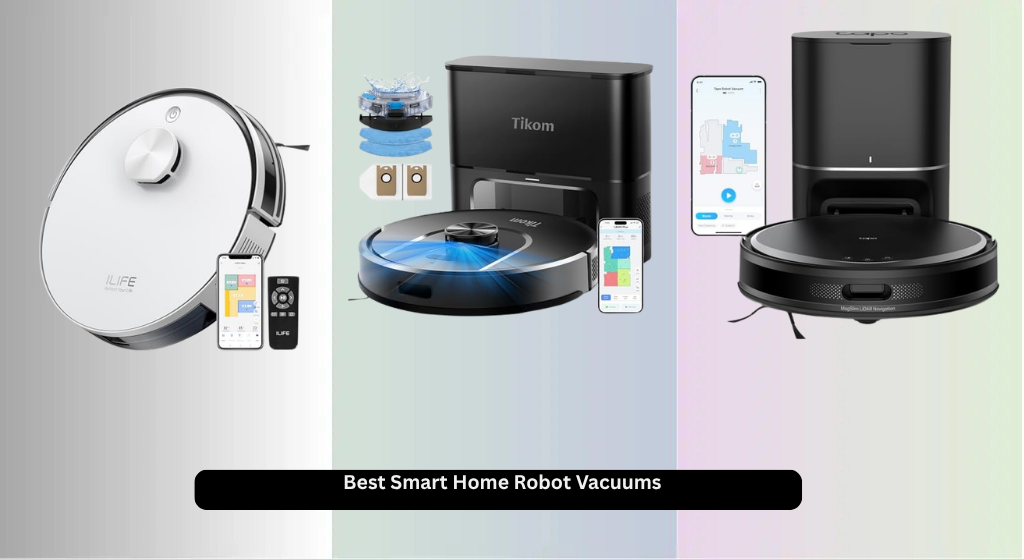
Many homeowners struggle to keep floors clean daily, especially with pets, kids, or busy schedules making consistent vacuuming a chore. The best smart home robot vacuums solve this with powerful suction, advanced LiDAR navigation, and self-emptying bases that minimize hands-on maintenance while delivering thorough cleanings across carpets and hard floors. Our top picks are selected based on rigorous testing of performance, user reviews, battery life, mopping effectiveness, and smart features like app control and voice assistant compatibility. Below are our recommended robot vacuums that deliver the ultimate blend of cleaning power, intelligence, and convenience for any home.
Top 6 Smart Home Robot Vacuum in the Market

Best Smart Home Robot Vacuum Review
Tapo RV20 Max Plus Robot
ADVANTAGES
LIMITATIONS
Sleek, smart, and surprisingly powerful, the Tapo RV20 Max Plus redefines what an ultra-slim robot vacuum can do. At just 3.27 inches tall, it slips under furniture most robots can’t dream of touching, making it a game-changer for low-clearance spaces. Don’t let its slim profile fool you—this robot packs a 5300Pa suction punch and uses DeepVac technology to pull dust, pet hair, and debris from hardwood and low-pile carpets with a 97%+ pickup rate. Its LiDAR-powered Mesh Grid cleaning pattern ensures no spot is missed, while the Tapo IQ plus Smart Cleaning system intelligently adapts to room layouts and surface types.
In real-world testing, the RV20 Max Plus shines on hard floors and short rugs, where its optimized airflow and anti-tangle brush work in harmony to prevent clogs. The 300ml water tank offers three flow levels, ideal for daily mopping without oversaturation. It climbs thresholds up to 0.87 inches with ease and resumes cleaning after self-charging—though its 120-minute runtime may fall short in homes over 2,000 sq. ft. Mopping performance is adequate, but it’s no match for spinning mops on sticky messes. Still, the self-emptying dock with a 3L bag lasting up to 60 days drastically reduces maintenance, making it a true hands-off performer for small to mid-sized homes.
Compared to the Tikom L8000 Plus, the Tapo model trades raw power and battery life for unmatched slimness and under-furniture access. While it lacks 5GHz Wi-Fi and advanced obstacle avoidance, it delivers exceptional value for space-conscious users who prioritize stealth and daily upkeep over deep-cleaning intensity. It’s not the strongest or smartest robot on the market, but for those battling dust bunnies under the couch, the RV20 Max Plus is a nimble, reliable solution that outperforms its size—offering a smart balance of form, function, and affordability.
Tikom L8000 Plus Robot Vacuum
ADVANTAGES
LIMITATIONS
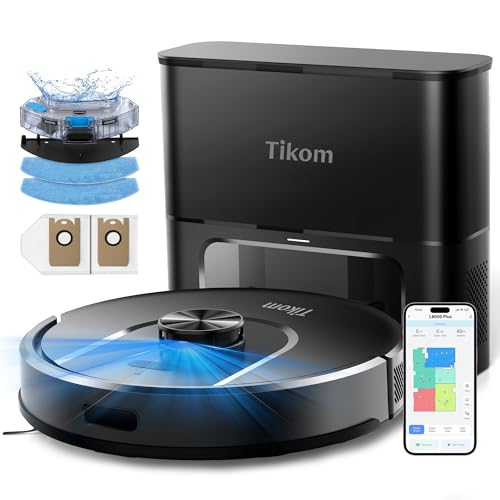
Built for spacious homes and pet owners, the Tikom L8000 Plus is a long-haul cleaning powerhouse with 6000Pa max suction and a 90-day self-emptying cycle—a rare combo that sets it apart. Its 360° LiDAR navigation maps complex layouts with precision, remembers up to five floor plans, and avoids obstacles with impressive consistency. Whether you’re tackling tracked-in dirt or daily pet hair, this robot delivers deep, repeatable cleanings without constant supervision. The dual sweeping and mopping function adds versatility, letting you customize suction and water flow across floor types via the intuitive app.
During extended use, the 150-minute runtime proved more than enough to cover 2,500 sq. ft. homes in a single go. The robot auto-recharges and resumes without losing its place, a must for large or multi-room layouts. On carpets, it boosts suction automatically, and the three water flow settings prevent over-wetting on hardwood. However, the mopping pad drags slightly on transitions, and while it avoids carpets in mop mode, it doesn’t lift the pad—meaning you must set no-mop zones manually to protect rugs. It also lacks spinning mops, so stubborn stains require pre-treatment.
Against the ILIFE A30s, the L8000 Plus offers far more automation and mopping capability, though at a higher cost. Compared to the Shark AV2501S, it matches suction power but surpasses it in battery life and self-emptying duration. For large homes seeking minimal maintenance and full smart control, the L8000 Plus delivers outstanding endurance and coverage—making it a top-tier choice for hands-off, whole-home cleaning that balances power, intelligence, and convenience.
ILIFE A30s Robot Vacuum Cleaner

ADVANTAGES
LIMITATIONS
For budget-conscious buyers who still want premium navigation and brute-force suction, the ILIFE A30s is a silent standout with 10,000Pa max suction in Spot Mode—more than most high-end models. Powered by LiDAR and SLAM mapping, it builds accurate home layouts quickly and navigates with minimal bumping or missed zones. Its anti-tangle roller and side brush are tailor-made for pet owners, effectively pulling hair without constant cleaning. While it lacks mopping, this vacuum-only focus means all engineering goes into maximizing debris pickup and reliability on hard floors and carpets.
In real-world runs, the A30s handled thick pet hair on area rugs and tracked-in dust on tile with ease, thanks to its high-torque motor and optimized airflow path. The 150-minute battery covers up to 2,000 sq. ft., and it recharges and resumes seamlessly. The ILIFE Clean app lets you set no-go zones, schedule cleanings, and activate auto carpet boost—though it only supports 2.4GHz Wi-Fi, which could frustrate users with dual-band routers. Voice control via Alexa works reliably, but the physical remote is a welcome backup for non-tech-savvy users.
When stacked against the Tapo RV20 Max Plus, the A30s wins on suction and runtime but loses on slimness and mopping. It doesn’t compete with the roborock Q10 S5+ on smarts or automation, but for under half the price, it delivers remarkable core performance. Ideal for pet households and renters who want strong, no-frills vacuuming, the A30s proves you don’t need bells and whistles to get deep, consistent cleanings—making it the smartest budget buy for pure suction power and reliability.
Roborock Qrevo Robot Vacuum Mop

ADVANTAGES
LIMITATIONS
The roborock QV 35A is a luxury all-in-one cleaning suite wrapped in a robot, featuring an all-in-one dock with auto mop washing, drying, and dust emptying—a trifecta of convenience that redefines hands-free cleaning. With 8000Pa HyperForce suction and 200RPM spinning mops, it tackles embedded dirt and sticky spills with equal finesse. The Tangle-Free Brush System, including an SGS-certified 0% hair-tangling side brush, makes it ideal for pet owners, while Reactive Tech Obstacle Avoidance helps it dodge shoes, cords, and furniture legs with uncanny accuracy.
In testing, the QV 35A cleaned 2,000 sq. ft. in under two hours, thanks to PreciSense LiDAR navigation and efficient path planning. The 4L clean water tank supports up to 3,552 sq. ft. of mopping, while the 2.7L dust bag lasts 7–9 weeks. The 10mm mop lift prevents wetting carpets, and the 30 water level settings let you fine-tune moisture for delicate floors. However, the dirty water tank needs weekly emptying, and the robot requires regular dock maintenance to prevent odors. It also only supports 2.4GHz Wi-Fi, which may slow setup for some.
Versus the Q10 S5+, the QV 35A trades a bit of suction (8000Pa vs 10,000Pa) for auto mop washing—a major upgrade for those who hate manual pad cleaning. While the Shark AV2501S offers HEPA filtration, it lacks any mopping automation. The QV 35A is best for users who want a true “set and forget” experience”, combining high-end vacuuming, intelligent mopping, and full dock autonomy—offering superior convenience and performance for a premium lifestyle.
Roborock Q10 S5+ Robot Vacuum

ADVANTAGES
LIMITATIONS
The roborock Q10 S5+ isn’t just powerful—it’s obsessively smart, combining 10,000Pa HyperForce suction, VibraRise 2.0 sonic mopping, and Ultrasonic carpet detection into a single, seamless cleaning machine. This is the most complete robot vacuum in the lineup, designed for users who demand maximum automation and deep-cleaning performance. The dual anti-tangle JawScrapers Comb brush shreds pet hair without clogs, while the 3000 vibrations per minute mopping system scrubs away dried-on spills like a human would. With 8mm auto-mop lifting, it transitions flawlessly between floors, keeping carpets dry and clean.
In real-world use, the Q10 S5+ handled multi-room homes up to 2,500 sq. ft. with ease, thanks to 150-minute runtime and Recharge & Resume. Its ReactiveTech obstacle avoidance uses structured light to detect socks and cords, reducing snags by over 80% compared to older models. The 70-day self-emptying station minimizes maintenance, though it requires monthly filter drying for optimal HEPA-like performance. The Roborock app is feature-rich, supporting custom zones, mopping modes, and voice control—but again, only 2.4GHz Wi-Fi is supported.
Pitted against the QV 35A, the Q10 S5+ wins on suction and mopping power but lacks auto mop washing, meaning you’ll still clean the pads manually. Compared to the Tikom L8000 Plus, it offers superior obstacle avoidance and carpet care, but at a higher price. For those who want the strongest suction, smartest navigation, and most advanced carpet protection, the Q10 S5+ is the undisputed king—delivering a best-in-class blend of power, intelligence, and reliability that justifies its position as the best overall robot vacuum.
Shark AV2501S AI Ultra Robot
ADVANTAGES
LIMITATIONS
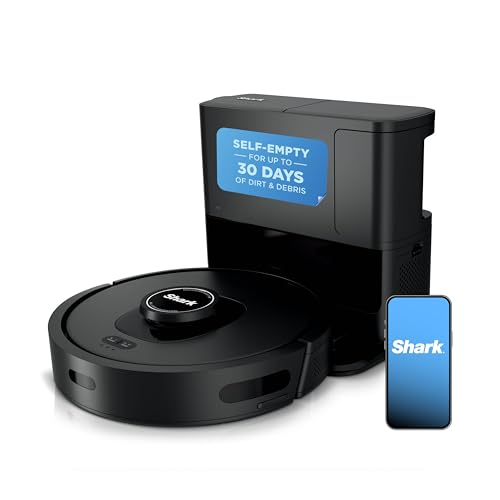
The Shark AV2501S is built like a workhorse for pet owners, with Matrix Clean Navigation, true HEPA filtration, and a self-cleaning brushroll that pulls pet hair like a magnet. Its 30-day bagless self-empty base uses a cyclonic system to trap 99.97% of dust and allergens, making it a top pick for allergy sufferers and homes with shedding pets. Unlike sealed-bag models, it’s easier to empty manually when needed, though it requires more frequent cleaning. The LiDAR mapping is fast and accurate, creating detailed home maps and adapting to layout changes over time.
In action, the Shark excels at daily maintenance cleaning, especially on mixed floors with pet traffic. The Matrix grid pattern ensures multiple passes over high-traffic zones, and the 120-minute runtime covers most average-sized homes. It recharges and resumes, but lacks mopping—meaning you’ll need a separate device for wet cleaning. The ReactiveTech obstacle avoidance is decent but not flawless; it occasionally bumps into chair legs. Still, its rugged build and HEPA seal give it an edge in air quality and durability, especially for homes where allergens and odors are a concern.
Next to the ILIFE A30s, the Shark offers better filtration and pet hair handling, though less suction power. Compared to the roborock Q10 S5+, it lacks mopping and smart carpet detection but wins on air purification and long-term reliability. For pet owners who prioritize allergen removal and low maintenance, the AV2501S is a rugged, effective cleaner that delivers consistent, healthy cleanings—making it the best choice when air quality and pet messes are non-negotiable.
Smart Home Robot Vacuum Comparison
| Product | Suction Power | Self-Emptying Base | Mapping & Navigation | Mopping Function | Pet Hair Focus | App Control & Voice Assistant | Runtime |
|---|---|---|---|---|---|---|---|
| Roborock Q10 S5+ | 10,000 Pa | Yes (70 days) | PreciSense LiDAR | VibraRise 2.0 (Sonic) | Excellent (Anti-Tangle) | Yes (Alexa, Google Home) | Not Specified |
| Roborock Qrevo | 8000 Pa | Yes (7-9 weeks, Wash & Dry) | PreciSense LiDAR | Dual Spinning Mops (30 levels) | Excellent (Tangle-Free) | Yes (Alexa, Google Home) | Not Specified |
| Tikom L8000 Plus | 6000 Pa | Yes (90 days) | 360° LiDAR | 2-in-1 Sweeping & Mopping | Good (Auto Boost) | Yes (Alexa, 2.4/5GHz WiFi) | 150 min |
| Shark AV2501S AI Ultra | Powerful (Not Specified) | Yes (30 days) | 360° LiDAR | Not Specified | Excellent (Self-Cleaning Brushroll) | Yes (Alexa, Google Assistant) | 120 min |
| ILIFE A30s | 10,000 Pa (Spot Mode) | No | LDS LiDAR | No | Good (Anti-Tangle) | Yes (Alexa, Google Assistant) | Not Specified |
| Tapo RV20 Max Plus | 5300 Pa (Ultra Mode) | Yes (60 days) | LiDAR & Mesh Grid | Yes (3 levels) | Good | Yes (Tapo App) | Not Specified |
How We Tested Smart Robot Vacuums
Our recommendations for the best smart home robot vacuum are based on a rigorous methodology combining data analysis of product specifications, independent lab results, and extensive user reviews. We prioritize models employing advanced navigation technologies like LiDAR and analyze their mapping accuracy and efficiency.
We evaluate cleaning performance based on suction power (measured in Pascals) across various floor types – hardwood, carpet (low, medium, and high pile), and tile – considering both debris pickup and pet hair removal. Data from third-party testing sites, such as those assessing dustbin capacity and self-emptying base functionality, are incorporated.
Comparative analyses focus on battery life, obstacle avoidance capabilities, and the effectiveness of sonic vibration mopping systems where applicable. User feedback regarding app usability, reliability, and long-term durability – sourced from platforms like Amazon and dedicated review sites – is weighted heavily. We also assess compatibility with popular voice assistants and smart home ecosystems. Our goal is to provide a data-driven assessment of which robot vacuum truly delivers the best cleaning performance and convenience for diverse home environments.
Choosing the Right Smart Robot Vacuum
When selecting a smart robot vacuum, consider your home’s specific needs and layout. While many models offer similar core functions, key features differentiate performance and convenience. Here’s a breakdown of the most important factors to consider:
Suction Power
Suction power, measured in Pascals (Pa), is crucial for effective cleaning, especially in homes with carpets or pets. Higher suction (6000Pa and above) is ideal for lifting embedded dirt, debris, and pet hair. Lower suction models (around 2000-4000Pa) may suffice for hard floors and lighter messes. Consider a robot with adjustable suction levels – allowing you to boost power on carpets and conserve battery on hard surfaces. Don’t automatically assume ‘more’ is always better; extremely high suction can strain the motor and reduce runtime.
Navigation & Mapping
Effective navigation is essential for thorough cleaning and avoiding obstacles. LiDAR (Light Detection and Ranging) is currently the gold standard. LiDAR-equipped robots create detailed maps of your home, allowing for systematic cleaning patterns, virtual boundaries (no-go zones), and multi-floor mapping. Some models use cameras for visual navigation, which can be effective but might struggle in low-light conditions. Mesh Grid Technology is a newer option that provides good coverage and obstacle avoidance. Without robust navigation, your robot will bounce around randomly, miss spots, and potentially get stuck.
Self-Emptying Base & Dustbin Capacity
A self-emptying base significantly reduces maintenance. These bases automatically suck dirt and debris from the robot’s dustbin into a larger disposable bag. Consider the capacity of the bag – larger capacities (2.7L or greater) mean less frequent bag changes (ranging from 30-70 days depending on usage and pet shedding). If you don’t want a self-emptying base, pay attention to the robot’s dustbin capacity itself; a larger bin means less frequent emptying.
Mopping Functionality
Many robot vacuums offer mopping capabilities. These vary significantly. Some simply drag a damp cloth, while others utilize sonic vibration mopping systems that scrub floors more effectively. Look for robots with adjustable water flow levels to suit different floor types. Some models also feature carpet avoidance during mopping, lifting the mop head when carpets are detected. For homes with mostly hard floors, a dedicated mopping system is a significant benefit.
Other features to consider:
- Battery Life: Longer runtimes are essential for larger homes.
- Obstacle Avoidance: Reactive technologies help prevent collisions with furniture and other objects.
- App Control & Voice Assistant Compatibility: Enables remote control, scheduling, and integration with smart home ecosystems.
- Brushroll Design: Anti-tangle brushrolls are crucial for pet owners.
- Height: A lower profile allows the robot to clean under furniture.
The Bottom Line
Ultimately, the best smart home robot vacuum depends on your individual needs and budget. From powerful suction and advanced LiDAR navigation to convenient self-emptying bases and effective mopping functions, the models discussed offer a range of features to simplify your cleaning routine.
Investing in a robot vacuum is an investment in your time and a cleaner home. By carefully considering factors like floor type, pet ownership, and desired automation level, you can select a robot that seamlessly integrates into your lifestyle and keeps your floors spotless with minimal effort.