



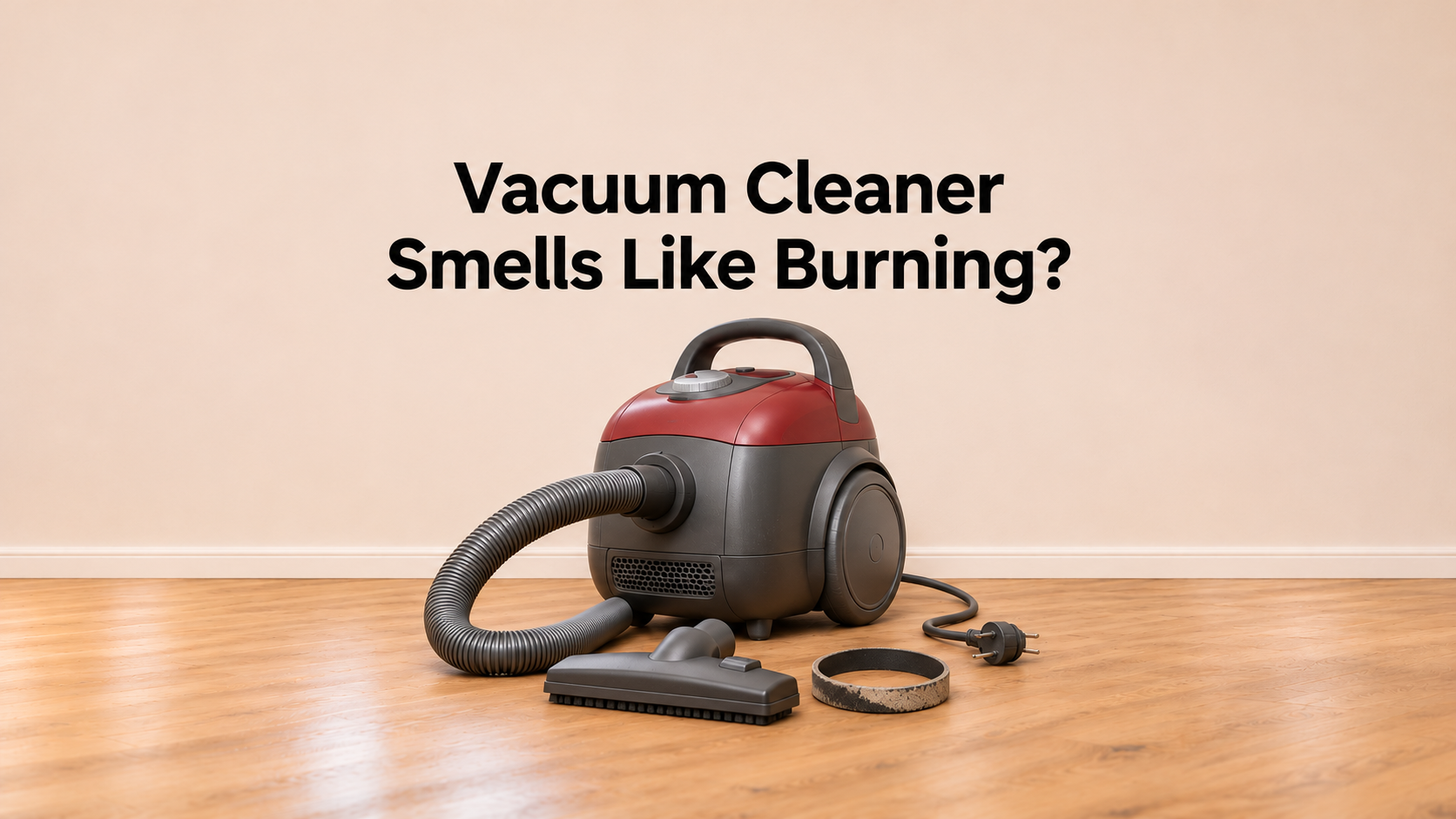
Vacuum Cleaner Smells Like Burning? Causes, Fixes and Safety Tips
You switch on your vacuum cleaner, and suddenly a sharp burning smell fills the room. It is a worrying moment, and for good reason. A burning smell is one of the clearest warning signs a vacuum can give you. Sometimes it is only a harmless result of hair wrapped around the brush roll or a clogged filter. Other times it points to an overheating motor or an electrical fault that could become a fire risk.
This complete guide explains why a vacuum cleaner smells like burning, how to tell the different smells apart, what to do the moment you notice it, and how to fix each cause safely. You will also learn when to stop using the machine for good, and how to prevent the problem from coming back.
Stop First: What to Do the Moment You Smell Burning
Do not keep vacuuming to see if the smell goes away. Act immediately:
- Switch the vacuum off and unplug it from the wall. For cordless models, remove the battery if it is safe to do so.
- Move it away from curtains, furniture, and anything flammable, and place it on a hard, non-flammable surface.
- Let it cool for at least 30 minutes before touching the motor area or opening any part.
- Look for smoke, sparks, or melted plastic. If you see any of these, do not use the vacuum again. Keep it outside or in a safe place until it can be inspected.
- If you see flames, leave the area and call your local emergency number. Never pour water on an electrical fire.
Once the machine has cooled and is unplugged, you can start finding the cause using the sections below.

What Does a Burning Smell From a Vacuum Mean?
A vacuum cleaner uses a high-speed motor, a fan, a belt, and a rotating brush roll. All of these parts create heat through friction or electrical load. When airflow is blocked or a part is worn, heat builds up fast, and that heat is what you smell. The exact smell gives you a useful clue about the source.

10 Common Reasons a Vacuum Smells Like Burning (and How to Fix Each One)
1. Clogged Hose or Airway
Smell: Hot dust or warm, stale air.
When the hose or wand is blocked, the motor cannot pull in enough air to cool itself. It overheats and produces a hot, dusty smell, often with weak suction.
How to fix it:
- Detach the hose and look through it toward a light.
- Push a broom handle or a long, flexible object through to clear the blockage.
- Check the wand, the floor head opening, and the inlet on the vacuum body.
2. Full Dust Bin or Bag
Smell: Hot, dusty odor that grows stronger the longer you vacuum.
An overfull bin restricts airflow in the same way a clog does. The motor runs hotter than it should and the air coming out of the exhaust can feel warm.
How to fix it: Empty the bin or replace the bag. As a habit, empty a bagless bin when it is about two thirds full.
3. Dirty or Clogged Filters
Smell: Hot dust, stale air, sometimes with a slightly musty note.
Filters protect the motor from fine dust. When they clog, air cannot pass through, so the motor strains and overheats. Many vacuums have an automatic thermal cut-off that shuts the machine off when this happens.
How to fix it:
- Find the pre-motor and post-motor filters using your user manual.
- Tap out loose dust. If the filter is washable, rinse it with cold water until the water runs clear.
- Dry it completely for at least 24 hours before refitting. A damp filter can cause mold and damage the motor.
- Replace any filter that is torn, stiff, or permanently stained.
4. Hair and Debris Wrapped Around the Brush Roll
Smell: Burning rubber or scorched hair.
Hair, thread, and carpet fibers wind tightly around the roller. The friction heats the roller and its bearings, and the smell of burning hair or rubber is a strong sign that this is happening.
How to fix it:
- Turn the floor head over and remove the brush roll following your manual.
- Cut the tangled hair with scissors or a seam ripper and pull it away.
- Clean the end caps, bearings, and the brush housing.
- Check that the roller spins freely by hand before putting it back.
5. Slipping, Stretched, or Worn Belt
Smell: Sharp burning rubber, often with a squeal or a slapping sound.
The belt connects the motor to the brush roll. When it stretches or the roller jams, the belt slips against the pulley, creating heat and a strong rubbery smell. A belt can also melt or snap.
How to fix it: Replace the belt with the exact type specified for your model. Check the pulley for melted rubber residue and clean it. Replace belts every 6 to 12 months if you vacuum often.
6. Worn Bearings
Smell: Hot metal or a burning smell with grinding or screeching noises.
Bearings let the motor shaft and the brush roll spin smoothly. When they wear out or fill with dust, friction rises sharply and creates heat.
How to fix it: If the smell comes from the brush roll end caps, replace the roller assembly. If it comes from inside the motor housing, stop using the vacuum and arrange a professional repair or consider replacement.
7. Overworked or Overheating Motor
Smell: A strong, hot, burning odor from the body of the vacuum, often with a loud hum.
Long cleaning sessions, thick carpet on a high suction setting, or constant blockages push the motor beyond its limits. The motor housing becomes very hot to the touch.
How to fix it:
- Turn the vacuum off and let it cool completely, usually 30 to 60 minutes.
- Clear every blockage and clean the filters before using it again.
- Vacuum in shorter sessions with breaks, especially with older machines.
- If the smell returns quickly, the motor itself may be failing.
8. Electrical Problems: Cord, Plug, or Switch
Smell: Sharp, plastic-like or fishy smell, sometimes described as ozone, often with flickering power or sparks.
A damaged power cord, a loose plug, a faulty switch, or worn internal wiring can create resistance and heat. This is a genuine fire risk.
How to fix it:
- Unplug the vacuum and inspect the cord and plug for burn marks, melted plastic, cracks, or exposed wire.
- Do not use a vacuum with a damaged cord or plug.
- Do not open the electrical parts unless you are trained. Have a qualified technician inspect the machine or replace it.
9. Vacuuming Something It Should Not
Smell: Burnt, chemical, or smoky odor.
Vacuums are made for dry household dust and dirt. Picking up ash from a fireplace, hot embers, cigarette butts, fine drywall dust, or spilled liquids can cause burning smells, clogged filters, motor damage, or even fires inside the machine.
How to fix it: Stop using the vacuum, unplug it, and empty the bin outdoors. Clean or replace the filters, and check the motor area for residue. Never vacuum warm ashes or smoldering material. Use a dedicated ash vacuum or a shovel and a metal container instead.
10. New Vacuum or Fresh Motor Smell
Smell: Mild, faint hot-plastic odor during the first few uses only.
Some new vacuums release a slight smell as protective coatings and lubricants warm up for the first time. This is usually harmless and disappears after a few uses.
What to do: Ventilate the room and run the vacuum for short periods. If the smell is strong, does not fade, or comes with smoke, stop using it and contact the manufacturer or the store where you bought it.
Warning Signs: When It Is Not Safe to Keep Using Your Vacuum
Some signs mean the vacuum should be taken out of use until a qualified person inspects it, or replaced altogether:

- You see smoke, sparks, or flames.
- The power cord or plug is hot, melted, or damaged.
- The burning smell returns quickly even after cleaning the filters and brush roll.
- The motor housing is too hot to touch comfortably.
- The vacuum keeps shutting itself off from overheating.
- You hear loud grinding, screeching, or rattling with the smell.
Step-by-Step: How to Find and Fix the Burning Smell
If you are unsure where the smell is coming from, follow this routine. It starts with the safest and easiest checks.

- Unplug and cool down. Wait at least 30 minutes.
- Empty the bin or bag and check how full it was.
- Inspect and clean the filters. Replace them if they are damaged.
- Check the hose, wand, and floor head for clogs.
- Remove and clean the brush roll, then inspect the belt for wear, cracks, or melted spots.
- Check the cord and plug for damage, then run the vacuum for a short test of 30 to 60 seconds outdoors or on a hard floor, staying close to the plug. If the smell returns, stop at once.
How to Prevent Your Vacuum From Overheating
Most burning smells are preventable. A little regular care keeps the motor cool, the airflow strong, and the machine safe.

- Empty the bin often and never let it overfill.
- Clean filters monthly and replace them on the schedule your manufacturer recommends.
- Cut hair from the brush roll every week, especially with pets or long hair in the home.
- Replace belts regularly before they stretch, slip, or melt.
- Never vacuum ashes, hot embers, wet messes, or fine construction dust unless the model is designed for it.
- Do not run the vacuum for very long periods without giving it a short rest.
- Handle the cord with care: pull the plug, not the cord, and never wrap it tightly around the machine.
- Store the vacuum in a dry, cool place away from heat sources.
Repair or Replace? How to Decide
Repair it if:
- The cause is a cheap, replaceable part such as a belt, filter, hose, or brush roll.
- The vacuum is fairly new or still under warranty.
- Replacement parts are easy to find.
Replace it if:
- The motor is overheating or failing and the repair would cost more than half the price of a new machine.
- The cord, plug, or internal wiring is damaged.
- The vacuum is 8 to 10 years old and keeps having problems.
- You have seen smoke or sparks.
What to Look for in a Safer, Longer-Lasting Vacuum
If you need a replacement, certain features reduce the risk of overheating and burning smells:
- Thermal protection: An automatic cut-off switch that turns the motor off before it overheats.
- Washable filters and easy access: Simple maintenance keeps airflow strong.
- Tool-free brush roll removal: Makes it easy to clear hair every week.
- Brush roll clutch or jam protection: Stops the belt from burning when the roller gets stuck.
- Full-bin indicator: Reminds you to empty the container before airflow drops.
- Efficient, high-quality motor: Modern brushless motors tend to run cooler and last longer.
- Safety certifications: Look for recognized electrical safety marks that match your country.
- Available spare parts: Belts, filters, and brush rolls should be easy to replace.
Frequently Asked Questions
Is it normal for a vacuum to smell like burning?
No, apart from a faint smell during the first few uses of a brand-new machine. A burning smell in an older vacuum means something is overheating or wearing out and should be checked.
Why does my vacuum smell like burning rubber?
This is most often caused by a slipping or worn belt, or by hair wrapped tightly around the brush roll creating friction.
Why does my vacuum smell like burning dust?
A hot dusty smell usually means restricted airflow caused by a full bin, a dirty filter, or a blocked hose. The motor is running hot.
Can a vacuum cleaner catch fire?
It is rare, but yes. Overheating motors, damaged cords, built-up lint and dust, or vacuuming hot ashes can cause fires. This is why you should never ignore a burning smell.
Is it safe to use my vacuum after cleaning the filter?
If the smell was caused by a clogged filter, a bin, or the brush roll, and it does not return after cleaning, it is usually safe. If the smell comes back, stop using the vacuum and get it checked.
Why does my new vacuum smell like burning?
A mild smell can come from protective coatings and lubricants heating up for the first time and should fade after a few uses. A strong smell, smoke, or one that does not fade should be reported to the seller or manufacturer.
How long should I let a hot vacuum cool?
Allow at least 30 to 60 minutes with the machine unplugged before inspecting it or using it again.
Final Thoughts
A burning smell from your vacuum cleaner is a warning, not something to ignore. In most cases, the cause is simple and fixable: a full bin, a dirty filter, a blocked hose, hair on the brush roll, or a worn belt. Switch off, unplug, let the machine cool, and work through the checks one by one.
If you see smoke or sparks, find a damaged cord, or the smell keeps coming back, stop using the vacuum and have it inspected or replaced. With regular maintenance and a careful eye, your vacuum will stay cooler, safer, and stronger for many years.