



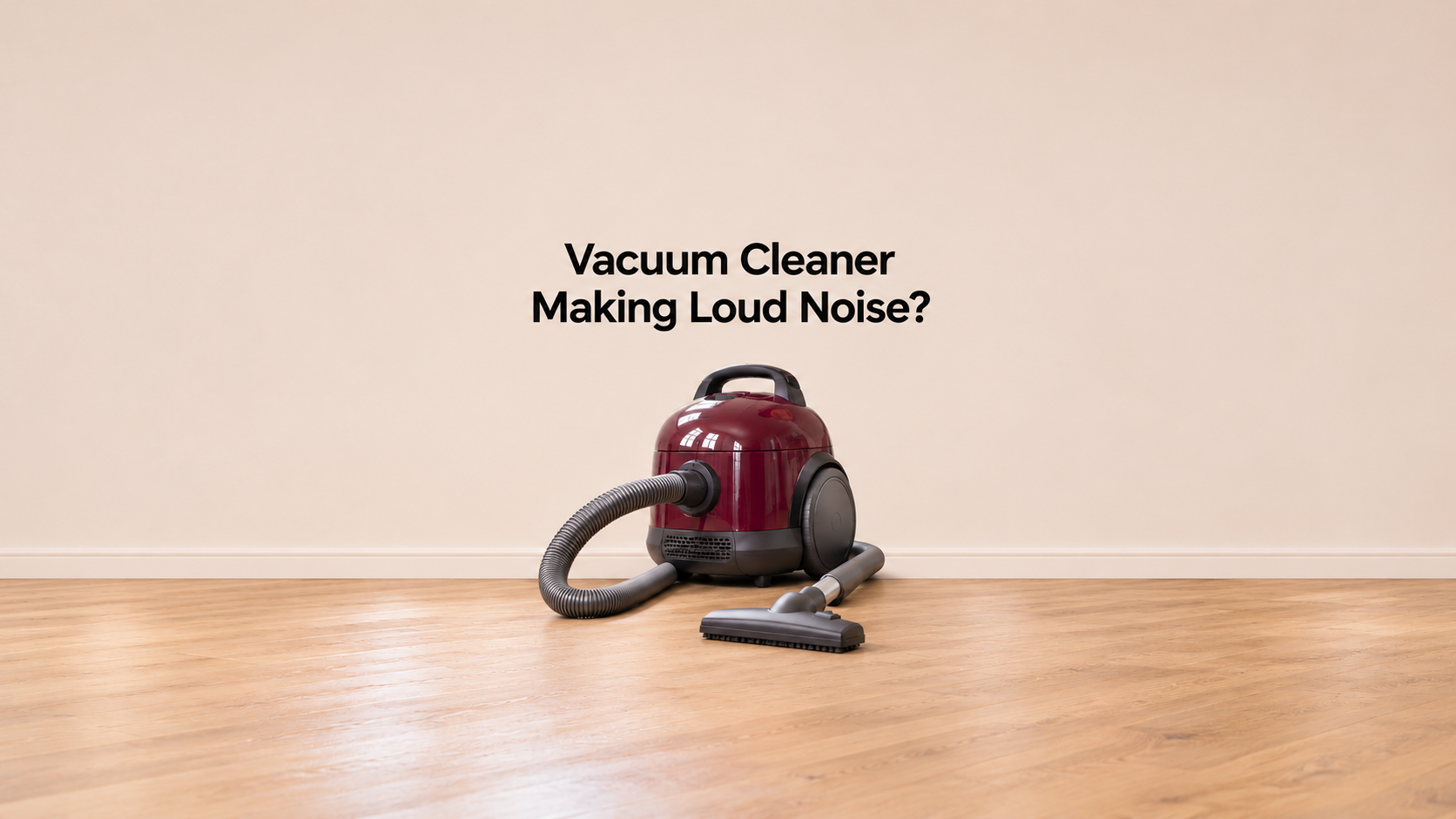
Vacuum Cleaner Making Loud Noise? 10 Causes and Easy Fixes
A vacuum cleaner is never completely silent, but when yours suddenly starts screaming, rattling, or grinding, something is wrong. The good news is that most loud vacuum problems come from simple issues such as a clogged hose, a full dust bin, or hair wrapped around the brush roll. You can fix many of them at home in under 15 minutes without any special tools.
In this complete guide, you will learn why a vacuum cleaner gets loud, how to identify the problem from the sound it makes, how to fix each cause step by step, and how to keep your vacuum quiet for years. We will also cover when it is time to repair or replace the machine, and what to look for if you want a quieter vacuum next time.
Is It Normal for a Vacuum Cleaner to Be Loud?
Yes, to a degree. A vacuum works by spinning a motor and fan at very high speed to pull air and dirt through the machine. This creates a steady, even hum or roar. Most household vacuums produce roughly 65 to 85 decibels, which is similar to a busy street or a loud restaurant.
What is not normal is a sudden change in sound. Warning signs include:
- A new high-pitched whistle or shriek
- Rattling, clicking, or banging noises
- A metallic grinding or scraping sound
- A louder roar combined with weaker suction
- Any burning smell together with a loud hum
If your vacuum is simply louder than it used to be, there is almost always a blockage, a dirty filter, or a worn part behind it.

Safety First: Before You Start Any Fix
Before you touch your vacuum for troubleshooting, follow these safety rules:
- Unplug the vacuum from the wall socket. For cordless models, remove the battery.
- Wear gloves when handling the brush roll, since hair and debris can hide sharp objects such as pins or glass.
- Let the machine cool down if it has been running, especially if you noticed a burning smell.
- Never put your fingers into the brush area or fan housing while the machine is connected to power.
Match the Sound to the Problem
The type of noise your vacuum makes is the fastest clue to what is wrong. Use the chart below to narrow down the cause before you start taking things apart.

10 Common Reasons a Vacuum Cleaner Is Loud (and How to Fix Each One)
1. Clogged Hose or Airway
Sound: High-pitched whistling or shrieking, often with weak suction.
When air cannot flow freely, the motor strains and the airflow squeezes through small gaps, creating a whistle. A clog is the number one cause of sudden loud noise.
How to fix it:
- Detach the hose and look through it toward a light source.
- Push a broom handle or a long, flexible object gently through the hose to dislodge any blockage.
- Check the wand, the neck of the floor head, and the inlet where the hose connects to the body.
- Reconnect everything firmly and test the vacuum.
2. Full Dust Bin or Bag
Sound: A deeper, louder roar and reduced pickup power.
A full bin or bag restricts airflow and forces the motor to work harder. Bagless vacuums lose performance noticeably once the bin is more than two thirds full. Bagged models struggle once the bag is packed solid.
How to fix it: Empty the bin or replace the bag. Make it a habit to empty a bagless bin after every use.
3. Dirty or Clogged Filters
Sound: Louder motor noise, sometimes with a hot smell or hot exhaust air.
Filters trap fine dust. When they clog, air cannot pass through, and the motor overheats and gets louder. Many people never clean their filters at all.
How to fix it:
- Locate the pre-motor foam filter and the post-motor or HEPA filter. Check your user manual for their positions.
- Tap loose dust into a trash bin. If the manual says the filter is washable, rinse it in cold water until the water runs clear.
- Let it dry completely for at least 24 hours before putting it back. A damp filter can cause mold and motor damage.
- Replace the filter if it is torn, stiff, or permanently discolored.
4. Tangled Brush Roll
Sound: Thumping, slapping, or a high whirring noise from the floor head.
Hair, thread, carpet fibers, and string wrap tightly around the roller. This creates friction, uneven rotation, and sometimes a burning rubber smell.
How to fix it:
- Turn the floor head over and remove the brush roll according to your manual.
- Cut the tangled hair with scissors or a seam ripper and pull it away.
- Clean the bearing ends and the brush housing.
- Check that the roller spins freely by hand before refitting it.
5. Worn or Stretched Belt
Sound: Squealing, slapping, or a rubbery burning smell.
The belt links the motor to the brush roll. Over time it stretches, cracks, or snaps. A loose belt slips and squeals, while a broken one may cause rattling as the loose pieces move around.
How to fix it: Replace the belt with the exact model recommended for your vacuum. Most belts take only a few minutes to swap and cost very little. Replace it every 6 to 12 months if you vacuum often.
6. Worn Bearings
Sound: Grinding, scraping, or a constant metallic screech.
Bearings let the brush roll and motor spin smoothly. Dust and age can wear them out. A faulty bearing in the motor itself is a bigger problem and often means the machine needs professional repair.
How to fix it: If the noise comes from the brush roll end caps, try cleaning and replacing the roller assembly. If the sound comes from inside the motor housing, stop using the vacuum and consider a repair service or replacement.
7. Debris or Foreign Objects Stuck Inside
Sound: Rattling, clicking, or knocking.
Small items like coins, pebbles, paper clips, screws, or toy parts can get sucked in and bounce around inside the hose or fan chamber.
How to fix it: Remove the hose and the bin, then shake them gently and listen for loose items. Open any access panels allowed by the manufacturer and remove the object by hand or with tweezers.
8. Air Leaks and Cracked Hose
Sound: Whistling or hissing that changes when you move the hose.
Cracks, splits, or loose connections let air escape in the wrong place. This reduces suction and produces a noticeable whistle.
How to fix it:
- Run your hand along the hose while the vacuum runs and feel for air leaking out.
- Seal small cracks temporarily with strong vacuum-safe tape.
- Replace the hose if it is split or the cuffs are damaged.
- Check that the bin and filter covers are seated tightly and the seals are not warped.
9. Suction Setting Too High for the Floor
Sound: A loud whine or a tight, suctioned-to-the-floor sound.
On thin rugs, curtains, or smooth floors, maximum suction can lock the head onto the surface and make a harsh noise. Many modern vacuums let you adjust suction or switch between hard floor and carpet modes.
How to fix it: Lower the suction setting, or open the airflow valve on the handle. Adjust the floor head height for the surface you are cleaning.
10. Damaged Fan or Failing Motor
Sound: Loud rattling, deep growling, or a high-pitched whine that gets worse over time, often with a burning smell.
A cracked or unbalanced fan blade, or a motor that is wearing out, creates vibration and heavy noise. This is the most serious cause on the list.
How to fix it: Stop using the vacuum right away. Continued use can overheat the motor and become a fire risk. Have a qualified technician inspect it, or compare the repair cost with the price of a new vacuum.
Typical Vacuum Noise Levels
Decibels (dB) measure sound intensity, and the scale is logarithmic. This means that a vacuum at 80 dB is much louder than one at 70 dB, not just slightly louder. As a general guide, quieter vacuums sit around 60 to 70 dB, standard models around 70 to 80 dB, and noisy or faulty models can exceed 80 dB. Spending long periods near sounds louder than 85 dB can be uncomfortable for your ears, so a noisy vacuum is also worth fixing for your own health.

Step-by-Step: How to Troubleshoot a Loud Vacuum Cleaner
If you are not sure what is causing the noise, follow this simple routine. It starts with the easiest and cheapest checks first.

- Unplug the vacuum. Safety always comes first.
- Empty the bin or bag. A full container is the simplest cause.
- Inspect and clean the filters. Tap, rinse if washable, and dry fully.
- Check the hose and attachments. Look for clogs and cracks.
- Clean the brush roll. Remove tangled hair, thread, and debris.
- Reassemble and test. Run the vacuum on a hard floor first and listen for improvement.
If the noise is still present after all six steps, the problem is likely inside the motor, belt, or fan, and you may need to open the machine or contact a technician.
How to Keep Your Vacuum Quiet: Preventive Maintenance
Regular care prevents nearly all noise problems before they begin. A few minutes each week will extend the life of your vacuum and keep the suction strong.

- Empty the bin often. Do not wait until it is completely full.
- Cut hair from the brush roll weekly, especially if you have pets or long hair at home.
- Clean washable filters monthly and replace them according to the manufacturer schedule.
- Do not vacuum large debris, wet messes, or fine construction dust unless the model is designed for it.
- Store the vacuum in a dry place with the hose loosely coiled to avoid kinks and cracks.
- Use only compatible replacement parts so belts, filters, and bags fit properly.
When Should You Repair or Replace a Noisy Vacuum?
Repair it if:
- The noise comes from a cheap, replaceable part like a belt, hose, filter, or brush roll.
- The vacuum is fairly new or still under warranty.
- Replacement parts are easy to find.
Replace it if:
- The motor or fan is damaged and the repair cost is more than half the price of a new vacuum.
- The machine is more than 8 to 10 years old and keeps developing problems.
- You notice smoke, sparks, or a strong burning smell.
- The vacuum overheats and shuts off repeatedly.
What to Look for in a Quieter Vacuum Cleaner
If your current vacuum is beyond saving, or you simply want a calmer cleaning experience, keep these features in mind when shopping for a replacement:
- Published decibel rating: Models rated around 60 to 70 dB are noticeably quieter than average.
- Brushless or efficient motor: Modern brushless motors tend to run smoother and quieter.
- Sealed system with good filtration: A well-sealed body reduces air leakage noise and keeps dust inside.
- Sound-dampening design: Look for insulated motor housings and rubber mounts that reduce vibration.
- Adjustable suction power: Lower settings for hard floors reduce unnecessary noise.
- Soft roller or hard floor head: Softer rollers create less impact noise on tile and wood.
- Easy-to-clean design: Washable filters and tool-free brush roll access make maintenance simple, which keeps noise low over time.
Frequently Asked Questions
Why is my vacuum suddenly so loud?
A sudden increase in noise usually points to a blockage, a full dust container, a dirty filter, or a tangled brush roll. These are easy to check and fix.
Why does my vacuum make a whistling sound?
Whistling happens when air is forced through a small gap. Look for a clogged hose, a cracked hose, a loose attachment, or a poorly seated filter or bin.
Why does my vacuum make a grinding noise?
Grinding is most often caused by worn bearings, a damaged brush roll, or hard debris such as small stones in the floor head. Stop using the vacuum and inspect it right away.
Can a dirty filter make a vacuum louder?
Yes. A clogged filter restricts airflow and makes the motor work harder, which increases both noise and heat.
Is it safe to use a loud vacuum?
It depends on the cause. A noisy vacuum with a simple clog is safe once cleared. A vacuum that smells of burning, smokes, or overheats should not be used until it has been inspected.
How often should I replace my vacuum belt?
Most manufacturers recommend replacing the belt every 6 to 12 months, depending on how often you vacuum and the type of flooring you clean.
Will a quieter vacuum clean worse?
Not necessarily. Well-designed quiet models rely on efficient airflow and good engineering rather than raw noise. Check suction ratings and reviews along with the decibel figure.
Final Thoughts
A loud vacuum cleaner is usually a cry for maintenance rather than a sign that the machine is finished. Start with the simple checks: empty the bin, clean the filters, clear the hose, and free the brush roll. In most homes, one of these four steps solves the problem within minutes.
Pay attention to the sound your vacuum makes, act early, and keep up with regular maintenance. You will enjoy stronger suction, a longer-lasting machine, and a much quieter cleaning routine. And if the motor itself is failing, replacing it with a quieter, better-designed model can make cleaning day far more comfortable for you and everyone at home.