






Vacuum Cleaner Loses Suction When Hot? 11 Causes and Easy Fixes
Your vacuum cleaner starts out strong, but after ten or fifteen minutes the suction fades. The motor feels hot, the exhaust air is warm, and the machine seems to give up exactly when you need it most. After it cools down, it works normally again, until it heats up and the same thing happens. If your vacuum cleaner loses suction when hot, it is telling you that heat is building up faster than the machine can get rid of it.
In most cases, this is not a dead motor. It is a warning sign that airflow is restricted, which is the thing a vacuum depends on to cool itself. This complete guide explains why vacuums lose suction as they heat up, how to find the cause, how to fix each problem safely at home, and how to stop it from happening again. It covers both corded and cordless models.
Why Does a Vacuum Lose Suction When It Gets Hot?
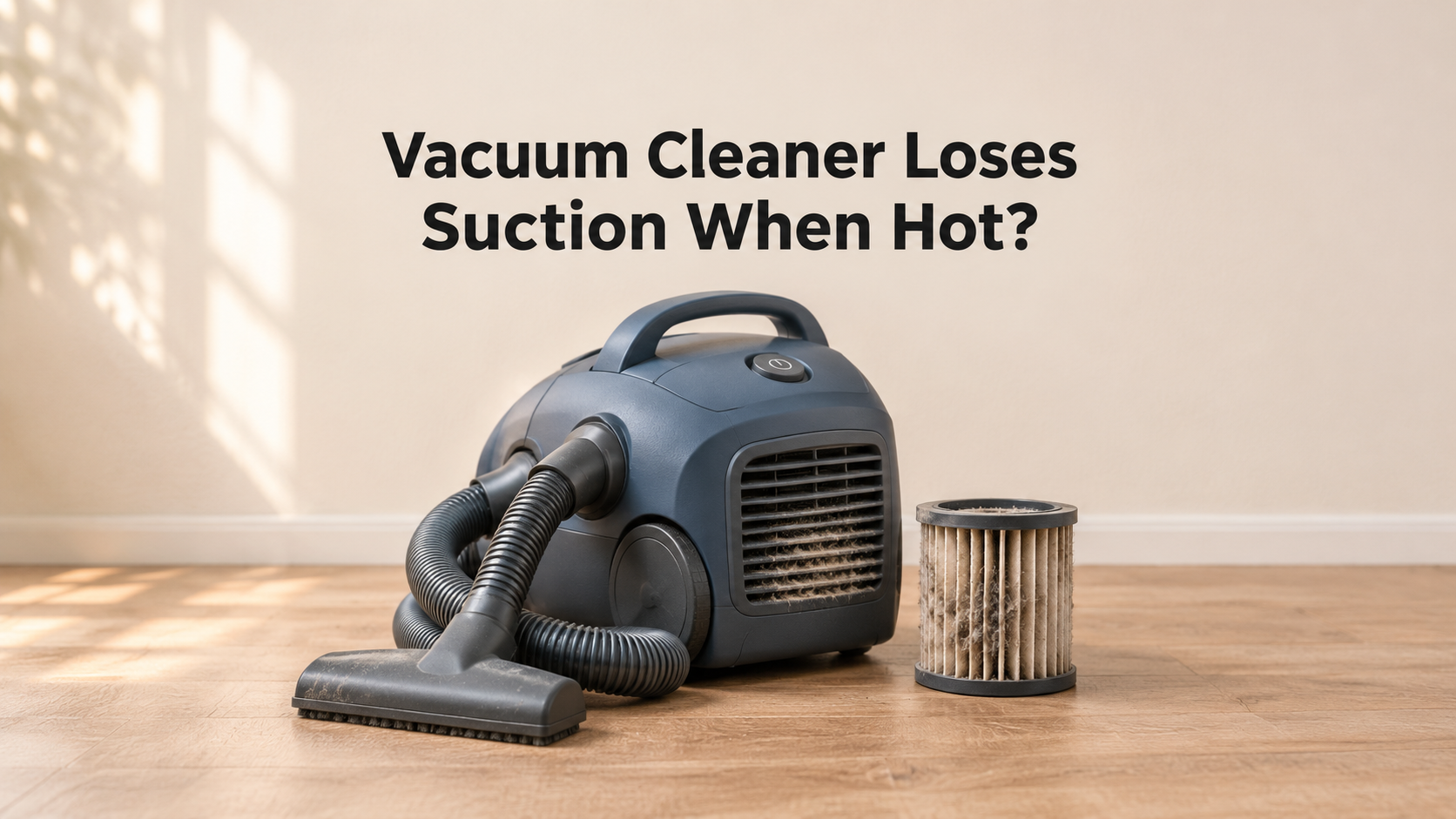
A vacuum motor is cooled by the same air that carries dust through the machine. When the airflow is strong and clear, the air carries heat away from the motor. When something restricts the airflow, such as a clogged filter, a full bin, or a blocked hose, two things happen at once: suction falls, and the motor loses its cooling air. The motor then heats up quickly.
Once the motor or battery reaches a certain temperature, many vacuums protect themselves. They may reduce power, pulse on and off, or shut down completely until they cool. This is why a vacuum seems to lose suction only after it has been running for a while and recovers after a rest. Heat is both a result of the problem and a trigger for further loss of power.

Safety First Before You Check Anything
- Switch the vacuum off and unplug it, or remove the battery on a cordless model, before you touch any part.
- Let it cool for at least 30 to 60 minutes. The motor area and exhaust can be very hot.
- Do not keep using a vacuum that smells of burning, makes smoke, sparks, or has a damaged cord. Those signs need a professional inspection.
- Wear gloves when clearing hair, debris, or blockages, since sharp objects may be hidden inside.
Match the Symptom to the Likely Cause
The pattern of how the suction fades gives a good clue about what is wrong.

11 Reasons Your Vacuum Loses Suction When Hot (and How to Fix Each One)
1. Clogged or Dirty Filters
This is the number one cause. Filters trap fine dust, and when they clog, air cannot pass through. The motor strains, overheats, and the suction drops. A clogged filter often causes warm, dusty-smelling air from the exhaust.
How to fix it:
- Find the pre-motor filter and the post-motor or HEPA filter using your user manual.
- Tap off loose dust. If the filter is washable, rinse it in cold water until the water runs clear.
- Let it dry completely for at least 24 hours before reinstalling it. A damp filter can cause mold and further blockage.
- Replace any filter that is torn, stiff, or permanently stained.
2. Full or Overfilled Dust Bin or Bag
As the bin fills up, the air has less space to move. A packed bin or bag cuts airflow in the same way as a clogged filter, and the motor runs hotter with every minute of use.
How to fix it: Empty a bagless bin after every use, and always before it is two thirds full. Replace a bag when it is about three quarters full, since bags lose efficiency before they are completely packed.
3. Blocked Hose, Wand, or Floor Head
A partial blockage, often caused by a wad of hair, paper, or debris, may not stop the vacuum completely. It simply reduces airflow enough to cause overheating after a few minutes.
How to fix it:
- Detach the hose, wand, and floor head and look through each one toward a light.
- Push a broom handle or a long flexible object through the hose to clear it.
- Check the inlet on the vacuum body and the opening in the floor head.
4. Blocked Exhaust or Motor Vents
The warm air has to leave the machine somewhere. If the exhaust grille, cooling vents, or the post-motor filter area are blocked by dust or lint, heat stays trapped inside.
How to fix it: Clean the exhaust grille and vents with a dry soft brush, and make sure nothing blocks them during use. Do not place the vacuum against walls, furniture, or fabric while it is running.
5. Thermal Protection Reducing Power
Modern vacuums have built-in thermal sensors. When the motor or electronics get too hot, the vacuum reduces power or switches off to prevent damage. This is a safety feature, not a fault. It is a symptom of the underlying airflow problem.
How to fix it: Let the vacuum cool completely, then fix the cause: clean the filters, empty the bin, and clear all blockages. If the protection triggers again within a few minutes even after cleaning, the motor or electronics may be failing.
6. Tangled or Jammed Brush Roll
Hair and debris wrapped around the brush roll create drag and, on powered brush heads, can overload the brush motor or belt. The extra load creates heat and weakens performance.
How to fix it: Remove the brush roll, cut away tangled hair, and clean the end caps and bearings. Check that the roller spins freely and inspect the belt for wear.
7. Air Leaks From Cracked or Softened Parts
Cracked hoses, loose attachments, and worn seals let air escape before it reaches the motor. Some plastic and rubber parts can also soften slightly as the vacuum warms up, which opens small gaps that were sealed when the machine was cold.
How to fix it:
- Run your hand along the hose while the vacuum is running and feel for escaping air.
- Check the bin seal, filter cover, and all connections for cracks, warping, or poor fit.
- Replace damaged hoses, seals, and gaskets.
8. Long Continuous Running Time
Even a healthy vacuum can run hot when it is used for very long, non-stop sessions, especially older machines, small motors, or in warm rooms with poor ventilation.
How to fix it: Clean in shorter sessions, give the machine short breaks, and keep the room ventilated. Do not vacuum a large house in one continuous run with an overworked small vacuum.
9. Worn Motor Parts or Aging Motor
Over the years, motor bearings and other parts wear out. A tired motor creates more friction and heat and delivers less power, particularly after it has been running for a while. You may hear a rattle, a grinding sound, or notice a burning smell.
How to fix it: Worn bearings and motor faults need professional repair. If the vacuum is old and repair costs are high, replacement is usually the better choice.
10. Cordless Models: Battery Overheating or Protection Mode
In a cordless vacuum, the battery has its own temperature protection. When the battery or the motor gets too hot, the vacuum may lower its power or shut down, which feels like a sudden loss of suction.
How to fix it:
- Switch to a lower power mode for everyday cleaning and use boost only when needed.
- Clean the filters, bin, and brush roll so the motor does not have to work so hard.
- Let the vacuum cool before charging, and store it away from heat and direct sunlight.
- If the battery is old, it may heat up more easily and should be replaced.
11. Hot Room, Direct Sun, or Poor Ventilation
If you vacuum in a very hot room, or the vacuum has been stored in a hot place before use, the machine starts out already warm. It will reach its temperature limit much sooner.
How to fix it: Avoid storing the vacuum in direct sun, hot cars, or near heaters. Let it reach room temperature before use, and vacuum in a well-ventilated space.
Step-by-Step: How to Fix a Vacuum That Loses Suction When Hot
Follow this order, from the easiest checks to the more serious ones.

- Switch off, unplug, and cool down for 30 to 60 minutes.
- Empty the bin or bag and check that it seals properly.
- Clean or replace the filters, including any post-motor filter. Let washed filters dry fully.
- Clear the hose, wand, and floor head of any blockage.
- Clean the brush roll, check the belt, and make sure the roller spins freely.
- Check the exhaust and vents, inspect the seals and hoses for leaks, and then test the vacuum in a short run. Feel the exhaust air: it should be warm at most, not very hot.
Corded vs Cordless: What to Check First

- Corded vacuums: Focus on filters, bin, hose, and exhaust vents first. Then check the brush roll and belt. If the motor still overheats, it may be worn.
- Cordless vacuums: Do the same airflow checks, then lower the power mode and check the battery temperature and age. Heavy use of boost mode and an old battery are common causes of heat-related power loss.
How to Prevent Your Vacuum From Overheating
Preventing heat problems is mostly about keeping the airflow open. A few simple habits go a long way.

- Empty the bin often and do not let it overfill.
- Clean filters monthly and replace them on the manufacturer’s schedule.
- Cut hair from the brush roll weekly, especially in homes with pets or long hair.
- Inspect hoses and seals every few months for cracks and leaks.
- Take short breaks during long cleaning sessions.
- Do not vacuum very fine dust such as drywall dust, ash, or flour unless the vacuum is designed for it. Fine dust clogs filters fast.
- Store the vacuum in a cool, dry place away from direct sun and heat sources.
- Keep vents and the exhaust clear when the vacuum is running.
Warning Signs That Need Professional Help
Stop using the vacuum and get it inspected if you notice any of the following:
- A strong burning smell, smoke, or sparks
- The suction loss and overheating return quickly even after cleaning every part
- Loud grinding, rattling, or screeching sounds from the motor
- A hot, melted, or damaged cord or plug
- A swollen, leaking, or very hot battery on a cordless vacuum
Repair or Replace? How to Decide
Repair it if:
- The cause is a replaceable part such as a filter, hose, seal, belt, brush roll, or battery.
- The vacuum is fairly new or still under warranty.
- Spare parts and service are easy to find for your model.
Replace it if:
- The motor is worn or failing and the repair would cost more than half the price of a new vacuum.
- The vacuum is 8 to 10 years old and keeps having heat and power problems.
- There has been smoke, sparks, or burning, or the cord or battery is damaged.
What to Look for in a Vacuum That Stays Cool and Strong
- Sealed system with good filtration: Keeps airflow steady and prevents air leaks.
- Washable, easy-to-reach filters: Make regular cleaning quick, which prevents most heat problems.
- Large, easy-to-empty dust bin and a full-bin indicator: Remind you before airflow drops.
- Thermal protection with a clear indicator: Tells you when the vacuum has paused to cool down.
- Well-designed ventilation and exhaust: Helps the motor shed heat during long jobs.
- Efficient, high-quality motor: Modern brushless motors tend to run cooler and last longer.
- Multiple power modes (cordless): Let you save high power for when you truly need it.
- Available spare parts and good warranty: Make long-term ownership easier and cheaper.
Frequently Asked Questions
Why does my vacuum lose suction after running for a while?
Usually because airflow is restricted by a clogged filter, a full bin, or a blockage. The motor loses its cooling air, overheats, and the vacuum either weakens or protects itself by reducing power.
Is it normal for a vacuum motor to get hot?
Some warmth is normal during use. However, if the vacuum becomes very hot, smells of burning, or loses suction as it heats up, there is a problem that needs attention.
Why does suction come back after the vacuum cools down?
The thermal protection or the cooled motor can work normally again. But unless you remove the cause, such as a clogged filter or blockage, the problem will return.
Can a dirty filter make a vacuum overheat?
Yes. A clogged filter restricts airflow, forces the motor to work harder, and raises the temperature quickly.
How long should I let a hot vacuum cool?
Leave it unplugged for 30 to 60 minutes, and clear blockages and clean the filters before using it again.
Why does my cordless vacuum lose power when hot?
The battery or motor may be overheating and triggering protection, often due to blocked airflow, heavy boost mode use, or an aging battery.
Is it safe to keep using a vacuum that overheats?
It is not a good idea. Repeated overheating can damage the motor and, in serious cases, create a fire risk. Find and fix the cause before using it again.
Final Thoughts
When a vacuum cleaner loses suction as it heats up, it is usually a clear signal that airflow is blocked somewhere. Start with the basics: let the machine cool, empty the bin, clean the filters, clear the hose and brush roll, and keep the vents open. These simple steps fix most heat-related suction problems in minutes and cost nothing.
If the problem comes back quickly, or you notice burning smells, strange noises, or damaged parts, stop using the vacuum and have it inspected. With regular maintenance, your vacuum will stay cooler, keep its suction, and last for many years.