







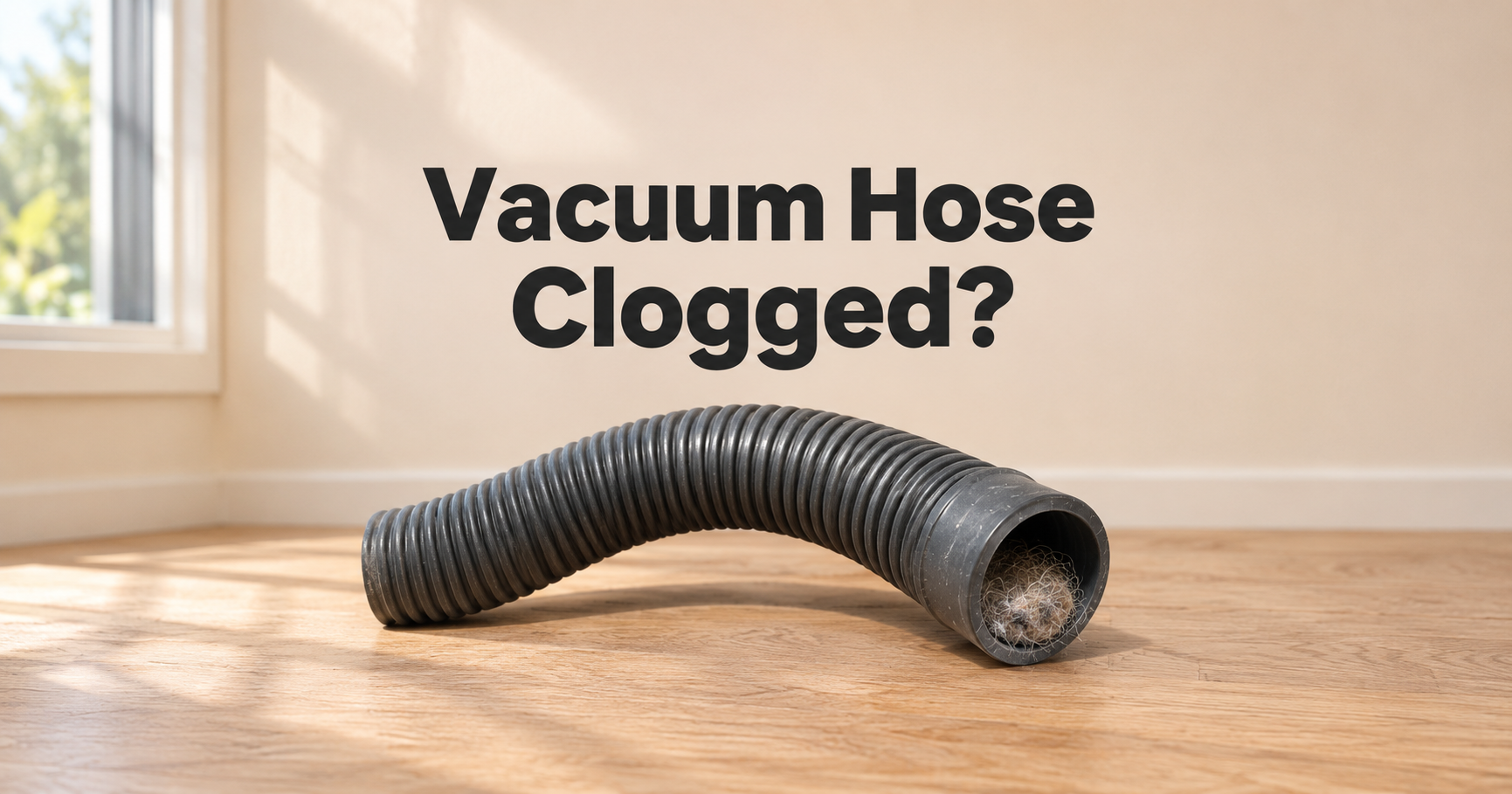
Vacuum Hose Clogged? How to Find the Blockage, Fix It Fast, and Stop It Happening Again
You switch on your vacuum, and instead of the usual strong pull, you get a weak whisper of suction, a strange whistling noise, or nothing at all. In most cases, the culprit is a clogged vacuum hose. The good news is that this is one of the easiest vacuum problems to fix at home, usually in under 15 minutes and without any special tools.
This guide explains how to confirm the hose is blocked, what causes it, exactly how to clear it, and how to keep it from clogging again.
Signs Your Vacuum Hose Is Clogged
- Weak or no suction at the nozzle, even though the motor is running loudly.
- A high-pitched whistling or straining sound as air struggles to pass through.
- Dust or debris not being picked up, or dropped back out of the nozzle.
- Motor getting unusually hot or shutting off by itself (thermal cut-off).
- Suction is fine without the hose but drops sharply when the hose is attached.
What Causes a Vacuum Hose to Clog?
A vacuum works by moving a steady stream of air. Anything that interrupts that airflow reduces performance. Typical causes include:
- Oversized debris: socks, paper, bottle caps, toy pieces, or large clumps of pet fur that fit into the nozzle but get stuck inside the narrower hose.
- Compacted hair and fibers: long hair, carpet fluff, and thread slowly wrap together into a dense plug.
- Damp or wet debris: moisture makes dust stick to the hose wall and form a hard layer over time.
- Overfull dust bin or clogged filter: when the bin is packed, debris backs up into the hose.
- Fine dust such as drywall, plaster, or ash: these powders can pack tightly and are tough to dislodge.
- A kinked or damaged hose: a crushed section can mimic a clog and restrict airflow.
Tools You May Need
- A broom handle, long wooden spoon, or a straightened wire coat hanger (wrapped in soft cloth at the tip)
- A flashlight or phone torch
- A second vacuum or a hand pump (optional)
- A bathtub or large sink, warm water, and mild dish soap
- Rubber gloves and a trash bag
How to Unclog a Vacuum Hose: Step by Step
Step 1: Unplug the vacuum
Always disconnect the power first. For cordless models, remove the battery. This prevents accidental startup and electric shock.
Step 2: Detach the hose and attachments
Remove the hose from the vacuum body, and detach any wand, brush head, or nozzle. Blockages often sit at the joints where the diameter changes, so check these connection points too.
Step 3: Find the blockage
Look through the hose toward a light source. If you cannot see light through it, there is a blockage. Run your hands along the outside of the hose and squeeze gently to feel for a hard lump, which tells you roughly where it is.
Step 4: Clear the clog
- Push it through: gently feed a broom handle or padded wire in from one end. Do not force it, as you can puncture the hose.
- Pull it out: if the clog is close to the end, use pliers or your gloved fingers to pull out the debris.
- Use air pressure: blow through the hose from the opposite end with a hand pump or the exhaust of another vacuum. Short bursts often pop a loose plug free.
- Flex the hose: bend and massage the clogged area to break up compacted dust before pushing it out.
Step 5: Wash stubborn or sticky clogs
For sticky or damp debris, fill a tub with warm water and a little dish soap. Submerge the hose, let it soak for 15 to 20 minutes, then flush with running water through one end. Hang it up so it drains and let it dry completely for at least 24 hours before reattaching. Never use a damp hose on a vacuum with an electric motor.
Step 6: Check filters and the dust bin
Empty the dust bin, tap out or rinse the washable filter (as your manual allows), and check the cyclone or bag area. A clogged filter creates similar symptoms and can cause the hose to clog again quickly.
Step 7: Reassemble and test
Reconnect everything, switch on the vacuum, and place your palm over the open hose end. You should feel strong, steady suction. If suction is still weak, check the nozzle, wand, and the intake port on the vacuum body, since the blockage may be elsewhere.
When the Hose Is Damaged, Not Clogged
If you have cleared the hose and suction is still poor, look for cracks, holes, split cuffs, or flattened sections. Air leaks reduce suction just like a clog does. A small split can be sealed temporarily with strong cloth tape, but a damaged hose should be replaced. Always choose a replacement hose that is made for your exact vacuum model, as the wrong diameter or fitting causes leaks and poor performance.
How to Prevent a Vacuum Hose From Clogging
- Pick up large items first before vacuuming, especially small toys, paper, and loose threads.
- Empty the dust bin when it reaches the fill line, not when it is overflowing.
- Clean or replace filters regularly, usually every one to three months depending on use.
- Cut tangled hair from the brush roll often so it does not feed into the hose.
- Avoid vacuuming wet messes unless your machine is designed for wet pickup.
- Use the right tool for fine dust: for construction dust or ash, a dedicated shop vacuum with a fine-dust filter is a safer choice.
- Do a quick monthly check by looking through the hose toward light.
Is It Time to Upgrade Your Vacuum?
If your hose clogs again and again, the design may be the problem. Features that reduce clogging include a wider hose diameter, a tangle-free or anti-hair-wrap brush roll, strong cyclonic separation that keeps dust out of the hose, and a large, easy-to-empty dust bin. Households with pets or long hair benefit the most from these features, so look for them when comparing models.
Frequently Asked Questions
Why does my vacuum run but have no suction?
The most common reasons are a clogged hose, a full dust bin, a blocked filter, or an air leak. Check them in that order.
Can I use water to clean a vacuum hose?
Yes, most plastic and rubber hoses can be washed with warm soapy water. Let the hose dry fully before use, and do not wash hoses that contain electrical wiring unless the manufacturer says it is safe.
How often should I clean my vacuum hose?
Inspect it monthly and clean it every few months. Homes with pets, long hair, or heavy daily use may need to do it more often.
Is it safe to use a wire hanger?
It is fine if you pad the tip with cloth and push gently. A bare metal tip can scratch or puncture the hose.
Can a clogged hose damage the vacuum motor?
Yes. Restricted airflow makes the motor run hot, which can shorten its life or trigger overheating shutdowns. Fix a clog as soon as you notice it.
Final Thoughts
A clogged vacuum hose is frustrating, but it is rarely a serious problem. With a flashlight, a long handle, and a few minutes of patience, you can usually restore full suction. Make regular checks and proper bin and filter care part of your routine, and your vacuum will stay powerful for years.