


Vacuum Cleaner Filter Cleaning: The Complete Guide to Restoring Suction and Cleaner Air
If your vacuum cleaner has lost its power, smells musty, or blows dust back into the room, the filter is the first place to look. A clean filter keeps airflow strong, protects the motor, and traps the fine dust, pollen, and pet dander that make indoor air unpleasant. Yet it is one of the most overlooked parts of vacuum maintenance.
This guide covers why filter cleaning matters, the different filter types, exactly how to clean each one, how often to do it, and the mistakes that can ruin a filter.
Why Cleaning Your Vacuum Filter Matters
- Stronger suction: a clogged filter restricts airflow, so the vacuum picks up less dirt even though the motor runs at full speed.
- Longer motor life: restricted airflow makes the motor run hot, which can lead to overheating, burnt smells, and early failure.
- Better air quality: a clean filter traps allergens instead of releasing them back into your home. This matters for families with allergies, asthma, or pets.
- No bad odors: trapped dust, pet hair, and moisture can cause a musty smell every time you vacuum.
- Lower costs: regular cleaning delays replacement filters and costly repairs.
Signs Your Vacuum Filter Needs Cleaning
- Noticeably weaker suction or poor pickup on carpet
- Dust or a stale smell coming from the exhaust
- The motor sounds strained, louder, or higher pitched
- The vacuum overheats or shuts off during use
- A visibly grey, matted, or discolored filter
- A filter indicator light on newer models
Know Your Filter Type First
Cleaning the wrong way can destroy a filter, so identify the type before you start. Check the user manual or the label printed on the filter itself.
- Foam filters: usually washable. They sit before or after the motor and catch larger particles.
- Pleated paper or fabric filters: some are washable, while many are not. Look for the words “washable” or a water-drop symbol.
- HEPA filters: capture very fine particles. Many are not washable and should be replaced, but some models use washable HEPA-style filters. Always check the manual.
- Mesh or pre-motor screens: tough plastic or metal screens that can be rinsed safely.
- Bag-style and bagless cyclone filters: the bag or cyclone does most of the work, and a secondary filter protects the motor.
What You Need
- Your vacuum’s manual (or model number)
- A soft brush or old toothbrush
- A trash bin or garbage bag
- Lukewarm water (no hot water)
- A clean, dry cloth or towel
- A dust mask if you are sensitive to dust
How to Clean a Vacuum Filter: Step by Step
Step 1: Turn off and unplug
Switch off the vacuum and unplug it. For cordless models, remove the battery if possible.
Step 2: Locate and remove the filter
Most vacuums have the filter near the dust bin, under a cover, or close to the motor. Some have more than one filter, so check for both a pre-motor and a post-motor filter.
Step 3: Tap out loose dust
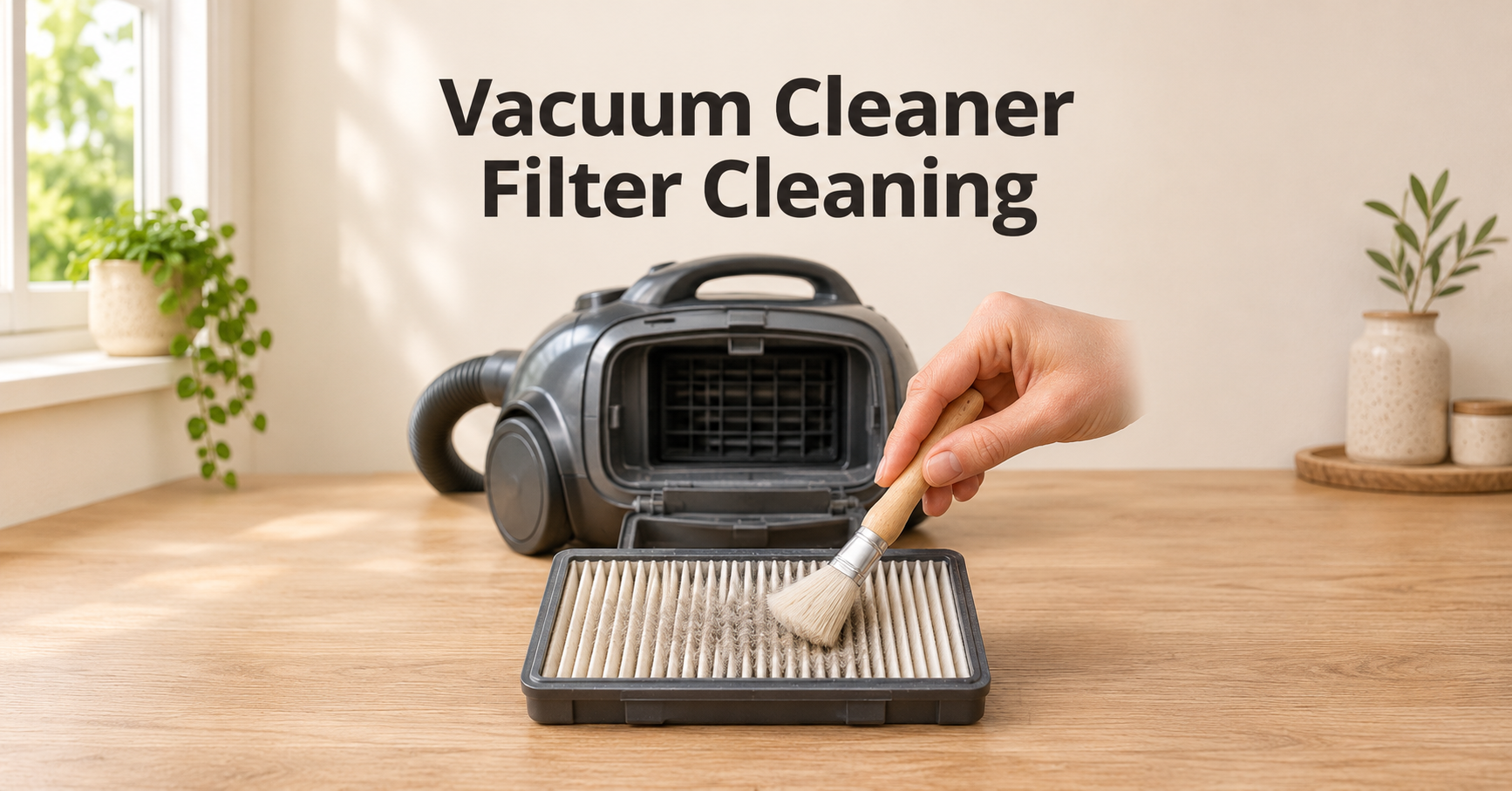
Hold the filter over a trash bin and tap it gently against the side to knock out dry dust. Do this outdoors if you can, because fine dust floats easily. Use a soft brush to loosen dust caught in the folds.
Step 4: Wash the filter (washable types only)
Rinse under lukewarm running water, flowing from the clean side to the dirty side to push dirt out. Gently squeeze foam filters until the water runs clear. Do not use soap, detergent, or hot water unless the manual allows it, and never scrub hard or wring pleated filters, as this can tear the material.
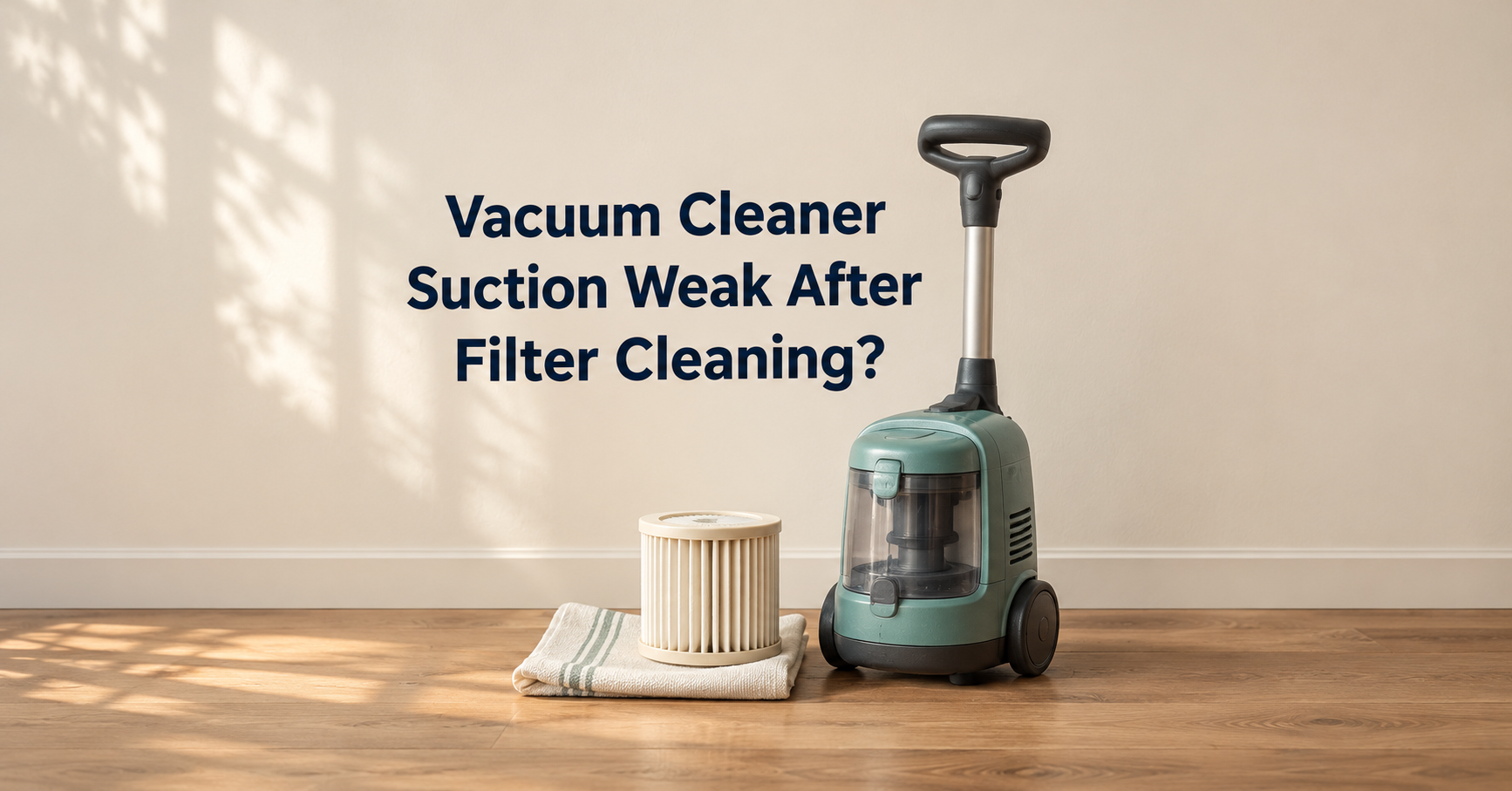
Step 5: Dry it completely
This is the most important step. Shake off excess water and leave the filter in a well-ventilated spot, away from direct heat, for at least 24 hours. Some thick foam filters need up to 48 hours. A damp filter causes mildew, odors, and motor damage.
Step 6: Clean the filter housing
While the filter dries, wipe the filter compartment with a dry cloth. Empty the dust bin and clean the cyclone or any mesh screen too.
Step 7: Reinstall and test
Put the dry filter back, close the cover firmly, and run the vacuum. You should notice stronger suction and no odor.
How Often Should You Clean or Replace a Vacuum Filter?
- Foam and washable filters: clean about once a month with regular use, or every two weeks for homes with pets.
- Pre-motor and mesh filters: every one to three months.
- HEPA filters (non-washable): tap out lightly every month, and replace every 6 to 12 months.
- Washable filters: replace about once a year, or sooner if torn, stiff, or discolored.
Heavy use, pets, allergies, construction dust, and fine powders all mean more frequent cleaning.
Common Filter Cleaning Mistakes to Avoid
- Washing a non-washable filter. Water can destroy HEPA and paper filter media.
- Reinstalling a damp filter. This is the number one cause of mold smell and motor trouble.
- Using a hairdryer or heater. High heat can warp or shrink the filter.
- Using harsh chemicals. Soaps and cleaners leave residue that blocks airflow.
- Skipping the second filter. Many vacuums have two or more.
- Running the vacuum without a filter. Dust goes straight into the motor.
When to Replace Instead of Clean
Replace the filter if it has holes, cracks, or torn pleats, stays dirty after cleaning, smells even after drying, has a stiff or crumbling texture, or is a non-washable type that has reached its service life. Always buy a replacement made for your exact vacuum model so it fits tightly with no air gaps. A good fit matters as much as filter quality.
Extra Tips for Better Vacuum Performance
- Keep a spare filter so you can swap one in while the other dries.
- Empty the dust bin after each use, or when it reaches the max line.
- Cut hair and thread from the brush roll regularly.
- Check the hose and attachments for blockages if suction is still weak.
- Set a monthly reminder on your phone to inspect the filters.
Frequently Asked Questions
Can I wash every vacuum filter?
No. Only filters marked washable should be rinsed. HEPA and paper filters are often damaged by water, so check the manual first.
Can I use soap to clean a vacuum filter?
It is best to use plain lukewarm water. Soap residue can clog the filter, though some manufacturers allow mild soap, so follow your manual.
How long does a vacuum filter take to dry?
Usually 24 hours, and up to 48 hours for thick foam filters. It must be completely dry before use.
Why does my vacuum still smell after cleaning the filter?
The filter may still be damp, or the smell may come from the dust bin, brush roll, hose, or a second filter. Clean those parts too, or replace an old filter.
Does a clean filter really improve suction?
Yes. In many cases, cleaning a clogged filter is enough to bring suction back to near-new levels.
Can I vacuum without a filter?
No. Running without a filter lets dust damage the motor and blows fine particles into the air.
Final Thoughts
Cleaning your vacuum filter takes only a few minutes of work and a little drying time, but it makes a major difference in suction, air quality, and the life of your machine. Know your filter type, follow the manufacturer’s instructions, dry it completely, and replace it when it wears out. Do this regularly and your vacuum will stay powerful and fresh for years.