


Vacuum Cleaner Dustbin Cleaning: How to Empty, Wash, and Sanitize Your Dust Container
The dustbin is where every bit of dirt your vacuum picks up ends up, so it is no surprise that it gets grimy fast. A neglected dustbin can lead to weaker suction, a stale smell, clogged filters, and even dust blowing back into your room. The good news is that cleaning it takes only a few minutes and costs almost nothing.
This guide explains why dustbin cleaning matters, how often to do it, and the right way to empty, wash, and sanitize a vacuum dustbin without damaging your machine.
Why You Should Clean Your Vacuum Dustbin
- Keeps suction strong: a full or caked dustbin restricts airflow, so the vacuum loses power.
- Prevents bad odors: old dust, pet hair, food crumbs, and moisture create a musty smell that spreads every time you vacuum.
- Protects the filters and motor: debris that overflows from a dirty bin clogs filters and makes the motor work harder.
- Improves air quality: a clean bin helps trap allergens, pollen, and dander instead of releasing them back into your home.
- Extends the life of your vacuum: regular care reduces wear and costly repairs.
How Often Should You Clean the Dustbin?
There are two levels of cleaning: emptying and deep cleaning.
- Empty after every use, or at least when the dust reaches the MAX line. Waiting until it is overflowing hurts performance.
- Deep clean once a month for normal use, and every two weeks if you have pets, allergies, or vacuum daily.
- Clean right away after vacuuming fine dust, ash, or anything damp or sticky.
Signs the Dustbin Needs Cleaning
- Suction feels weaker than usual
- A musty, dusty, or pet-like smell when the vacuum runs
- Dust caked on the walls of the bin or around the seals
- Dirt flying out when you open the bin
- Dust coming from the exhaust
- The bin looks cloudy or stained
What You Need
- A trash bag or outdoor bin
- A soft brush, old toothbrush, or microfiber cloth
- Lukewarm water and a few drops of mild dish soap
- Scissors (to cut tangled hair)
- White vinegar or a mild disinfectant wipe (optional)
- A dust mask if you are sensitive to dust
How to Clean a Vacuum Dustbin: Step by Step
Step 1: Turn off and unplug
Switch off the vacuum and unplug it. If it is cordless, remove the battery if the design allows it.
Step 2: Remove the dustbin
Press the release latch and take the dustbin off the vacuum. Hold it level so loose dust does not spill.
Step 3: Empty it carefully
Empty the contents directly into a trash bag, holding the bin deep inside the bag to keep dust from floating up. Doing this outdoors is even better. Tap the sides to loosen packed debris.
Step 4: Remove hair and stuck debris
Use scissors to cut tangled hair and threads, and a soft brush to loosen dust stuck in corners, around the seals, and on any mesh screens. Check the cyclone or inner cone as well.
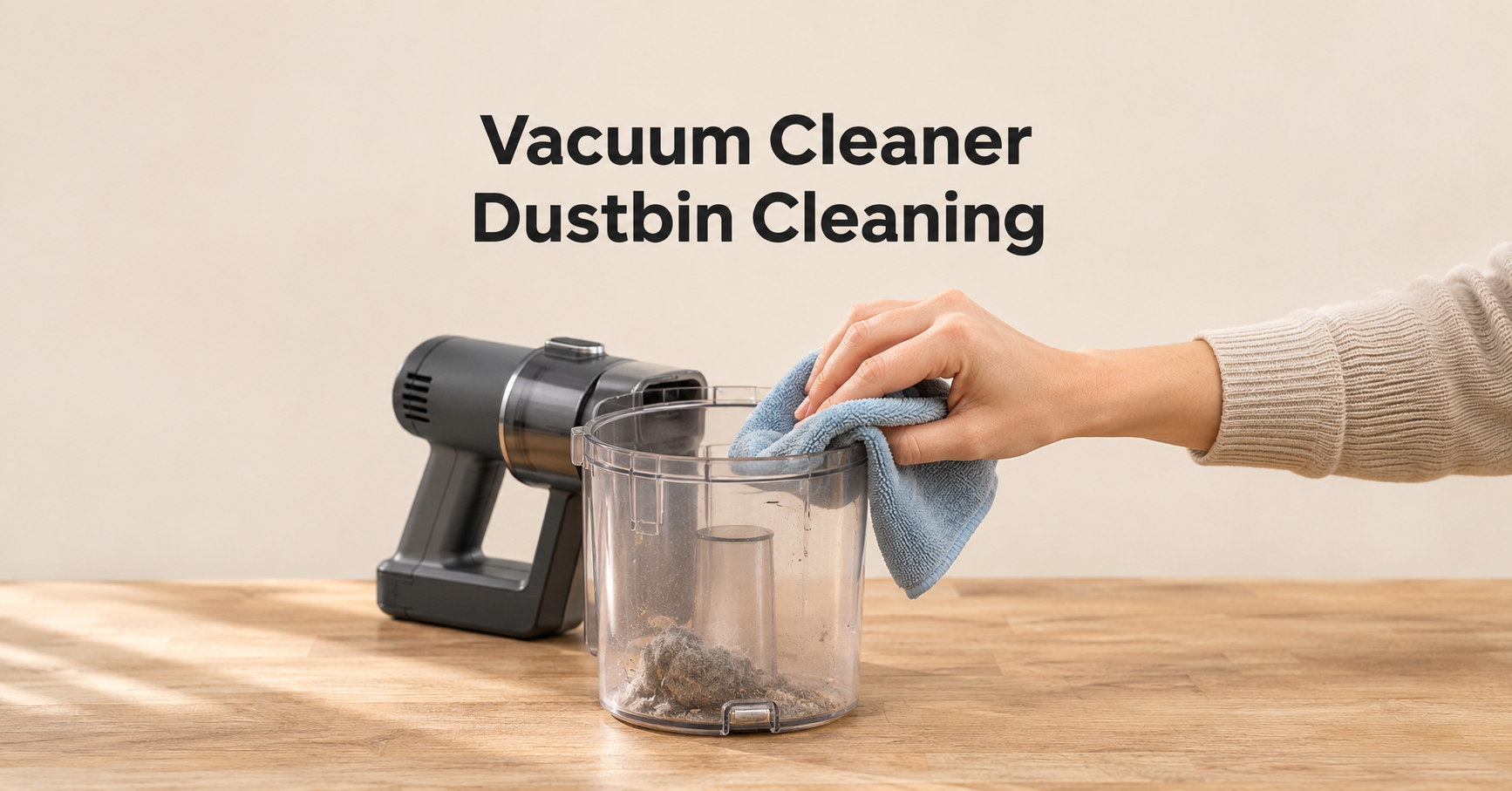
Step 5: Wipe or wash the bin
For a light clean, wipe the inside with a dry or slightly damp microfiber cloth. For a deep clean, check your manual to confirm the bin is washable. If so, rinse it with lukewarm water and a drop of mild dish soap, scrub gently, and rinse well. For odors, wipe with a mix of equal parts white vinegar and water.
Step 6: Dry completely
Shake off excess water and leave the bin to air dry for at least 24 hours in a well-ventilated spot. Do not use a hairdryer or heater. A damp bin causes mold, bad smells, and clogs.
Step 7: Reassemble and test
Once it is bone dry, slide the bin back until it clicks into place. Run the vacuum and check suction and smell.
Bagged vs Bagless: Cleaning Differences
- Bagless vacuums: need regular dustbin emptying and washing as described above. They save on bag costs but need more hands-on care.
- Bagged vacuums: use a disposable bag instead of a bin, so you replace the bag when it is about two-thirds full. Wipe the bag compartment during replacement.
- Robot vacuums and handhelds: have small bins that fill quickly, so empty them after each cycle or use.
How to Remove Odors From a Vacuum Dustbin
- Wash and dry the bin completely, since moisture is the main cause of smells.
- Wipe with a white vinegar and water solution, then let it air dry.
- Leave the empty bin in open air or sunlight for a few hours.
- Sprinkle a little baking soda in the empty, dry bin for an hour, then wipe it out.
- Clean the filters and brush roll too, because the smell often comes from them.
Common Dustbin Cleaning Mistakes
- Washing non-washable parts: some bins contain parts that cannot get wet. Check the manual first.
- Putting back a damp bin: it leads to mold and a bad smell.
- Using hot water or harsh chemicals: they can warp plastic and damage seals.
- Waiting until the bin overflows: debris then clogs the filter and hose.
- Forgetting the filter: a clean bin with a dirty filter still means weak suction.
- Emptying indoors: fine dust spreads into the air and settles back on your floors.
Tips to Keep Your Dustbin Cleaner for Longer
- Empty it after each use, as a habit.
- Pick up large debris like paper, wrappers, and toys before vacuuming.
- Line the empty bin area of a bagless vacuum only if the manufacturer allows it.
- Check seals and the lid for cracks or loose fits that let dust escape.
- Pair dustbin cleaning with filter cleaning on the same day each month.
- Replace a cracked or warped dustbin with one made for your exact model.
Frequently Asked Questions
Can I wash my vacuum dustbin with water?
In most bagless vacuums, the plastic bin can be rinsed with lukewarm water, but always check the manual first, because some include parts that must stay dry.
How often should I empty a vacuum dustbin?
After every use, or when the dust reaches the MAX line. This keeps suction strong and prevents clogs.
How do I get rid of the smell in my vacuum cleaner dustbin?
Wash it, dry it fully, and wipe with a vinegar and water mix. Also clean the filters, since they often hold the odor.
Can I use disinfectant on the dustbin?
Mild disinfectant wipes are fine for the inside of the bin if the manufacturer does not forbid them. Avoid harsh chemicals and rinse well.
Why does my vacuum lose suction when the bin is nearly full?
Packed dust blocks the airflow path and clogs the filters. Emptying at the MAX line prevents this.
Should I clean the dustbin before or after the filter?
Clean the dustbin first, then the filter, so that loose dust from the bin does not dirty a freshly cleaned filter.
Final Thoughts
Dustbin cleaning is one of the quickest ways to keep a vacuum cleaner working like new. Empty it often, give it a deep clean every month, make sure it dries completely, and pair it with regular filter care. A clean dustbin means stronger suction, fresher air, and a vacuum that lasts for years.