



Vacuum Cleaner Brush Roll Cleaning: How to Remove Tangled Hair and Restore Cleaning Power
If your vacuum is leaving dirt behind on the carpet, making a grinding noise, or the brush bar has stopped spinning, a tangled brush roll is the most likely cause. The brush roll (also called a beater bar or agitator) is the spinning cylinder that loosens dirt and pulls hair, fibers, and debris off your floors. When hair and thread wrap around it, cleaning performance drops fast.
The fix is simple and takes about five minutes. This guide shows you why brush rolls tangle, how often to clean them, and exactly how to do it safely.
What Is a Vacuum Brush Roll and Why Does It Matter?
The brush roll is a rotating bar fitted with bristles, rubber fins, or both, located inside the vacuum’s floor head. It is driven by a belt or directly by a motor. As it spins, it agitates carpet fibers and sweeps dirt toward the suction opening. A clean, free-spinning brush roll is what gives a vacuum its deep cleaning ability on carpets and rugs.
Why Brush Rolls Get Tangled
- Long human hair: the biggest culprit, especially in homes with long-haired people.
- Pet fur: shedding dogs and cats leave a lot of hair that winds tightly around the bar.
- Threads, string, and carpet fringe: these wrap around the roll and bearings.
- Fabric fibers and lint: they build up slowly and bind the hair together.
- Infrequent cleaning: small tangles grow into dense mats that stall the roll.
Signs Your Brush Roll Needs Cleaning
- The brush roll does not spin or turns slowly or unevenly.
- Dirt is left behind on carpet even after several passes.
- A burning rubber smell appears, often from a strained belt or motor.
- Noise changes, such as grinding, rattling, or squealing.
- Visible hair, thread, or string wrapped around the bar or around the end caps.
- Worn bristles, which look flat, short, or missing in places.
How Often Should You Clean the Brush Roll?
Check the roll every time you empty the dustbin, and give it a full clean on the schedule above. Clean immediately if you notice any warning signs. Homes with long hair or shedding pets may need to clean it as often as weekly.
What You Need
- Small scissors, a seam ripper, or a hair-cutting tool
- A coin or screwdriver (to open the brush roll cover, depending on the model)
- A soft brush or old toothbrush
- A damp microfiber cloth
- A trash bag
- Gloves, if you prefer
How to Clean a Vacuum Brush Roll: Step by Step
Step 1: Turn off and unplug
Switch off the vacuum and unplug it. For cordless models, remove the battery. This prevents the brush roll from spinning unexpectedly.
Step 2: Lay the vacuum down and access the brush roll
Turn the floor head over or lay the vacuum on its back. Many models have a cover, plate, or latch that you release by hand or with a coin to remove the roll. Check your manual if unsure.
Step 3: Remove the brush roll
Lift the brush roll out, keeping hold of any belt. If your model has a removable end cap, take it off and note how everything fits so you can reassemble it.
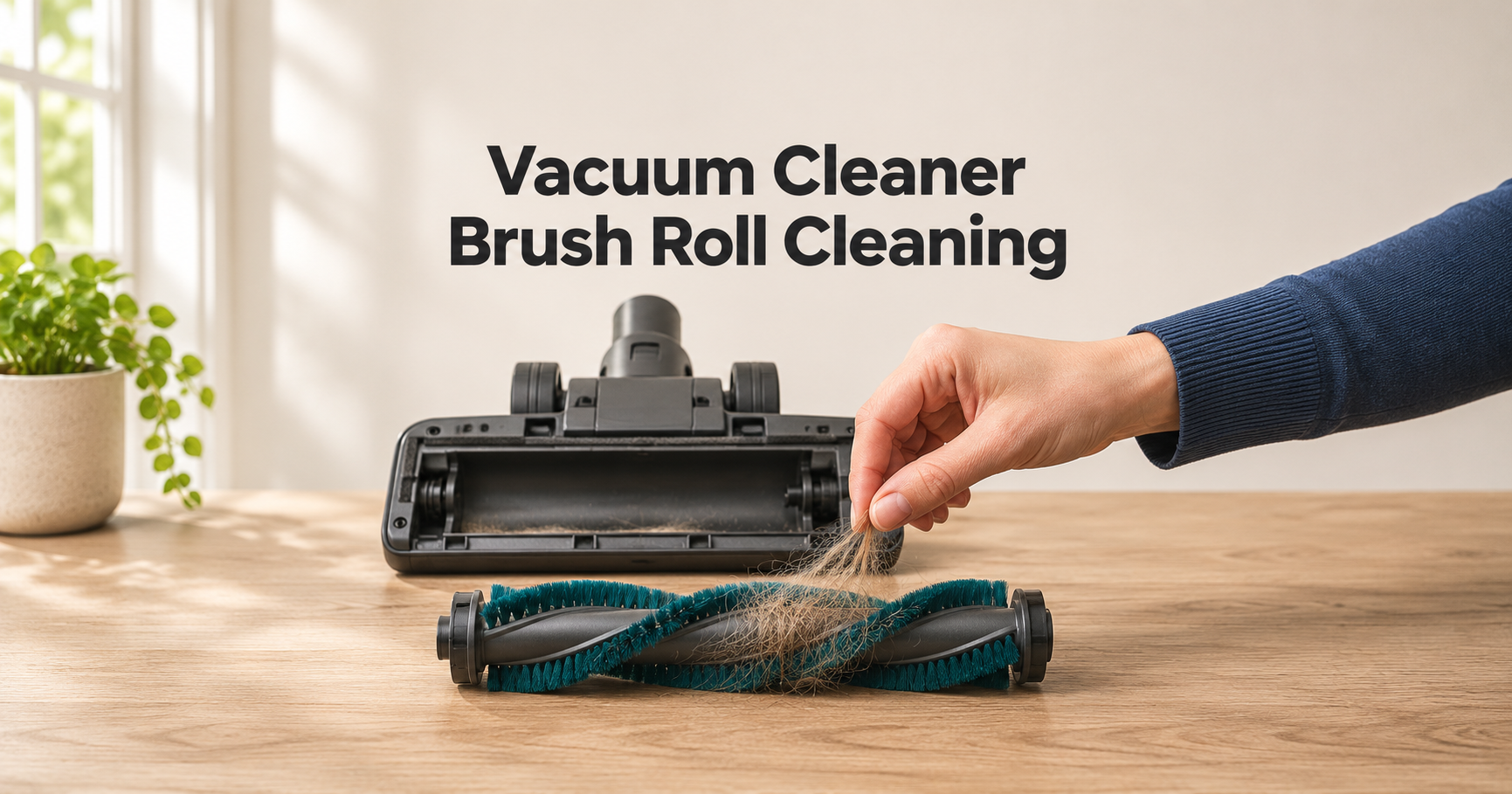
Step 4: Cut and remove the hair
Use scissors or a seam ripper to cut through the tangled hair along the length of the bar, working in the groove between bristle rows. Be careful not to cut the bristles or the belt. Peel the hair away in sections and drop it into the trash bag. Slide off any end caps and clear threads wound around the shaft.
Step 5: Clean the roll, bearings, and housing
Brush off dust from the bristles with a soft brush, and wipe the roll with a slightly damp cloth. Clear the end caps, belt area, and floor head cavity, which usually hold hidden hair and debris. Check that the roll spins freely by hand, with no grinding or resistance.
Step 6: Inspect the belt and bristles
If your vacuum has a belt, check it for stretching, cracks, or glazing. Replace it if it looks worn or loose. Look at the bristles, too. If they are flattened, bald, or damaged, a replacement roll will clean better.
Step 7: Refit and test
Put the brush roll back, secure the cover, and turn the vacuum on. The roll should spin smoothly, with a steady sound and strong pickup.
Special Cases
Self-cleaning and anti-tangle brush rolls
Some modern vacuums use combs, tangle-free designs, or rubber fins that shed hair as they spin. These need far less maintenance, but you should still check them regularly, because threads and fibers can still get trapped at the ends.
Cordless and stick vacuums
These often have a removable roller that slides out with one click. Clean it the same way, and check the end caps where hair sneaks in.
Robot vacuums
Robot vacuums tangle quickly because they run so often. Clean the main brush weekly, and clear any side brushes too.
Common Mistakes to Avoid
- Cleaning while plugged in: a spinning roll can injure you or damage the vacuum.
- Pulling hair out by force: this can bend bristles and damage bearings. Cut it first.
- Using a sharp blade carelessly: a slip can cut the bristles, belt, or your fingers.
- Soaking the brush roll: water can rust bearings and loosen glue. Wipe it instead, unless the manual says the roll is washable.
- Ignoring the end caps: hair that builds up there can seize the roll.
- Waiting too long: heavy tangles can burn a belt or strain the motor.
When to Replace the Brush Roll or Belt
- Bristles are worn down, bent, or missing in large patches
- The roll wobbles, is cracked, or has damaged end caps
- It does not spin freely even when clean
- The belt is loose, stretched, cracked, or melted
- Your vacuum cleans poorly even after a thorough cleaning
Generally, belts need replacement every 6 to 12 months, and brush rolls every 1 to 2 years, depending on use. Always choose parts made for your exact vacuum model so the fit is secure.
Tips to Prevent Tangles
- Brush pets regularly to cut down on loose fur.
- Tie up and trim stray threads and carpet fringe before vacuuming.
- Vacuum in straight, steady lines rather than over loose cords or rug tassels.
- Check and clear the brush roll during each dustbin emptying.
- Pair brush roll care with filter and dustbin cleaning for easy maintenance.
- Consider an anti-tangle brush roll if you have long hair or pets.
Frequently Asked Questions
How do I get hair off a vacuum brush roll?
Unplug the vacuum, remove the roll, cut the hair along the grooves with scissors or a seam ripper, and peel it away. Clear the end caps too.
Can I wash my vacuum brush roll?
Only if the manual says it is washable. Most brush rolls should be wiped with a damp cloth and air dried, because water can damage bearings.
Why is my vacuum brush roll not spinning?
The most common reasons are tangled hair, a broken or loose belt, or a blocked roller. Clean the roll first, and check the belt.
How often should I replace the vacuum belt?
Every 6 to 12 months for most vacuums, or sooner if it is stretched, cracked, or slipping.
Can a tangled brush roll damage my vacuum?
Yes. It can burn the belt, strain the motor, and wear out bearings, which leads to costly repairs.
Should I turn the brush roll off on hard floors?
If your vacuum allows it, yes. Turning the roll off on bare floors prevents scattering debris and reduces wear and tangling.
Final Thoughts
A clean brush roll is the secret to a vacuum that grabs dirt, hair, and pet fur instead of just pushing it around. Check it regularly, cut away tangles safely, inspect the belt and bristles, and replace worn parts on time. A few minutes of care keeps your vacuum cleaning like new and saves you from avoidable repairs.