


Vacuum Cleaner Blowing Out Dust: Why It Happens and How to Stop It
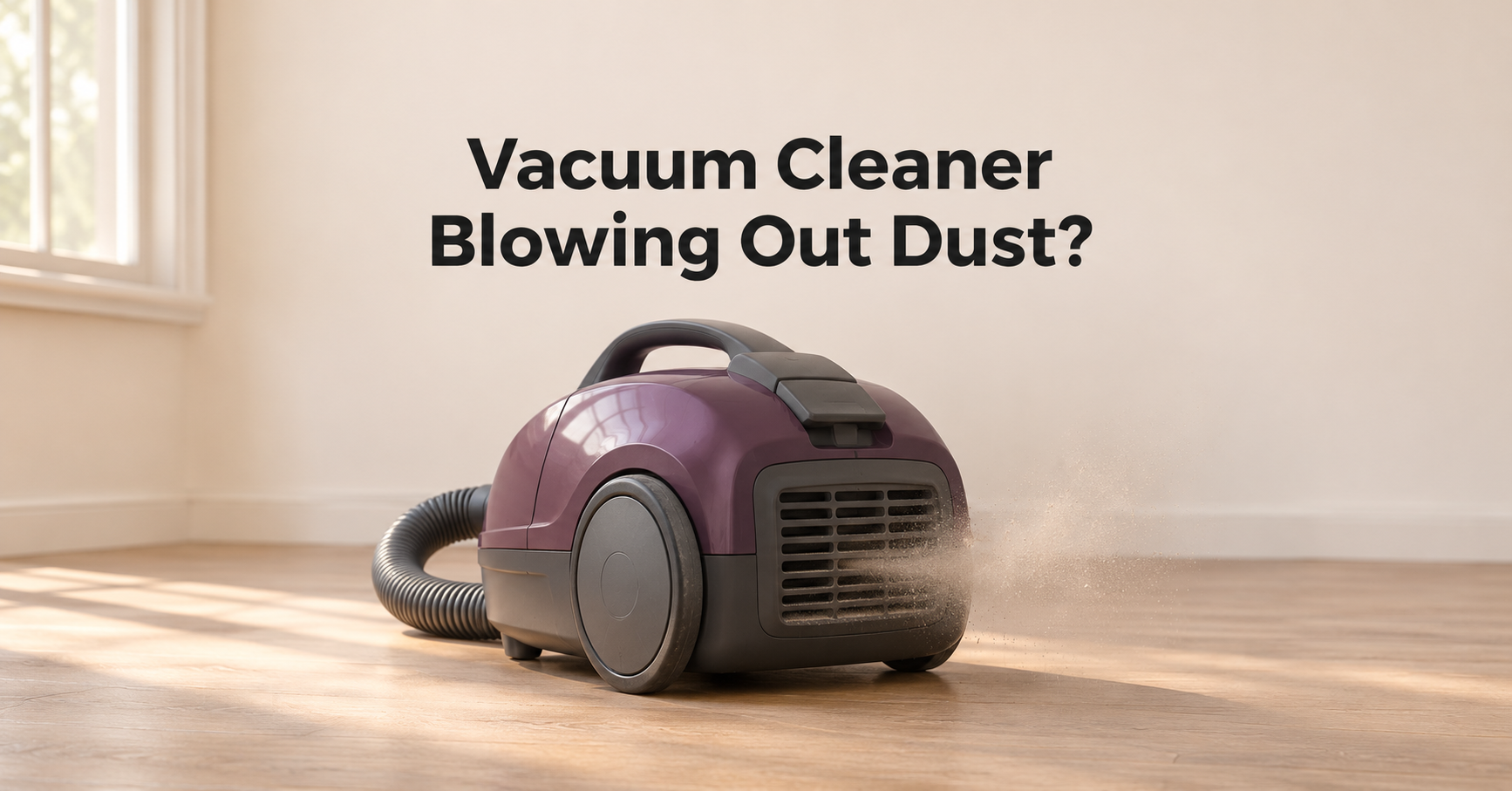
You switch on your vacuum to clean the floor, and moments later there is a cloud of dust coming out of the machine, a dusty smell in the room, or fine powder settling on your furniture. A vacuum that blows out dust is doing the opposite of its job, and it can make allergies and breathing problems worse. The good news is that this is a very common problem with simple causes that you can fix at home.
This guide explains why a vacuum cleaner blows dust back into the air, how to find the leak, step-by-step fixes, and how to prevent it in the future.
How a Vacuum Is Supposed to Handle Dust
A vacuum pulls dirty air in through the floor head and hose. The air flows into the dust bin or bag, where most debris is separated. It then passes through one or more filters, which trap fine particles. Finally, cleaner air leaves through the exhaust. If any part of this path is blocked, damaged, or not sealed, dust can escape at the wrong place.
Signs Your Vacuum Is Blowing Out Dust
- Visible dust or a dusty cloud from the exhaust or around the dust bin
- A musty, dusty, or stale smell while vacuuming
- Dust settling on nearby furniture soon after you vacuum
- A fine layer of dust inside the vacuum’s filter area or around the motor
- Sneezing, watery eyes, or coughing while you vacuum
- Dust spilling out when you open or empty the dust bin
- Weaker suction than normal
Why Your Vacuum Cleaner Blows Out Dust
1. The dust bin or bag is full
This is the most common reason. When the bin or bag is overfull, there is no room for new debris, and dust gets pushed past the separator toward the filter and exhaust. Even a bin that looks only partly full can be packed too tightly to work properly.
2. A dirty or clogged filter
Filters trap fine dust. When they are saturated, air cannot pass through easily, so pressure builds and dust escapes through gaps. A clogged filter also reduces suction.
3. A missing, wrongly fitted, or worn-out filter
If a filter is missing, installed the wrong way, or has holes and tears, dust passes straight through to the motor and the exhaust. After a filter is washed, it may also be put back while still damp or poorly seated.
4. Worn seals and gaskets
Rubber seals around the dust bin, lid, filter housing, and hose connections keep the airflow in a closed path. When they crack, harden, or are missing, dust leaks out of the gaps.
5. Cracks, loose joints, or a leaking hose
A split hose, a loose wand connection, a cracked dust bin, or a broken latch can allow air, and dust, to leak before it reaches the filter.
6. A blocked airflow path
A clog in the hose, nozzle, or inlet raises pressure inside the machine, which can force dust out around seals and filters.
7. A torn bag or the wrong bag type
In a bagged vacuum, a torn bag, a badly fitted bag, or a bag that is not made for your model can leak dust into the compartment and out of the exhaust.
8. Missing or worn HEPA or exhaust filter
Some vacuums have a final exhaust filter. If it is old, damaged, or missing, fine dust is released into the room.
9. Poor-quality or very cheap filters or bags
Low-quality replacements may not fit tightly or may have weaker filtering material, which lets more dust through.
10. Vacuuming very fine dust
Drywall dust, ash, plaster, and fine powders can pass through ordinary filters and clog them quickly. A standard household vacuum is not designed for these jobs.
Where Does Dust Escape? Find the Leak
Look at where the dust is coming from, since it narrows down the cause:
- From the exhaust vent: usually a dirty, missing, or damaged filter, or a full bin.
- Around the dust bin or lid: worn seals, a cracked bin, or an overfull container.
- From the hose or wand joints: a split hose or loose connection.
- When you open the bin: normal to some extent, but a lot of dust points to an overfilled bin.
What You Need
- A trash bag or outdoor bin
- A soft brush or old toothbrush
- A dry microfiber cloth
- A replacement filter or bag, if needed
- Mild dish soap and lukewarm water (for washable parts only)
- A flashlight, for checking the hose and housing
- A dust mask, if you are sensitive to dust
How to Stop a Vacuum Blowing Out Dust: Step by Step
Step 1: Turn off and unplug
Switch off the vacuum and unplug it. For cordless models, remove the battery if the design allows.
Step 2: Empty the dust bin or change the bag
Empty the bin outdoors or into a trash bag. Replace a bag when it is about two-thirds full. Wipe the inside of the bin and check it for cracks.
Step 3: Clean or replace the filters
Remove every filter, including pre-motor and exhaust filters. Tap out loose dust and wash only filters marked washable, then dry them for at least 24 hours. Replace filters that are torn, stiff, discolored, or reaching their service life. Make sure each filter sits correctly and snugly.
Step 4: Check seals and gaskets
Run a finger along the rubber seals on the dust bin, lid, and filter housing. They should be flexible, clean, and unbroken. Wipe off dust and replace any cracked or flattened seals.
Step 5: Inspect the hose, wand, and joints
Look along the hose for splits or holes, and check that every connection clicks firmly into place. Replace damaged hoses. For a quick check, run the vacuum and listen for a whistling sound that may reveal a leak.
Step 6: Clear clogs
Remove blockages from the hose, nozzle, and inlet. Look through each part toward a light to check that air can pass freely.
Step 7: Reassemble and test
Fit everything back together, close the latches, and run the vacuum on a clean surface. Hold your hand near the exhaust to check the air is clean, and look for any dust around the bin or lid.
Special Cases
Bagless vacuums
These rely on a bin, cyclone, and filters. Empty the bin often, clean the cyclone area, and keep every filter in place. Check the lid seal carefully, since this is a common leak point.
Bagged vacuums
Use bags made for your model, make sure the bag is correctly fitted, and replace it before it is full. A poor-fitting bag can leak around the opening.
Cordless and stick vacuums
These have small bins that fill quickly. Empty them after each use and clean the mesh and foam filters regularly.
Robot vacuums
Empty the bin after each cycle and clean the filter weekly. Dust leaking from the bin area often means an overfull bin or a filter that is not seated properly.
When to Replace Parts or the Vacuum
- The filter is damaged or has not been replaced within its recommended period
- Seals are cracked, brittle, or no longer fit snugly
- The dust bin, lid, or hose is cracked
- Dust still leaks after full cleaning and filter replacement
- The machine is old, and repair costs approach the price of a new one
If you are shopping for a replacement, look for a vacuum with a sealed system, HEPA filtration, a tight-fitting bin lid, and an easy-to-empty dust container. These features reduce dust leakage and help allergy sufferers.
Common Mistakes to Avoid
- Running the vacuum without a filter: dust goes straight into the motor and the air.
- Overfilling the bin or bag: it blocks airflow and forces dust out.
- Putting back a damp filter: it clogs, grows mold, and fails to trap dust.
- Using the wrong filter or bag: a loose fit allows leaks.
- Ignoring cracked seals or hoses: even small gaps release a lot of dust.
- Vacuuming construction dust with a household vacuum: it clogs and damages the machine.
How to Prevent Dust Blowing Out in the Future
- Empty the bin after each use, or when it reaches the fill line.
- Clean filters monthly, and replace them every 6 to 12 months or as advised.
- Check seals, latches, and the hose every few months.
- Use good-quality filters and bags made for your model.
- Pick up large debris before vacuuming.
- Do not use a household vacuum for fine construction dust or ash.
- Store the vacuum in a dry, clean place.
- Set a reminder for monthly vacuum maintenance.
Frequently Asked Questions
Why does my vacuum blow dust out the back?
It is usually a dirty or missing filter, a full bin, or worn seals. Clean or replace the filters and empty the bin first.
Why does my vacuum smell dusty when it runs?
Dust in the filter, bin, or exhaust path heats up and releases a stale smell. Clean the bin and filters, and make sure everything is fully dry.
Can a clogged filter make a vacuum blow out dust?
Yes. A clogged filter restricts airflow, which increases pressure and pushes dust through gaps and seals.
Is it safe to use a vacuum that blows out dust?
It is not ideal. Dust in the air can trigger allergies and breathing problems, so find and fix the cause before continuing.
How do I know if my vacuum seal is leaking?
Look for dust around the bin, lid, and hose joints, listen for whistling, and check the rubber seals for cracks or gaps.
Does a HEPA filter stop a vacuum blowing out dust?
A properly fitted HEPA filter in a sealed system traps very fine particles, but it must be clean and correctly installed to work well.
How often should I replace the filter?
Most filters need replacing every 6 to 12 months, or sooner with pets or heavy use. Follow your manual’s guidance.
Final Thoughts
A vacuum that blows out dust is usually a sign of simple maintenance problems rather than a broken machine. Empty the bin on time, keep the filters clean and properly fitted, check the seals and hose for leaks, and replace worn parts. With these habits, your vacuum will trap dust properly, protect the air in your home, and last longer.