







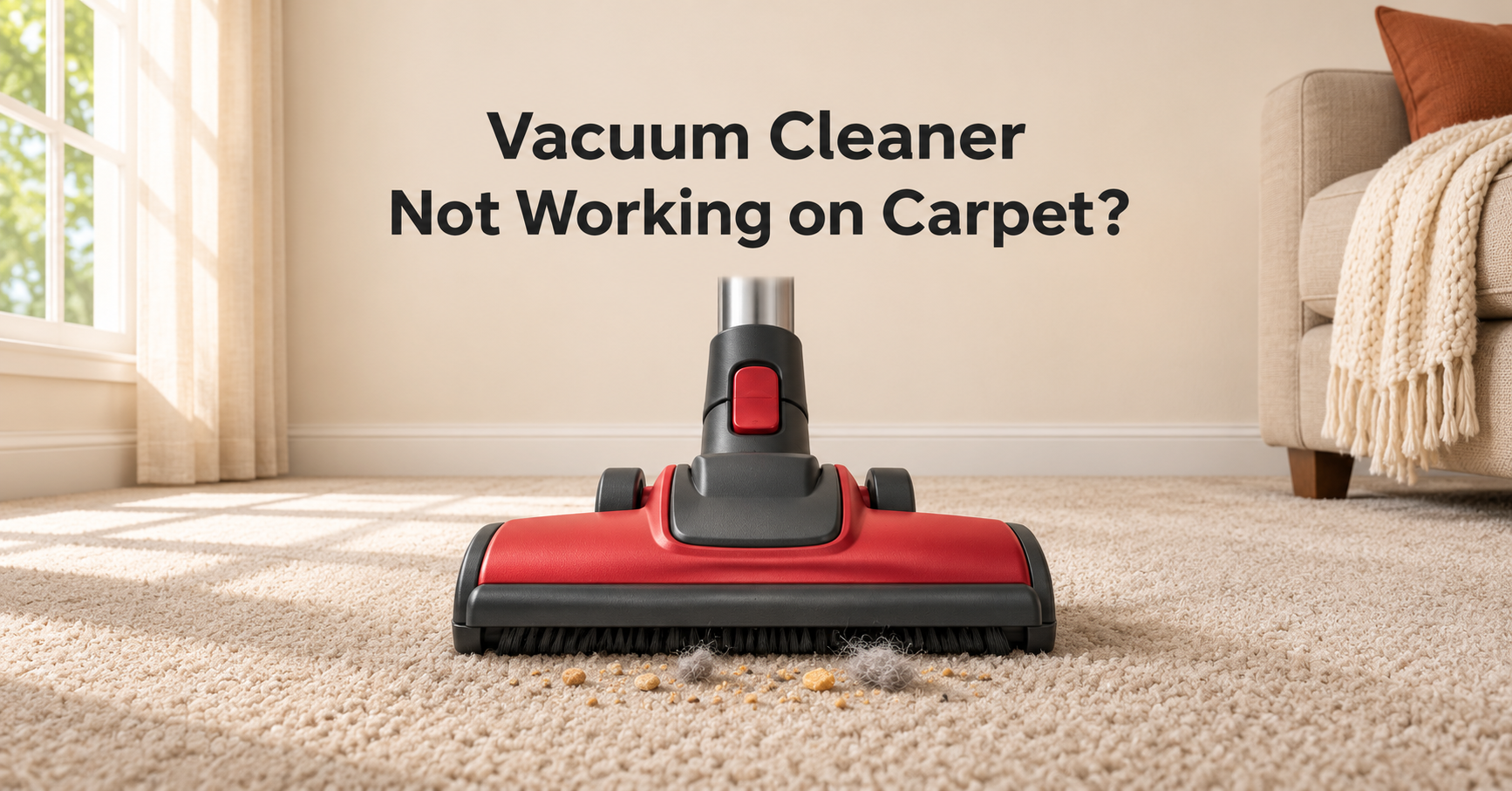
You plug in your vacuum, push it across the living room carpet, and nothing happens. The dust stays, the pet hair stays, and the carpet looks exactly the same as before. It is frustrating, especially when the same machine works perfectly well on hard floors.
The good news is that a vacuum cleaner that is not working on carpet is usually suffering from a small, fixable problem. In most homes the cause is a full dust bin, a clogged filter, a tangled brush roll, a worn belt, or simply the wrong height setting. You rarely need a new machine, and you often do not need a repair shop.
In this guide you will learn why vacuums struggle on carpet, how to find the exact problem in a few minutes, and how to fix it step by step. You will also get a maintenance routine, a repair-or-replace rule of thumb, and a buying checklist in case your vacuum really has reached the end of its life.
Quick answer: If your vacuum is not picking up on carpet, work through these checks in order: (1) power and battery, (2) height setting, (3) full bin or bag, (4) dirty filters, (5) blocked hose or nozzle, (6) tangled brush roll, (7) worn belt, (8) air leaks, and (9) overheated motor. One of these solves the problem in the vast majority of cases.
In this guide:
- Why vacuums struggle on carpet
- A quick symptom-and-cause table
- A visual troubleshooting path
- 9 step-by-step fixes
- Fixes for upright, canister, cordless and robot vacuums
- How carpet type changes your settings
- A maintenance schedule, repair-or-replace advice and a buying checklist
- Frequently asked questions
Why Is My Vacuum Not Working on Carpet?
Carpet is much harder to clean than a smooth floor. Dust, crumbs, sand and pet hair do not sit on top of carpet fibers. They sink deep between them. To lift that dirt, a vacuum needs two things working together: strong, uninterrupted airflow and a brush roll that shakes the fibers loose.
On a hard floor, suction alone can pick up most debris, so a vacuum with a weak brush roll or slightly restricted airflow can still look fine. On carpet, any weakness in the system shows up right away. That is why many people notice the problem only when they move from the kitchen to the bedroom.
Quick Diagnosis: Symptoms, Likely Causes and Fixes
Before you start taking things apart, match what you see and hear to the most likely cause. This table saves a lot of time.
| What you notice | Most likely cause | First thing to try |
|---|---|---|
| No power at all | Dead outlet, damaged cord, flat battery, tripped safety switch | Test another outlet or fully charge the battery |
| Weak suction everywhere | Full bin, clogged filter, blocked hose | Empty the bin and clean the filter |
| Suction is fine but carpet stays dirty | Brush roll not spinning or height set too high | Check the brush roll and height setting |
| Burning rubber smell | Slipping, stretched or snapped belt | Unplug and inspect the belt |
| Hard to push, brush roll stops | Height set too low or hair wrapped around the roll | Raise the height and cut away tangles |
| Vacuum shuts off after a few minutes | Overheating from a blockage or dirty filter | Let it cool, then clear blockages |
| Whistling or high-pitched noise | Air leak or partial blockage | Check hose, seals and bin fit |
| Dust blowing back out | Full bag or bin, damaged filter | Replace the bag or filter |
Follow This Troubleshooting Path
If you prefer a visual approach, follow the chart below from top to bottom. Stop at the first “fix” box that applies to your vacuum, apply it, and test again on your carpet.
9 Fixes for a Vacuum That Is Not Working on Carpet
Always switch the vacuum off and unplug it (or remove the battery) before you inspect or clean any part. Moving parts and sudden start-ups are the most common cause of small injuries during DIY vacuum repairs.
1. Check the Power, Battery and Cord
It sounds obvious, but it is the quickest test. Plug the vacuum into a different outlet that you know works. Run your hand along the cord and look for cuts, kinks or exposed wires. If the cord is damaged, stop using the machine and have the cord replaced by a qualified technician.
For cordless vacuums, charge the battery fully and make sure the metal contacts on the battery and the vacuum are clean and dry. Many cordless models also drop to a low-power mode when the battery is nearly flat, which makes them feel weak on carpet even though they still run.
2. Adjust the Height Setting
Many upright and some canister vacuums have a height or carpet-pile adjustment. If the head sits too high, the bristles never touch the carpet fibers, so the vacuum only skims the surface. If it sits too low, the head seals against the carpet, the brush roll drags, the machine is hard to push and the motor can overheat.
A simple test: switch the vacuum on, lower it onto the carpet and push forward. It should glide with light resistance and you should see the carpet fibers being lifted. If it feels stuck, raise the setting by one step. If dirt is left behind, lower it by one step.
3. Empty the Dust Bin or Replace the Bag
A bin or bag that is almost full restricts airflow, and suction drops quickly. As a general rule, empty a bagless bin once the dust reaches the “max” line, and replace a bag when it is about two-thirds full. When you empty the bin, tap out any fine dust that clings to the inside walls and the cyclone parts, then refit the bin firmly. A bin that is not fully clicked into place can leak air.
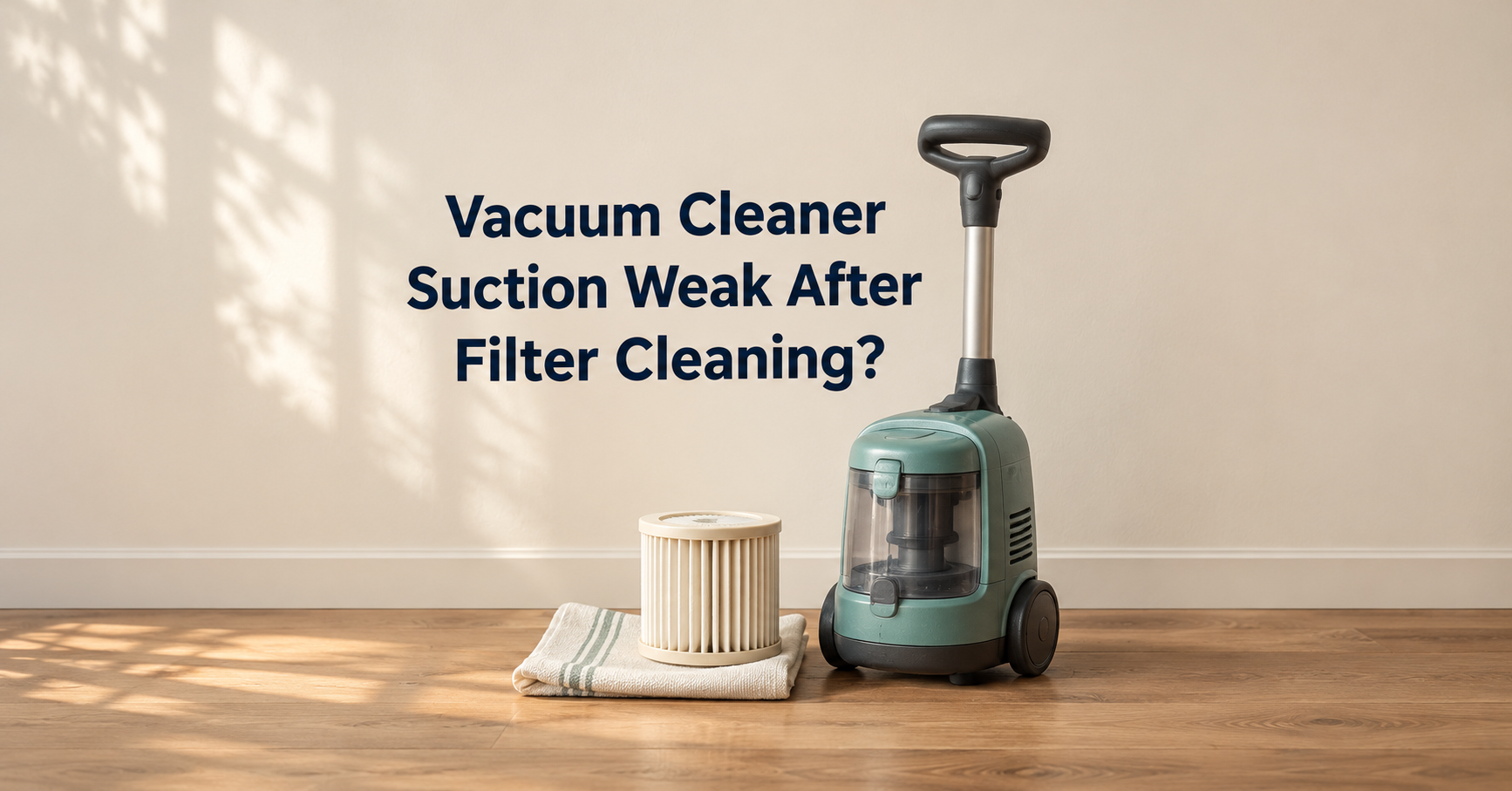
4. Clean or Replace the Filters
Filters trap fine dust before it reaches the motor. When they clog, air cannot pass through, and suction falls sharply. This is one of the most common reasons for weak performance on carpet.
- Foam and felt filters are often washable. Rinse them under cool running water, squeeze gently, and let them air-dry for at least 24 hours before refitting.
- Paper and pleated filters can usually be tapped clean, but should be replaced when they look grey or stay dirty.
- HEPA filters are normally not washable unless the manual clearly says so. Replace them as the manufacturer recommends, often every 6 to 12 months.
Important: Never put a damp filter back into the vacuum. Moisture can damage the motor and cause a musty smell.
5. Clear Blockages in the Hose, Wand and Nozzle
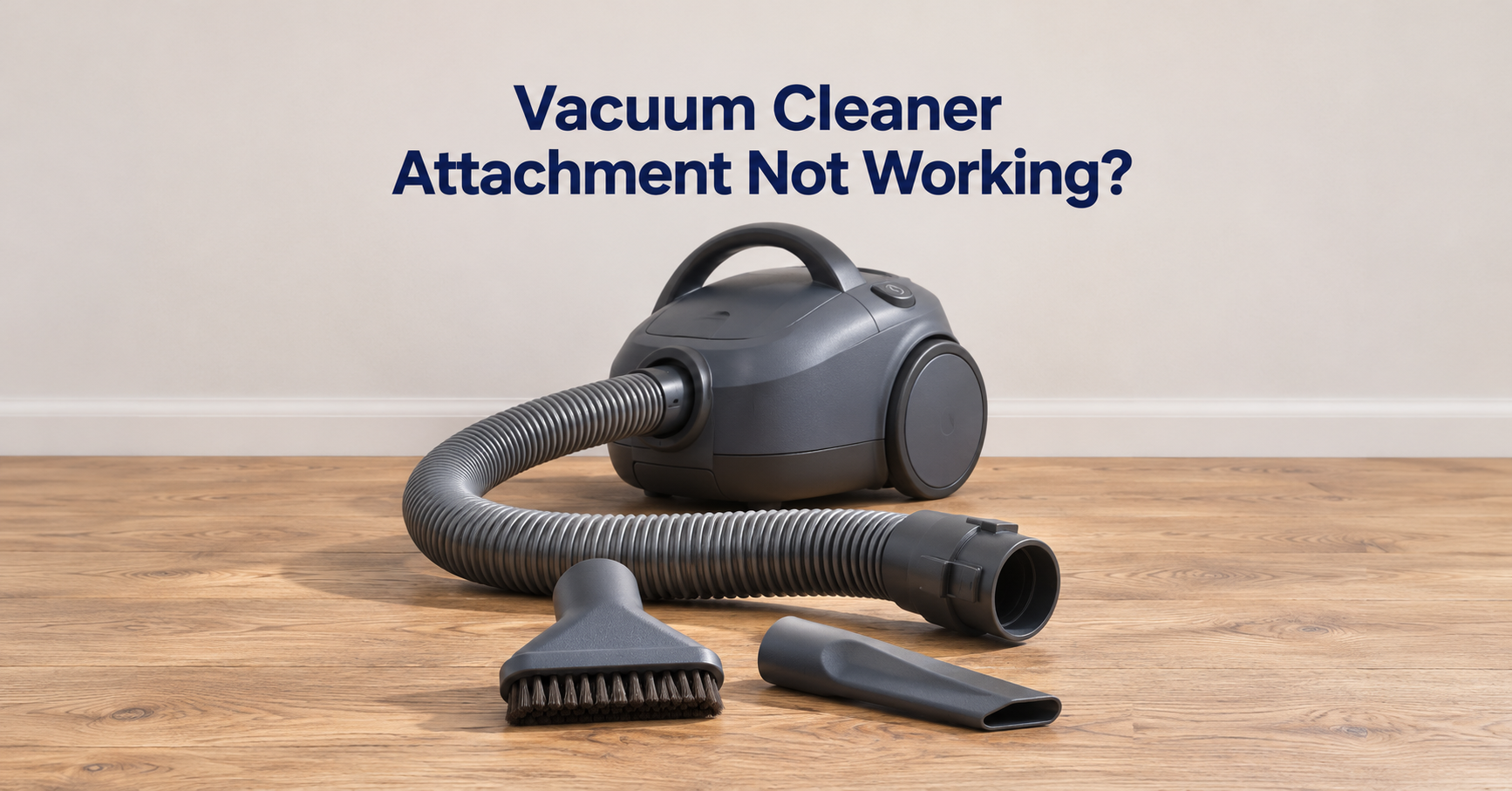
Blockages often hide where you cannot see them. Detach the hose and wand, hold them up to a bright light, and look through them. Gently push a broom handle or a long, blunt tool through the hose to dislodge stuck material such as socks, paper, bottle caps or compacted pet hair. Also check the opening of the nozzle and the passage where the hose connects to the vacuum body.
If you can feel a blockage but cannot reach it, try flushing the hose with a little air from the other end, or shake it while holding it vertically. Avoid sharp tools that can puncture the hose.
6. Untangle the Brush Roll
The brush roll is the spinning bar that agitates carpet fibers. Long hair, string, thread and pet fur wrap around it, restricting rotation until it stops. A stalled brush roll means the vacuum can only rely on suction, and suction alone is not enough for carpet.
- Unplug the vacuum and turn it over.
- Open the brush roll cover (many have a coin-slot screw or a simple clip).
- Lift the roll out and cut away tangles with scissors or a seam ripper, working along the length of the roll.
- Check the end caps and bearings for trapped hair and make sure the roll spins freely by hand.
- Look at the bristles. If they are worn flat, the roll needs replacing.
7. Replace a Worn or Broken Belt
On many upright vacuums, a rubber belt connects the motor to the brush roll. Belts stretch, crack and eventually snap, usually after 6 to 12 months of regular use, sooner in homes with heavy pet hair. Signs of a bad belt include a burning rubber smell, a brush roll that does not turn at all, or a brush roll that spins slowly or only now and then.
Replacing a belt is usually a five-minute job. Check the model number on the vacuum, buy the exact matching belt, loop it around the motor shaft and the brush roll, and refit the cover. A new belt often restores full carpet cleaning power.
8. Check for Air Leaks and Loose Parts
Suction depends on a sealed airway. A cracked hose, a loose wand connection, a worn rubber gasket or a bin that does not seat properly allows air to escape before it reaches the nozzle. A tell-tale sign is a whistling or hissing sound. Examine the hose for splits (especially near the ends where it bends), press all connections firmly together, and look for missing seals around the filter housing and bin.
You can also run your hand over the hose while the vacuum is on. If you feel air escaping, the hose has a hole. Wrapping it with strong tape can work as a short-term repair, but a replacement hose is better.
9. Let an Overheated Motor Cool Down
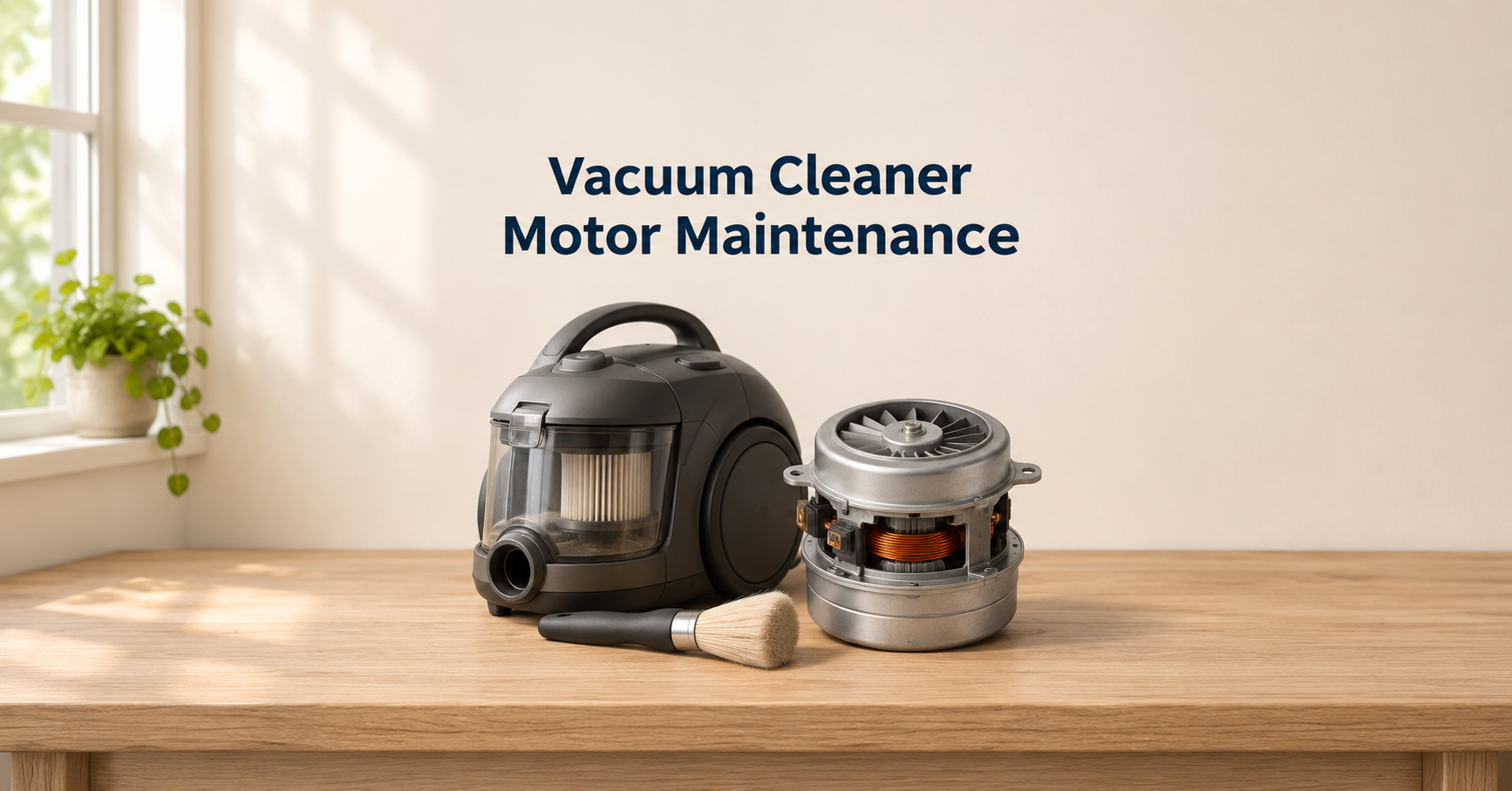
Most vacuums have a thermal cut-off that turns the motor off when it gets too hot. This usually happens because of a blocked filter, a full bin or a clogged hose. If your vacuum switches itself off after a few minutes, unplug it, clear every blockage described above, and let it cool for 30 to 60 minutes before trying again. If it keeps overheating after a thorough clean, the motor or fan may be worn and the vacuum should be serviced.
Vacuum Not Working on Carpet: Fixes by Vacuum Type
Upright Vacuums
Uprights depend heavily on the brush roll and belt. Focus on the belt, brush roll, height setting and filters. Also check the foot and hose switch: some models send suction to the hose by default if the lever is slightly out of place, leaving the floor head with no airflow.
Canister Vacuums
Canister models use a separate power head. If the power head is not spinning, check the electrical connection between the wand and the head, clean the brush roll, and test the power head on its own if the manufacturer allows it. Also check the hose, which is a common place for blockages.
Cordless Stick Vacuums
Weak carpet performance on a cordless stick is often a battery or mode issue. Switch to the highest power mode, fully charge the battery, and clean the filter and cyclone. A battery that no longer holds a charge after a few years may simply need replacing. Make sure the motorized head is the right attachment for carpet, not a soft-roller head meant for hard floors.
Robot Vacuums
If a robot vacuum struggles on carpet, remove tangled hair from the main brush and side brushes, empty the dustbin and clean the filter, and wipe the sensors and wheels. Very thick or shaggy rugs, fringe and rug tassels can confuse robots, so tuck tassels under the rug or limit those areas using the app. If your model has a carpet-boost or max-suction mode, enable it. Always confirm the battery is charged.
Does Carpet Type Matter?
Yes. A vacuum that handles a low, dense carpet well may struggle on a deep, plush or shag carpet. The taller the pile, the more resistance the head meets and the harder it is for suction to reach the base of the fibers.
Other carpet features can also make cleaning harder. Looped carpets (such as Berber) can snag on a brush roll with stiff bristles, which may pull fibers loose. Very long shag strands can wrap around the roll and stall it. Heavy furniture dents and trapped pet hair demand more passes. If you have mixed flooring, look for a vacuum with an easy-to-use height adjustment and an option to switch off or slow the brush roll.
Technique: How to Vacuum Carpet So It Actually Gets Clean
Even a perfectly working vacuum needs the right technique to clean carpet deeply:
- Go slowly. Rushing leaves dirt behind. Slow, steady passes give the brush roll and suction time to lift debris.
- Overlap each pass. Overlapping by about one third prevents striped, missed areas.
- Make more than one pass in high-traffic areas. Hallways, doorways and living rooms collect the most grit.
- Vacuum in two directions. Going up-and-down then side-to-side lifts fibers from different angles.
- Pick up large debris first. Coins, paper clips, socks and toys can jam the nozzle or brush roll.
- Do not overload the vacuum. A pile of dry leaves, sand or ash needs special handling. Never vacuum ash or anything that might be hot.
Maintenance Schedule to Keep Your Vacuum Strong on Carpet
Most carpet problems come back unless you add a few habits. This schedule takes only a few minutes each time and can add years to the life of your vacuum.
| How often | What to do |
|---|---|
| After every use | Empty the bin (or check the bag) and wipe away dust from the nozzle opening |
| Weekly | Check the brush roll for hair and thread, and remove tangles |
| Monthly | Clean or tap out the filters, and look through the hose for blockages |
| Every 3 to 6 months | Wash washable filters, check belt condition and inspect the hose and seals for cracks |
| Every 6 to 12 months | Replace HEPA filters and belts if they show wear, and replace the brush roll if bristles are worn flat |
These intervals are general guidelines. If you have pets, long hair at home, children or a dusty environment, do these jobs more often. Always follow the maintenance advice in your owner’s manual.
Should You Repair or Replace Your Vacuum?
If you have gone through every fix and the vacuum still does not work well on carpet, it is time to weigh repair against replacement.
- Repair it when the problem is a belt, filter, hose, brush roll or battery. These parts are inexpensive compared with a new vacuum.
- Repair it if the vacuum is relatively new, still under warranty or a high-quality model with parts available.
- Replace it if the motor has failed, the housing is cracked, or the repair cost is more than about half the price of a comparable new vacuum.
- Replace it if the vacuum is more than 8 to 10 years old, parts are no longer sold, and performance has dropped across the board.
What to Look for in a Vacuum That Works Well on Carpet
If you decide to buy a new vacuum, focus on features that matter on carpet rather than only on price or looks.
- Adjustable height or auto-adjusting head: helps the head adapt to different pile heights.
- Motorized brush roll with on/off control: lets you protect delicate rugs and hard floors.
- Anti-tangle brush design: reduces hair wrap, which is important for pet owners and long-haired households.
- Strong, consistent suction: look for a machine that keeps its power as the bin fills, rather than fading quickly.
- Sealed system with a quality filter: prevents fine dust from escaping back into the air.
- Easy access to filters, belts and brush rolls: maintenance is simpler and cheaper when you can reach these parts without tools.
- Available spare parts: a vacuum with replaceable belts, filters and batteries lasts far longer.
- Weight and maneuverability: a vacuum that is easy to push is more likely to be used properly.
- Battery life and run time (cordless models): check that it can clean your whole carpeted area on the setting you will actually use.
- Reasonable warranty: protects you against early motor or battery problems.
Common Mistakes That Make Vacuums Perform Badly on Carpet
- Waiting until the bin is completely full before emptying it.
- Washing a filter that is not designed to be washed, or refitting it before it is completely dry.
- Leaving the height setting on a hard-floor mode while vacuuming carpet.
- Ignoring a burning smell, which usually warns of a slipping belt or an overheating motor.
- Using cheap, ill-fitting replacement belts and filters.
- Vacuuming wet carpet with a dry vacuum, which can damage the motor and create a safety hazard.
- Pulling the vacuum by the cord or hose, which weakens connections over time.
Frequently Asked Questions
Why does my vacuum work on hard floors but not on carpet?
Hard floors only need suction to pick up loose debris. Carpet also needs a spinning brush roll and the correct height setting to lift dirt out of the fibers. A worn belt, a tangled brush roll, a wrong height setting or slightly restricted airflow often goes unnoticed on hard floors but becomes obvious on carpet.
Why does my vacuum lose suction after a few minutes?
This usually happens because of a clogged filter, a full bin or a blockage in the hose. The restricted airflow can also cause the motor to overheat and the thermal cut-off to switch it off. Clean the filter, empty the bin, clear the hose and let the vacuum cool down.
Why is my vacuum pushing dirt around instead of picking it up?
The brush roll may not be spinning, the height may be set too high, or the nozzle may be blocked. Check the belt, brush roll and height setting first.
How often should I replace the belt on my vacuum?
A belt typically lasts 6 to 12 months with regular use. Replace it right away if it is stretched, cracked or snapped, or if you smell burning rubber.
Can a dirty filter really stop a vacuum from working on carpet?
Yes. A clogged filter blocks airflow, so suction collapses and the vacuum cannot lift dirt from deep in the carpet. Cleaning or replacing the filter is one of the easiest and most effective fixes.
Why is my robot vacuum not cleaning carpet well?
Tangled brushes, a full dustbin, a dirty filter, a low battery or thick, shaggy rugs are the most common causes. Clean the brushes and sensors, empty the bin, enable carpet-boost mode if your model has one, and keep rug tassels tucked away.
Is it safe to use my vacuum if it smells like burning?
No. Switch it off and unplug it immediately. A burning smell can mean a slipping belt, a jammed brush roll or an overheating motor. Find and fix the cause before using it again, and have it checked by a technician if the smell continues.
Final Thoughts
A vacuum cleaner that is not working on carpet is annoying, but it is rarely a lost cause. Start with the simple checks: power, height setting, bin and filters. Then move on to hoses, the brush roll and the belt. Most problems are solved in minutes with a pair of scissors, a bit of water and a cheap spare part.
Build the maintenance routine into your weekly cleaning, match your height setting to your carpet, and your vacuum will stay strong for years. And if the machine really is worn out, use the buying checklist above so your next vacuum is built to handle carpet from day one.