







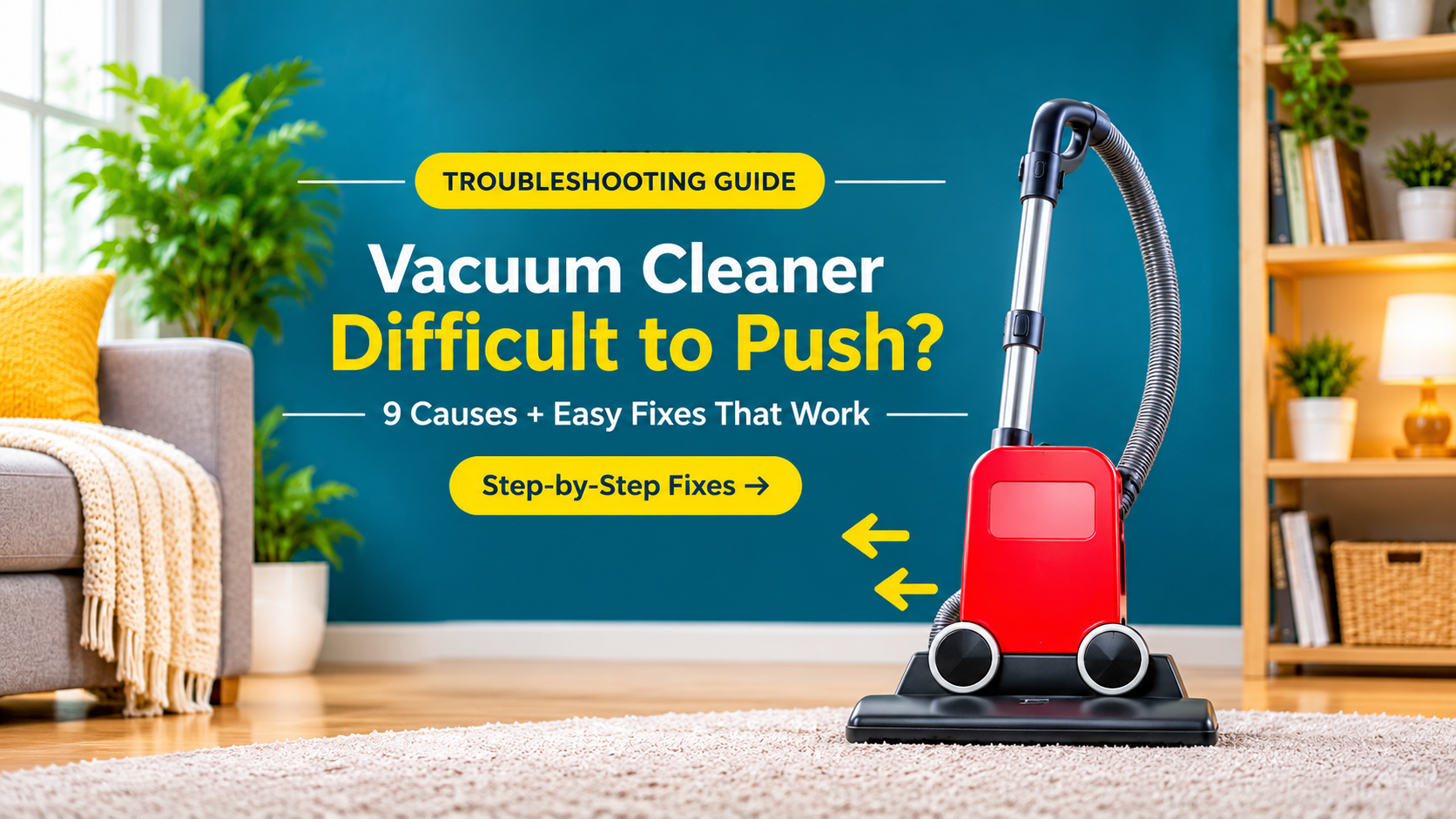
You switch on the vacuum, start cleaning, and suddenly it feels like you are dragging a heavy sled across the floor. Your wrist aches, the head sticks to the carpet, and a ten-minute job turns into a workout. If your vacuum cleaner is difficult to push, you are not alone, and in most cases the problem is simple and cheap to fix.
In this guide you will learn exactly why a vacuum becomes hard to push, how to diagnose the cause in minutes, the step-by-step fixes, and what to look for if it is time to buy a new, easier-gliding model.
Why Does a Vacuum Become Hard to Push?
A vacuum glides when airflow, wheels and brush roll are all working in balance. Suction pulls the head toward the floor, so if air cannot flow freely, the head clamps down like a suction cup. Add a jammed roller or sticky wheels, and pushing becomes a struggle. Understanding the main causes helps you fix the right part first.
1. Tangled Brush Roll
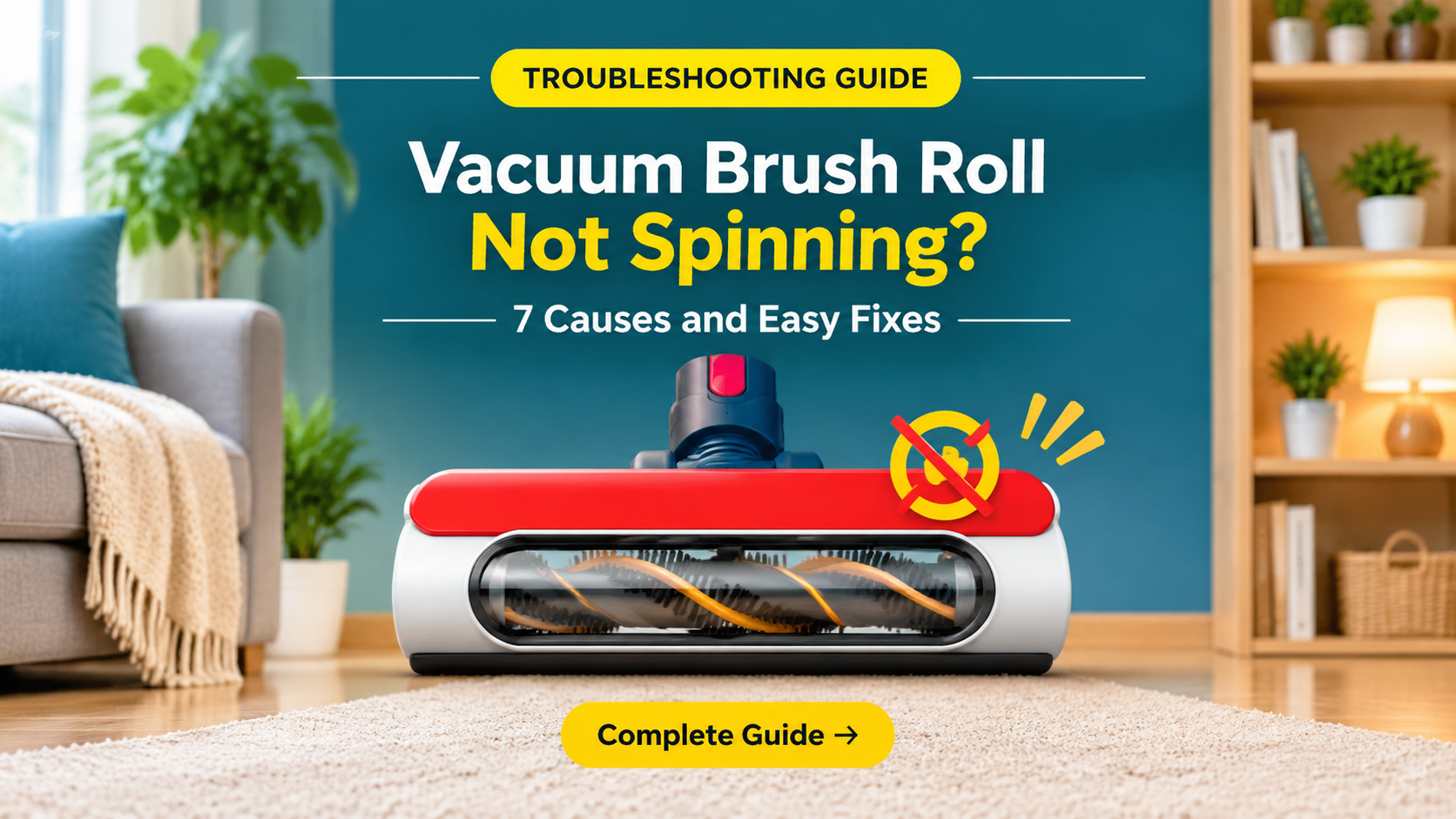
Hair, string, carpet fibers and pet fur wrap around the brush roll and slow it down. A stiff roller drags on the carpet instead of spinning freely, which makes the whole machine harder to move. It also leaves your floor dirtier.
Fix: Unplug the vacuum, flip it over, and cut the tangles with scissors. Pull out all the hair, check the end caps for trapped debris, and spin the roller by hand. It should turn smoothly.
2. Full Dust Bin or Clogged Bag
When the bin is overfilled or the bag is packed tight, air cannot travel through the machine. Suction drops, but the head can still stick to the floor because of uneven airflow. Empty the bin when it reaches the MAX line and replace bags when they are about two-thirds full.
3. Dirty or Clogged Filters
Filters trap fine dust. Over time they clog and choke the airflow. A clogged filter is one of the biggest hidden reasons for weak performance and a sticky, heavy feel.
Fix: Remove the filter and tap it over a trash can. If the manual says it is washable, rinse it with cold water and let it dry completely for 24 hours before putting it back. Never use a damp filter. Replace non-washable filters every 6 to 12 months.
4. Wrong Height Setting for Your Floor
Most vacuums have a height or floor-type adjustment. If the head is set too low on thick carpet, it presses into the pile and grips the floor tightly.
- Hard floors and tiles: lowest setting or hard-floor mode, brush roll off if possible.
- Low-pile carpet and rugs: low to medium setting.
- Thick or shag carpet: highest setting.
5. Blocked Hose, Wand or Airway
If something is stuck in the hose or wand, suction pressure builds up in the wrong places. Check by removing the hose and looking through it toward a light. To clear it, push a broom handle gently through it or flush it with water (letting it dry fully afterwards). Check the opening at the base of the head too, since small socks and paper often hide there.
6. Worn, Dirty or Damaged Wheels
Wheels collect hair and grit around their axles. This adds friction and makes the vacuum feel stiff. Cracked or flat-spotted wheels also create resistance. Clean the axles with scissors and a cloth, add a tiny drop of silicone lubricant if the manual allows it, and replace wheels that are visibly worn.
7. Broken or Stretched Belt
On upright models, a worn belt can slip, jam or snap, making the brush roll lock up or spin unevenly. If you smell burning rubber or the roller will not spin, replace the belt. It is a quick, inexpensive repair.
8. Suction Power Too High
Strong suction is great for deep cleaning, but on rugs and low carpets it can lock the head to the floor. Many modern models have an adjustable suction control. Reduce the power for rugs, curtains and delicate surfaces to glide more easily.
9. The Vacuum Is Heavy or Poorly Balanced
Sometimes the machine itself is the problem. Older upright vacuums can weigh 15 pounds or more, and a poor handle position makes them tiring to push. If you have cleaned everything and it still feels hard, an easier model may be the best long-term solution.
Step-by-Step Troubleshooting Checklist
- Unplug the vacuum or remove the battery.
- Empty the dust bin or replace the bag.
- Clean or replace the filters.
- Inspect and cut away hair from the brush roll.
- Check the hose, wand and head opening for clogs.
- Inspect the wheels and clean the axles.
- Check the belt on upright models.
- Adjust the height setting and suction level for your floor.
- Test the vacuum on a hard floor, then on carpet.
How to Keep Your Vacuum Easy to Push
Regular care prevents most problems before they start. Follow this simple routine.
| Problem | Quick Fix | Time Needed |
|---|---|---|
| Tangled brush roll | Cut and remove hair | 5 minutes |
| Clogged filter | Tap, wash or replace | 10 minutes + drying |
| Wrong height | Raise the height setting | 10 seconds |
| Blocked hose | Clear with a broom handle | 10 minutes |
| Worn belt or wheels | Replace the part | 15 to 30 minutes |
When Should You Replace Your Vacuum?
If your vacuum is more than 8 to 10 years old, the motor is weak, or repairs cost more than half the price of a new one, replacement makes sense. Constant burning smells, cracked housing and loud grinding noises are other warning signs.
What to Look For in a Vacuum That Is Easy to Push
- Lightweight design: Aim for under 10 pounds for upright and under 6 pounds for stick vacuums.
- Swivel steering: Lets the head turn easily around furniture.
- Adjustable suction and height: Prevents the head from sticking to rugs.
- Self-adjusting brush head: Automatically adapts to the floor type.
- Anti-tangle brush roll: Reduces hair wrap and cleaning time.
- Large, smooth wheels: Rubberized wheels glide better on all surfaces.
- Cordless freedom: No cable dragging behind you, which makes pushing feel lighter.
- Good balance: Motor weight placed near the handle reduces wrist strain.
Cordless stick vacuums and robot vacuums are popular choices for people who want effortless cleaning. For thick carpet, look for a quality upright with a height adjustment dial and a powered brush roll.
Frequently Asked Questions
Why is my vacuum cleaner hard to push on carpet?
Usually the head is set too low, the brush roll is tangled, or the airflow is blocked, so suction clamps the head to the carpet. Raise the height setting and clean the roller and filters.
Why does my vacuum stick to the floor?
This is caused by very strong suction combined with restricted airflow. Reduce the suction, clear clogs, and make sure the bin is not full.
Can a dirty filter make a vacuum hard to push?
Yes. A clogged filter disrupts airflow and can make the head grip the floor while also lowering cleaning power.
How often should I clean the brush roll?
Check it weekly if you have pets or long hair, and at least once a month otherwise.
Is it better to buy a new vacuum or repair the old one?
Repair simple issues such as belts, filters and wheels. Buy a new vacuum if the motor is failing or the machine is old and heavy.
Final Thoughts
A vacuum that is hard to push is frustrating, but it rarely means the machine is dead. Start with the basics: empty the bin, clean the filters, remove hair from the brush roll, check the hose, and set the correct floor height. With a little regular care your vacuum will glide again and clean better too. If it still feels heavy after these fixes, choose a lighter, well-balanced model with adjustable suction and swivel steering to make cleaning a pleasure instead of a chore.