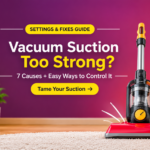



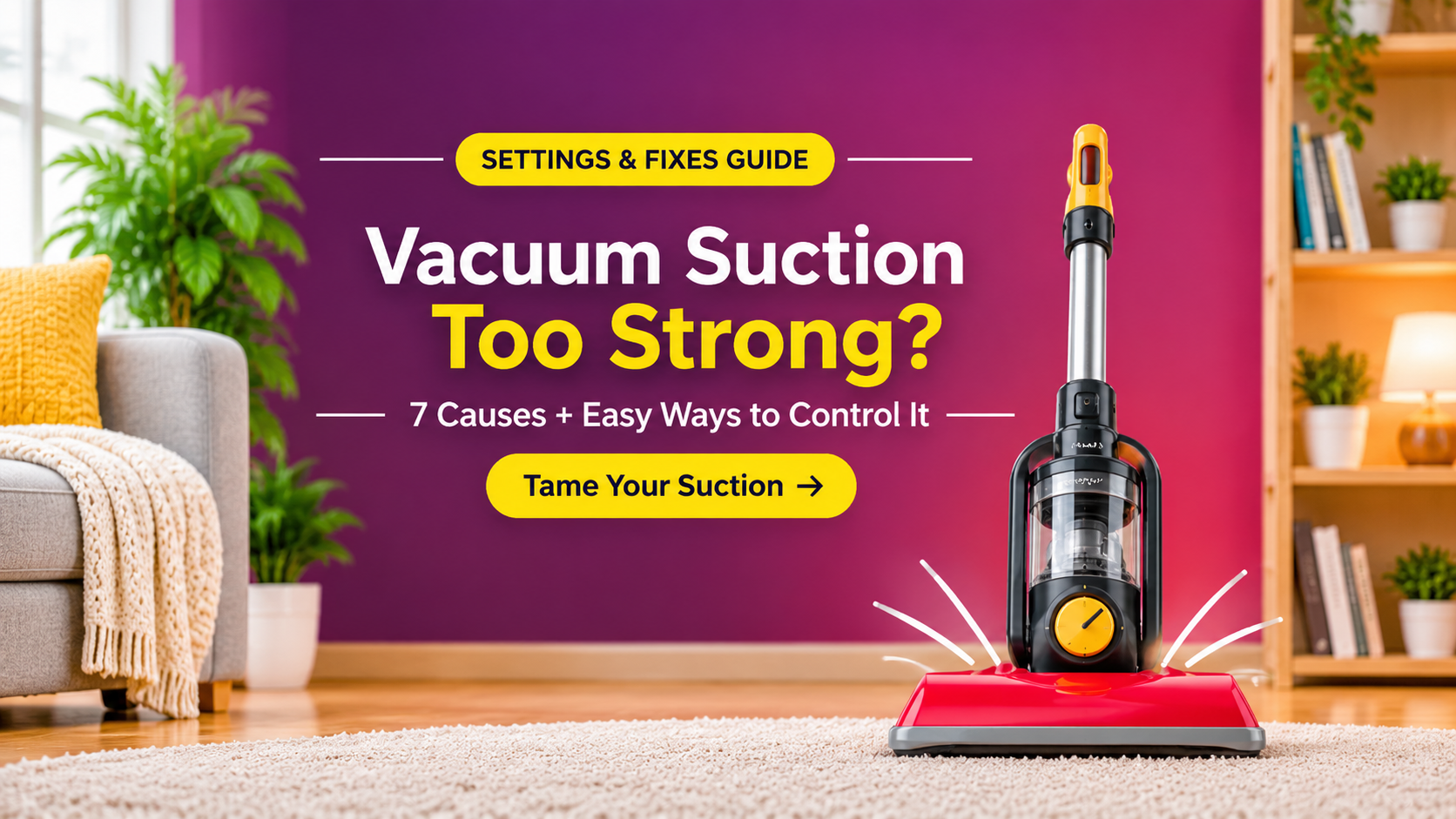
Strong suction sounds like a perfect feature, until your vacuum grabs the rug, sucks up a curtain, or sticks to the carpet so firmly that you can barely move it. If your vacuum cleaner suction is too strong, you are not imagining things, and you are not alone. Powerful modern motors are great for deep cleaning, but they can be uncomfortable and even damaging on the wrong surface.
This guide explains why suction can feel too strong, how to tell real excess power from a hidden airflow problem, and the safe ways to reduce suction on any vacuum. You will also learn what features to look for if you want a vacuum with better control.
Is Too Much Suction Really a Problem?
Yes, in several ways. Excessive suction can:
- Make the vacuum hard to push on carpet and rugs.
- Pull up and tangle loose rugs, curtains and fabric.
- Suck up small items such as coins, earrings, LEGO bricks and buttons.
- Wear down delicate fibers, wool and thin upholstery over time.
- Drain the battery faster on cordless models.
- Create more noise and tire your arms and wrists.
7 Reasons Your Vacuum Suction Feels Too Strong
1. The Vacuum Is on Max Power
Many vacuums have Eco, Auto, Normal and Max modes. Max is designed for deep carpet and heavy messes, yet many people leave it on all the time. It is not needed for hard floors or light dust.
Fix: Use the lowest mode that still picks up the dirt. Switch to Max only for short bursts.
2. The Floor Head Is Set Too Low
A low head setting presses the nozzle close to the surface, which seals the airflow and makes suction feel much stronger. The result is a vacuum that clamps down and grips the carpet.
Fix: Raise the floor height dial one level at a time until the vacuum moves smoothly.
3. You Are Using the Wrong Attachment
Small, narrow nozzles concentrate the full power of the motor into a tiny opening. On fabric, curtains or upholstery this feels extremely strong.
Fix: Use an upholstery tool or a soft dusting brush for delicate fabrics. A wide, flat tool spreads suction over a bigger area.
4. It Has a Powerful Motor
High-wattage vacuums and strong cordless stick models are built to pull dirt from deep carpet fibers. On light rugs and hard floors they can feel too aggressive, especially if the model has no power adjustment.
Fix: Use the lowest power or a hard-floor mode. If your vacuum has only one power level, use an attachment with an airflow vent, or consider a model with adjustable suction.
5. A Clog Is Creating the Feeling of Stronger Suction
This is the hidden cause many people miss. When the hose, wand or head is blocked, the vacuum may stick to the floor and feel like it has stronger suction, even though real cleaning power has dropped. You may also hear the motor change pitch.
Fix: Unplug the vacuum, empty the bin, check the filters, and clear the hose, wand and brush head. If suction feels normal afterwards, the clog was the problem.
6. The Airflow (Bleed) Valve Is Closed
Some vacuums have a small slide on the handle or hose that lets extra air in and lowers the pull. If it is closed, you get full suction at the nozzle.
Fix: Slide it open to reduce suction on curtains, cushions and rugs. Close it again for deep cleaning.
7. Brand-New Filters and an Empty Bin
A vacuum has its strongest suction when the filters are clean and the bin is empty. If you recently replaced the filter or cleaned the machine, it may seem stronger than before. That is normal.
Which Suction Level Should You Use?
4 Safe Ways to Reduce Vacuum Suction
- Lower the power setting. Use Eco, Low or Auto mode when available.
- Open the airflow valve. This reduces pull at the nozzle and protects delicate fabrics.
- Adjust the floor head height. A higher setting reduces grip on carpets and rugs.
- Change the attachment. A soft brush or wide upholstery tool spreads suction and protects surfaces.
Tips for Vacuuming Delicate and Small Items
- Curtains and lampshades: Use low power and a soft brush. Hold the tool slightly above the fabric.
- Loose rugs: Use a hard-floor or low setting, or turn the brush roll off. Secure the rug with a non-slip pad.
- Small objects on the floor: Pick up coins, jewelry and toys before you start.
- Silk, wool and antique fabrics: Use the lowest setting and test a hidden spot first, or follow the care label.
- Hair and pet fur on sofas: Use a pet or upholstery tool on a medium setting.
Avoid drilling holes or taping over parts of your vacuum to cut suction. This can overheat the motor and may void your warranty. Use the controls the manufacturer provides.
Quick Troubleshooting Table
| Problem | Likely Cause | Solution |
|---|---|---|
| Sticks to the carpet | Head too low or clog | Raise height, clear clog |
| Pulls curtains or rugs | Max power, narrow nozzle | Low power, soft brush |
| Sucks up small items | High power, no pre-check | Pick up items first |
| Hard to push | Suction clamping the head | Lower suction, adjust height |
| Suddenly stronger, noisy motor | Blocked airflow | Check bin, filter, hose |
What to Look For in a Vacuum With Adjustable Suction
- Multiple power modes: At least Eco, Normal and Max so you can match each surface.
- Airflow control slider: Lets you cut suction instantly for curtains and upholstery.
- Adjustable floor head height: Keeps the head gliding rather than gripping.
- Brush roll on/off switch: Essential for hard floors and delicate rugs.
- Soft roller or hard-floor head: Protects wood and laminate while still picking up dust.
- Good attachment set: Soft dusting brush, upholstery tool and crevice tool.
- Lightweight, balanced body: Lowers wrist strain, especially on cordless models.
- Smart or auto-sensing modes: Some models adjust suction automatically to the floor type.
For mixed homes with carpet, hard floors and rugs, a cordless stick or upright vacuum with several power modes and a brush roll switch offers the most control. For apartments with mostly hard floors, a lightweight vacuum with a soft roller head is often the better fit.
Frequently Asked Questions
Can a vacuum have too much suction?
Yes. Too much suction can make the vacuum hard to push, pull up loose rugs and damage delicate fabrics. The best vacuum is one that lets you control suction.
How do I reduce the suction on my vacuum?
Lower the power mode, open the airflow valve, raise the floor head height and use a soft brush attachment.
Why is my vacuum suddenly sticking to the floor?
This often points to a clog in the hose, head or filter that traps air pressure. Clean those parts first.
Does strong suction damage carpet?
Not usually, but strong suction combined with a fast-spinning brush roll can fray some carpets and pull fibers on delicate rugs. Use a gentler setting or turn off the brush roll when needed.
Is stronger suction always better?
No. Cleaning performance also depends on the brush design, airflow, filtration and floor head. Controlled suction usually gives better results than maximum suction everywhere.
Is it safe to block some airflow to reduce suction?
It is better not to. Blocking airflow can overheat the motor. Use the built-in power settings or airflow valve instead.
Final Thoughts
When vacuum suction is too strong, the fix is usually simple: choose the right power mode, adjust the height, open the airflow valve, and use the right attachment. If the sudden grip comes with a noisy motor, check for a clog first. And if you often struggle with a vacuum that has no way to adjust power, upgrading to a model with variable suction, a brush roll switch and a good set of tools will make cleaning easier, safer for your belongings, and far more comfortable.