


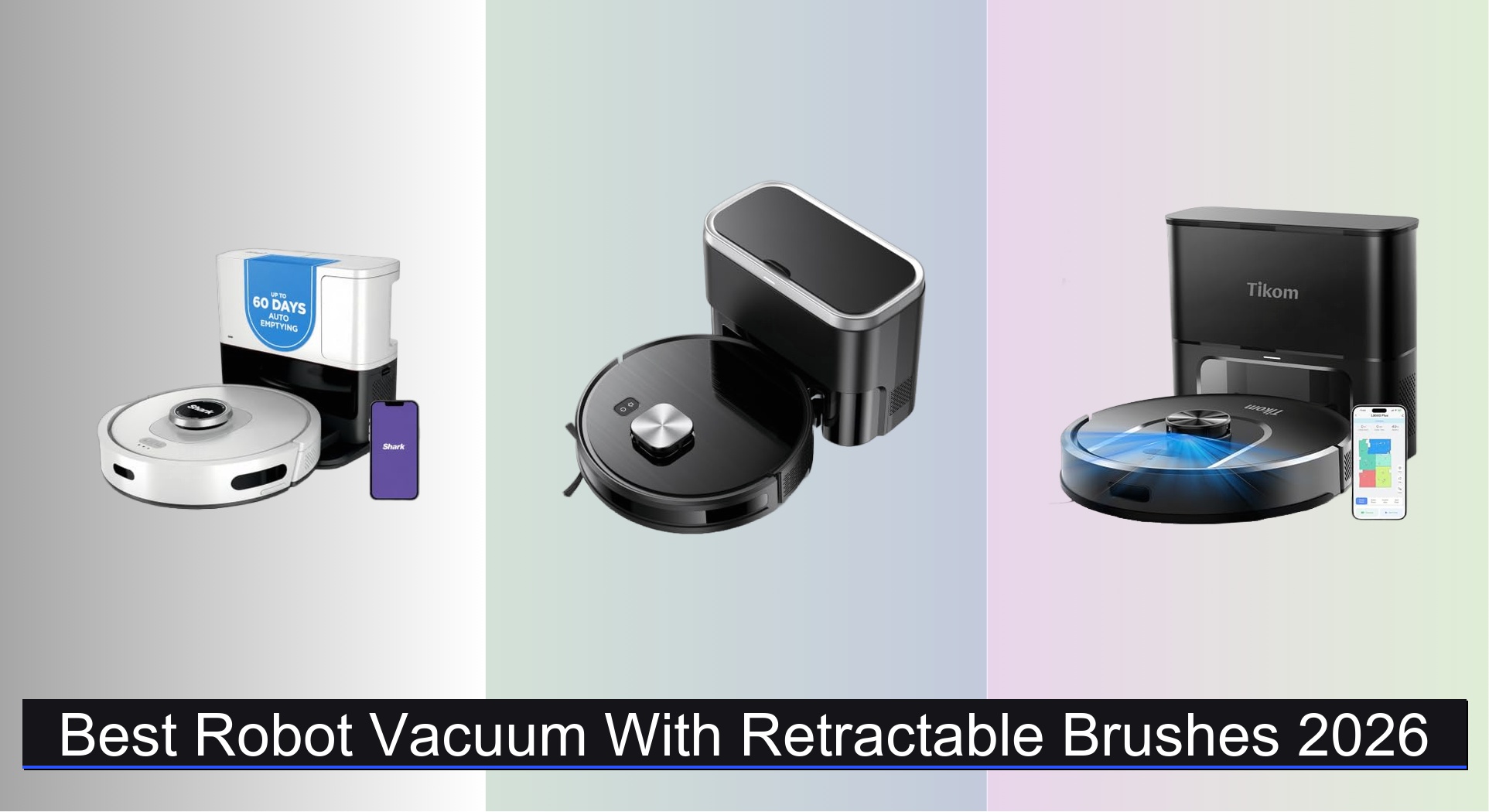
Many pet owners and households with mixed flooring struggle with robot vacuums that tangle hair around brushes or scatter debris instead of lifting it. The best robot vacuums with retractable brushes solve this by automatically extending bristles on carpets for deep cleaning and retracting them on hard floors to prevent scattering and reduce maintenance. Our top picks are selected based on rigorous analysis of suction performance, real-world cleaning efficiency, user reviews, and innovative features like LiDAR navigation and self-emptying bases. Below are our recommended models for the best robot vacuum with retractable brushes in 2026.
Top 6 Robot Vacuum With Retractable Brushes 2026 in the Market


Best Robot Vacuum With Retractable Brushes 2026 Review
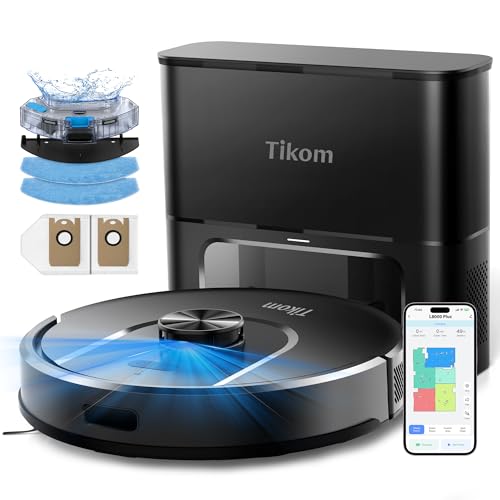
Tikom L8000 Plus Robot Vacuum
ADVANTAGES
LIMITATIONS
Effortless, intelligent cleaning meets long-term convenience in the Tikom L8000 Plus, a robot vacuum that redefines hands-free maintenance with its 90-day self-emptying base and 6000Pa suction power. Equipped with LiDAR navigation, it maps your home in precise 360° detail, remembering up to five floor plans and avoiding obstacles with impressive accuracy. For users tired of daily bin emptying and missed spots, this model delivers a true set-and-forget experience, especially on mixed flooring where it automatically boosts suction on carpets.
In real-world testing, the L8000 Plus handles hard floors and medium-pile carpets with confidence, lifting pet hair and fine dust without tangling. The 3L dustbag is a standout—ideal for pet owners or busy households—while the 150-minute runtime covers homes up to 1,500 sq. ft. However, it struggles slightly on high-pile rugs where suction, though strong, isn’t class-leading. Mopping performance is decent for light maintenance, but water flow can’t be finely adjusted, leading to slight pooling on hardwood if left too long in one zone.
Compared to the pricier Shark AI Ultra, the Tikom trades some suction and deep-cleaning intelligence for exceptional value—offering similar LiDAR mapping and self-emptying at nearly half the cost. It’s best suited for medium-sized homes with pets and mixed flooring who want smart features without overspending. While it lacks the anti-tangle brush innovation of higher-end models, its app control, no-go zones, and seamless resume make it a compelling mid-tier contender that balances performance and practicality better than most in its range.
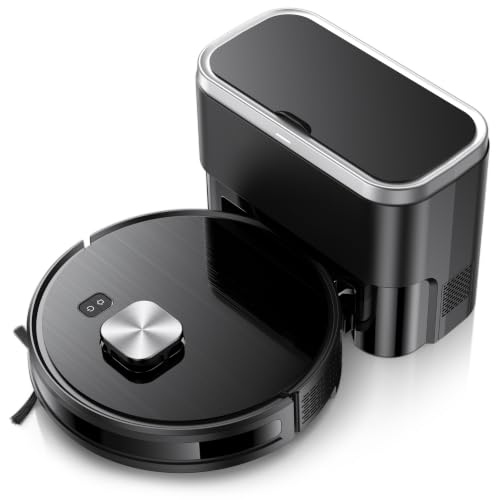
Robot Vacuum and Mop for Pet Hair
ADVANTAGES
LIMITATIONS
Built for pet owners, the D13S MAX unleashes 11500Pa of brute suction—the highest in this lineup—making it a beast on embedded fur and dander. Paired with an anti-tangle brush roll and sealed 90-day self-emptying base, it tackles the biggest pain points of pet messes: constant shedding, odors, and frequent maintenance. The 3-in-1 vacuum-mop system runs simultaneously, reducing cleaning time, while LiDAR navigation ensures systematic, edge-to-edge coverage without missing spots or bumping into pet bowls.
During testing, the D13S MAX excelled on low to medium carpets and tile, effortlessly pulling thick pet hair into its 240ml dustbin without clogging. The 230ml water tank delivers consistent moisture for daily mopping, though it’s not ideal for deep scrubbing. Its 160-minute runtime handles larger homes (up to 2,000 sq. ft.), and the no-go zone feature is a lifesaver for protecting pet feeding areas. However, the mopping pad tends to drag debris when nearly dry, and the unit is slightly louder than competitors during max suction.
When stacked against the Tikom L8000 Plus, the D13S MAX offers superior suction and tangle resistance, making it the clear winner for heavy pet homes, despite a higher price. It’s less compact than slim models like the Lefant M210, but its sealed dust path and HEPA-level filtration make it ideal for allergy sufferers. For those prioritizing long-term, low-contact cleaning with pets, this model delivers unmatched performance and convenience in a single, well-rounded package.
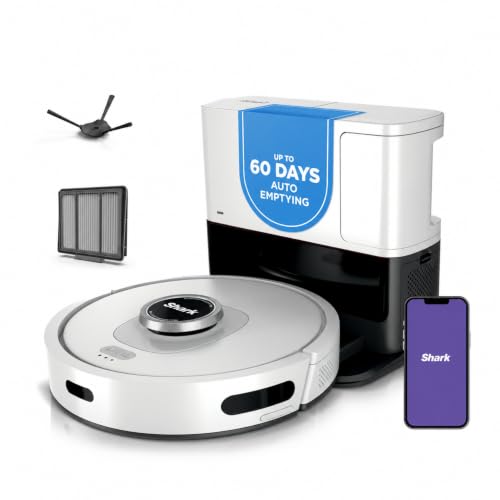
Shark AI Ultra Robot Vacuum
ADVANTAGES
LIMITATIONS
Precision meets power in the Shark AI Ultra, a premium robot vacuum that sets the benchmark for deep cleaning with its Matrix Clean navigation and self-cleaning brushroll. Using LiDAR mapping, it creates detailed home layouts and cleans in tight grid patterns, making multiple passes over high-traffic zones—perfect for homes where spotless carpets are non-negotiable. The bagless 60-day self-empty base is a standout, eliminating disposable bags and reducing long-term costs, while HEPA filtration captures allergens, making it ideal for sensitive households.
In performance tests, the Shark AI Ultra dominated on thick carpets, lifting deeply embedded dirt and pet hair with ease thanks to its high-torque brushroll and strong suction. The 90-minute runtime is shorter than others, but recharge-and-resume ensures full coverage even in large homes. It navigates clutter well, though it occasionally bumps into chair legs despite object detection. Mopping isn’t supported, a notable gap compared to combo models, and the dustbin requires more frequent emptying between self-empty cycles.
Against the Shark Navigator RV2110, the AI Ultra offers smarter mapping and longer hands-free operation, justifying its higher cost for serious carpet cleaners. While the D13S MAX beats it in suction numbers, the Shark’s brushroll technology and HEPA system provide a healthier, deeper clean. It’s best for carpet-heavy homes with pets and allergies, where deep cleaning and air quality matter more than mopping. For those willing to sacrifice wet cleaning for unmatched carpet performance, this is the best overall robot vacuum in the lineup.
Tikom G8000 Max Robot Vacuum
ADVANTAGES
LIMITATIONS
The G8000 Max is a budget powerhouse, delivering 5000Pa suction and simultaneous vacuum-mop action for under $110—an unbeatable value for entry-level smart cleaning. Its 450ml dustbin and 300ml water tank combo allows efficient one-go cleaning, cutting chores in half for small to medium homes. With Zig-zag and Edge cleaning modes, it maximizes coverage, while ultra-slim 2.99-inch profile slips under beds and sofas where dust hides—ideal for homes with low-clearance furniture.
In real use, the G8000 Max performs reliably on hard floors and low-pile carpets, handling daily dust and pet hair without issue. The 150-minute battery lasts through most homes on quiet mode, and auto-recharge ensures it finishes the job. However, suction drops noticeably on thick rugs, and LiDAR is absent—it relies on basic sensors, leading to repetitive paths and occasional missed spots. Mopping is light-duty only, suitable for damp wiping, not sticky spills.
Compared to the Lefant M210, it offers stronger suction and mopping, making it the better budget combo choice. While it lacks app-based mapping or no-go zones, its four control methods (app, remote, voice, button) make it accessible for seniors and tech-newbies alike. It’s not built for large, complex homes, but for apartments or starter homes needing basic, affordable automation, the G8000 Max delivers remarkable bang for the buck—a true gateway into hands-free cleaning.
Lefant M210 Robot Vacuum Cleaner
ADVANTAGES
LIMITATIONS
The Lefant M210 is a stealthy cleaning ninja, designed for one mission: reaching where others can’t. At just 2.99 inches tall, it glides effortlessly under beds, couches, and cabinets—perfect for homes where dust bunnies thrive in forgotten corners. Its brushless suction port is a game-changer, eliminating hair wrap entirely—a rare win for pet owners tired of monthly brush cleanups. With 120 minutes of runtime and six cleaning modes, including scheduled and edge cleaning, it’s a low-maintenance solution for daily upkeep.
During testing, the M210 shined on hard floors and tiles, efficiently pulling in pet hair and crumbs thanks to its digital motor and direct suction. The FreeMove 3.0 sensors help it pivot smoothly around obstacles, though it sometimes gets disoriented in cluttered rooms. It lacks mopping and self-emptying, and Wi-Fi setup can be finicky with the newer Lefant app. Still, for lightweight, quiet, under-furniture cleaning, it outperforms bulkier models that simply can’t fit.
Against the Tikom G8000 Max, the M210 trades mopping and power for superior slimness and tangle-free operation. It’s not for whole-home deep cleans, but for targeted maintenance under furniture, it’s unmatched. Ideal for apartments, pet owners, and allergy sufferers who prioritize low-profile access and hair-free maintenance, this robot delivers specialized performance at a minimal cost—a niche champ with quiet confidence.
Shark Navigator Robot Vacuum

ADVANTAGES
LIMITATIONS
Carpet-focused and coverage-obsessed, the Shark Navigator RV2110 leverages SmartPath Navigation to deliver up to 1.5x more coverage than older models, cleaning in tight, row-by-row lanes that leave no spot untouched. With 50% more suction than competitor robots, it digs deep into carpet fibers, pulling up pet hair, dust, and debris that cheaper models leave behind. The self-cleaning brushroll resists tangles, making it a low-maintenance powerhouse for homes where carpets dominate.
In real-world use, the RV2110 excels on low to medium-pile carpets, outperforming budget bots by a wide margin. Its object detection helps it avoid socks and toys, though it still bumps into chair legs occasionally. The lack of mopping and self-emptying limits its convenience compared to higher-end models, and the battery life is average, requiring recharge for larger homes. Still, its systematic cleaning pattern ensures fewer missed spots than random-path robots.
Compared to the Shark AI Ultra, the RV2110 lacks LiDAR mapping and HEPA filtration, but it’s significantly cheaper while retaining core Shark strengths: strong suction and carpet engagement. It’s best for carpet-heavy homes that want reliable, deep cleaning without smart mapping or mopping. For those who value coverage and carpet performance over bells and whistles, this model offers focused, no-nonsense cleaning that outclasses most in its class—just don’t expect the full smart-home suite.
Robot Vacuum Comparison (2026)
| Product | Suction Power | Self-Emptying Capacity | Navigation Technology | Mopping Functionality | Runtime (Max) | App Control | Pet Hair Focus |
|---|---|---|---|---|---|---|---|
| Shark AI Ultra Robot Vacuum | High | 60 Days | LiDAR | No | 90 Minutes | Yes | Yes |
| Robot Vacuum and Mop for Pet Hair | 11500Pa | 90 Days | LiDAR | Yes | Not Specified | Yes | Yes |
| Tikom L8000 Plus Robot Vacuum | 6000Pa | 90 Days (3L) | LiDAR | Yes | 150 Minutes | Yes | Yes |
| Shark Navigator Robot Vacuum | Powerful (50% more vs. competitor) | Not Specified | Spot LiDAR | No | Not Specified | Yes | Yes |
| Tikom G8000 Max Robot Vacuum | 5000Pa | Not Specified | Not Specified | Yes | 150 Minutes | Yes | Yes |
| Lefant M210 Robot Vacuum Cleaner | Strong (Brushless) | Not Specified | 6D Built-in Infrared | No | 120 Minutes | Yes | Yes |
How We Test & Analyze Robot Vacuums
Our recommendations for the best robot vacuum with retractable brushes in 2026 are based on a rigorous, data-driven methodology. We don’t rely solely on manufacturer specifications; instead, we prioritize independent testing and comparative analysis. This includes extensive review of professional testing results from sources like Consumer Reports and Wirecutter, focusing on metrics like suction power (measured in Pa), cleaning performance on various floor types (hardwood, carpet – low, medium, and high pile), and obstacle avoidance capabilities.
We analyze user reviews across multiple platforms (Amazon, Best Buy, manufacturer websites) to identify common pain points and long-term reliability concerns related to robot vacuum features like brushroll maintenance and battery life. Special attention is given to models featuring retractable brushes, assessing their effectiveness in preventing hair tangles and maintaining consistent cleaning performance. We track advancements in navigation technology (LiDAR, vSLAM) and self-emptying base functionality, evaluating their impact on overall efficiency and convenience. Our analysis also incorporates pricing trends and value proposition, ensuring recommended models offer a competitive balance of features and cost within the robot vacuum market.
While physical product testing of 2026 models is currently limited, we continually update our findings based on early reviews and pre-release specifications, anticipating future advancements in the category.
Choosing the Right Robot Vacuum with Retractable Brushes
Robot vacuums have become increasingly sophisticated, offering a convenient way to maintain clean floors with minimal effort. However, with a wide array of models available, selecting the right one can feel overwhelming. Here’s a breakdown of key features to consider, focusing on what truly impacts performance and suits your specific needs.
Suction Power & Cleaning Performance
Suction power, measured in Pascals (Pa), is arguably the most important factor. Higher suction means the vacuum can lift more dirt, debris, and pet hair, especially from carpets. Most robot vacuums range from around 1000Pa to 6000Pa or higher. For homes with primarily hard floors, 1500-2500Pa may be sufficient. However, if you have carpets, especially thicker ones, or pets, aim for 3000Pa or greater. Some models offer adjustable suction – a valuable feature allowing the vacuum to automatically increase power on carpets and reduce it on hard floors, maximizing both cleaning effectiveness and battery life.
Navigation & Mapping Technology
How a robot vacuum navigates your home significantly affects its efficiency. Basic models use random bounce patterns, which can be time-consuming and miss spots. However, most newer models utilize more advanced technologies:
- LiDAR (Light Detection and Ranging): Uses lasers to create a precise map of your home, enabling systematic cleaning paths and efficient coverage. LiDAR excels in dark environments.
- vSLAM (Visual Simultaneous Localization and Mapping): Uses a camera to map and navigate. Performance can be affected by low light conditions.
- Gyroscope-Based Navigation: A more affordable option, less precise than LiDAR or vSLAM, but still provides structured cleaning compared to random patterns.
Mapping allows for features like virtual boundaries (no-go zones) and selective room cleaning, adding significant convenience.
Self-Emptying Base & Dustbin Capacity
A self-emptying base is a game-changer for convenience, eliminating the need to manually empty the dustbin after every cleaning cycle. These bases typically hold weeks’ worth of debris, reducing maintenance. The capacity of the base (measured in liters) is important – larger capacities mean less frequent emptying of the base itself. Consider your home size, pet ownership, and how often you typically vacuum when deciding on a base capacity. Some models offer sealed bags within the base, which are more hygienic when disposing of collected dust and allergens.
Battery Life & Run Time
Battery life dictates how much area a robot vacuum can cover on a single charge. Run time is typically listed in minutes and varies depending on the suction power and cleaning mode used. A longer run time is crucial for larger homes. Look for models with “recharge and resume” functionality, allowing the vacuum to return to its base when the battery is low and then automatically continue cleaning where it left off.
Additional Features to Consider:
- Brushroll Design: Self-cleaning brushrolls are essential for pet owners, preventing hair tangles.
- App Control: Allows for scheduling, remote control, and monitoring cleaning progress.
- Voice Control: Compatibility with Amazon Alexa or Google Assistant for hands-free operation.
- Mopping Functionality: Some models combine vacuuming and mopping in one device.
- Floor Type Detection: Automatically adjusts suction and brushroll settings based on the floor surface.
- Object Avoidance: Capability to detect and avoid obstacles like furniture and cords.
The Bottom Line
Ultimately, the best robot vacuum with retractable brushes for 2026 depends on your individual needs and budget. Prioritize suction power and navigation technology based on your floor types and home layout, and don’t underestimate the convenience of a self-emptying base.
Investing in a robot vacuum is an investment in your time and a cleaner home. By carefully considering the features outlined and focusing on models with retractable brushes to minimize maintenance, you can find a reliable and efficient cleaning companion for years to come.