



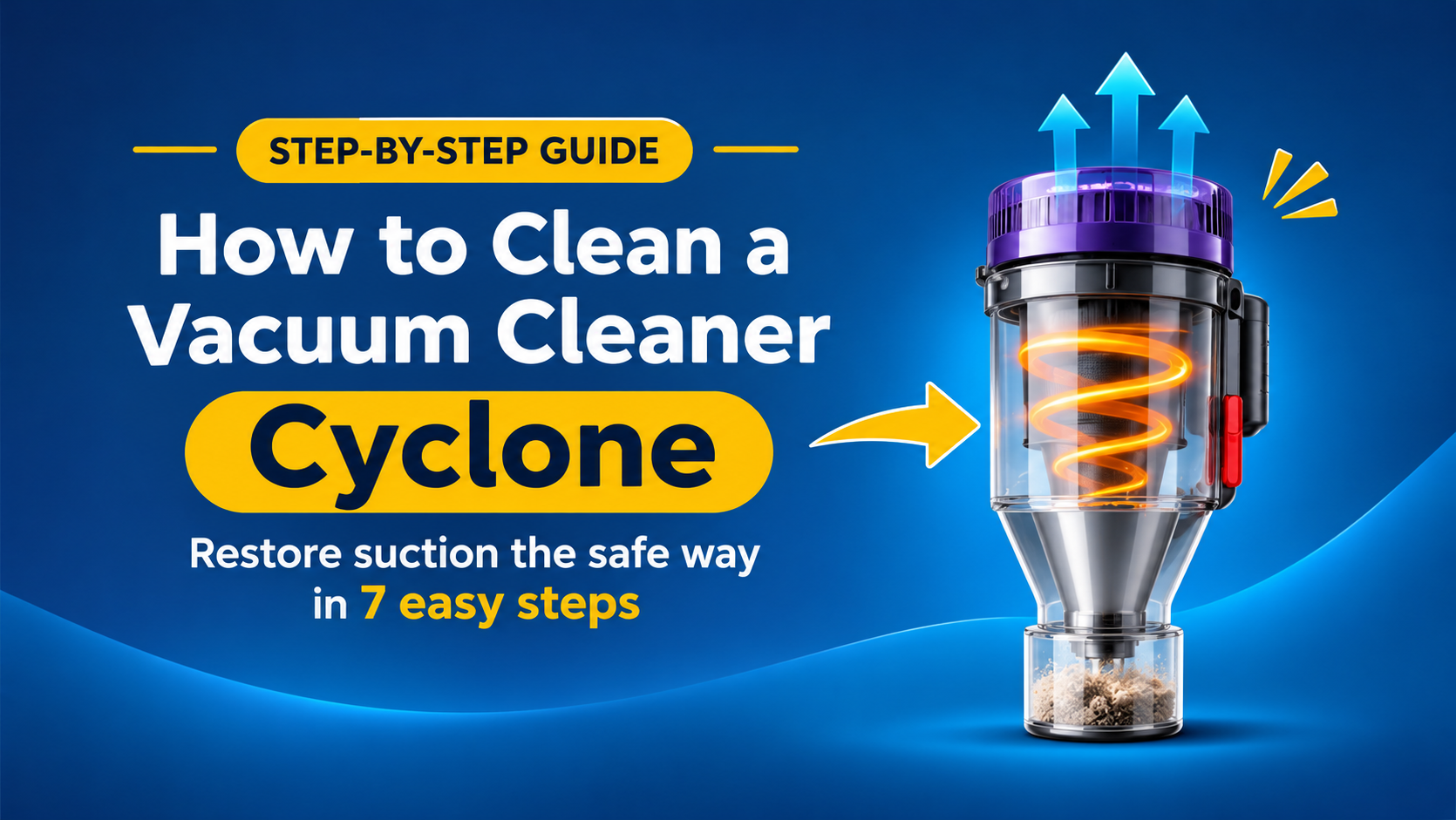

If your bagless vacuum has lost suction, smells musty or leaves dust inside the clear bin after every use, the cyclone assembly is probably dirty or clogged. The cyclone is the part that spins dirt out of the airflow, and over time fine dust, hair and fluff build up on the shroud, in the cones and around the seals. The good news is that learning how to clean a vacuum cleaner cyclone is easy, free and takes about 20 minutes. This guide explains what the cyclone does, how to clean it safely and how to keep it working like new.
What Is a Vacuum Cleaner Cyclone?
A cyclonic vacuum draws dirty air into a chamber where it spins at high speed. Heavier dust and debris are thrown outward and fall into the dust bin, while cleaner air moves through the shroud or cones and then through the filters. Because the cyclone does not rely on a bag, it keeps airflow strong as long as the parts stay clean.
Signs Your Cyclone Needs Cleaning
- Weak suction even though the bin was emptied
- A musty or stale smell from the vacuum
- Dust stuck on the shroud or the walls of the chamber
- Visible clogs in the cones, the mesh or the air passage
- The vacuum overheats or shuts off unexpectedly
- Dust blowing out of the exhaust
- Whistling, which may point to a blockage or poor seal
Tools and Materials You Will Need
- Soft brush or old paintbrush
- Microfiber cloth, slightly damp
- Long, narrow brush or a bottle brush for the cones
- Scissors for cutting tangled hair
- Cool water and, if your manual permits, a drop of mild dish soap
- Trash bag
- Gloves and a dust mask if you are sensitive to dust
How to Clean a Vacuum Cleaner Cyclone: Step by Step
Step 1: Unplug and Empty the Dust Bin
Switch off and unplug the vacuum. Hold the bin over a trash bag, preferably outdoors, and release the catch to empty it. Tap the sides to remove packed dust and hair.
Step 2: Detach the Cyclone Assembly
Press the release button and lift off the cyclone unit, shroud or cone assembly. Most models allow the dust bin, the inner shroud and the cones to separate. Take a quick photo of the parts before taking them apart so reassembly is simple. Do not force any piece. If something does not come off, check the manual.
Step 3: Remove Hair and Loose Debris
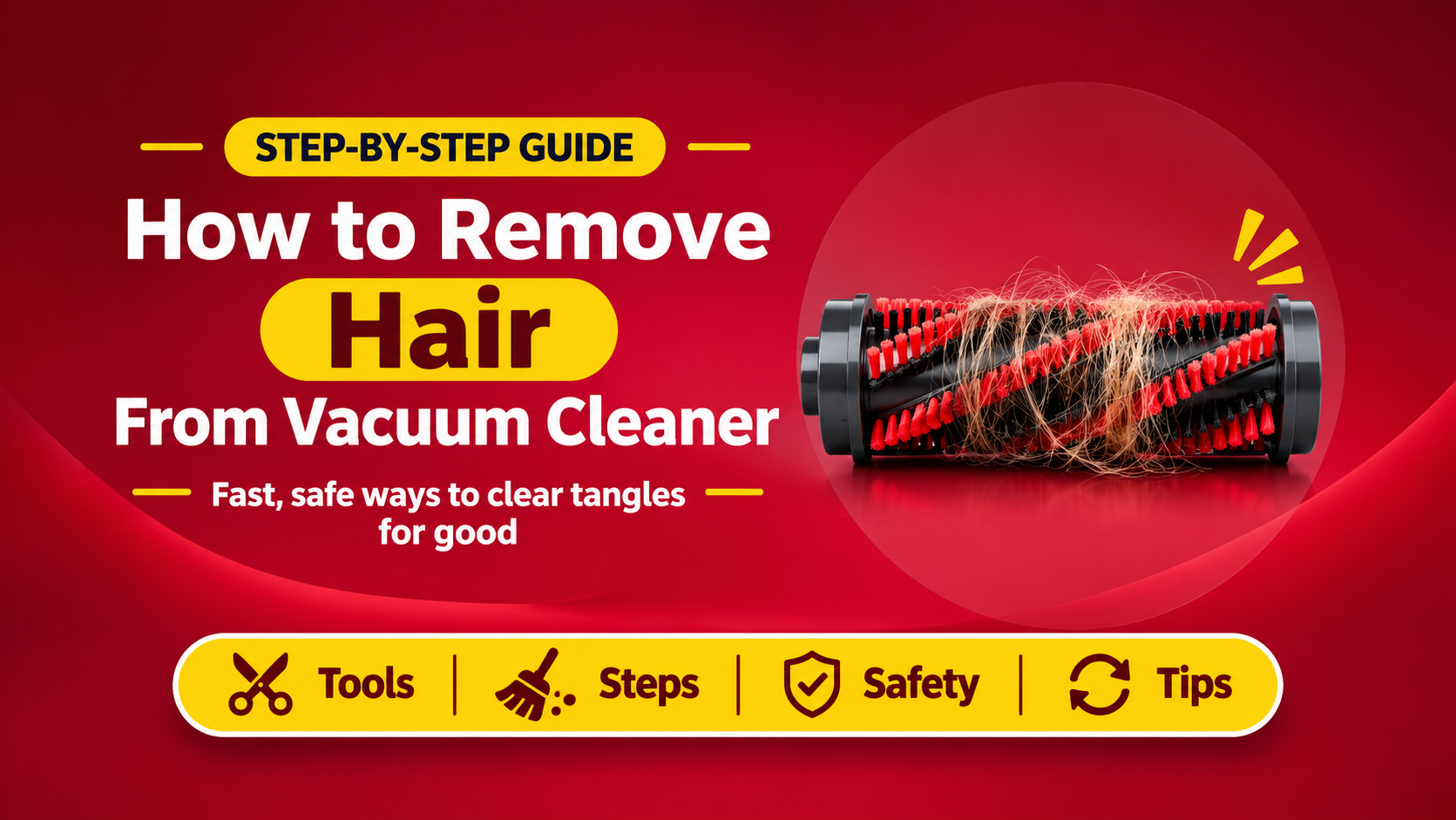
Cut and pull off any hair, string or fluff wrapped around the shroud and openings. Tap the assembly over the trash bag to dislodge loose dust. Use the soft brush on the mesh or the shroud holes, brushing in one direction.
Step 4: Clear the Cones and Air Passages
Look through the cones and the airflow channels. Use a long, narrow brush or a clean cloth wrapped around a wooden spoon to loosen any clogged dust. Do not poke sharp objects into the cones, because scratches or cracks reduce cyclone efficiency. If the cone is stubbornly clogged, try gentle tapping and brushing first.
Step 5: Wipe or Rinse the Parts
If the manual says the parts are not washable, wipe them with a slightly damp microfiber cloth, then dry them. If the manufacturer states the cyclone or bin is washable, rinse in cool running water, and gently clean with your hand or a soft brush. Do not use hot water, a dishwasher, bleach, polish or strong cleaners. Never submerge any part that contains electrical connections or a motor.
Step 6: Dry Everything Thoroughly
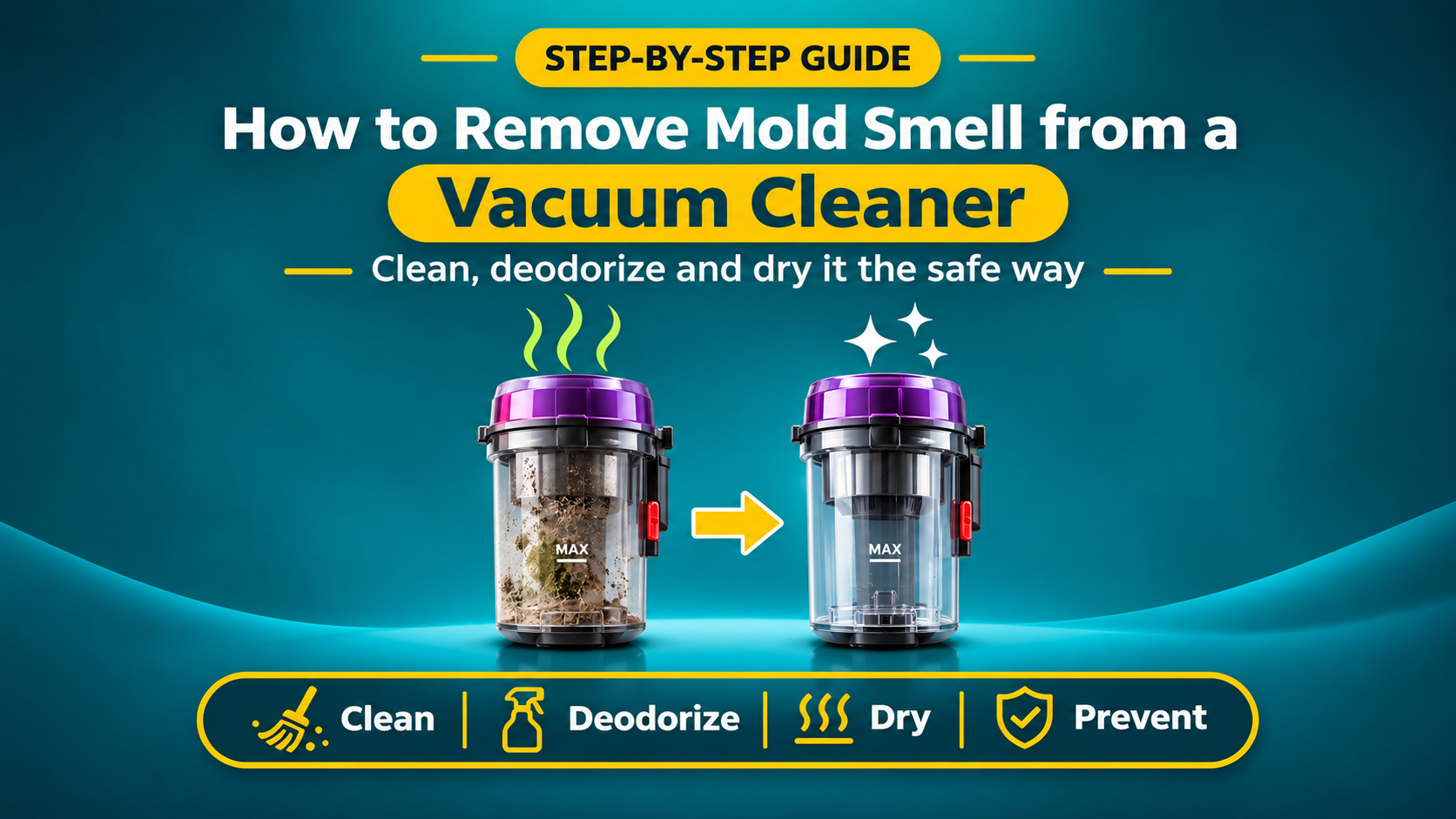
Shake off the water and stand the parts upright in a warm, airy spot for at least 24 hours. Every part must be completely dry, including inside the cones and around the seals. Do not use a hair dryer or a heater. Moisture left inside causes mold, bad smells and damage to the motor.
Step 7: Reassemble and Test
Once dry, reconnect the cyclone assembly and the bin. Check that the seals sit flat and that every latch clicks securely. Plug the vacuum in and run it for a minute. Place your hand near the end of the hose to feel for strong suction, and listen for whistling or rattling.
Cleaning Other Parts That Affect Cyclone Performance
A clean cyclone will still struggle if other parts of the airflow path are blocked. Check these at the same time:
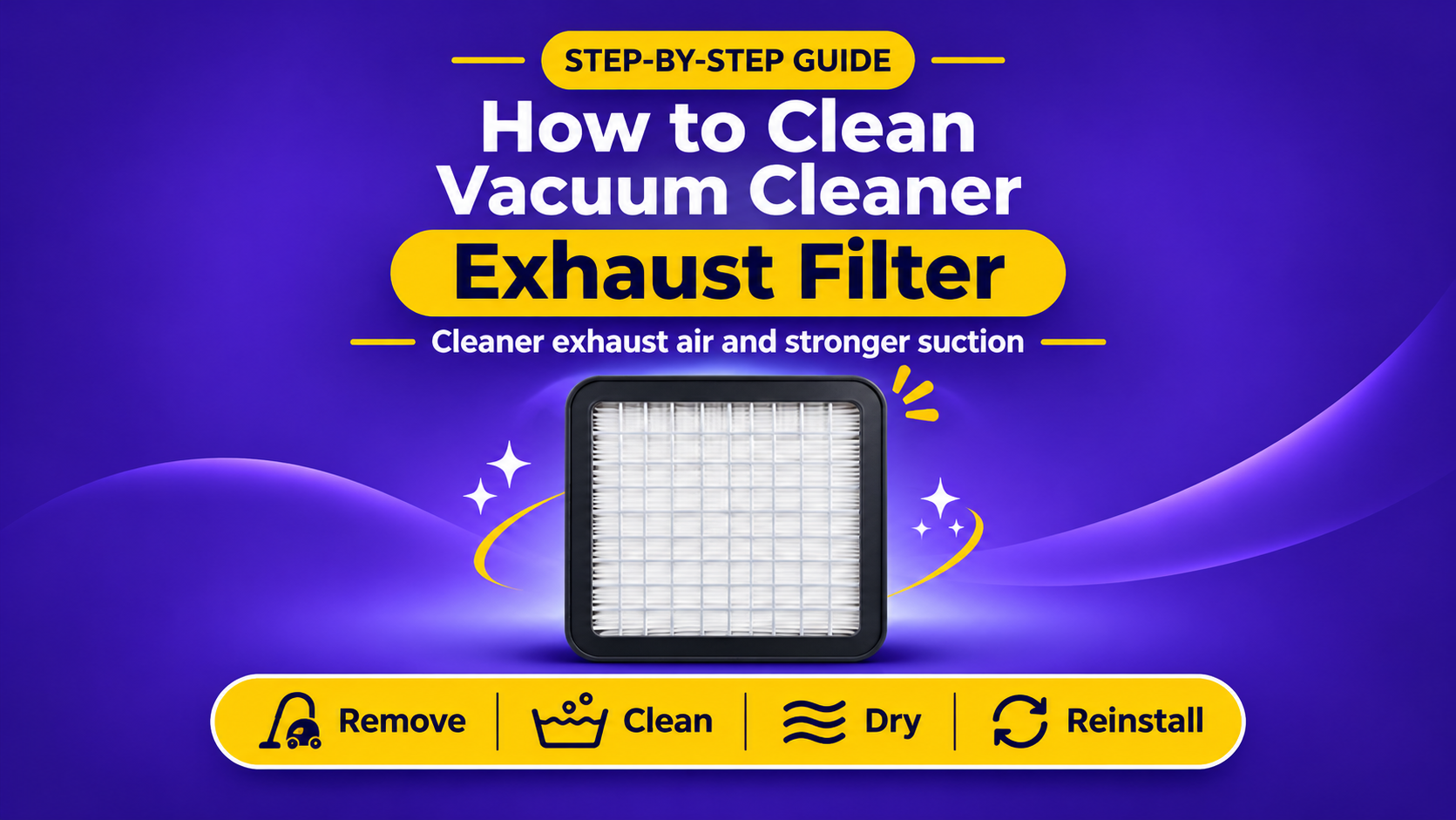
- Filters: Tap clean, rinse if washable and dry fully, or replace when worn.
- Hose and wand: Look through them for clogs.
- Brush roll: Remove tangled hair and check that it spins freely.
- Seals and gaskets: Wipe them and make sure they are not cracked.
- Inlet and outlet ports: Clear any dust buildup.
How Often Should You Clean the Cyclone?
| Task | Recommended Frequency |
|---|---|
| Empty the dust bin | After every use or when it reaches the max line |
| Wipe the shroud and bin | Every month |
| Deep clean the cones and cyclone | Every one to three months |
| Clean or replace filters | As the manual advises |
| Check seals and latches | Every few months |
Homes with pets, shedding hair, renovation dust or allergy sufferers should clean more often.
Common Mistakes to Avoid
- Washing parts that are not labeled washable
- Using hot water, detergents or a dishwasher
- Reassembling while damp
- Forcing parts apart and breaking latches
- Letting the bin overfill beyond the max line
- Skipping the filters, which then clog the airflow
- Running the vacuum with the cyclone or filter missing
Tips to Keep Your Cyclone Working Longer
- Empty the bin often, since a full bin lowers cyclone efficiency.
- Avoid vacuuming fine powders such as flour, ash or plaster dust, which clog filters and cones.
- Keep spare filters on hand.
- Inspect the cyclone for cracks or warped parts and replace damaged parts.
- Store the vacuum in a dry place.
- Follow the maintenance advice in your user manual.
When to Replace Cyclone Parts
Replace the cyclone assembly, shroud or bin if you notice cracks, loose or broken latches, warped plastic, or persistent poor suction even after a thorough clean and a filter change. Worn seals that no longer sit tightly should also be replaced, because air leaks reduce suction. Use parts made for your exact model.
Frequently Asked Questions
Can I wash the cyclone of my vacuum?
Only if the manufacturer says it is washable. Many bins and shrouds can be rinsed in cool water, but parts with electrical contacts must never be submerged.
Why does my vacuum have poor suction after cleaning the cyclone?
Check that the filters are clean and dry, the hose and brush roll are clear and every part is correctly seated. Also check the seals for leaks.
How long should I dry the parts?
Dry them for at least 24 hours, or longer in humid weather, until no moisture is left anywhere.
Can I use vinegar or soap to clean the cyclone?
A small amount of mild dish soap is fine if your manual allows washing. Avoid strong chemicals, and check your manual before using vinegar or other cleaners.
How do I remove a bad smell from the cyclone?
Clean the bin, shroud and filters, then dry everything completely. Replace the filters if the smell stays.
Does a bagless vacuum need cyclone cleaning if I empty the bin often?
Yes. Fine dust still builds up on the shroud and cones, so schedule a regular deep clean.
Final Thoughts
Learning how to clean a vacuum cleaner cyclone is one of the best ways to keep suction strong and protect your motor. Unplug the vacuum, empty the bin, detach the cyclone, brush away debris, wash only the parts that are washable, dry everything fully and reassemble carefully. Combined with regular filter care and a simple cleaning schedule, this routine will keep your vacuum performing well for years.