








Vacuum Cleaner Cord Not Retracting: Causes, Safe Fixes, and Prevention Tips
A retractable cord makes a vacuum cleaner easy to store and quick to put away. But when you press the rewind button or pedal and the cord stays out, hangs halfway, or jerks back unevenly, the convenience quickly turns into a nuisance. The good news is that a vacuum cord that will not retract is a common problem, and most causes can be fixed at home with simple, safe steps.
This guide explains why the cord gets stuck, how to troubleshoot it, step-by-step fixes, when to call a technician, and how to prevent the problem from coming back.
How a Vacuum Cord Reel Works
Inside most canister and upright vacuums is a cord reel: a spool wrapped with the power cord and connected to a coiled spring. When you pull the cord out, the spring winds tighter. When you press the rewind pedal or button, a latch releases and the spring pulls the cord back onto the spool. Anything that blocks the cord, weakens the spring, or stops the latch from releasing can cause retraction to fail.
Signs the Cord Reel Has a Problem
- The cord stays out when you press the rewind button or pedal
- It retracts only partway, then stops
- The cord retracts slowly or jerkily
- The cord is stiff and will not pull out smoothly
- A clicking, grinding, or rattling noise from the reel
- The plug does not reach its slot after rewinding
- The cord twists or tangles when you pull it out
Why a Vacuum Cord Will Not Retract
1. The cord is twisted or kinked
This is the most common cause. If the cord twists as you pull it out, or lies in loops on the floor, it can snag on itself or on the cord opening during retraction. Even a small kink can stop the reel.
2. Dirty or sticky cord
Dust, dirt, pet hair, and grime build up on the cord over time. This creates friction as the cord passes through the guide opening, so it cannot slide back easily.
3. Jammed cord reel
Debris, hair, or tangled cord inside the housing can jam the spool. If the cord has been pulled out unevenly or stuffed back in by hand, it may be bunched up on the reel.
4. Weak or broken return spring
Over years of use, the spring loses tension. A weak spring cannot pull the cord back fully, and a broken one will not pull it back at all. This is common in older vacuums.
5. Faulty rewind pedal, button, or latch
If the pedal or button is bent, stuck, or not connecting to the latch, the reel is never released. You may hear a click but see no movement.
6. Cord pulled out too far
Most cords have a red or yellow warning mark. Pulling the cord beyond it can strain or damage the reel and the cord attachment, which can cause the cord to jam or fail to rewind.
7. Damaged cord or plug
A cord with a swollen section, repaired joint, or bulky plug can catch at the opening. A cracked or frayed cord is also a safety hazard and needs replacement.
8. Worn or damaged guide or housing
A bent, cracked, or rough cord guide can scrape against the cord and block it from returning smoothly.
Safety First
The cord reel spring is under tension. If the housing is opened carelessly, the spring can unwind suddenly and cause injury or damage. Always unplug the vacuum before any inspection, and never use a cord that is frayed, cut, or has exposed wires. If your repair steps involve opening the reel housing, think carefully about whether you should do it yourself.
What You May Need
- A dry microfiber cloth
- A soft brush or old toothbrush
- A small flashlight
- A screwdriver set (only if your manual allows opening the housing)
- Gloves, if you prefer them
- A replacement cord reel, spring, or cord set, if needed
How to Fix a Vacuum Cord That Will Not Retract
Step 1: Unplug the vacuum
Remove the plug from the wall socket and check that the vacuum is switched off.
Step 2: Pull the cord out fully
Gently draw out the cord until you reach the warning mark, then lay it flat and straight. Look along its entire length for twists, kinks, or knots.
Step 3: Straighten and untwist
Work any twists out of the cord by hand. Run it through your fingers, removing loops. A straight cord rewinds more smoothly than a twisted one.
Step 4: Clean the cord
Wipe the full length of the cord with a dry or slightly damp microfiber cloth to remove dust and grime. Dry it thoroughly. Also wipe and brush the cord opening and guide to clear any buildup.
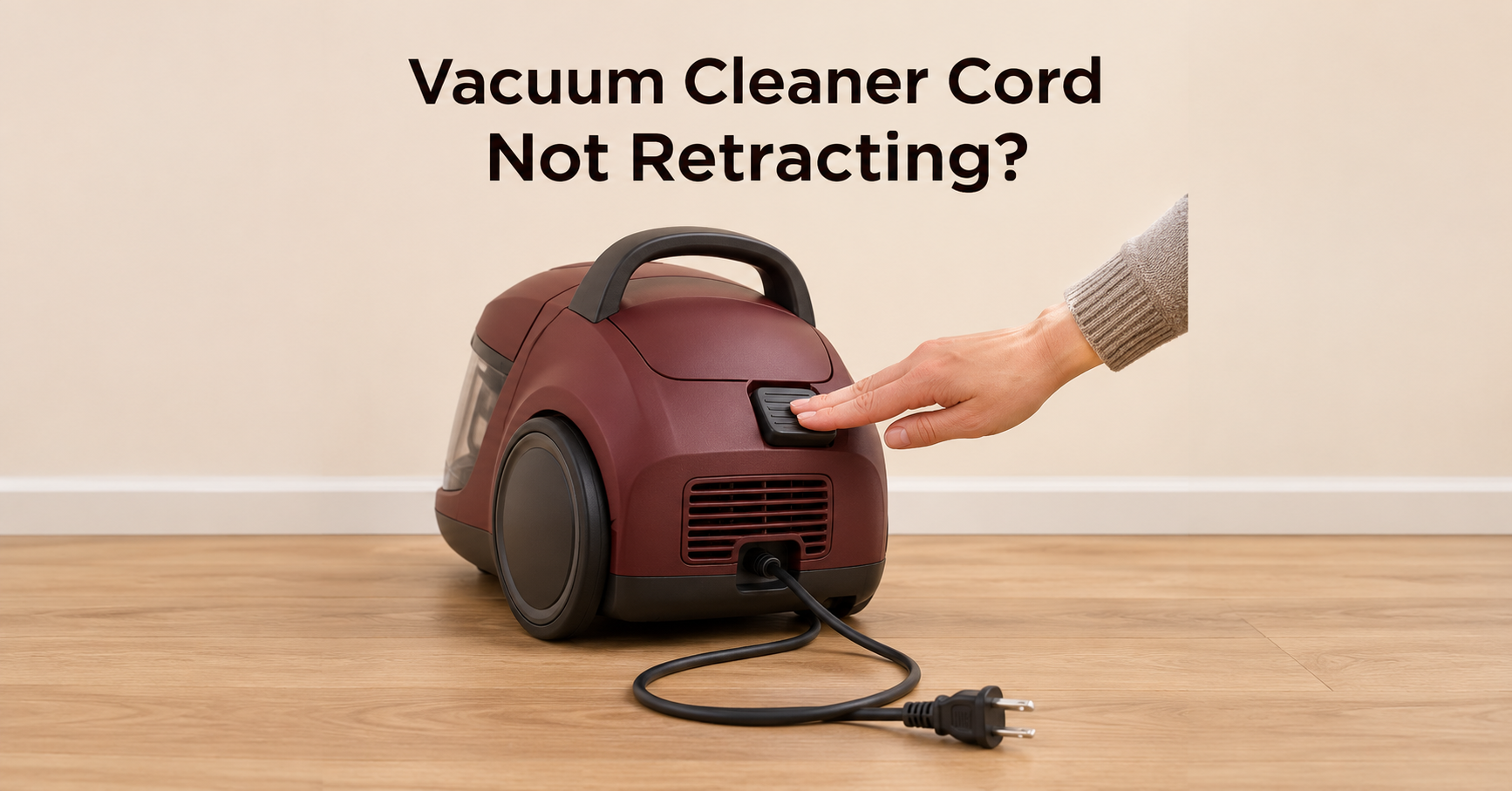
Step 5: Press the rewind pedal or button
Hold the plug firmly, press the rewind pedal or button, and let the cord retract slowly while you guide it with your hand. Do not let the plug whip back, since it can hit the vacuum or you.
Step 6: Try gentle assistance
If the cord moves but stops, pull it out a little, then let it rewind again. Repeating this can help the cord settle onto the spool evenly. You can also guide the last stretch of cord in by hand while holding the pedal down.
Step 7: Check the pedal or button
If nothing happens, check that the rewind pedal moves freely and returns to position. Clear any dust or debris around it. A stuck or bent pedal may need adjusting or replacing.
Step 8: Test
Extend the cord a short distance and retract it a few times to see whether the problem is gone. If the cord still sticks or retracts weakly, the issue is likely inside the reel.
When the Problem Is Inside the Reel
If the quick fixes do not work, the problem is probably a jammed reel, a weak spring, or a broken latch. These are repairable, but they require care.
- Check the manual or warranty first. The repair may be covered.
- Consider a professional. A technician can safely handle the spring tension and replace the reel assembly.
- Replacing the whole reel assembly is often easier and safer than trying to repair a spring.
- Never force the housing open, and never cut the cord inside the reel.
When to Replace the Cord or Vacuum
- The cord is cracked, frayed, melted, or has exposed wires
- The plug or cord gets hot during use
- The spring is broken and the reel is no longer available
- Repair costs approach the price of a new vacuum
- The vacuum is very old and has other faults, such as weak suction or a failing motor
When replacing the cord or reel, always use a part designed for your exact vacuum model, so the rating and fit are correct.
Alternatives If You Do Not Like Retractable Cords
If a cord reel is a constant source of trouble, you might consider a vacuum with a manual cord wrap, or a cordless model that removes the need for a cord altogether. Cordless vacuums are lightweight and handy for quick cleanups, though they depend on battery life and may not match corded power for heavy-duty jobs.
Common Mistakes to Avoid
- Yanking the cord from the wall: this strains the plug, wires, and reel.
- Pulling the cord past the warning mark: it can damage the reel and spring.
- Letting the plug snap back freely: it can crack the housing or hurt you.
- Stuffing the cord back by hand: it tangles inside the reel.
- Ignoring a damaged cord: this is a fire and shock hazard.
- Using tape as a permanent fix: electrical tape is not a safe long-term repair for a damaged cord.
How to Prevent Cord Retraction Problems
- Pull the cord out in a straight line, not at a sharp angle.
- Unplug by gripping the plug, not the cord.
- Guide the cord by hand as it retracts.
- Wipe the cord with a dry cloth every month or two.
- Keep the cord clear of sharp edges, furniture legs, and closed doors.
- Never extend the cord beyond its marked limit.
- Check the cord for wear and twists regularly.
- Store the vacuum upright or on a stable surface, so the cord does not get crushed.
Frequently Asked Questions
Why does my vacuum cord get stuck halfway?
It is usually twisted, dirty, or snagged on the cord guide. Pull it out, straighten it, wipe it clean, and try again.
Can I fix a vacuum cord reel myself?
Simple issues like twists, dirt, and a sticky pedal can be fixed at home. Spring and reel repairs are more difficult and are best left to a technician, because the spring is under tension.
Is it safe to use a vacuum if the cord will not retract?
If the cord and plug are in good condition, you can use it and wind the cord manually. Do not use a vacuum with a damaged cord.
How do I know if the spring is broken?
If the reel turns freely with no resistance and the cord does not pull back at all, the spring may be broken or detached.
How much does it cost to repair a vacuum cord reel?
The cost varies by model. A replacement reel is often modest, but if labor and parts approach the price of a new vacuum, replacing it may make more sense.
Why does the cord retract slowly?
Dirt on the cord, a weakening spring, or friction in the guide can slow it down. Cleaning the cord and the opening often helps.
Final Thoughts
A vacuum cord that will not retract is rarely a reason to throw the machine away. In most cases, straightening, cleaning, and guiding the cord solves the problem within minutes. If the trouble is inside the reel, a replacement assembly or professional repair keeps you safe and gets your vacuum working again. Handle the cord with care, and it will keep rewinding smoothly for years.