








Vacuum Cleaner Wheels Not Turning: Causes, Easy Fixes, and Prevention Tips
A vacuum that glides smoothly across the floor makes cleaning easy. But when the wheels stop turning, the machine drags, scratches your floors, tips over, or becomes a struggle to push. Whether you have an upright, canister, cordless stick, or robot vacuum, wheels that will not turn are a common problem, and in most cases, a simple one to fix at home.
This guide explains why vacuum wheels get stuck, how to diagnose the problem, step-by-step fixes, and how to prevent it from happening again.
Signs Your Vacuum Wheels Are Not Turning Properly
- The vacuum drags or is hard to push or pull
- One or more wheels do not spin when you lift and flick them
- Squeaking, grinding, or scraping noises while moving
- Scratch marks or scuffs on hardwood, tile, or laminate floors
- The vacuum pulls to one side
- A canister vacuum that tips or flips when you tug the hose
- A robot vacuum that veers, stalls, or reports a wheel error
Why Vacuum Cleaner Wheels Stop Turning
1. Hair and thread wrapped around the axle
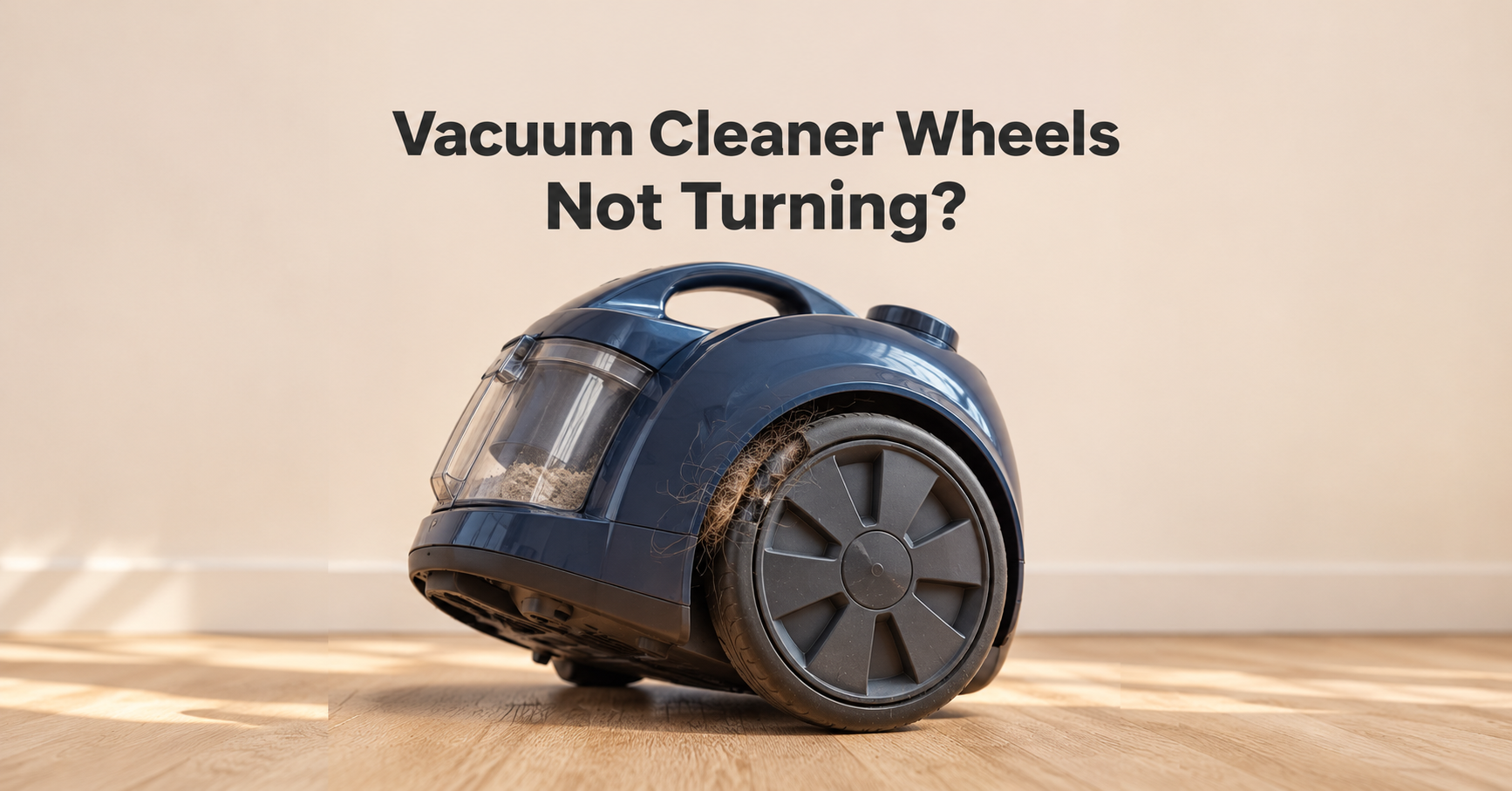
This is by far the most common cause. Long hair, pet fur, carpet fibers, and thread slip into the gap between the wheel and its housing and wind tightly around the axle until the wheel cannot spin.
2. Trapped dirt and debris
Grit, sand, crumbs, and small stones can lodge inside the wheel hub or wheel well. Over time this packs into a hard layer that jams movement.
3. Worn or damaged wheels
Plastic or rubber wheels wear down with age. They can crack, flatten, or lose their tread, which causes uneven movement and sticking.
4. A bent, broken, or loose axle
Drops, hard knocks against furniture, or tugging a canister vacuum over thresholds can bend the axle or pop it out of position.
5. Lack of lubrication or rust
A dry axle creates friction, which leads to squeaks and stiff wheels. In humid areas or after contact with moisture, rust may form and lock the wheel.
6. Debris in the wheel well or housing
Sometimes the wheel itself is fine, but a buildup of dust, hair, or a broken plastic piece in the housing prevents it from turning.
7. Swivel caster issues (canister and upright models)
Front swivel wheels can jam with hair or lose their ability to rotate, making the vacuum steer poorly or tip.
8. Drive wheel or motor faults (robot and self-propelled vacuums)
If the vacuum moves under its own power, a jammed drive wheel, a worn gear, or a failing motor can stop it from turning even when the surface looks clean.
Quick Diagnosis
What You Need
- A small screwdriver set (flat and Phillips)
- Small scissors, a seam ripper, or a craft knife
- Tweezers or needle-nose pliers
- A soft brush or old toothbrush
- A damp cloth
- A silicone-based lubricant or a small amount of light machine oil (avoid heavy grease that attracts dirt)
- A replacement wheel or axle, if needed
How to Fix Vacuum Wheels That Will Not Turn
Step 1: Turn off and unplug
Switch off the vacuum and unplug it. For cordless or robot vacuums, remove the battery if you can.
Step 2: Turn the vacuum over
Lay the vacuum on its back or side so the wheels are easy to reach. Place a towel underneath to protect the floor and the vacuum casing.
Step 3: Inspect and spin each wheel
Flick every wheel by hand. A healthy wheel should spin freely and smoothly. Note which ones stick, wobble, or grind, and look for hair, thread, or debris around the hub.
Step 4: Remove the wheel
Many vacuum wheels pop off with a firm pull or a gentle pry from a flat screwdriver. Others are held by a screw, clip, or cap on the axle. Check your manual if you are unsure. Take a photo before removing it so you remember how it fits back.
Step 5: Remove hair and debris
Cut the hair along the axle with scissors or a seam ripper, and pull it out with tweezers. Clear any grit or fibers from the hub, the axle, and the wheel well. Use a soft brush to scrub out remaining dust.
Step 6: Clean and lubricate
Wipe the wheel and axle with a damp cloth, then let them dry. Apply a small amount of silicone lubricant or light oil to the axle. Use only a little, since too much attracts dust and becomes sticky.
Step 7: Check for damage
Look for cracks, flat spots, a bent axle, or a worn hub. If you find any, replace the part rather than reusing it.
Step 8: Reassemble and test
Refit the wheel, press or screw it back into place, and spin it by hand. It should turn smoothly with no wobble. Then set the vacuum upright and roll it across the floor to confirm that it moves freely.
Fixes for Different Vacuum Types
Upright vacuums
Check the rear wheels and the front swivel wheels. Rear wheels are often held by a clip or cap. Also check around the base plate, where hair collects.
Canister vacuums
The swivel casters often get tangled with hair. Pull them out, clear the stem and wheel, and lubricate lightly. A loose or broken caster can make the canister tip over.
Cordless and stick vacuums
These have small wheels on the floor head. Remove the floor head, clear hair from the wheels, and make sure the brush roll area is clean, since a jammed brush bar can also make the head feel stuck.
Robot vacuums
Remove the drive wheels and caster wheel, and clear hair from the axles and wheel wells. Wipe the sensors and make sure the wheel springs move freely. If the robot still reports a wheel error, the wheel module may need replacement.
When to Replace the Wheels or Axle
- The wheel is cracked, flat, or has lost its tread
- The axle is bent, broken, or the hub is worn out
- The wheel is loose and will not stay on
- It still sticks after thorough cleaning and lubrication
- A robot or self-propelled vacuum drive wheel makes a grinding or clicking sound
Replacement wheels are inexpensive and often easy to fit. Always buy parts made for your exact vacuum model, so the size and axle fit correctly. If the problem is a damaged chassis or a failed drive motor, a repair technician may be the better option.
Common Mistakes to Avoid
- Forcing a stuck wheel: this can snap plastic or bend the axle.
- Using heavy grease: it attracts dirt and makes the problem worse.
- Spraying lubricant everywhere: it can stain floors and damage carpet or rubber parts.
- Cleaning while plugged in: always disconnect power first.
- Ignoring small noises: a squeak is an early warning sign that the wheel needs attention.
- Using the wrong replacement part: poor fit causes new problems.
How to Prevent Wheel Problems
- Check and clean the wheels every month, or more often in homes with pets or long hair.
- Pick up string, hair ties, and large debris before vacuuming.
- Avoid dragging the vacuum over thresholds and stairs by the hose or handle.
- Store the vacuum on a flat surface, so the wheels do not bend under weight.
- Wipe the wheels and axles with a dry cloth during regular maintenance.
- Add a drop of light lubricant to moving axles once or twice a year.
- Do not vacuum wet areas unless the machine is built for it.
Frequently Asked Questions
Why will my vacuum wheels not turn?
The usual causes are hair or thread wrapped around the axle, trapped debris, a dry or rusty axle, or a worn or damaged wheel.
Can I use WD-40 on vacuum wheels?
A small amount of silicone-based lubricant is usually better, because it is lighter and cleaner. If you use any oil, apply very little and wipe off the excess so it does not attract dust.
How do I remove hair from vacuum wheels?
Take the wheel off, cut the hair along the axle with scissors or a seam ripper, and pull it out with tweezers. Brush away any remaining fibers.
Are vacuum wheels easy to replace?
In most cases, yes. Many wheels simply pop off or are held by one screw. Check your model number and buy a matching replacement.
Why does my robot vacuum say the wheel is stuck?
Hair, string, or debris is usually jammed in the drive wheel or caster. Clean the wheels and axles, then test. If the error remains, the wheel module may be faulty.
Should I be worried about floor scratches from a stuck wheel?
Yes. A wheel that cannot roll drags across the floor and can scuff or scratch hard floors, so fix it as soon as you notice.
Final Thoughts
Vacuum wheels that will not turn are frustrating, but they rarely mean the machine is finished. In most cases, a few minutes spent removing hair, clearing debris, and adding a drop of lubricant will bring them back to life. Check your wheels regularly, replace damaged parts quickly, and your vacuum will glide across your floors for years to come.