



Vacuum Cleaner Suction Power Test: How to Measure, Compare and Understand Real Cleaning Performance
Suction power is the first thing most people look at when they buy a vacuum cleaner, and the first thing they complain about when it seems to fade. Yet the number printed on a box rarely tells the full story. Two vacuums with similar specifications can perform very differently on a real carpet, and a machine that once picked up everything can slowly lose strength without any obvious warning.
This guide explains how a vacuum cleaner suction power test works. You will learn what the common measurements mean, how to run simple and fair tests at home, how to score the results, and what to do if your vacuum does not pass. Whether you are comparing models before buying or checking the health of a machine you already own, these methods will help you judge performance with confidence.
What Does “Suction Power” Really Mean?
Suction is not one single number. A vacuum cleans by combining two things: the pressure difference that lifts dirt, and the airflow that carries it into the machine. A strong vacuum needs both. High pressure with little airflow struggles to move debris, while high airflow with low pressure may fail to pull dirt out of carpet fibres.
On top of that, the nozzle, brush roll, filter, seals and the surface being cleaned all change the final result. That is why a proper suction power test looks at actual cleaning, not just one specification.
Common Suction Measurements Explained
Manufacturers and testers use several terms. Understanding them makes product descriptions much easier to read.

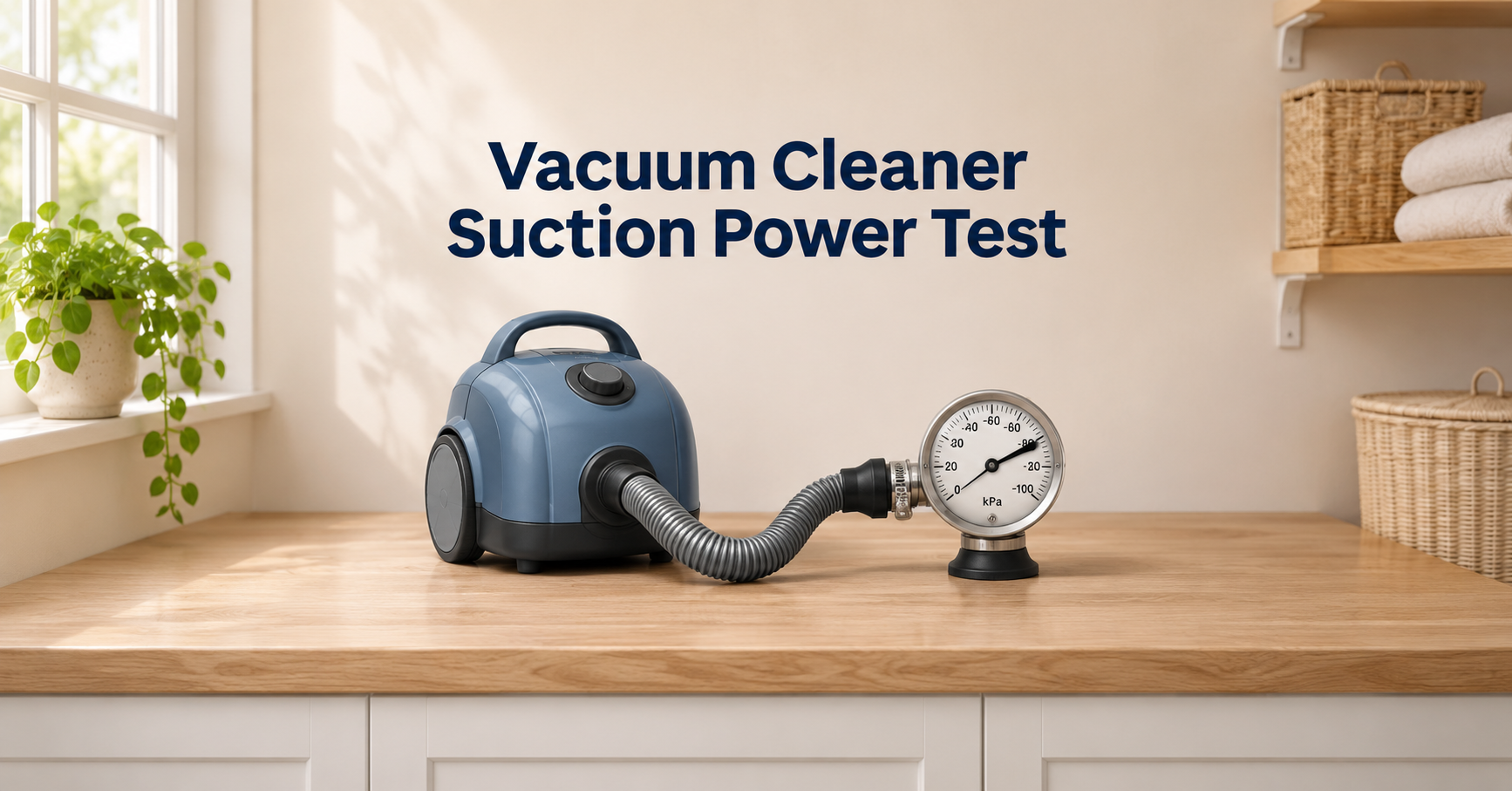
- Pascals (Pa) or kilopascals (kPa): This measures the suction pressure, usually with the opening sealed. It shows how hard the machine can pull, but not how much air it moves.
- Airflow (CFM or litres per second): This shows how much air passes through the machine. Better airflow helps carry dirt along the hose and into the container.
- Air watts: This combines pressure and airflow into one figure, which is why many experts consider it more meaningful than motor wattage.
- Motor watts: This tells you how much electricity the motor uses. It does not directly tell you how well the vacuum cleans, because efficient design can achieve strong results with less power.
The key lesson is simple: a bigger number on one specification does not automatically mean a better vacuum. Real-world performance depends on the whole design.
How Professional Suction Tests Work
Independent laboratories test vacuum cleaners under controlled conditions so the results can be compared fairly. They typically use standardised test dust, measured amounts of debris spread over a set area, and fixed cleaning speeds. The vacuum is weighed or the dust is measured before and after, and the percentage removed is recorded. Tests are repeated on different surfaces, such as bare floors and carpets, and sometimes along edges and in crevices.
Household performance standards exist for this purpose, so that products can be assessed in the same way. You do not need a laboratory to learn something useful, though. The idea behind those tests, which is to keep everything the same and measure what is left behind, can be copied at home with ordinary items.
What You Need for a Home Suction Test
- Uncooked rice or similar grains for bare floors
- Fine flour or fine sand for carpet or rugs
- A small amount of mixed crumbs, such as cereal or biscuit pieces
- Pet hair or a few strands of thread (optional)
- A measuring spoon or small cup
- Masking tape or a ruler to mark a test area
- A small kitchen scale if you want more accurate results (optional)
- A phone timer and a notebook for results
Preparing Your Vacuum for a Fair Test
Before you begin, make sure the machine is in its best condition. Otherwise you will be testing a dirty vacuum, not its true ability.
- Empty the dust bin or fit a fresh bag.
- Clean or replace the filter according to the manual.
- Remove hair from the brush roll and check the hose for blockages.
- For a cordless model, fully charge the battery. For a corded model, plug it in directly, avoiding a long thin extension lead.
- Choose the same power mode for every test, and note which one you used.
Step-by-Step Home Suction Power Tests

Test 1: The hard floor debris test
Mark a square of about one metre on a clean hard floor. Spread a measured amount of rice evenly across it, such as two tablespoons. Vacuum the square with one slow forward pass and one slow backward pass, using a steady speed. Count how many grains remain, or collect them and compare their amount to what you started with. A strong vacuum should leave almost nothing behind and should not scatter grains outside the square.
Test 2: The carpet or rug test
Carpet is harder than a hard floor because dirt sinks into the fibres. Sprinkle a small, measured amount of fine flour or sand across a marked area of carpet, then gently press it in with your hand. Vacuum with two passes and look at the surface. Use a white cloth or a sheet of paper pressed on the carpet to see how much fine dust remains. If you do this test, use a rug you do not mind getting a little dusty, and follow with an extra clean afterwards.
Test 3: The edge and corner test
Place crumbs along a skirting board and in a corner. Run the vacuum along the edge in one pass. Good performance depends on both suction and the nozzle design here. Note how much is left along the wall line and in the corner.
Test 4: The pet hair and thread test
Lay a few strands of hair or thread across a rug and vacuum them. Strong suction combined with a good brush roll will lift them without leaving long strands behind. Also check how much hair winds around the brush after the test, because heavy tangling can reduce performance later.
Test 5: The simple paper or hand check
This is only a quick sanity check, not a measurement. With the hose or nozzle attachment, hold a piece of lightweight paper near the opening. It should be pulled firmly toward the vacuum. You can also feel the airflow with your hand at the nozzle opening. If the airflow feels weak compared with how it did when the machine was new, something is probably blocked or worn. Keep fingers and loose clothing away from moving parts and never put your hand near a spinning brush.
How to Score Your Results
To compare two vacuums, or to track the same vacuum over time, give each test a percentage. Estimate how much of the original material was removed. For example, if you started with fifty grains of rice and ten remain, the vacuum picked up about eighty per cent. Then use the guide below.

These ranges are a practical guide for home use, not an official scale. The most useful comparison is always your own: run the same tests under the same conditions every few months and watch for a downward trend.
Tips for Accurate and Repeatable Results
- Use exactly the same amount of material for each test.
- Move at the same slow, steady pace every time. A stopwatch helps.
- Use the same attachment, brush setting and power mode.
- Run each test at least twice and use the average.
- Test one vacuum at a time on the same surface so that the floor does not change the result.
- Write down the date, the power setting and the condition of the filter.
Cordless, Corded and Robot Vacuums: What Changes?
Corded vacuums provide steady power, so suction should stay consistent from start to finish. Cordless vacuums can lose some strength as the battery drains, and they often have several power modes. Test on the mode you actually use, and repeat the test with a partly drained battery if you want a realistic picture. Robot vacuums are best tested by placing a measured amount of debris on a marked area and letting the robot clean it for a set time, then checking what is left.
Common Reasons for Weak Suction
If your vacuum scored poorly, do not rush to replace it. Most suction problems have simple causes.

What to check and fix
- Dust bin or bag: Empty it. Many machines lose performance well before the container looks completely full.
- Filters: Clean or replace them. A clogged filter is one of the most common causes of weak suction.
- Hose and wand: Look through them toward a light, or gently push a long soft object through to find blockages.
- Brush roll: Remove hair and fibres, and replace the brush if the bristles are badly worn.
- Seals and joints: Check that the dust container, hose and nozzle are firmly attached and that no part is cracked.
- Battery: For cordless models, a tired battery can reduce power. Recharge fully and test again.
- Belt (if fitted): A stretched or broken belt stops the brush from spinning properly.
After each fix, run the same test again to see whether performance has improved. This turns troubleshooting into a clear before-and-after comparison.
Using Suction Tests When You Are Buying a Vacuum
If you are choosing a new vacuum, look for independent test results and real user reviews that describe how the machine performs on different floors, instead of relying only on suction numbers. Pay attention to:
- How well it cleans carpet, not only hard floors
- How it handles pet hair and edges
- Whether performance stays stable across power modes
- Battery run time at the cleaning mode that actually works for you
- How easy it is to empty, clean and maintain
A vacuum with slightly lower headline suction but a better brush, seal and filter system will often clean more effectively than a higher-rated machine with a weaker design.
How Often Should You Test Your Vacuum?
Once every two or three months is a good rhythm for most households. If you have pets, thick carpets or allergy concerns, test more often. A short test after changing a filter, brush or battery is also a good way to confirm that the repair worked.
Frequently Asked Questions
How can I test my vacuum cleaner suction at home?
Spread a measured amount of rice on a hard floor and fine flour or sand on a rug, vacuum with a fixed number of slow passes, and estimate how much is left. Repeat the same test regularly to compare results over time.
Is higher wattage always better for suction?
No. Wattage describes how much electricity the motor uses, not how well the vacuum cleans. Airflow, pressure, nozzle design, seals and filters all affect real performance.
What is a good suction level for a vacuum cleaner?
It depends on the type and your floors. Instead of aiming for one magic number, look for a vacuum that removes most debris in one or two passes on your own floor types and keeps doing so over time.
Why does my vacuum have less suction than before?
The usual causes are a full container, a clogged filter, a blocked hose, a tangled brush roll or a weakening battery. Check these first before considering repair or replacement.
Do cordless vacuums have weaker suction than corded ones?
Not necessarily. Modern cordless models can clean very well, but their performance depends on the battery charge and the power mode. Corded machines usually deliver steadier output during long cleaning sessions.
Can a dirty filter really reduce suction?
Yes. A clogged filter restricts airflow, which weakens the pull at the nozzle. Cleaning or replacing it often restores much of the lost performance.
Final Thoughts
A vacuum cleaner suction power test does not need special equipment. By understanding the main measurements, preparing the machine properly and running a few fair, repeatable tests, you can see how well any vacuum really cleans. Use the same method for every comparison, record your results, and act when performance falls. A few minutes of testing and basic maintenance can keep your vacuum working at its best and help you choose the right machine when it is time for a new one.