









Vacuum Cleaner Loses Suction on Thick Carpet: Causes, Fixes and Smart Prevention Tips
You switch on your vacuum, and it sounds powerful. It glides across the hard floor and picks up everything in its path. Then you step onto a thick rug or plush carpet, and suddenly it feels as if the machine has given up. The nozzle drags, the motor sounds strained, and dust stays behind. If this sounds familiar, you are not alone.
The good news is that a vacuum cleaner that loses suction on thick carpet usually has a simple, fixable cause. Sometimes the problem is the machine, sometimes it is the setting, and sometimes it is simply the way thick pile behaves. This guide explains why it happens, how to find the exact cause and what to do about it, step by step.
Why Does a Vacuum Lose Suction on Thick Carpet?
Hard floors are easy. Air flows freely around the nozzle, and dirt sits on the surface. Thick carpet changes everything. Deep fibres press against the nozzle, block the air gaps and hold dirt deep down. The result is often one of two things: either the nozzle seals tightly to the carpet and airflow is cut off, or the brush roll cannot reach far enough into the fibres to loosen the dirt.

A vacuum needs a steady stream of air to carry dirt away. When that stream is restricted, the machine may feel like it is pulling the carpet instead of cleaning it. This is normal to a degree, but if the effect is strong, or if it has become worse over time, something needs attention.
The Most Common Causes
1. The nozzle height is set too low
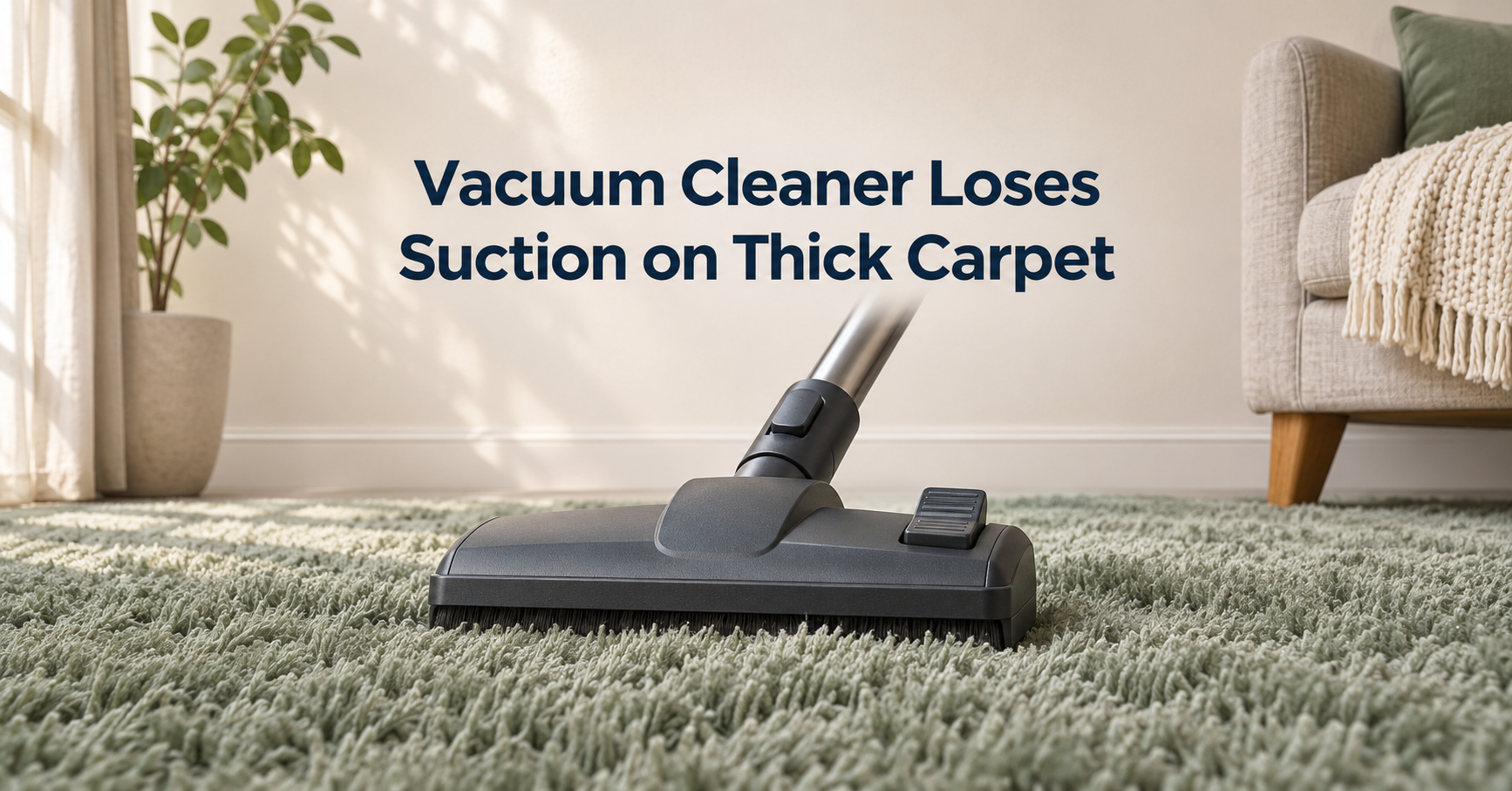
This is the most frequent cause. When the nozzle sits too close to the carpet surface, it presses the fibres flat and seals against them. Airflow drops and the vacuum becomes hard to push. Many people never adjust this setting after buying the machine.
2. The nozzle height is set too high
The opposite problem is just as common. If the nozzle floats above the carpet, air escapes through the gap and the brush barely touches the fibres. Suction at the surface becomes weak, so dirt stays put.

3. A worn or tangled brush roll
Thick carpets rely heavily on the brush roll to loosen dirt, hair and fine dust. If the bristles are worn, bent or covered with hair and thread, the brush cannot agitate the fibres properly. A tangled roll can also slow down or stop spinning, which strains the motor.
4. A stretched or broken belt
Many upright and some canister power heads use a belt to turn the brush. If the belt is loose, cracked or has slipped off, the brush will turn slowly or not at all. Often the vacuum still sounds powerful, which is why this cause is easy to miss.
5. A full bin, bag or clogged filter
Thick carpet places the highest demand on airflow, so any restriction shows up there first. A bin or bag that is nearly full, or a filter packed with fine dust, may seem acceptable on a hard floor but fail on a rug.
6. Blockages in the hose or wand
A partial blockage, such as a clump of hair, a sock or a piece of paper, reduces airflow. Because carpet already limits air at the nozzle, a small blockage can make the problem much worse.
7. Air leaks
Cracks in the hose, loose connections or a poorly seated dust container let air escape before it reaches the filter. You may hear a whistling or hissing sound when this happens.
8. The wrong power mode or a weak battery
Many modern vacuums have power modes. Using a low or eco setting on thick carpet will not give enough performance. For cordless models, a tired battery or one that is low on charge can also reduce power.
9. The wrong vacuum for the floor type
Some vacuums are designed mainly for hard floors and light carpets. They may lack the brush design, motor strength or height range needed for deep pile. In that case no setting will fully fix the problem.
Quick Diagnosis: Where Is the Problem?
Start with one simple question: does the vacuum feel weak only on thick carpet, or on every surface? The answer points you in the right direction.

- Weak only on thick carpet: Look at the nozzle height, brush roll, belt and power mode first.
- Weak on every floor: Look at the bin, filters, hose and possible air leaks first.
Step-by-Step Fixes

Step 1: Adjust the nozzle height
Set the height so the brush gently touches the tips of the carpet fibres. The vacuum should move with moderate effort, not feel stuck. If you have to pull hard, raise the setting one level. If the machine glides freely but leaves dirt behind, lower it one level. Always test on a small area before cleaning the whole room.
Step 2: Clean the brush roll
Switch the vacuum off and unplug it or remove the battery. Turn it over, cut away hair and thread with scissors and pull everything out. Check that the brush spins freely by hand. If the bristles look flattened or worn down, consider replacing the brush roll.
Step 3: Clean or replace the filters
Follow the manual. Washable filters should be rinsed gently and left to dry fully before they are used again. Non-washable filters should be tapped clean or replaced if they look dull or discoloured.
Step 4: Empty the bin or change the bag
Do this even if the container looks only half full. Performance often starts to fall before it reaches the maximum line, especially on carpet.
Step 5: Inspect the hose, wand and belt
Detach the hose and look through it toward a light. If you cannot see light, there is a blockage. Gently clear it with a long, soft tool. Check the belt, if your model has one. A belt that feels loose or looks cracked should be replaced following the manufacturer’s instructions.
Step 6: Choose the right power mode
Switch to a higher power or carpet mode for thick pile. If the vacuum has an adjustable suction control or a bleed valve, close it for the strongest suction. For cordless vacuums, charge the battery fully before cleaning a large rug.
Know Your Carpet Pile
Carpet type has a big effect on how a vacuum behaves. Low pile carpet is short and dense. Medium pile is common in living rooms and bedrooms. High pile and shag carpets have long, soft fibres that can trap the nozzle and hide dirt deep inside.

For high-pile carpet, start at the highest height setting and test. Some machines clean shag rugs better with the brush roll turned off, using suction only, because a spinning brush can tangle the long fibres. Check your manual, since recommendations vary between models.
Better Cleaning Technique on Thick Carpet
- Move slowly: Slow, overlapping passes give the brush and airflow time to lift dirt from deep inside the fibres.
- Use different directions: Vacuum forward and back, then across the first direction, to lift fibres from several angles.
- Do not press down: Pushing hard makes the nozzle seal more tightly. Let the machine do the work.
- Shake out loose debris first: For small rugs, shaking or beating them outdoors removes a lot of deep dirt before vacuuming.
- Work in sections: Divide a large room into areas so that you do not rush any part.
Prevention: Keep Suction Strong Over Time
- Empty the bin after every use or when it reaches the fill line.
- Clean the brush roll every few weeks, or more often if you have pets or long hair in the home.
- Wash or replace filters regularly, following the schedule in your manual.
- Check the hose and belt every few months.
- Store the vacuum in a dry place so that filters and electronics stay in good condition.
What to Look for in a Vacuum for Thick Carpet
If you have tried everything and the vacuum still struggles, it may be time to consider a different machine. For thick carpets and rugs, look for these features:
- Adjustable height or auto-adjusting head: The nozzle adapts to different floors and pile depths.
- A motorised brush roll: A powered brush loosens dirt that suction alone cannot lift.
- Brush roll on/off control: Useful for delicate or very high-pile rugs.
- Strong, consistent airflow: Good filtration and sealed construction help maintain suction.
- Multiple power modes: A boost or carpet mode is helpful for deep cleaning.
- Easy maintenance: A brush roll that is easy to remove and clean is a big advantage.
Rather than relying on the headline suction number, read independent reviews that describe how a vacuum performs specifically on thick carpet and rugs.
When Should You Call a Professional?
If the motor makes grinding or burning sounds, if you notice a burning smell, or if the vacuum shuts off on its own, stop using it and have it checked by a qualified technician. These signs can point to motor or electrical faults that are not safe to fix at home. The same applies if the machine is under warranty, because opening it yourself may affect your coverage.
Frequently Asked Questions
Why does my vacuum feel stuck on thick carpet?
The nozzle is probably sitting too low and sealing against the fibres. Raise the height setting by one level and test again.
Why does my vacuum seem strong on hard floors but weak on carpet?
Hard floors need little agitation, but carpet needs a working brush roll, correct height and good airflow. A worn brush, slipped belt or wrong height will show up on carpet even when the motor sounds fine.
Can a dirty filter cause suction loss only on carpet?
Yes. Carpet cleaning demands more airflow, so a partly clogged filter can seem fine on hard floors but fall short on thick pile.
Should I turn off the brush roll on shag carpet?
In many cases yes, because a spinning brush can tangle long fibres. Check the manual, and test on a small area first.
Does a stronger motor always fix the problem?
No. Brush design, nozzle height, seals and airflow matter as much as motor strength. A well-designed vacuum with moderate power often beats a poorly designed one with more.
How often should I clean the brush roll?
Every few weeks is a good habit for most homes, and more often if you have pets or long hair.
Final Thoughts
When a vacuum cleaner loses suction on thick carpet, the cause is usually found in one of a few places: the height setting, the brush roll, the belt, the filters or the airflow path. Work through the checks in this guide one by one, retest after each fix, and you will usually find the answer quickly. A few minutes of maintenance and the right settings can bring back strong cleaning performance and make even the thickest carpet much easier to keep clean.