




Vacuum Cleaner Has No Suction? 9 Easy Fixes That Actually Work
You switch on your vacuum, push it across the carpet, and… nothing. Dust, pet hair and crumbs are all still there. When your vacuum cleaner has no suction, it feels like the machine has simply given up. The good news is that in most cases the motor is perfectly healthy. Weak suction is usually caused by a blockage, a dirty filter or an air leak, and nearly all of these problems can be fixed at home in under 15 minutes without any special tools.
In this complete guide you will learn exactly why a vacuum loses suction, how to diagnose the problem step by step, nine proven fixes, when it is time to repair or replace your machine, and how to prevent the problem from coming back.
Quick Answer
The most common reasons a vacuum cleaner loses suction are: (1) a full dust bin or bag, (2) a clogged filter, (3) a blocked hose or wand, and (4) a tangled brush roll. Check these four things first, in that order, and you will fix the problem around 80% of the time.
- How vacuum suction works
- Common causes of weak suction
- Quick troubleshooting flowchart
- 9 fixes for a vacuum with no suction
- Extra tips for cordless and robot vacuums
- Repair or replace?
- How to prevent suction loss
- Features to look for in your next vacuum
- Frequently asked questions
How Vacuum Suction Actually Works
A vacuum cleaner does not “pull” dirt in with some magic force. Inside the machine, a motor spins a fan that pushes air out of the exhaust. That creates a pressure difference, so air (and the dirt riding on it) rushes in through the floor head, travels through the hose, passes into the dust bin or bag, goes through the filters, and finally leaves through the motor and exhaust.
This means suction depends on airflow. Anything that restricts airflow, whether it is a clog, a full bin, a dirty filter or a crack in the hose, forces the motor to work harder and reduces the amount of dirt it can lift. Understanding this makes troubleshooting simple: you are just looking for whatever is blocking or leaking air along that path.
Common Causes of a Vacuum Cleaner Losing Suction
Before you start taking things apart, here are the usual suspects, ranked from most to least common:
- Full dust bin or bag: Once a bag or bin is more than about two-thirds full, airflow drops noticeably.
- Clogged or dirty filters: Fine dust packs into the pre-motor and HEPA filters and chokes airflow.
- Blocked hose, wand or inlet: Socks, paper, pet hair and debris can lodge in the air path.
- Tangled brush roll: Hair and thread wrap around the roller, jam it and clog the floor head.
- Air leaks: A cracked hose, loose connection or worn seal lets air escape before it reaches the bin.
- Broken or stretched belt: The brush roll stops spinning, so it no longer agitates dirt out of the carpet.
- Wrong height or mode setting: The floor head may be set too high or in a hard-floor mode while on carpet.
- Weak battery (cordless models): An ageing battery cannot supply enough power to the motor.
- Motor wear or failure: Rare, but possible on older machines, usually with a burning smell or loud noise.
Quick Troubleshooting Flowchart
Not sure where to start? Follow this simple order. It goes from the quickest, easiest checks to the more involved ones so you do not waste time.
9 Fixes for a Vacuum Cleaner With No Suction
Fix 1: Empty the Dust Bin or Replace the Bag
This is the simplest fix and the most overlooked. Bagless vacuums should be emptied after every use, or whenever dust reaches the “MAX” line. Bagged vacuums lose suction as the bag fills because the pores in the paper clog with fine dust, even before the bag looks full.
- Switch off and unplug the vacuum (or remove the battery).
- Empty the bin over a trash can, ideally outdoors to avoid a cloud of dust.
- Wipe the inside of the bin and check the rubber seal for dust or damage.
- If you use bags, replace them when about two-thirds full.
Fix 2: Clean or Replace the Filters
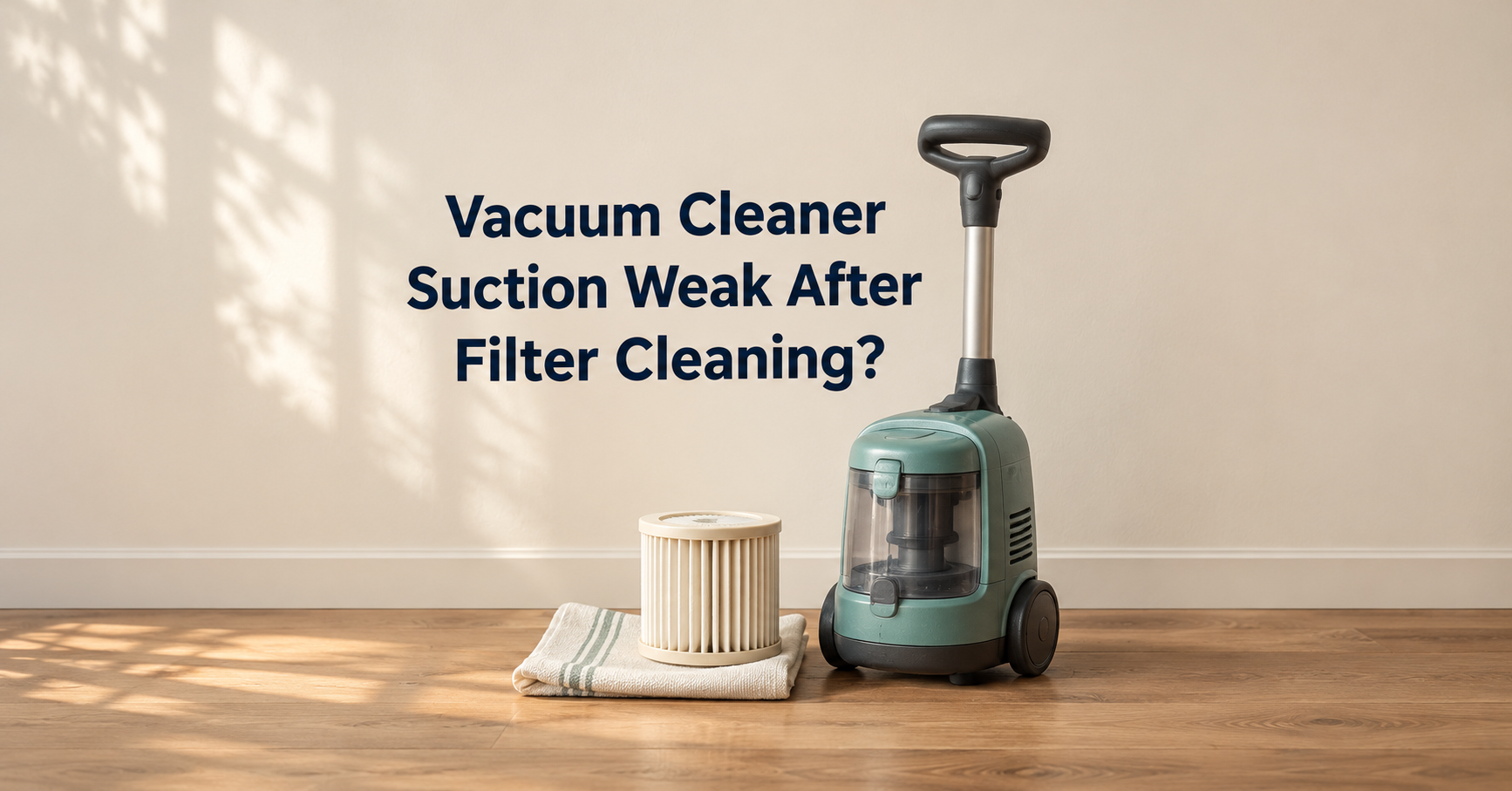
Filters are your vacuum’s lungs. When they clog, the motor cannot breathe. Most vacuums have at least one pre-motor filter (foam or felt) and one post-motor or HEPA filter. Check your user manual to see which filters are washable and which must be replaced.
- Washable filters: Tap out loose dust, rinse under cold running water until the water runs clear, squeeze gently and let it air dry for at least 24 hours.
- Non-washable HEPA filters: Tap gently to remove surface dust, but replace them every 6 to 12 months for the best performance.
- Never use a damp filter. Moisture causes mould, bad smells and can damage the motor.
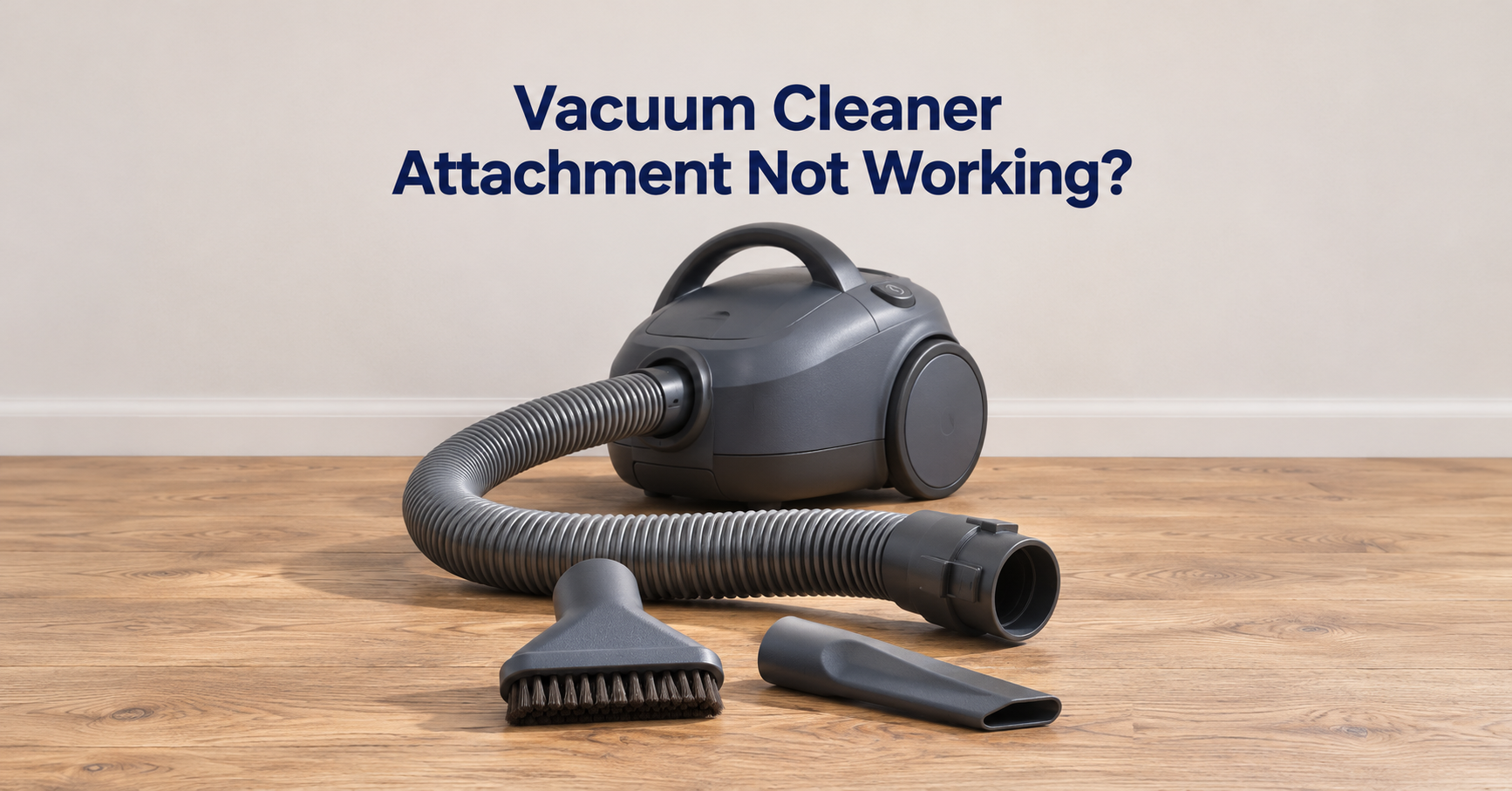
Fix 3: Check the Hose and Wand for Blockages
A blocked hose is a classic cause of sudden suction loss, especially if your vacuum picked up something large like a sock, a toy or a wad of paper.
- Detach the hose from the vacuum body and the floor head.
- Look through it toward a window or a light. You should see a clear circle of light.
- Run the machine with the hose detached and place your hand over the inlet. You should feel strong suction. If not, the blockage is inside the body.
- To clear a blockage, push a broom handle gently through the hose, or flush it with lukewarm water and let it dry fully before reattaching.
Fix 4: Remove Hair From the Brush Roll
If your vacuum makes noise but picks up very little, the brush roll may be wrapped in hair, string and carpet fibres. A jammed roller blocks the floor head inlet and stops dirt from being agitated out of the carpet.
- Turn the floor head upside down.
- Use scissors or a seam ripper to cut through wrapped hair and pull it free.
- Remove the brush roll end caps if possible and clean the bearings.
- Check that the roller spins freely by hand.
Fix 5: Look for Air Leaks and Cracks
Even a small crack in the hose or a loose connection can ruin your suction because air escapes before it reaches the dust bin. Inspect the hose along its whole length, particularly near the ends where it bends most. Check that the dust bin lid, filter housing and floor head all click firmly into place.
A quick fix for a small hose crack is strong vacuum-safe tape as a temporary repair, but a cracked hose generally needs to be replaced for the best results.
Fix 6: Inspect and Replace the Belt
On many upright vacuums, a rubber belt turns the brush roll. After a year or two the belt can stretch, melt or snap. A common sign is a burning rubber smell and a brush roll that does not spin, even though suction at the nozzle seems normal.
- Unplug the vacuum and open the base plate.
- Check that the belt is tight, intact and not shiny or frayed.
- Replace it with a belt that matches your model number.
Fix 7: Adjust the Height and Power Settings
Sometimes there is nothing wrong with the vacuum at all. If the floor head sits too high on thick carpet, it cannot seal against the surface. If it is too low on a hard floor or rug, it can stick and block airflow. Check these settings:
- Set the height adjustment to suit your flooring.
- Switch between “carpet” and “hard floor” modes if your model offers them.
- Make sure any suction-control vent on the handle or hose is fully closed.
Fix 8: Charge or Replace the Battery (Cordless Vacuums)
Cordless vacuums often lose suction because of the battery rather than a blockage. If suction drops quickly after a minute or two, or the machine keeps cutting out, the battery may be worn out. Lithium-ion batteries typically last around 300 to 500 charge cycles, which is roughly two to four years of regular use.
- Clean the battery contacts with a dry cloth.
- Fully charge the battery and test the vacuum in the standard power mode.
- If runtime remains very short, replace the battery pack with an official one for your model.
Fix 9: Check the Motor and Exhaust
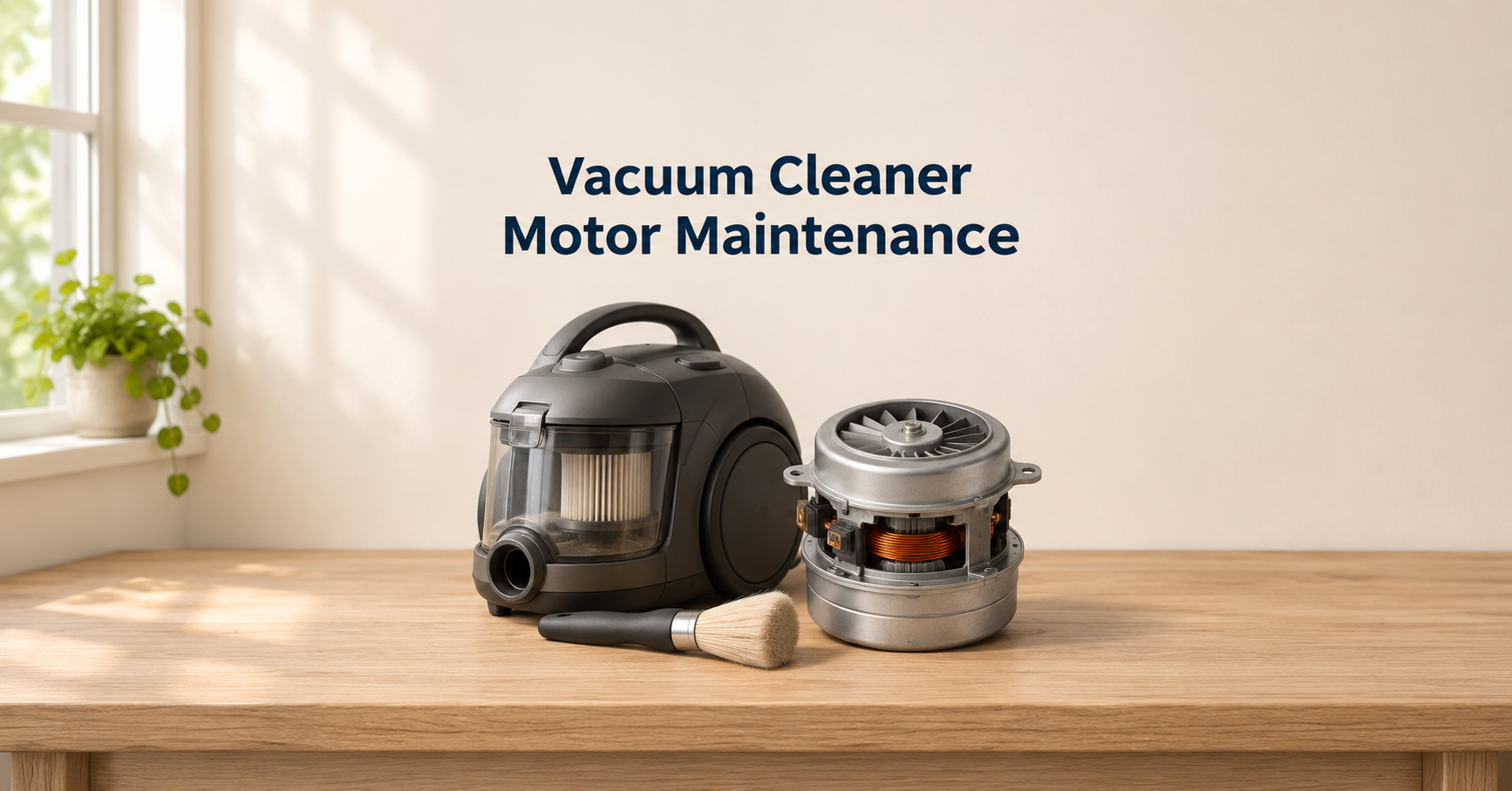
If you have tried everything above and suction is still weak, the problem may be inside the machine. Listen to the motor. A high-pitched whine, grinding noise, burning smell or sudden loss of power all point to motor or fan problems. Also check the exhaust filter and vents for blockages, since a blocked exhaust is just as bad as a blocked inlet.
Motor repairs are usually expensive. At this point, it is worth comparing repair costs with the price of a new machine, as explained below.
Extra Tips for Cordless, Robot and Bagged Vacuums
Cordless Stick Vacuums
Besides the battery, cordless vacuums have small cyclone chambers and fine mesh screens that clog easily. Clean the cyclone cone and the mesh at least once a month. Many cordless models also have an automatic power mode that increases or decreases power depending on the floor type, so make sure it is not stuck in the lowest setting.
Robot Vacuums
If a robot vacuum has weak suction, clean its tiny dust bin and filter after every run, remove hair from the main roller and side brushes, and wipe the dust sensors. A full dustbin on a robot vacuum fills quickly because the bin is small.
Bagged Vacuums
Always use bags designed for your model. Cheap, ill-fitting bags can leak air or restrict airflow and can cause a sudden loss of suction even when they are only half full.
Repair or Replace? How to Decide
If you have worked through every fix and the suction is still poor, use this table to decide on your next step.
| Situation | Best Option | Why |
|---|---|---|
| Machine under 3 years old, still under warranty | Repair or warranty claim | Repairs are often free, and the machine is still modern. |
| Cracked hose, worn belt or dead filter | Repair | Replacement parts are inexpensive and easy to fit. |
| Worn-out battery on a cordless vacuum | Replace the battery | It costs much less than a new vacuum, as long as the rest of the machine is in good shape. |
| Failed motor on a budget vacuum | Replace | Motor repair often costs more than half the price of a new machine. |
| Machine over 8 to 10 years old with multiple faults | Replace | Newer models are lighter, quieter and more efficient. |
How to Prevent Your Vacuum From Losing Suction
A little regular maintenance keeps your vacuum running like new and extends its lifespan by years. Follow this simple schedule:
- Do not vacuum wet or damp areas unless your machine is a wet-dry model. Moisture turns dust into sludge that clogs the filters.
- Avoid picking up very fine dust such as flour, drywall dust, cement or ash with a regular household vacuum, as it clogs filters in seconds.
- Pick up large objects by hand before vacuuming, including coins, paper clips, socks and rubber bands.
- Brush pets regularly. Less loose fur on the floor means less hair in the brush roll.
- Store your vacuum in a dry place and wind the cord loosely to avoid damaging the wire.
Features to Look For in Your Next Vacuum Cleaner
If your current vacuum is beyond repair, you can use this opportunity to choose a model that is less likely to lose suction in the future. Look for these features:
- Washable, easy-to-reach filters: They save money and make monthly cleaning quick.
- Sealed system with HEPA filtration: It keeps suction consistent and traps allergens.
- Anti-tangle or self-cleaning brush roll: It is especially useful for homes with long hair or pets.
- Clear dust bin with a MAX fill line: It makes it obvious when it is time to empty the bin.
- Removable, replaceable battery (cordless): You can swap in a new battery instead of replacing the whole vacuum.
- Easily available spare parts: Check that belts, filters and hoses are easy to buy.
- Adjustable suction modes: They let you use higher power on carpet and lower power on delicate surfaces.
Frequently Asked Questions
Why does my vacuum cleaner have no suction even though it is on?
The motor is probably running, but airflow is blocked. The most common causes are a full dust bin, a clogged filter, a blocked hose or a jammed brush roll. Check them in that order.
Why does my vacuum lose suction after a few minutes?
This usually means a filter or cyclone is clogging quickly, or a cordless vacuum battery is weak. It can also be a sign that the motor is overheating and shutting down for protection. Let it cool for 30 minutes, then clean the filters and check for blockages.
How often should I clean the vacuum filter?
Wash washable filters every one to three months, or monthly if you have pets or allergies. Replace HEPA filters every 6 to 12 months.
Can a clogged filter damage the motor?
Yes. When airflow is restricted, the motor has to work harder and can overheat. Over time, this shortens its life, so regular filter cleaning is one of the cheapest ways to protect your vacuum.
How do I know if my vacuum hose is blocked?
Detach the hose and look through it toward a light. If you cannot see light, or if suction is strong at the body inlet but weak at the end of the hose, the hose is blocked.
Why does my vacuum cleaner smell and have weak suction?
A burning smell usually points to a broken belt or a jammed brush roll. A musty smell usually means a damp or dirty filter. Switch off and unplug the vacuum, then inspect and clean it.
Is it worth repairing an old vacuum cleaner?
If the fix is a simple part such as a filter, belt or hose, repairing is almost always worth it. If the motor has failed on an older or budget machine, buying a new one is usually the better value.
How long should a vacuum cleaner last?
With regular maintenance, a good corded vacuum can last 8 to 10 years. Cordless models typically last 4 to 6 years, with the battery being the main wear item.
Final Thoughts
A vacuum cleaner with no suction is annoying, but it rarely means the end of the machine. In most cases, a quick check of the dust bin, filters, hose and brush roll brings the power straight back. Make these checks part of your regular cleaning routine, replace worn parts before they fail, and your vacuum will deliver strong, consistent suction for many years.
If you have followed every step in this guide and your vacuum still has no suction, it is time to consider a professional repair or an upgrade to a new model with easy-to-maintain filters and a tangle-free brush roll. Your floors, and your family’s air quality, will thank you.